Foram encontradas 70 questões.
126762
Ano: 2007
Disciplina: TI - Desenvolvimento de Sistemas
Banca: Consulplan
Orgão: CHESF
Disciplina: TI - Desenvolvimento de Sistemas
Banca: Consulplan
Orgão: CHESF
Provas:
- Fundamentos de ProgramaçãoEstruturas de DadosDefinição: Estrutura de Dados
- Fundamentos de ProgramaçãoEstruturas de DadosEstrutura de Dados: ÁrvoreÁrvore (Outros Tipos)
- Fundamentos de ProgramaçãoEstruturas de DadosEstrutura de Dados: ÁrvoreEstrutura de Nós (Raiz, Folha, Filhos)
- Fundamentos de ProgramaçãoEstruturas de DadosEstrutura de Dados: ÁrvorePropriedades de Árvores
Analise as alternativas abaixo e assinale a INCORRETA:
Provas
Questão presente nas seguintes provas

126759
Ano: 2007
Disciplina: TI - Organização e Arquitetura dos Computadores
Banca: Consulplan
Orgão: CHESF
Disciplina: TI - Organização e Arquitetura dos Computadores
Banca: Consulplan
Orgão: CHESF
Provas:
Qual é o número binário correspondente ao número decimal 234?
Provas
Questão presente nas seguintes provas
Muitos programadores de computador costumam preparar um programa iniciando-o a partir de um diagrama de blocos. Para tal, pode-se utilizar as seguintes técnicas de lógica, EXCETO:
Provas
Questão presente nas seguintes provas
A respeito dos padrões de Qualidade ISO9000, identifique a única alternativa válida:
I. Um sistema de garantia da qualidade pode ser definido como a estrutura organizacional, responsabilidades, procedimentos, processos e recursos para implementar a gestão da qualidade.
II. Sistemas de garantia da qualidade são criados para ajudar organizações a garantir que seus produtos e serviços satisfaçam as expectativas do cliente, estando de acordo com suas especificações. Porém, não abrangem todo o ciclo de vida de um produto.
III. Para se registrar num dos modelos de sistema de garantia da qualidade contidos na ISO9000, o sistema e operações de qualidade da empresa são escrutinados por auditores externos para verificação do atendimento das normas e da efetividade da operação.
Está(ão) correta(s) apenas a(s) afirmativa(s):
I. Um sistema de garantia da qualidade pode ser definido como a estrutura organizacional, responsabilidades, procedimentos, processos e recursos para implementar a gestão da qualidade.
II. Sistemas de garantia da qualidade são criados para ajudar organizações a garantir que seus produtos e serviços satisfaçam as expectativas do cliente, estando de acordo com suas especificações. Porém, não abrangem todo o ciclo de vida de um produto.
III. Para se registrar num dos modelos de sistema de garantia da qualidade contidos na ISO9000, o sistema e operações de qualidade da empresa são escrutinados por auditores externos para verificação do atendimento das normas e da efetividade da operação.
Está(ão) correta(s) apenas a(s) afirmativa(s):
Provas
Questão presente nas seguintes provas
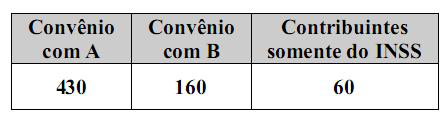
Um levantamento efetuado entre 600 contribuintes do INSS mostrou que muitos deles mantinham convênio com duas empresas particulares de assistência médica, A e B conforme o quadro. Analisando-o, podemos concluir que o número de contribuintes simultâneos às duas empresas, A e B, é:
Provas
Questão presente nas seguintes provas
Paulo César Nóbrega is one of 40 milion people living with HIV/AIDS. This is story:
Like most young people of my generation, I started using drugs as an adolescent. By the time I was 16, I was taking cannabis, hallucinogens and injecting drugs. Soon, my addiction led me to drug trafficking. Between 1985 and 1993, I was imprisoned in the city of São Paulo, Brazil, where I was diagnosed HIV-positive.
Initially, I was shocked. But I didn't really know what HIV or AIDS were, which is why I continued using drugs and sharing needles with other inmates. We received no guidance or preventive care.
In prison, AIDS first manifested itself through tuberculosis, an illness I suffered from three times. Although I was eventually given anti-retroviral medicines, I continued taking drugs and only restarted the treatment in earnest after abandoning drugs for good in 1999.
At that time, I was a member of a support group in my hometown, the coastal city of São Vicente, and was close to other HIV-positive people. We soon decided to establish the Hipupiara NGO to promote a sense of unity among people living with HIV and to improve their quality of life.
Unfortunately, I suffered a lot of prejudice for being HIV-positive, including from members of my family. I was also denied jobs. Then, in 2001, I started working as a fisherman, a job I retired from in 2005, at 50, due to poor health.
Today, I am free of drugs and am sticking to the treatment. I work as a volunteer for Hipupiara, contacting drug users in the city and referring them to treatment and assistance services.
Thanks to all the information I have accumulated about HIV/AIDS, I can now face and beat prejudice. People infected with HIV and drug users should not close up or avoid talking about their problems; we should help each other so that we can all lead a better life.
The text is about the story: Like most young people of my generation, I started using drugs as an adolescent. By the time I was 16, I was taking cannabis, hallucinogens and injecting drugs. Soon, my addiction led me to drug trafficking. Between 1985 and 1993, I was imprisoned in the city of São Paulo, Brazil, where I was diagnosed HIV-positive.
Initially, I was shocked. But I didn't really know what HIV or AIDS were, which is why I continued using drugs and sharing needles with other inmates. We received no guidance or preventive care.
In prison, AIDS first manifested itself through tuberculosis, an illness I suffered from three times. Although I was eventually given anti-retroviral medicines, I continued taking drugs and only restarted the treatment in earnest after abandoning drugs for good in 1999.
At that time, I was a member of a support group in my hometown, the coastal city of São Vicente, and was close to other HIV-positive people. We soon decided to establish the Hipupiara NGO to promote a sense of unity among people living with HIV and to improve their quality of life.
Unfortunately, I suffered a lot of prejudice for being HIV-positive, including from members of my family. I was also denied jobs. Then, in 2001, I started working as a fisherman, a job I retired from in 2005, at 50, due to poor health.
Today, I am free of drugs and am sticking to the treatment. I work as a volunteer for Hipupiara, contacting drug users in the city and referring them to treatment and assistance services.
Thanks to all the information I have accumulated about HIV/AIDS, I can now face and beat prejudice. People infected with HIV and drug users should not close up or avoid talking about their problems; we should help each other so that we can all lead a better life.
(Available in: <
http://www.unodc.org/newsletter/200601/page005.htm...>; Acess in: Mar. 6, 2006.)
Provas
Questão presente nas seguintes provas
Paulo César Nóbrega is one of 40 milion people living with HIV/AIDS. This is story:
Like most young people of my generation, I started using drugs as an adolescent. By the time I was 16, I was taking cannabis, hallucinogens and injecting drugs. Soon, my addiction led me to drug trafficking. Between 1985 and 1993, I was imprisoned in the city of São Paulo, Brazil, where I was diagnosed HIV-positive.
Initially, I was shocked. But I didn't really know what HIV or AIDS were, which is why I continued using drugs and sharing needles with other inmates. We received no guidance or preventive care.
In prison, AIDS first manifested itself through tuberculosis, an illness I suffered from three times. Although I was eventually given anti-retroviral medicines, I continued taking drugs and only restarted the treatment in earnest after abandoning drugs for good in 1999.
At that time, I was a member of a support group in my hometown, the coastal city of São Vicente, and was close to other HIV-positive people. We soon decided to establish the Hipupiara NGO to promote a sense of unity among people living with HIV and to improve their quality of life.
Unfortunately, I suffered a lot of prejudice for being HIV-positive, including from members of my family. I was also denied jobs. Then, in 2001, I started working as a fisherman, a job I retired from in 2005, at 50, due to poor health.
Today, I am free of drugs and am sticking to the treatment. I work as a volunteer for Hipupiara, contacting drug users in the city and referring them to treatment and assistance services.
Thanks to all the information I have accumulated about HIV/AIDS, I can now face and beat prejudice. People infected with HIV and drug users should not close up or avoid talking about their problems; we should help each other so that we can all lead a better life.
Mr. Nóbrega started dealing drugs:Like most young people of my generation, I started using drugs as an adolescent. By the time I was 16, I was taking cannabis, hallucinogens and injecting drugs. Soon, my addiction led me to drug trafficking. Between 1985 and 1993, I was imprisoned in the city of São Paulo, Brazil, where I was diagnosed HIV-positive.
Initially, I was shocked. But I didn't really know what HIV or AIDS were, which is why I continued using drugs and sharing needles with other inmates. We received no guidance or preventive care.
In prison, AIDS first manifested itself through tuberculosis, an illness I suffered from three times. Although I was eventually given anti-retroviral medicines, I continued taking drugs and only restarted the treatment in earnest after abandoning drugs for good in 1999.
At that time, I was a member of a support group in my hometown, the coastal city of São Vicente, and was close to other HIV-positive people. We soon decided to establish the Hipupiara NGO to promote a sense of unity among people living with HIV and to improve their quality of life.
Unfortunately, I suffered a lot of prejudice for being HIV-positive, including from members of my family. I was also denied jobs. Then, in 2001, I started working as a fisherman, a job I retired from in 2005, at 50, due to poor health.
Today, I am free of drugs and am sticking to the treatment. I work as a volunteer for Hipupiara, contacting drug users in the city and referring them to treatment and assistance services.
Thanks to all the information I have accumulated about HIV/AIDS, I can now face and beat prejudice. People infected with HIV and drug users should not close up or avoid talking about their problems; we should help each other so that we can all lead a better life.
(Available in: <
http://www.unodc.org/newsletter/200601/page005.htm...>; Acess in: Mar. 6, 2006.)
Provas
Questão presente nas seguintes provas
Paulo César Nóbrega is one of 40 milion people living with HIV/AIDS. This is story:
Like most young people of my generation, I started using drugs as an adolescent. By the time I was 16, I was taking cannabis, hallucinogens and injecting drugs. Soon, my addiction led me to drug trafficking. Between 1985 and 1993, I was imprisoned in the city of São Paulo, Brazil, where I was diagnosed HIV-positive.
Initially, I was shocked. But I didn't really know what HIV or AIDS were, which is why I continued using drugs and sharing needles with other inmates. We received no guidance or preventive care.
In prison, AIDS first manifested itself through tuberculosis, an illness I suffered from three times. Although I was eventually given anti-retroviral medicines, I continued taking drugs and only restarted the treatment in earnest after abandoning drugs for good in 1999.
At that time, I was a member of a support group in my hometown, the coastal city of São Vicente, and was close to other HIV-positive people. We soon decided to establish the Hipupiara NGO to promote a sense of unity among people living with HIV and to improve their quality of life.
Unfortunately, I suffered a lot of prejudice for being HIV-positive, including from members of my family. I was also denied jobs. Then, in 2001, I started working as a fisherman, a job I retired from in 2005, at 50, due to poor health.
Today, I am free of drugs and am sticking to the treatment. I work as a volunteer for Hipupiara, contacting drug users in the city and referring them to treatment and assistance services.
Thanks to all the information I have accumulated about HIV/AIDS, I can now face and beat prejudice. People infected with HIV and drug users should not close up or avoid talking about their problems; we should help each other so that we can all lead a better life.
During the time Mr. Nóbrega spent in prison he: Like most young people of my generation, I started using drugs as an adolescent. By the time I was 16, I was taking cannabis, hallucinogens and injecting drugs. Soon, my addiction led me to drug trafficking. Between 1985 and 1993, I was imprisoned in the city of São Paulo, Brazil, where I was diagnosed HIV-positive.
Initially, I was shocked. But I didn't really know what HIV or AIDS were, which is why I continued using drugs and sharing needles with other inmates. We received no guidance or preventive care.
In prison, AIDS first manifested itself through tuberculosis, an illness I suffered from three times. Although I was eventually given anti-retroviral medicines, I continued taking drugs and only restarted the treatment in earnest after abandoning drugs for good in 1999.
At that time, I was a member of a support group in my hometown, the coastal city of São Vicente, and was close to other HIV-positive people. We soon decided to establish the Hipupiara NGO to promote a sense of unity among people living with HIV and to improve their quality of life.
Unfortunately, I suffered a lot of prejudice for being HIV-positive, including from members of my family. I was also denied jobs. Then, in 2001, I started working as a fisherman, a job I retired from in 2005, at 50, due to poor health.
Today, I am free of drugs and am sticking to the treatment. I work as a volunteer for Hipupiara, contacting drug users in the city and referring them to treatment and assistance services.
Thanks to all the information I have accumulated about HIV/AIDS, I can now face and beat prejudice. People infected with HIV and drug users should not close up or avoid talking about their problems; we should help each other so that we can all lead a better life.
(Available in: <
http://www.unodc.org/newsletter/200601/page005.htm...>; Acess in: Mar. 6, 2006.)
Provas
Questão presente nas seguintes provas
Paulo César Nóbrega is one of 40 milion people living with HIV/AIDS. This is story:
Like most young people of my generation, I started using drugs as an adolescent. By the time I was 16, I was taking cannabis, hallucinogens and injecting drugs. Soon, my addiction led me to drug trafficking. Between 1985 and 1993, I was imprisoned in the city of São Paulo, Brazil, where I was diagnosed HIV-positive.
Initially, I was shocked. But I didn't really know what HIV or AIDS were, which is why I continued using drugs and sharing needles with other inmates. We received no guidance or preventive care.
In prison, AIDS first manifested itself through tuberculosis, an illness I suffered from three times. Although I was eventually given anti-retroviral medicines, I continued taking drugs and only restarted the treatment in earnest after abandoning drugs for good in 1999.
At that time, I was a member of a support group in my hometown, the coastal city of São Vicente, and was close to other HIV-positive people. We soon decided to establish the Hipupiara NGO to promote a sense of unity among people living with HIV and to improve their quality of life.
Unfortunately, I suffered a lot of prejudice for being HIV-positive, including from members of my family. I was also denied jobs. Then, in 2001, I started working as a fisherman, a job I retired from in 2005, at 50, due to poor health.
Today, I am free of drugs and am sticking to the treatment. I work as a volunteer for Hipupiara, contacting drug users in the city and referring them to treatment and assistance services.
Thanks to all the information I have accumulated about HIV/AIDS, I can now face and beat prejudice. People infected with HIV and drug users should not close up or avoid talking about their problems; we should help each other so that we can all lead a better life.
Mr. Nóbrega “was denied jobs” because: Like most young people of my generation, I started using drugs as an adolescent. By the time I was 16, I was taking cannabis, hallucinogens and injecting drugs. Soon, my addiction led me to drug trafficking. Between 1985 and 1993, I was imprisoned in the city of São Paulo, Brazil, where I was diagnosed HIV-positive.
Initially, I was shocked. But I didn't really know what HIV or AIDS were, which is why I continued using drugs and sharing needles with other inmates. We received no guidance or preventive care.
In prison, AIDS first manifested itself through tuberculosis, an illness I suffered from three times. Although I was eventually given anti-retroviral medicines, I continued taking drugs and only restarted the treatment in earnest after abandoning drugs for good in 1999.
At that time, I was a member of a support group in my hometown, the coastal city of São Vicente, and was close to other HIV-positive people. We soon decided to establish the Hipupiara NGO to promote a sense of unity among people living with HIV and to improve their quality of life.
Unfortunately, I suffered a lot of prejudice for being HIV-positive, including from members of my family. I was also denied jobs. Then, in 2001, I started working as a fisherman, a job I retired from in 2005, at 50, due to poor health.
Today, I am free of drugs and am sticking to the treatment. I work as a volunteer for Hipupiara, contacting drug users in the city and referring them to treatment and assistance services.
Thanks to all the information I have accumulated about HIV/AIDS, I can now face and beat prejudice. People infected with HIV and drug users should not close up or avoid talking about their problems; we should help each other so that we can all lead a better life.
(Available in: <
http://www.unodc.org/newsletter/200601/page005.htm...>; Acess in: Mar. 6, 2006.)
Provas
Questão presente nas seguintes provas
- Gramática - Língua InglesaAdjetivos | AdjectivesComparativo e superlativo de adjetivos | Comparative and superlative
- Gramática - Língua InglesaPronomes | PronounsPronome reflexivo | Reflexive Pronoun
- Gramática - Língua InglesaSubstantivos e compostos | Nouns and compounds
- Gramática - Língua InglesaPreposições | Prepositions
Paulo César Nóbrega is one of 40 milion people living with HIV/AIDS. This is story:
Like most young people of my generation, I started using drugs as an adolescent. By the time I was 16, I was taking cannabis, hallucinogens and injecting drugs. Soon, my addiction led me to drug trafficking. Between 1985 and 1993, I was imprisoned in the city of São Paulo, Brazil, where I was diagnosed HIV-positive.
Initially, I was shocked. But I didn't really know what HIV or AIDS were, which is why I continued using drugs and sharing needles with other inmates. We received no guidance or preventive care.
In prison, AIDS first manifested itself through tuberculosis, an illness I suffered from three times. Although I was eventually given anti-retroviral medicines, I continued taking drugs and only restarted the treatment in earnest after abandoning drugs for good in 1999.
At that time, I was a member of a support group in my hometown, the coastal city of São Vicente, and was close to other HIV-positive people. We soon decided to establish the Hipupiara NGO to promote a sense of unity among people living with HIV and to improve their quality of life.
Unfortunately, I suffered a lot of prejudice for being HIV-positive, including from members of my family. I was also denied jobs. Then, in 2001, I started working as a fisherman, a job I retired from in 2005, at 50, due to poor health.
Today, I am free of drugs and am sticking to the treatment. I work as a volunteer for Hipupiara, contacting drug users in the city and referring them to treatment and assistance services.
Thanks to all the information I have accumulated about HIV/AIDS, I can now face and beat prejudice. People infected with HIV and drug users should not close up or avoid talking about their problems; we should help each other so that we can all lead a better life.
“Addiction/ better/itself/among”. The following words can be classified as: Like most young people of my generation, I started using drugs as an adolescent. By the time I was 16, I was taking cannabis, hallucinogens and injecting drugs. Soon, my addiction led me to drug trafficking. Between 1985 and 1993, I was imprisoned in the city of São Paulo, Brazil, where I was diagnosed HIV-positive.
Initially, I was shocked. But I didn't really know what HIV or AIDS were, which is why I continued using drugs and sharing needles with other inmates. We received no guidance or preventive care.
In prison, AIDS first manifested itself through tuberculosis, an illness I suffered from three times. Although I was eventually given anti-retroviral medicines, I continued taking drugs and only restarted the treatment in earnest after abandoning drugs for good in 1999.
At that time, I was a member of a support group in my hometown, the coastal city of São Vicente, and was close to other HIV-positive people. We soon decided to establish the Hipupiara NGO to promote a sense of unity among people living with HIV and to improve their quality of life.
Unfortunately, I suffered a lot of prejudice for being HIV-positive, including from members of my family. I was also denied jobs. Then, in 2001, I started working as a fisherman, a job I retired from in 2005, at 50, due to poor health.
Today, I am free of drugs and am sticking to the treatment. I work as a volunteer for Hipupiara, contacting drug users in the city and referring them to treatment and assistance services.
Thanks to all the information I have accumulated about HIV/AIDS, I can now face and beat prejudice. People infected with HIV and drug users should not close up or avoid talking about their problems; we should help each other so that we can all lead a better life.
(Available in: <
http://www.unodc.org/newsletter/200601/page005.htm...>; Acess in: Mar. 6, 2006.)
Provas
Questão presente nas seguintes provas
Cadernos
Caderno Container