Foram encontradas 50 questões.
Sobre a perda de carga distribuída em tubulações industriais, assinale a alternativa correta:
Provas

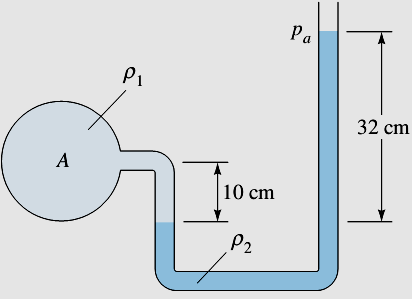
Dado o manômetro em U da figura, assinale a alternativa que corresponde à pressão manométrica em A: Dados: !$ \rho !$1=800kg/m3 e !$ \rho !$2=1200kg/m3
Provas
Sobre os quatro tipos diferentes de cargas resultantes que surgem devido as componentes de força resultante (FR) e ao momento (MRo) em um corpo genérico como mostrado na figura, assinale a alternativa correta:

Provas
Um par de engrenagens de dentes retos consiste em um pinhão de 18 dentes movendo uma cora de 42 dentes. Se o módulo do par vale 2mm, assinale a alternativa que indica a distância entre centros das engrenagens:
Provas
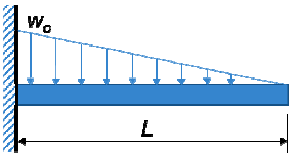
A equação que representa o diagrama de momento fletor da viga abaixo é:
Provas
Assinale a alternativa que indica corretamente a variação do comprimento sofrida pela peça da figura devido ao carregamento. Considere que o módulo de elasticidade da peça seja E=200GPa.

Provas
A Lei nº 8.666, de 21 de junho de 1993, regulamenta o art. 37, inciso XXI, da Constituição Federal, institui normas para licitações e contratos da Administração Pública. luz dessa Lei aponte a alternativa errada.
Provas
Disciplina: Ética e Regulação Profissional
Banca: MS CONCURSOS
Orgão: CREA-MG
Baseando-se no Regimento do Crea-MG, analise o art. 32 e respectivos parágrafos, e assinale a alternativa que faz a afirmação incorreta. Nas votações em Plenário, os escrutínios secretos serão realizados com cédulas manuscritas ou impressas, ou por meio eletrônico que preserve o sigilo da votação.
§1º – Nos escrutínios secretos será designada pelo presidente uma comissão escrutinadora, composta de, no mínimo, três conselheiros, um dos quais será indicado seu coordenador, que coordenará o processo de votação e apuração e o destino dos votos.
§2º – Em eleição para composição de listas plurinominais, serão realizados tantos escrutínios quantos forem necessários para que os candidatos obtenham o sufrágio indispensável à indicação.
§3º – Em cada escrutínio para composição de listas plurinominais, o Plenário votará em tantos nomes quantos ainda faltarem para completar a lista de eleitos.
§4º – É facultado ao membro do Conselho, se julgar que o resultado proclamado não corresponde à realidade ou que houve confusão dos votantes, pedir a verificação da contagem.
Provas
Leia o texto a seguir para responder às próximas cinco(5) questões:
House of Representatives Approves Civil Right Framework for the Internet in Brazil
03/26/2014 - 09H08
1 After two years and seven months of struggles, negotiations and intense lobbying, the House of Representatives approved late on Tuesday (25) the main text in the Civil Right Framework for the Internet. The text now goes for Senate approval.
2 The proposal is like a Constitution, with established principles, guarantees, rights and duties in the web. Deputies removed all suggested changes.
3 The Civil Right Framework for the Internet became controversial because of contrary interests from the government, telecommunications companies, Internet sites, Federal Police and Public Ministry, in addition to consumer protection entities.
4 With so many fronts involved and far from a consensus, the issue blocked the vote and other proposals at the House of Representatives for five months.
5 In recent weeks, the government gave in when it came to the priority points and negotiated positions, releasing funds for works sponsored by Congressmen in the budget in an attempt to empty the huge number of allies in the House and move forward with the discussion at hand, considered vital to strengthen Dilma Rousseff discourse against espionage.
NEGOTIATION
6 The greatest resistance to the text was brought by PMDB, the political arty advocated changes in terms of web neutrality-a term used to indicate that the connection speed cannot vary according to the program or website accessed by the user.
7 It is a popular measure for users, but contested by telephone companies since they would like to sell packages according to the level of consumption of each user.
8 With this, telcos are required to maintain consumption out of the equation. Thus, users can navigate whenever they want in the limit of their data and speed package.
9 The Brazilian Executive Power accepted to set standards for regulatory neutrality and established a presidential decree that will detail the concept of neutrality, without much change in the content. Behind the scenes, the move was interpreted as an honorable PMDB exit.
10 Another modification sponsored by the government in order to avoid a defeat in the House was the removal of the requirement for nationalization of data users storage centers. That was one of the measures advocated by President Dilma Rousseff as a way to respond to news of U.S. spying against Brazilian authorities.
11 The original version stated that an Executive decree would regulate the obligation of companies like Google and Facebook to keep user data storage structure in the country.
12 To do this they would have to replicate in the country a structure that is similar to other countries including the United States. According to the government the measure would give greater protection to data from the country.
13 It was decided, however, that the data will be submitted to Brazilian law. The project aso rejects contractual terms of any program that does not offer the user an alternative to appeal to the Brazilian forum if an user finds problems with the provision of services in Brazil.
14 For months, technology companies have been lobbying Congress to overturn the requirement, with the argument that would represent exorbitant spending.
15 Even without ensuring the implementation of data centers in the country, the president wants to use the framework as an international flag, to defend web communication, confronting allegations of violations of her electronic and telephone communications by the American security agency.
16 The government will work to accelerate the vote on the proposal in the Senate since the project is vital to strengthen Dilma Rousseff discourse against espionage. In April, Brazil will host the international conference on Internet governance, and the government wants to introduce the new law during the event.
Fonte:http://www1.folha.uol.com.br/internacional/en/brazil/2014/03/1431053-house-of-representatives-approvescivil-right-framework-for-the-internet-in-brazil.shtml Acesso em: 17/05/2014
No parágrafo 13, a palavra however, pode ser traduzida como:
Provas
Leia o texto a seguir para responder às próximas cinco(5) questões:
House of Representatives Approves Civil Right Framework for the Internet in Brazil
03/26/2014 - 09H08
1 After two years and seven months of struggles, negotiations and intense lobbying, the House of Representatives approved late on Tuesday (25) the main text in the Civil Right Framework for the Internet. The text now goes for Senate approval.
2 The proposal is like a Constitution, with established principles, guarantees, rights and duties in the web. Deputies removed all suggested changes.
3 The Civil Right Framework for the Internet became controversial because of contrary interests from the government, telecommunications companies, Internet sites, Federal Police and Public Ministry, in addition to consumer protection entities.
4 With so many fronts involved and far from a consensus, the issue blocked the vote and other proposals at the House of Representatives for five months.
5 In recent weeks, the government gave in when it came to the priority points and negotiated positions, releasing funds for works sponsored by Congressmen in the budget in an attempt to empty the huge number of allies in the House and move forward with the discussion at hand, considered vital to strengthen Dilma Rousseff discourse against espionage.
NEGOTIATION
6 The greatest resistance to the text was brought by PMDB, the political arty advocated changes in terms of web neutrality-a term used to indicate that the connection speed cannot vary according to the program or website accessed by the user.
7 It is a popular measure for users, but contested by telephone companies since they would like to sell packages according to the level of consumption of each user.
8 With this, telcos are required to maintain consumption out of the equation. Thus, users can navigate whenever they want in the limit of their data and speed package.
9 The Brazilian Executive Power accepted to set standards for regulatory neutrality and established a presidential decree that will detail the concept of neutrality, without much change in the content. Behind the scenes, the move was interpreted as an honorable PMDB exit.
10 Another modification sponsored by the government in order to avoid a defeat in the House was the removal of the requirement for nationalization of data users storage centers. That was one of the measures advocated by President Dilma Rousseff as a way to respond to news of U.S. spying against Brazilian authorities.
11 The original version stated that an Executive decree would regulate the obligation of companies like Google and Facebook to keep user data storage structure in the country.
12 To do this they would have to replicate in the country a structure that is similar to other countries including the United States. According to the government the measure would give greater protection to data from the country.
13 It was decided, however, that the data will be submitted to Brazilian law. The project aso rejects contractual terms of any program that does not offer the user an alternative to appeal to the Brazilian forum if an user finds problems with the provision of services in Brazil.
14 For months, technology companies have been lobbying Congress to overturn the requirement, with the argument that would represent exorbitant spending.
15 Even without ensuring the implementation of data centers in the country, the president wants to use the framework as an international flag, to defend web communication, confronting allegations of violations of her electronic and telephone communications by the American security agency.
16 The government will work to accelerate the vote on the proposal in the Senate since the project is vital to strengthen Dilma Rousseff discourse against espionage. In April, Brazil will host the international conference on Internet governance, and the government wants to introduce the new law during the event.
Fonte:http://www1.folha.uol.com.br/internacional/en/brazil/2014/03/1431053-house-of-representatives-approvescivil-right-framework-for-the-internet-in-brazil.shtml Acesso em: 17/05/2014
O texto ainda precisa passar pela aprovação do(a):
Provas
Caderno Container