Foram encontradas 60 questões.
Read Text III and answer the three questions that follow it:
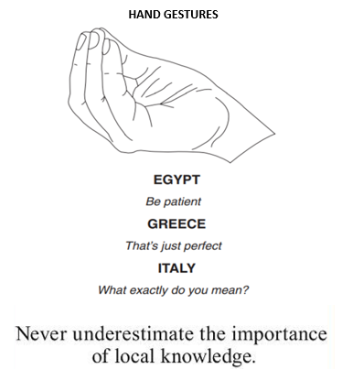
Adapted from: https://www.linkedin.com/pulse /hand-gestures-%C5%BEeljko-kraljevi%C4%87/ and https://i.pinimg.com/originals/ed/80/ae/ed80ae85f4ae55dd248a8b9eb18c73db.jpeg
The word “underestimate” is formed by
Provas

Read Text III and answer the three questions that follow it:
Adapted from: https://www.linkedin.com/pulse /hand-gestures-%C5%BEeljko-kraljevi%C4%87/ and https://i.pinimg.com/originals/ed/80/ae/ed80ae85f4ae55dd248a8b9eb18c73db.jpeg
Provas
Read text II and answer the four questions that follow it:
Text II
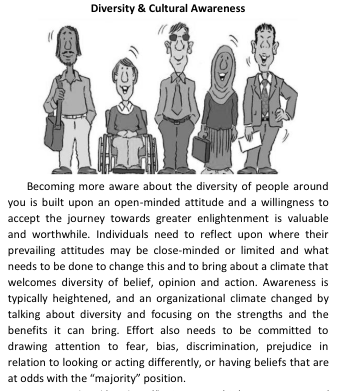
Adapted from: https://br.pinterest.com/pin/428897564482393461/
To be “at odds with ‘the majority’ position” means to
Provas
Read text II and answer the four questions that follow it:
Text II
Adapted from: https://br.pinterest.com/pin/428897564482393461/
If a person has an “open-minded attitude”, this person can be said to be
Provas
Read text II and answer the four questions that follow it:
Text II
Adapted from: https://br.pinterest.com/pin/428897564482393461/
The sentence that explains the relation between the text and the smiling characters in the illustration is:
Provas
Read text II and answer the four questions that follow it:
Text II
Adapted from: https://br.pinterest.com/pin/428897564482393461/
Based on Text II, mark the statements below as TRUE (T) or FALSE (F).
Provas
- Gramática - Língua InglesaAdvérbios e conjunções | Adverbs and conjunctionsAdvérbios de: lugar, modo, tempo e freqüência | Adverbs of: place, manner, time and frequency
Read Text I and answer the fourteen questions that follow it
Text I The “literacy turn” in education: reexamining
what it means to be literate
In response to the phenomena of mass migration and the emergence of digital communications media that defined the last decade of the 20th century, the New London Group (NLG) called for a broader view of literacy and literacy teaching in its 1996 manifesto, A Pedagogy of Multiliteracies: Designing Social Futures. The group argued that literacy pedagogy in education must (1) reflect the increasing cultural and linguistic diversity of the contemporary globalized world, and (2) account for the new kinds of texts and textual engagement that have emerged in the wake of new information and multimedia technologies. In order to better capture the plurality of discourses, languages, and media, they proposed the term ‘multiliteracies’.
Within the NLG’s pedagogy of multiliteracies, language and other modes of communication are viewed as dynamic resources for meaning making that undergo constant changes in the dynamics of language use as learners attempt to achieve their own purposes. Within this broader view of literacy and literacy teaching, learners are no longer “users as decoders of language” but rather “designers of meaning.” Meaning is not viewed as something that resides in texts; rather, deriving meaning is considered an active and dynamic process in which learners combine and creatively apply both linguistic and other semiotic resources (e.g., visual, gesture, sound, etc.) with an awareness of “the sets of conventions connected with semiotic activity [...] in a given social space” (NLG, 1996, p. 74).
Grounded within the view that learning develops in social, cultural, and material contexts as a result of collaborative interactions, NLG argued that instantiating literacy-based teaching in classrooms calls on the complex integration and interaction of four pedagogical components that are neither hierarchical nor linear and can at times overlap: situated practice, overt instruction, critical framing, and transformed practice. […]
Although the NLG’s pedagogy of multiliteracies was conceived as a “statement of general principle” (1996, p. 89) for schools, the group’s call for educators to recognize the diversity and social situatedness of literacy has had a lasting impact on foreign language (FL) teaching and learning. The reception of the group’s work along with that of other scholars from critical pedagogy appeared at a time when the field was becoming less solidly anchored in theories of L2 acquisition and more interested in the social practice of FL education itself. In the section that follows, we describe the current state of FL literacy studies as it has developed in recent years, before finally turning to some very recent emerging trends that we are likely to see develop going forward.
(Adapted from: https://www.colorado.edu/center/altec/sites/default/files/ attachedfiles/moving_toward_multiliteracies_in_foreign_language_teaching.pdf)
Provas
- Voz Ativa e Passiva | Passive and Active Voice
- Gramática - Língua InglesaVerbos | VerbsPassado simples | Simple past
Read Text I and answer the fourteen questions that follow it
Text I The “literacy turn” in education: reexamining
what it means to be literate
In response to the phenomena of mass migration and the emergence of digital communications media that defined the last decade of the 20th century, the New London Group (NLG) called for a broader view of literacy and literacy teaching in its 1996 manifesto, A Pedagogy of Multiliteracies: Designing Social Futures. The group argued that literacy pedagogy in education must (1) reflect the increasing cultural and linguistic diversity of the contemporary globalized world, and (2) account for the new kinds of texts and textual engagement that have emerged in the wake of new information and multimedia technologies. In order to better capture the plurality of discourses, languages, and media, they proposed the term ‘multiliteracies’.
Within the NLG’s pedagogy of multiliteracies, language and other modes of communication are viewed as dynamic resources for meaning making that undergo constant changes in the dynamics of language use as learners attempt to achieve their own purposes. Within this broader view of literacy and literacy teaching, learners are no longer “users as decoders of language” but rather “designers of meaning.” Meaning is not viewed as something that resides in texts; rather, deriving meaning is considered an active and dynamic process in which learners combine and creatively apply both linguistic and other semiotic resources (e.g., visual, gesture, sound, etc.) with an awareness of “the sets of conventions connected with semiotic activity [...] in a given social space” (NLG, 1996, p. 74).
Grounded within the view that learning develops in social, cultural, and material contexts as a result of collaborative interactions, NLG argued that instantiating literacy-based teaching in classrooms calls on the complex integration and interaction of four pedagogical components that are neither hierarchical nor linear and can at times overlap: situated practice, overt instruction, critical framing, and transformed practice. […]
Although the NLG’s pedagogy of multiliteracies was conceived as a “statement of general principle” (1996, p. 89) for schools, the group’s call for educators to recognize the diversity and social situatedness of literacy has had a lasting impact on foreign language (FL) teaching and learning. The reception of the group’s work along with that of other scholars from critical pedagogy appeared at a time when the field was becoming less solidly anchored in theories of L2 acquisition and more interested in the social practice of FL education itself. In the section that follows, we describe the current state of FL literacy studies as it has developed in recent years, before finally turning to some very recent emerging trends that we are likely to see develop going forward.
(Adapted from: https://www.colorado.edu/center/altec/sites/default/files/ attachedfiles/moving_toward_multiliteracies_in_foreign_language_teaching.pdf)
Provas
Read Text I and answer the fourteen questions that follow it
Text I The “literacy turn” in education: reexamining
what it means to be literate
In response to the phenomena of mass migration and the emergence of digital communications media that defined the last decade of the 20th century, the New London Group (NLG) called for a broader view of literacy and literacy teaching in its 1996 manifesto, A Pedagogy of Multiliteracies: Designing Social Futures. The group argued that literacy pedagogy in education must (1) reflect the increasing cultural and linguistic diversity of the contemporary globalized world, and (2) account for the new kinds of texts and textual engagement that have emerged in the wake of new information and multimedia technologies. In order to better capture the plurality of discourses, languages, and media, they proposed the term ‘multiliteracies’.
Within the NLG’s pedagogy of multiliteracies, language and other modes of communication are viewed as dynamic resources for meaning making that undergo constant changes in the dynamics of language use as learners attempt to achieve their own purposes. Within this broader view of literacy and literacy teaching, learners are no longer “users as decoders of language” but rather “designers of meaning.” Meaning is not viewed as something that resides in texts; rather, deriving meaning is considered an active and dynamic process in which learners combine and creatively apply both linguistic and other semiotic resources (e.g., visual, gesture, sound, etc.) with an awareness of “the sets of conventions connected with semiotic activity [...] in a given social space” (NLG, 1996, p. 74).
Grounded within the view that learning develops in social, cultural, and material contexts as a result of collaborative interactions, NLG argued that instantiating literacy-based teaching in classrooms calls on the complex integration and interaction of four pedagogical components that are neither hierarchical nor linear and can at times overlap: situated practice, overt instruction, critical framing, and transformed practice. […]
Although the NLG’s pedagogy of multiliteracies was conceived as a “statement of general principle” (1996, p. 89) for schools, the group’s call for educators to recognize the diversity and social situatedness of literacy has had a lasting impact on foreign language (FL) teaching and learning. The reception of the group’s work along with that of other scholars from critical pedagogy appeared at a time when the field was becoming less solidly anchored in theories of L2 acquisition and more interested in the social practice of FL education itself. In the section that follows, we describe the current state of FL literacy studies as it has developed in recent years, before finally turning to some very recent emerging trends that we are likely to see develop going forward.
(Adapted from: https://www.colorado.edu/center/altec/sites/default/files/ attachedfiles/moving_toward_multiliteracies_in_foreign_language_teaching.pdf)
Provas
Read Text I and answer the fourteen questions that follow it
Text I The “literacy turn” in education: reexamining
what it means to be literate
In response to the phenomena of mass migration and the emergence of digital communications media that defined the last decade of the 20th century, the New London Group (NLG) called for a broader view of literacy and literacy teaching in its 1996 manifesto, A Pedagogy of Multiliteracies: Designing Social Futures. The group argued that literacy pedagogy in education must (1) reflect the increasing cultural and linguistic diversity of the contemporary globalized world, and (2) account for the new kinds of texts and textual engagement that have emerged in the wake of new information and multimedia technologies. In order to better capture the plurality of discourses, languages, and media, they proposed the term ‘multiliteracies’.
Within the NLG’s pedagogy of multiliteracies, language and other modes of communication are viewed as dynamic resources for meaning making that undergo constant changes in the dynamics of language use as learners attempt to achieve their own purposes. Within this broader view of literacy and literacy teaching, learners are no longer “users as decoders of language” but rather “designers of meaning.” Meaning is not viewed as something that resides in texts; rather, deriving meaning is considered an active and dynamic process in which learners combine and creatively apply both linguistic and other semiotic resources (e.g., visual, gesture, sound, etc.) with an awareness of “the sets of conventions connected with semiotic activity [...] in a given social space” (NLG, 1996, p. 74).
Grounded within the view that learning develops in social, cultural, and material contexts as a result of collaborative interactions, NLG argued that instantiating literacy-based teaching in classrooms calls on the complex integration and interaction of four pedagogical components that are neither hierarchical nor linear and can at times overlap: situated practice, overt instruction, critical framing, and transformed practice. […]
Although the NLG’s pedagogy of multiliteracies was conceived as a “statement of general principle” (1996, p. 89) for schools, the group’s call for educators to recognize the diversity and social situatedness of literacy has had a lasting impact on foreign language (FL) teaching and learning. The reception of the group’s work along with that of other scholars from critical pedagogy appeared at a time when the field was becoming less solidly anchored in theories of L2 acquisition and more interested in the social practice of FL education itself. In the section that follows, we describe the current state of FL literacy studies as it has developed in recent years, before finally turning to some very recent emerging trends that we are likely to see develop going forward.
(Adapted from: https://www.colorado.edu/center/altec/sites/default/files/ attachedfiles/moving_toward_multiliteracies_in_foreign_language_teaching.pdf)
Provas
Caderno Container