Magna Concursos

Foram encontradas 50 questões.

3946863 Ano: 2025
Disciplina: Inglês (Língua Inglesa)
Banca: UNEB
Orgão: SEE-BA
Provas:
When describing an action that will be in progress at a specific moment in the future, the correct use of tense is essential for clarity. Which sentence demonstrates the proper structure and meaning of the future continuous tense?
 

Provas

Questão presente nas seguintes provas
3946862 Ano: 2025
Disciplina: Inglês (Língua Inglesa)
Banca: UNEB
Orgão: SEE-BA
Provas:
Which of the following sentences demonstrates a grammatically and semantically correct use of a defining relative clause?
 

Provas

Questão presente nas seguintes provas
3946861 Ano: 2025
Disciplina: Inglês (Língua Inglesa)
Banca: UNEB
Orgão: SEE-BA
Provas:
O texto seguinte servirá de base para responder à questão.


Pannacotta with finger lime
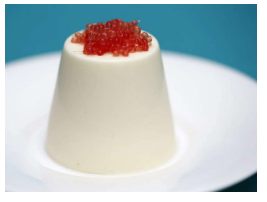
I am something of a pannacotta afficionado, and often choose it for dessert when I eat at Italian restaurants. It is quite simple to make, but it takes a delicate touch to get the gelatine to liquid ratio just right, so that the pannacotta is set but quite wobbly when turned out from its mould, and the texture silky smooth and quite delicate. I make a pannacotta that uses a combination of cream and buttermilk, which makes it rich, but light and silky in texture and with faint citrus notes. It is perfecct to pair with finger lime, an Australian native citrus fruit that is becoming more readily available, due to its pretty colours and gorgeous flavour.
The finger lime is native to the rainforests of the border ranges of south east Queensland and northern New South Wales. The pulp of the fruit is made up of individual juice vesicles that look like caviar or tiny pearls. They are compressed inside the fruit and burst out when the fruit is opened. The pulp has an astringent citrus flavour and is almost effervescent on the tongue, a bit like sherbert. We have been growing a finger lime for several years now and it started to bear fruit a couple of years ago. Ours has a dark green fruit and the pearls are a pale green, but the ones I bought to make this recipe have an almost black skin and the pearls are translucent pink. If you can't get finger limes then any tropical fruit works wonderfully in this recipe − finely diced mango, passionfruit pulp, or small chunks of caramelised pineapple. But if you can find finger limes please try them to top this pannacotta − you won't be disappointed.
Enunciado 4798684-1
Serves 6
3 leaves of gold strength gelatine
1 2/3 cups pouring cream
150 g castor sugar
1 1/4 cups buttermilk
juice of 1 lemon
2 medium sized finger limes (available from good fruit shops) sliced lengthwise and the pearl like fruit removed.
Soak the gelatine leaves in cold water to soften. Combine the cream and sugar in a saucepan on medium heat and bring it almost to the boil. Take off the heat and add it to the buttermilk in a medium sized bowl. Squeeze the excess moisture out of the gelatine and whisk into the buttermilk and cream mixture until completely dissolved. Stir through the lemon juice and let it cool a little. Pour into moulds and then set in the fridge for around 4 hours. When ready to serve carefully invert the pannacottas onto a serving plate. They should come out easily and be set but very wobbly. Carefully top with a teaspoon of finger lime pearls and serve right away.
https://simplefood.blog/2019/03/17/pannacotta-with-finger-lime/
Analyze the prepositions used in the following excerpt: "Combine the cream and sugar in a saucepan on medium heat and bring it almost to the boil." Which statement best explains the specific semantic functions of the prepositions "in," "on," and "to" in this cooking context?
 

Provas

Questão presente nas seguintes provas
3946860 Ano: 2025
Disciplina: Inglês (Língua Inglesa)
Banca: UNEB
Orgão: SEE-BA
Provas:
O texto seguinte servirá de base para responder à questão.


Pannacotta with finger lime
I am something of a pannacotta afficionado, and often choose it for dessert when I eat at Italian restaurants. It is quite simple to make, but it takes a delicate touch to get the gelatine to liquid ratio just right, so that the pannacotta is set but quite wobbly when turned out from its mould, and the texture silky smooth and quite delicate. I make a pannacotta that uses a combination of cream and buttermilk, which makes it rich, but light and silky in texture and with faint citrus notes. It is perfecct to pair with finger lime, an Australian native citrus fruit that is becoming more readily available, due to its pretty colours and gorgeous flavour.
The finger lime is native to the rainforests of the border ranges of south east Queensland and northern New South Wales. The pulp of the fruit is made up of individual juice vesicles that look like caviar or tiny pearls. They are compressed inside the fruit and burst out when the fruit is opened. The pulp has an astringent citrus flavour and is almost effervescent on the tongue, a bit like sherbert. We have been growing a finger lime for several years now and it started to bear fruit a couple of years ago. Ours has a dark green fruit and the pearls are a pale green, but the ones I bought to make this recipe have an almost black skin and the pearls are translucent pink. If you can't get finger limes then any tropical fruit works wonderfully in this recipe − finely diced mango, passionfruit pulp, or small chunks of caramelised pineapple. But if you can find finger limes please try them to top this pannacotta − you won't be disappointed.
Enunciado 4798683-1
Serves 6
3 leaves of gold strength gelatine
1 2/3 cups pouring cream
150 g castor sugar
1 1/4 cups buttermilk
juice of 1 lemon
2 medium sized finger limes (available from good fruit shops) sliced lengthwise and the pearl like fruit removed.
Soak the gelatine leaves in cold water to soften. Combine the cream and sugar in a saucepan on medium heat and bring it almost to the boil. Take off the heat and add it to the buttermilk in a medium sized bowl. Squeeze the excess moisture out of the gelatine and whisk into the buttermilk and cream mixture until completely dissolved. Stir through the lemon juice and let it cool a little. Pour into moulds and then set in the fridge for around 4 hours. When ready to serve carefully invert the pannacottas onto a serving plate. They should come out easily and be set but very wobbly. Carefully top with a teaspoon of finger lime pearls and serve right away.
https://simplefood.blog/2019/03/17/pannacotta-with-finger-lime/
In the sentence "When ready to serve carefully invert the pannacottas onto a serving plate. They should come out easily and be set but very wobbly," analyze the pronoun reference. Which statement correctly identifies the antecedent and explains the grammatical relationship?
 

Provas

Questão presente nas seguintes provas
3946859 Ano: 2025
Disciplina: Inglês (Língua Inglesa)
Banca: UNEB
Orgão: SEE-BA
Provas:
O texto seguinte servirá de base para responder à questão.


Pannacotta with finger lime
I am something of a pannacotta afficionado, and often choose it for dessert when I eat at Italian restaurants. It is quite simple to make, but it takes a delicate touch to get the gelatine to liquid ratio just right, so that the pannacotta is set but quite wobbly when turned out from its mould, and the texture silky smooth and quite delicate. I make a pannacotta that uses a combination of cream and buttermilk, which makes it rich, but light and silky in texture and with faint citrus notes. It is perfecct to pair with finger lime, an Australian native citrus fruit that is becoming more readily available, due to its pretty colours and gorgeous flavour.
The finger lime is native to the rainforests of the border ranges of south east Queensland and northern New South Wales. The pulp of the fruit is made up of individual juice vesicles that look like caviar or tiny pearls. They are compressed inside the fruit and burst out when the fruit is opened. The pulp has an astringent citrus flavour and is almost effervescent on the tongue, a bit like sherbert. We have been growing a finger lime for several years now and it started to bear fruit a couple of years ago. Ours has a dark green fruit and the pearls are a pale green, but the ones I bought to make this recipe have an almost black skin and the pearls are translucent pink. If you can't get finger limes then any tropical fruit works wonderfully in this recipe − finely diced mango, passionfruit pulp, or small chunks of caramelised pineapple. But if you can find finger limes please try them to top this pannacotta − you won't be disappointed.
Enunciado 4798682-1
Serves 6
3 leaves of gold strength gelatine
1 2/3 cups pouring cream
150 g castor sugar
1 1/4 cups buttermilk
juice of 1 lemon
2 medium sized finger limes (available from good fruit shops) sliced lengthwise and the pearl like fruit removed.
Soak the gelatine leaves in cold water to soften. Combine the cream and sugar in a saucepan on medium heat and bring it almost to the boil. Take off the heat and add it to the buttermilk in a medium sized bowl. Squeeze the excess moisture out of the gelatine and whisk into the buttermilk and cream mixture until completely dissolved. Stir through the lemon juice and let it cool a little. Pour into moulds and then set in the fridge for around 4 hours. When ready to serve carefully invert the pannacottas onto a serving plate. They should come out easily and be set but very wobbly. Carefully top with a teaspoon of finger lime pearls and serve right away.
https://simplefood.blog/2019/03/17/pannacotta-with-finger-lime/
Read these five recipe adaptations based on the original text. Identify which sentence contains an INCORRECT use of relative pronouns:
 

Provas

Questão presente nas seguintes provas
3946858 Ano: 2025
Disciplina: Inglês (Língua Inglesa)
Banca: UNEB
Orgão: SEE-BA
Provas:
O texto seguinte servirá de base para responder à questão.


Pannacotta with finger lime
I am something of a pannacotta afficionado, and often choose it for dessert when I eat at Italian restaurants. It is quite simple to make, but it takes a delicate touch to get the gelatine to liquid ratio just right, so that the pannacotta is set but quite wobbly when turned out from its mould, and the texture silky smooth and quite delicate. I make a pannacotta that uses a combination of cream and buttermilk, which makes it rich, but light and silky in texture and with faint citrus notes. It is perfecct to pair with finger lime, an Australian native citrus fruit that is becoming more readily available, due to its pretty colours and gorgeous flavour.
The finger lime is native to the rainforests of the border ranges of south east Queensland and northern New South Wales. The pulp of the fruit is made up of individual juice vesicles that look like caviar or tiny pearls. They are compressed inside the fruit and burst out when the fruit is opened. The pulp has an astringent citrus flavour and is almost effervescent on the tongue, a bit like sherbert. We have been growing a finger lime for several years now and it started to bear fruit a couple of years ago. Ours has a dark green fruit and the pearls are a pale green, but the ones I bought to make this recipe have an almost black skin and the pearls are translucent pink. If you can't get finger limes then any tropical fruit works wonderfully in this recipe − finely diced mango, passionfruit pulp, or small chunks of caramelised pineapple. But if you can find finger limes please try them to top this pannacotta − you won't be disappointed.
Enunciado 4798681-1
Serves 6
3 leaves of gold strength gelatine
1 2/3 cups pouring cream
150 g castor sugar
1 1/4 cups buttermilk
juice of 1 lemon
2 medium sized finger limes (available from good fruit shops) sliced lengthwise and the pearl like fruit removed.
Soak the gelatine leaves in cold water to soften. Combine the cream and sugar in a saucepan on medium heat and bring it almost to the boil. Take off the heat and add it to the buttermilk in a medium sized bowl. Squeeze the excess moisture out of the gelatine and whisk into the buttermilk and cream mixture until completely dissolved. Stir through the lemon juice and let it cool a little. Pour into moulds and then set in the fridge for around 4 hours. When ready to serve carefully invert the pannacottas onto a serving plate. They should come out easily and be set but very wobbly. Carefully top with a teaspoon of finger lime pearls and serve right away.
https://simplefood.blog/2019/03/17/pannacotta-with-finger-lime/
In the recipe text, analyze the imperative constructions used in the cooking instructions. Which statement best describes the grammatical function and formation of the imperative mood as demonstrated in sentences like "Take off the heat," "Squeeze the excess moisture," and "Pour into moulds"?
 

Provas

Questão presente nas seguintes provas
3946857 Ano: 2025
Disciplina: Inglês (Língua Inglesa)
Banca: UNEB
Orgão: SEE-BA
Provas:
O texto seguinte servirá de base para responder à questão.


Pannacotta with finger lime
I am something of a pannacotta afficionado, and often choose it for dessert when I eat at Italian restaurants. It is quite simple to make, but it takes a delicate touch to get the gelatine to liquid ratio just right, so that the pannacotta is set but quite wobbly when turned out from its mould, and the texture silky smooth and quite delicate. I make a pannacotta that uses a combination of cream and buttermilk, which makes it rich, but light and silky in texture and with faint citrus notes. It is perfecct to pair with finger lime, an Australian native citrus fruit that is becoming more readily available, due to its pretty colours and gorgeous flavour.
The finger lime is native to the rainforests of the border ranges of south east Queensland and northern New South Wales. The pulp of the fruit is made up of individual juice vesicles that look like caviar or tiny pearls. They are compressed inside the fruit and burst out when the fruit is opened. The pulp has an astringent citrus flavour and is almost effervescent on the tongue, a bit like sherbert. We have been growing a finger lime for several years now and it started to bear fruit a couple of years ago. Ours has a dark green fruit and the pearls are a pale green, but the ones I bought to make this recipe have an almost black skin and the pearls are translucent pink. If you can't get finger limes then any tropical fruit works wonderfully in this recipe − finely diced mango, passionfruit pulp, or small chunks of caramelised pineapple. But if you can find finger limes please try them to top this pannacotta − you won't be disappointed.
Enunciado 4798680-1
Serves 6
3 leaves of gold strength gelatine
1 2/3 cups pouring cream
150 g castor sugar
1 1/4 cups buttermilk
juice of 1 lemon
2 medium sized finger limes (available from good fruit shops) sliced lengthwise and the pearl like fruit removed.
Soak the gelatine leaves in cold water to soften. Combine the cream and sugar in a saucepan on medium heat and bring it almost to the boil. Take off the heat and add it to the buttermilk in a medium sized bowl. Squeeze the excess moisture out of the gelatine and whisk into the buttermilk and cream mixture until completely dissolved. Stir through the lemon juice and let it cool a little. Pour into moulds and then set in the fridge for around 4 hours. When ready to serve carefully invert the pannacottas onto a serving plate. They should come out easily and be set but very wobbly. Carefully top with a teaspoon of finger lime pearls and serve right away.
https://simplefood.blog/2019/03/17/pannacotta-with-finger-lime/
Examine the morphological structure of compound words and derived terms in this recipe segment: "medium-sized," "pearl-like," and "buttermilk." Which analysis correctly categorizes these formations and their grammatical functions?
 

Provas

Questão presente nas seguintes provas
3946856 Ano: 2025
Disciplina: Inglês (Língua Inglesa)
Banca: UNEB
Orgão: SEE-BA
Provas:
O texto seguinte servirá de base para responder à questão.


Pannacotta with finger lime
I am something of a pannacotta afficionado, and often choose it for dessert when I eat at Italian restaurants. It is quite simple to make, but it takes a delicate touch to get the gelatine to liquid ratio just right, so that the pannacotta is set but quite wobbly when turned out from its mould, and the texture silky smooth and quite delicate. I make a pannacotta that uses a combination of cream and buttermilk, which makes it rich, but light and silky in texture and with faint citrus notes. It is perfecct to pair with finger lime, an Australian native citrus fruit that is becoming more readily available, due to its pretty colours and gorgeous flavour.
The finger lime is native to the rainforests of the border ranges of south east Queensland and northern New South Wales. The pulp of the fruit is made up of individual juice vesicles that look like caviar or tiny pearls. They are compressed inside the fruit and burst out when the fruit is opened. The pulp has an astringent citrus flavour and is almost effervescent on the tongue, a bit like sherbert. We have been growing a finger lime for several years now and it started to bear fruit a couple of years ago. Ours has a dark green fruit and the pearls are a pale green, but the ones I bought to make this recipe have an almost black skin and the pearls are translucent pink. If you can't get finger limes then any tropical fruit works wonderfully in this recipe − finely diced mango, passionfruit pulp, or small chunks of caramelised pineapple. But if you can find finger limes please try them to top this pannacotta − you won't be disappointed.
Enunciado 4798679-1
Serves 6
3 leaves of gold strength gelatine
1 2/3 cups pouring cream
150 g castor sugar
1 1/4 cups buttermilk
juice of 1 lemon
2 medium sized finger limes (available from good fruit shops) sliced lengthwise and the pearl like fruit removed.
Soak the gelatine leaves in cold water to soften. Combine the cream and sugar in a saucepan on medium heat and bring it almost to the boil. Take off the heat and add it to the buttermilk in a medium sized bowl. Squeeze the excess moisture out of the gelatine and whisk into the buttermilk and cream mixture until completely dissolved. Stir through the lemon juice and let it cool a little. Pour into moulds and then set in the fridge for around 4 hours. When ready to serve carefully invert the pannacottas onto a serving plate. They should come out easily and be set but very wobbly. Carefully top with a teaspoon of finger lime pearls and serve right away.
https://simplefood.blog/2019/03/17/pannacotta-with-finger-lime/
Examine the phrase "2 medium sized finger limes... sliced lengthwise and the pearl like fruit removed." Which analysis correctly explains the passive voice construction and its grammatical implications in this context?
 

Provas

Questão presente nas seguintes provas
3946855 Ano: 2025
Disciplina: Inglês (Língua Inglesa)
Banca: UNEB
Orgão: SEE-BA
Provas:
O texto seguinte servirá de base para responder à questão.


Pannacotta with finger lime
I am something of a pannacotta afficionado, and often choose it for dessert when I eat at Italian restaurants. It is quite simple to make, but it takes a delicate touch to get the gelatine to liquid ratio just right, so that the pannacotta is set but quite wobbly when turned out from its mould, and the texture silky smooth and quite delicate. I make a pannacotta that uses a combination of cream and buttermilk, which makes it rich, but light and silky in texture and with faint citrus notes. It is perfecct to pair with finger lime, an Australian native citrus fruit that is becoming more readily available, due to its pretty colours and gorgeous flavour.
The finger lime is native to the rainforests of the border ranges of south east Queensland and northern New South Wales. The pulp of the fruit is made up of individual juice vesicles that look like caviar or tiny pearls. They are compressed inside the fruit and burst out when the fruit is opened. The pulp has an astringent citrus flavour and is almost effervescent on the tongue, a bit like sherbert. We have been growing a finger lime for several years now and it started to bear fruit a couple of years ago. Ours has a dark green fruit and the pearls are a pale green, but the ones I bought to make this recipe have an almost black skin and the pearls are translucent pink. If you can't get finger limes then any tropical fruit works wonderfully in this recipe − finely diced mango, passionfruit pulp, or small chunks of caramelised pineapple. But if you can find finger limes please try them to top this pannacotta − you won't be disappointed.
Enunciado 4798678-1
Serves 6
3 leaves of gold strength gelatine
1 2/3 cups pouring cream
150 g castor sugar
1 1/4 cups buttermilk
juice of 1 lemon
2 medium sized finger limes (available from good fruit shops) sliced lengthwise and the pearl like fruit removed.
Soak the gelatine leaves in cold water to soften. Combine the cream and sugar in a saucepan on medium heat and bring it almost to the boil. Take off the heat and add it to the buttermilk in a medium sized bowl. Squeeze the excess moisture out of the gelatine and whisk into the buttermilk and cream mixture until completely dissolved. Stir through the lemon juice and let it cool a little. Pour into moulds and then set in the fridge for around 4 hours. When ready to serve carefully invert the pannacottas onto a serving plate. They should come out easily and be set but very wobbly. Carefully top with a teaspoon of finger lime pearls and serve right away.
https://simplefood.blog/2019/03/17/pannacotta-with-finger-lime/
Complete the following sentence based on the recipe's context: "Among all citrus fruits available in the market, finger limes are___expensive than regular lemons, but they provide___unique flavor profile for desserts."
 

Provas

Questão presente nas seguintes provas
3946854 Ano: 2025
Disciplina: Inglês (Língua Inglesa)
Banca: UNEB
Orgão: SEE-BA
Provas:

O texto seguinte servirá de base para responder à questão.

LOVE BOMB

Do you fall in love hard and fast? Three signs you're an emophiliac − & five ways to break the destructive lust cycle


If this happens often, you may have emophilia, AKA a tendency to fall in love quickly and with just about anyone.


And experts warn it can have a negative impact on mental health, leaving people vulnerable and trapped in toxic relationships, or see them darting from one relationship to the next, constantly chasing the thrill of early attraction or that feeling of falling in love.


"When you first fall for someone, you get that rush of the feel-good hormone, serotonin," says Sarah Louise Ryan, dating and relationship expert, matchmaker and psychotherapist.


"This phase of romantic love is really the rose-tinted glasses phase. You are falling for the newness of these just-discovered feelings, just as much as you're falling for the actual person. This is because new and different people bring out different parts of us."


There's nothing wrong with these emotions, though they do simmer down as we build a relationship.


"In reality, when that spark fades, that is when the real relationship begins," says Sarah.


"But those with emophilia don't ever want that feeling to fizzle out, which can lead them into a volatile position romantically. They either never fully commit and move on to the next partner, or they date multiple people to discover who they have the biggest spark with, all in search of the rush."


The emotional fallout from this pattern can be huge.


The good news is it's possible to stop and change your thinking and actions.


Love At First Sight?


But whatever happened to "love at first sight", you might wonder?


Genuine love at first sight is an instant attraction to someone you might share common values with, find intriguing and are physically attracted to.


It can be with someone who feels safe and calm.


But emophilia is falling in love with the feeling of lust, attention, validation and connection, rather than the person.


"That need for attachment can be intoxicating, but it's important to get to know the person you've fallen for on a deeper level," Sarah says.


"You will feel anxiety when you're not getting that serotonin burst, but if you follow these steps before becoming emotionally attached so quickly, you'll feel better."


When Emophilia Becomes a Problem


At a time when the dating world feels dire and "true love" is hard to find, is it really all that bad if someone is so open to connection?


The issue is that when emophiliacs fall, they tend not to question the relationship's long-term goals, values or red flags.


This can make them either more likely to jump ship or get stuck in a relationship that was doomed from the start.


"Falling for risky partners may seem appealing, but it can be dangerous when their aim is manipulation and destruction," explains Sarah.


"People with emophilia can be attracted to narcissists, who may lovebomb a new partner by showing excessive amounts of affection and attention. This would be ideal for a person with emophilia. Because they think they're in love, emophiliacs are likely to overlook warnings or advice, even from trusted family and friends. However, when red flags aren't addressed, over time they can become more problematic."


Why Do you Fall so Hard?


Though the exact cause of emophilia is unknown, there are several possible theories.


"It is thought that low serotonin levels in the brain may contribute," says Sarah.


Serotonin is also implicated in conditions including depression and obsessive compulsive disorder (OCD).


Some people may also be hypersensitive to oxytocin," adds Sarah.


Also known as the love hormone, oxytocin creates feelings of trust and a desire to care.

Falling in love quickly is also a shared experience of people with ADHD, which may be linked with the disorder's symptoms of impulsivity.

But it may just be a personality trait.

For some, there is excitement to be found in the chaos, and boredom in the monotony.


FIVE WAYS TO BREAK UP WITH EMOPHILIA


Overcoming the need to chase the rush of falling for someone isn't easy, as many of our relationship desires are ingrained.


"I would ask an emophiliac: 'Is it working for you?'", Sarah says.

"If the answer is yes, and you're happy flitting from one relationship to another, keep doing what you are doing. If the answer is no, I'd recommend these tips."

1. Go Cold Turkey

If you are a serial dater, go cold turkey − including no sex or romantic relations − to focus on yourself.

Discover the qualities you like in yourself and note the ways in which you are capable without having a significant other.

Then, pick up conscious dating when the time is right.

"When you find the confidence to make the right choices, you will no longer let your drive for a feeling choose for you," says Sarah.


"It will be hard work, but worth it."

2. Spot The Red Flags

Some red flags are universal.

For example, a lack of respect or signs of attempting to control another person.

However, others will be more specific to you.

For example, how do you feel about their financial situation, living arrangements, family set-up or beliefs?

It's easy for a friend to say: "That's a red flag", but ask yourself if it really is for you.

Write down your deal-breakers, then ensure when connecting with someone that you ask the questions that will unveil these warning signs.

3. Note What Hasn't Worked

Sit back and really think about the patterns you have fallen into with each romantic partner.

What happened? Where did it go wrong? Self-awareness is important in the decision-making process.

If necessary, write out an action plan for the next time someone catches your attention.


4. Listen To Friends

You may get so caught up in the rush of a new partner that you forget the concerns of those closest to you.

Take time to speak to a family member or friend who knows you well and has historically given you honest advice.

Run through any worries or ask for feedback on new partners.

Your friends don't have to love or even like your partner, but if they have concerns about them, it's worth hearing them.

This can be a failing for people with emophilia, who can only see the positives of a new crush.

5. Consult A Therapist

Therapists or counsellors can help you to understand and manage emophilia.

"Therapists help bring you into the here and now and find internal validation, rather than seeking external validation from others," says Sarah.

"That means that those with emophilia can consciously connect with themselves and with others when dating."


https://www.thesun.co.uk/health/35847187/love-marriage-relationshipscouples-emophiliac-lust-cycle

The article presents Sarah Louise Ryan's therapeutic approach for addressing emophilia through a five-step intervention strategy. When analyzing this comprehensive methodology, which statement most accurately captures the core philosophical foundation and primary therapeutic objective underlying her recommended treatment?
 

Provas

Questão presente nas seguintes provas