Foram encontradas 40 questões.
Analyse the image to answer.
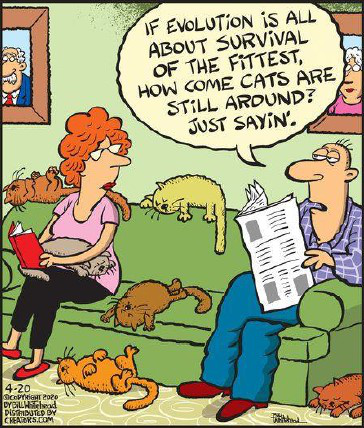
(Available at: https://br.pinterest.com)
Readers are led to infer the feelings and questionings posed as they analyse an image. Having as references, the image and the text clues in “If evolution is all about survival of the fittest, how come cats are still around? Just sayin’” we can assure that irony is built on the:
Provas

Examine the sentences with regards to comma use/absence.
I. Where she is it doesn’t matter.
II. The driver in the Ferrari, was running at unbelievable speed.
III. Laura enjoys watching movies that employ lots of special effects.
IV. Watching Star Wars, which has lots of special effects, is my favorite thing to do.
V. After we finished dinner we went for a walk together.
The consistent answer is:
Provas
Read the text to answer.
Dictionary:
1. a book that contains a list of words in alphabetical order and explains their meanings, or gives a word for them in another language; na electronic product giving similar information on a computer, smartphone, etc.
2. a book that gives information about a particular subject, in which the entries (words or phrases) are given in alphabetical order, or a similar electronic product.
3. a list of words in electronic form that is used by a computer or smartphone, for example, in a program that checks your spelling when you type.
4. Encyclopedic (dictionary): dictionary that, in addition to the common words of a language, contains proper names of prominent characters, events, places, etc.
5. Historical (dictionary): dictionary that aspires to contain all the words of a language that exist and have existed, as well as the variants that they present.
6. Ideological (dictionary): dictionary that associates and orders the words conceptually.
(Available at: https://englopedia.com. Adapted.)
The use to which language is put, rather than the particular grammar form it takes, constructs language functions. Language is employed in order to fulfill purposes and each one of these purposes can be known as a language function. Regarding the text above, which language function does it display?
Provas
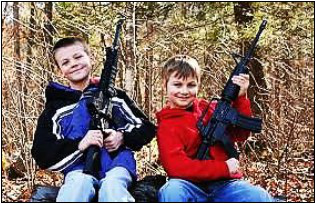
Under no circumstances consider such an image usual.
(Available at:https://gunsmagazine.com)
Fill in the blank above with the appropriate verb form.
Provas
Sign in a roadside eating place:
SOME PAY BEFORE DUE
SOME PAY WHEN DUE
SOME PAY WHEN PAST DUE
SOME NEVER DO
HOW DO YOU DO?
Referenciation processes introduce in texts new bodies or referents, being essential in establishing text cohesion. DO in the segment “Some never do” refers to:
Provas
Text I
It is very likely you are eating foods and food products that are made with ingredients that come from GMO crops. Many GMO crops are used to make ingredients that Americans eat such as cornstarch, corn syrup, corn oil, soybean oil, canola oil, or granulated sugar. A few fresh fruits and vegetables are available in GMO varieties, including potatoes, summer squash, apples, and papayas. To make it easier for consumers to know if the foods they eat contain GMO ingredients, the U.S. Department of Agriculture maintains a list of bioengineered foods available throughout the world. When you hear the term “GMO” you probably think of food. However, genetic engineering, which is the process used to create GMOs, was first used to make human insulin, a medicine used to treat diabetes.
Text II
More than 95% of animals used for meat and dairy in the United States eat GMO crops. Independent studies show that there is no difference in how GMO and non-GMO foods affect the health and safety of animals. The DNA in the GMO food does not transfer to the animal that eats it. GMOs are also used in the textile industry. Some GMO cotton plants are used to create cotton fiber that is then used to make fabric for clothing and other materials. Researchers are also studying the use of monoclonal antibodies produced in GMO tobacco plants as a potential drug treatment to combat Ebola. In fact, vaccines derived from GMO techniques are already preventing a range of diseases including hepatitis A and B, diphtheria, tetanus, pertussis and pólio.
(GMO – Genetically Modified Organisms. Available at: https://www.fda.gov/food/agricultural-biotechnology. Adapted.)
The common theme which is central to both of the texts is:
Provas
Read the sentences to answer.
1. The rain did damage around town.
2. I fully understand your point.
4. 3-I firmly believe that he’s feeling guilty.
5. Unfortunately she’s a heavy drinker.
6. Meg is a very devoted friend.
7. This job is a golden opportunity for him.
8. They changed their mind about going.
9. The doctor ordered him to take regular exercise.
A word or phrase that is often used with another word or phrase, in a way that sounds correct to people who have spoken the language all their lives, but might not be expected from the meaning is a/an:
Provas
Read the dialogue to answer.
A: Why did the teacher call off the test?
B: Looks like someone got a copy of the test and posted it.
A: No kidding! I hope this jerk doesn’t get away with it. The school loses face when something like that happens.
B: So do we... Look, if there’s no test, how about hanging around the mall?
A: Fine with me, but I’m broke, ran out of my allowance already and the month is at the beginning.
B: Then why don’t we go to my place and sniff around the test’s posting origin. We may run into some useful stuff.
A: Play virtual detective? Way to go!
While working with the text and focusing the usage situation of: call off, no kidding, jerk, get away with, loses face, hanging around, ran out of, sniff around, run into, stuff, and way to go, which micro ability of speech, part of sociolinguistic competence, is being explored?
Provas
Read the description of an oral practice activity to answer.
The teacher tells students they will train how to convey meaning by means of intonation. First he/she reads pairs of sentences aloud; the students follow the teacher’s reading. Next, the teacher delivers students handouts containing the pairs of sentences they have just heard, and gets them oriented to repeat the sentences that he/she will read aloud again, pausing after each sentence to give students the opportunity to carry out choir repetition __ students are instructed to replicate the teacher’s intonation since the words’ pronunciation is already known and has been practiced in previous oral exercises. After this step is repeated several times and performed satisfactory, the teacher will ask individual students to read the sentences, he/she will ellicit doubts they might have, and also explain the exact meaning conveyed by intonation in each utterance.
The handout sentences
1.A – The meeting is at four, isn’t it? (using a rising intonation in the question tag)
1.B – The meeting is at four, isn’t it? (using a falling intonation in the question tag)
2.A – Our guests will be coming soon, won’t they? (using a rising intonation in the question tag)
2.B – Our guests will be coming soon, won’t they? (using a falling intonation in the question tag)
3.A – You like sea food, don’t you? (using a rising intonation in the question tag)
3.B – You like sea food, don’t you? (using a falling intonation in the question tag)
4.A – The Bronson’s have been traveling for over a month, haven’t they? (using a rising intonation in the question tag)
4.B – The Bronson’s have been traveling for over a month, haven’t they? (using a falling intonation in the question tag)
5.A – I’m late, aren’t I? (using a rising intonation in the question tag)
5.B – I’m late, aren’t I? (using a falling intonation in the question tag)
Mark the option which suits the meaning of the rising intonation practiced when uttering the question tags.
Provas
The ed added at the end of verbs can be a trick subject when it comes to proper pronunciation. In that respect, the rationale which stands for the selection of words to form the sequence that follows is:
Concealed – Used – Bathed – Echoed – Robbed – Claimed – Bragged
Provas
Caderno Container