Foram encontradas 70 questões.
A figura a seguir representa um prisma reto com aresta lateral de 10 m. Sua base é um trapézio com três lados medindo 3 m e o quarto lado medindo 6 m.
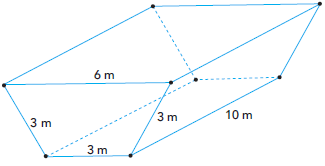
O volume do prisma, em m3, é igual a:
Provas

A sequência \( (a_n)=(0,0,5,5,0,...) \), em que \( n ∈ \mathbb{N} \), é definida por:
\( \begin{cases}a_1=a_2=0 \\a_3=5 \\a_n=x\, \text{o}\,\text{algarismo}\,\text{da}\,\text{unidade}\,\text{simples}\,\text{da}\,\text{soma}\,a_{n-1}+a_{n-2}+a_{n-3} \end{cases} \)
A soma dos 100 primeiros elementos da sequência \( (a_n) \) é igual a:
Provas
THE BENEFITS OF SLOWING DOWN
Hustle culture uses speed as a measure of performance. How fast can you ship a new feature? How many prospective clients can you call in an hour? How much of your day can you devote to work? If you’re not fast, are you even being productive? This harmful mindset results in burnout, poor decision-making and bad communication.
It may seem counterintuitive, but slowing down can be a faster way to achieve your goals. Fighting our urge to live and work faster can lead to clearer thinking, deeper connections and better mental health. The illusory imperative to keep up with everyone else is hurting us. Faster is not always better – far from it. By slowing down, you can build three key pillars to rely on in your life and work.
When we focus on speed, we may blindly follow a path that may not be the most efficient one to reach our goals – whether it’s a path dictated by others, or one that seems the most obvious. Slowing down allows us to be more intentional when making decisions and executing our plans.
Being fast allows us to do more. But “doing more” does not equal “doing what’s best”. Doing things slower means we can achieve a substantial increase in positive results, and even sometimes in the experience itself. Would you design a more polished feature if you had two days, or if you had two weeks? Would you enjoy a landscape better if you are driving over the speed limit, or if you are taking a leisurely walk? Would you learn more about a friend if you had a quick chat or a long conversation? Of course, we may not always have the luxury of slowness, but we should make a conscious effort to question artificial time constraints.
Consistent effort over time is more sustainable than pushing your limits to work as fast as possible. To do our best work, we need mental downtime, space for self-reflection, and a realistic schedule we can actually keep up with.
Overall, slowing down will help you make better decisions, connect deeper with people, have more meaningful experiences, all while improving your mental well-being by avoiding burnout. You may go slower, but you will go further.
Whatever area of your life you are targeting, making space for self-reflection is crucial. Helpful methods to slow down include journaling, meditation and taking breaks. Speed may sometimes be a goal in and of itself, but it should be an intentional goal rather than an automatic need to “keep up” with others.
An easy trick to slow down is to ask “Why the rush?” and to take a step back. Is speed really adding to the quality of the output?
ANNE-LAURE LE CUNFF Adaptado de nesslabs.com.
Helpful methods to slow down include journaling,
The underlined word may be substituted, without significant change in meaning, by the words below:
Provas
THE BENEFITS OF SLOWING DOWN
Hustle culture uses speed as a measure of performance. How fast can you ship a new feature? How many prospective clients can you call in an hour? How much of your day can you devote to work? If you’re not fast, are you even being productive? This harmful mindset results in burnout, poor decision-making and bad communication.
It may seem counterintuitive, but slowing down can be a faster way to achieve your goals. Fighting our urge to live and work faster can lead to clearer thinking, deeper connections and better mental health. The illusory imperative to keep up with everyone else is hurting us. Faster is not always better – far from it. By slowing down, you can build three key pillars to rely on in your life and work.
When we focus on speed, we may blindly follow a path that may not be the most efficient one to reach our goals – whether it’s a path dictated by others, or one that seems the most obvious. Slowing down allows us to be more intentional when making decisions and executing our plans.
Being fast allows us to do more. But “doing more” does not equal “doing what’s best”. Doing things slower means we can achieve a substantial increase in positive results, and even sometimes in the experience itself. Would you design a more polished feature if you had two days, or if you had two weeks? Would you enjoy a landscape better if you are driving over the speed limit, or if you are taking a leisurely walk? Would you learn more about a friend if you had a quick chat or a long conversation? Of course, we may not always have the luxury of slowness, but we should make a conscious effort to question artificial time constraints.
Consistent effort over time is more sustainable than pushing your limits to work as fast as possible. To do our best work, we need mental downtime, space for self-reflection, and a realistic schedule we can actually keep up with.
Overall, slowing down will help you make better decisions, connect deeper with people, have more meaningful experiences, all while improving your mental well-being by avoiding burnout. You may go slower, but you will go further.
Whatever area of your life you are targeting, making space for self-reflection is crucial. Helpful methods to slow down include journaling, meditation and taking breaks. Speed may sometimes be a goal in and of itself, but it should be an intentional goal rather than an automatic need to “keep up” with others.
An easy trick to slow down is to ask “Why the rush?” and to take a step back. Is speed really adding to the quality of the output?
ANNE-LAURE LE CUNFF Adaptado de nesslabs.com.
In the second paragraph, the author mentions three principles we can count on in our life and work. Each is presented in a separate paragraph (paragraphs 3, 4 and 5).
The words that best represent the topic of each of the three paragraphs, respectively, are:
Provas
THE BENEFITS OF SLOWING DOWN
Hustle culture uses speed as a measure of performanceA). How fast can you ship a new feature? How many prospective clients can you call in an hour? How much of your day can you devote to work? If you’re not fast, are you even being productive? This harmful mindset results in burnoutB), poor decision-making and bad communication.
It may seem counterintuitive, but slowing down can be a faster way to achieve your goals. Fighting our urge to live and work faster can lead to clearer thinking, deeper connections and better mental health. The illusory imperative to keep up with everyone else is hurting us. Faster is not always better – far from it. By slowing down, you can build three key pillars to rely on in your life and work.
When we focus on speed, we may blindly follow a path that may not be the most efficient one to reach our goals – whether it’s a path dictated by others, or one that seems the most obvious. Slowing down allows us to be more intentional when making decisions and executing our plans.
Being fast allows us to do more. But “doing more” does not equal “doing what’s best”. Doing things slower means we can achieve a substantial increase in positive results, and even sometimes in the experience itself. Would you design a more polished feature if you had two days, or if you had two weeks? Would you enjoy a landscape better if you are driving over the speed limit, or if you are taking a leisurely walk? Would you learn more about a friend if you had a quick chat or a long conversation? Of course, we may not always have the luxury of slownessC), but we should make a conscious effort to question artificial time constraints.
Consistent effort over time is more sustainable than pushing your limits to work as fast as possible. To do our best work, we need mental downtime, space for self-reflection, and a realistic schedule we can actually keep up with.
Overall, slowing down will help you make better decisions, connect deeper with people, have more meaningful experiences, all while improving your mental well-being by avoiding burnout. You may go slower, but you will go furtherD).
Whatever area of your life you are targeting, making space for self-reflection is crucial. Helpful methods to slow down include journaling, meditation and taking breaks. Speed may sometimes be a goal in and of itself, but it should be an intentional goal rather than an automatic need to “keep up” with others.
An easy trick to slow down is to ask “Why the rush?” and to take a step back. Is speed really adding to the quality of the output?
ANNE-LAURE LE CUNFF Adaptado de nesslabs.com.
It may seem counterintuitive,
The pronoun it refers to a certain idea present in the text.
This idea is found in the following fragment:
Provas
THE BENEFITS OF SLOWING DOWN
Hustle culture uses speed as a measure of performance. How fast can you ship a new feature? How many prospective clients can you call in an hour? How much of your day can you devote to work? If you’re not fast, are you even being productive? This harmful mindset results in burnout, poor decision-making and bad communication.
It may seem counterintuitive, but slowing down can be a faster way to achieve your goals. Fighting our urge to live and work faster can lead to clearer thinking, deeper connections and better mental health. The illusory imperative to keep up with everyone else is hurting us. Faster is not always better – far from it. By slowing down, you can build three key pillars to rely on in your life and work.
When we focus on speed, we may blindly follow a path that may not be the most efficient one to reach our goals – whether it’s a path dictated by others, or one that seems the most obvious. Slowing down allows us to be more intentional when making decisions and executing our plans.
Being fast allows us to do more. But “doing more” does not equal “doing what’s best”. Doing things slower means we can achieve a substantial increase in positive results, and even sometimes in the experience itself. Would you design a more polished feature if you had two days, or if you had two weeks? Would you enjoy a landscape better if you are driving over the speed limit, or if you are taking a leisurely walk? Would you learn more about a friend if you had a quick chat or a long conversation? Of course, we may not always have the luxury of slowness, but we should make a conscious effort to question artificial time constraints.
Consistent effort over time is more sustainable than pushing your limits to work as fast as possible. To do our best work, we need mental downtime, space for self-reflection, and a realistic schedule we can actually keep up with.
Overall, slowing down will help you make better decisions, connect deeper with people, have more meaningful experiences, all while improving your mental well-being by avoiding burnout. You may go slower, but you will go further.
Whatever area of your life you are targeting, making space for self-reflection is crucial. Helpful methods to slow down include journaling, meditation and taking breaks. Speed may sometimes be a goal in and of itself, but it should be an intentional goal rather than an automatic need to “keep up” with others.
An easy trick to slow down is to ask “Why the rush?” and to take a step back. Is speed really adding to the quality of the output?
ANNE-LAURE LE CUNFF Adaptado de nesslabs.com.
This harmful mindset results in burnout, poor decision-making and bad communication.
The sentence above lists some harmful mental attitudes that result in using speed as a measure of performance.
Besides these, another result of hustle culture is the one below:
Provas
THE BENEFITS OF SLOWING DOWN
Hustle culture uses speed as a measure of performance. How fast can you ship a new feature? How many prospective clients can you call in an hour? How much of your day can you devote to work? If you’re not fast, are you even being productive? This harmful mindset results in burnout, poor decision-making and bad communication.
It may seem counterintuitive, but slowing down can be a faster way to achieve your goals. Fighting our urge to live and work faster can lead to clearer thinking, deeper connections and better mental health. The illusory imperative to keep up with everyone else is hurting us. Faster is not always better – far from it. By slowing down, you can build three key pillars to rely on in your life and work.
When we focus on speed, we may blindly follow a path that may not be the most efficient one to reach our goals – whether it’s a path dictated by others, or one that seems the most obvious. Slowing down allows us to be more intentional when making decisions and executing our plans.
Being fast allows us to do more. But “doing more” does not equal “doing what’s best”. Doing things slower means we can achieve a substantial increase in positive results, and even sometimes in the experience itself. Would you design a more polished feature if you had two days, or if you had two weeks? Would you enjoy a landscape better if you are driving over the speed limit, or if you are taking a leisurely walk? Would you learn more about a friend if you had a quick chat or a long conversation? Of course, we may not always have the luxury of slowness, but we should make a conscious effort to question artificial time constraints.
Consistent effort over time is more sustainable than pushing your limits to work as fast as possible. To do our best work, we need mental downtime, space for self-reflection, and a realistic schedule we can actually keep up with.
Overall, slowing down will help you make better decisions, connect deeper with people, have more meaningful experiences, all while improving your mental well-being by avoiding burnout. You may go slower, but you will go further.
Whatever area of your life you are targeting, making space for self-reflection is crucial. Helpful methods to slow down include journaling, meditation and taking breaks. Speed may sometimes be a goal in and of itself, but it should be an intentional goal rather than an automatic need to “keep up” with others.
An easy trick to slow down is to ask “Why the rush?” and to take a step back. Is speed really adding to the quality of the output?
ANNE-LAURE LE CUNFF Adaptado de nesslabs.com.
The author presents a series of questions in the first paragraph.
These questions are used with the following purpose:
Provas
POUR REGAGNER LE TEMPS PERDU
Pour ceux qui y parviennent, l’été est l’occasion de délaisser ses doudous du quotidien, montres et téléphones portables. Le temps s’étire, l’horloge ne dicte plus l’agenda. Ouf ! On profite de l’accalmie pour se reposer et dresser un éventail de solutions afin de ralentir le rythme. Car le sentiment de ne pas maîtriser le tempo de sa vie est plus que jamais partagé dans notre société. Pas le temps, tout va trop vite…
Huit personnes sur dix souhaitent ralentir leur rythme de vie, la moitié considérant qu’elles manquent de temps, selon l’Observatoire société et consommation qui a réalisé une enquête en 2016 sur près de 12000 sondés, dans six pays industrialisés. “Tout le monde se plaint de cet emballement et tout le monde consent à en être victime!”, fait remarquer Gilles Vernet, ancien opérateur de marchés financiers, devenu professeur des écoles et auteur du documentaire “Tout s’accélère”.
D’autres statistiques illustrent la cadence infernale de notre société, comme celles sur l’évolution depuis cinquante ans de la production, de la consommation, des émissions de carbone, de l’acidification des océans ou de la population. “Il ne peut pas y avoir de développement infini”, rappelle Gilles Vernet, qui pointe la responsabilité de la financiarisation à outrance, de la soumission au rythme des marchés et à leur trading haute fréquence.
Cette course folle en laisse beaucoup sur le bas-côté: “Nous sommes privilégiés, car la majorité de la population mondiale n’est pas concernée par la dictature de l’urgence et tente juste de survivre. C’est une des conséquences de l’accélération: elle creuse encore un peu plus les inégalités entre les riches et les pauvres”, déplore Jérôme Lèbre, directeur de programme au Collège international de philosophie de Paris. Il rappelle que, logiquement, grâce aux robots et aux algorithmes, l’homme devrait travailler moins: “À l’époque de Marx, la machine était dépendante des gestes de l’homme qui devait donc aller à sa vitesse… Aujourd’hui, c’est le contraire: en s’autonomisant, elle est censée lui faire gagner du temps”. Mais plus il a de temps et plus l’homme moderne l’occupe, en le mesurant toujours plus finement.
C’est la maladie de sa mère qui a poussé Gilles Vernet, disciple du sociologue allemand Hartmut Rosa, qui combat “l’accélération compulsive”, à se reconvertir, au début des années 2000: “Je voulais profiter de nos derniers moments. Ma vie d’opérateur était absurde, il fallait trouver une occupation en harmonie avec les circonstances. Alors que sur les marchés j’étais l’esclave du temps, j’en suis presque devenu le maître aujourd’hui”. Ainsi, avec ses élèves, il commence toujours la journée par cinq minutes de respirations profondes, “pour faire le vide, descendre et reprendre conscience”. À l’image du mouvement slow qui prône un ralentissement global de nos modes de vie, pour en profiter plutôt que de courir après.
PHILIPPE SALVADOR Adaptado de lejournaltoulousain.fr.
pour en profiter plutôt que de courir après.
Le pronom dans le fragment ci-dessus reprend le mot suivant:
Provas
POUR REGAGNER LE TEMPS PERDU
Pour ceux qui y parviennent, l’été est l’occasion de délaisser ses doudous du quotidien, montres et téléphones portables. Le temps s’étire, l’horloge ne dicte plus l’agenda. Ouf ! On profite de l’accalmie pour se reposer et dresser un éventail de solutions afin de ralentir le rythme. Car le sentiment de ne pas maîtriser le tempo de sa vie est plus que jamais partagé dans notre société. Pas le temps, tout va trop vite…
Huit personnes sur dix souhaitent ralentir leur rythme de vie, la moitié considérant qu’elles manquent de temps, selon l’Observatoire société et consommation qui a réalisé une enquête en 2016 sur près de 12000 sondés, dans six pays industrialisés. “Tout le monde se plaint de cet emballement et tout le monde consent à en être victime!”, fait remarquer Gilles Vernet, ancien opérateur de marchés financiers, devenu professeur des écoles et auteur du documentaire “Tout s’accélère”.
D’autres statistiques illustrent la cadence infernale de notre société, comme celles sur l’évolution depuis cinquante ans de la production, de la consommation, des émissions de carbone, de l’acidification des océans ou de la population. “Il ne peut pas y avoir de développement infini”, rappelle Gilles Vernet, qui pointe la responsabilité de la financiarisation à outrance, de la soumission au rythme des marchés et à leur trading haute fréquence.
Cette course folle en laisse beaucoup sur le bas-côté: “Nous sommes privilégiés, car la majorité de la population mondiale n’est pas concernée par la dictature de l’urgence et tente juste de survivre. C’est une des conséquences de l’accélération: elle creuse encore un peu plus les inégalités entre les riches et les pauvres”, déplore Jérôme Lèbre, directeur de programme au Collège international de philosophie de Paris. Il rappelle que, logiquement, grâce aux robots et aux algorithmes, l’homme devrait travailler moins: “À l’époque de Marx, la machine était dépendante des gestes de l’homme qui devait donc aller à sa vitesse… Aujourd’hui, c’est le contraire: en s’autonomisant, elle est censée lui faire gagner du temps”. Mais plus il a de temps et plus l’homme moderne l’occupe, en le mesurant toujours plus finement.
C’est la maladie de sa mère qui a poussé Gilles Vernet, disciple du sociologue allemand Hartmut Rosa, qui combat “l’accélération compulsive”, à se reconvertir, au début des années 2000: “Je voulais profiter de nos derniers moments. Ma vie d’opérateur était absurde, il fallait trouver une occupation en harmonie avec les circonstances. Alors que sur les marchés j’étais l’esclave du temps, j’en suis presque devenu le maître aujourd’hui”. Ainsi, avec ses élèves, il commence toujours la journée par cinq minutes de respirations profondes, “pour faire le vide, descendre et reprendre conscience”. À l’image du mouvement slow qui prône un ralentissement global de nos modes de vie, pour en profiter plutôt que de courir après.
PHILIPPE SALVADOR Adaptado de lejournaltoulousain.fr.
L’homme devrait travailler moins:
Dans l’affirmation, la forme du verbe devoir apporte le sens de:
Provas
POUR REGAGNER LE TEMPS PERDU
Pour ceux qui y parviennent, l’été est l’occasion de délaisser ses doudous du quotidien, montres et téléphones portables. Le temps s’étire, l’horloge ne dicte plus l’agenda. Ouf ! On profite de l’accalmie pour se reposer et dresser un éventail de solutions afin de ralentir le rythme. Car le sentiment de ne pas maîtriser le tempo de sa vie est plus que jamais partagé dans notre société. Pas le temps, tout va trop vite…
Huit personnes sur dix souhaitent ralentir leur rythme de vie, la moitié considérant qu’elles manquent de temps, selon l’Observatoire société et consommation qui a réalisé une enquête en 2016 sur près de 12000 sondés, dans six pays industrialisés. “Tout le monde se plaint de cet emballement et tout le monde consent à en être victime!”, fait remarquer Gilles Vernet, ancien opérateur de marchés financiers, devenu professeur des écoles et auteur du documentaire “Tout s’accélère”.
D’autres statistiques illustrent la cadence infernale de notre société, comme celles sur l’évolution depuis cinquante ans de la production, de la consommation, des émissions de carbone, de l’acidification des océans ou de la population. “Il ne peut pas y avoir de développement infini”, rappelle Gilles Vernet, qui pointe la responsabilité de la financiarisation à outranceA), de la soumission au rythme des marchés et à leur trading haute fréquence.
Cette course folle en laisse beaucoup sur le bas-côté: “Nous sommes privilégiés, car la majorité de la population mondiale n’est pas concernée par la dictature de l’urgenceB) et tente juste de survivre. C’est une des conséquences de l’accélérationC): elle creuse encore un peu plus les inégalités entre les riches et les pauvresD)”, déplore Jérôme Lèbre, directeur de programme au Collège international de philosophie de Paris. Il rappelle que, logiquement, grâce aux robots et aux algorithmes, l’homme devrait travailler moins: “À l’époque de Marx, la machine était dépendante des gestes de l’homme qui devait donc aller à sa vitesse… Aujourd’hui, c’est le contraire: en s’autonomisant, elle est censée lui faire gagner du temps”. Mais plus il a de temps et plus l’homme moderne l’occupe, en le mesurant toujours plus finement.
C’est la maladie de sa mère qui a poussé Gilles Vernet, disciple du sociologue allemand Hartmut Rosa, qui combat “l’accélération compulsive”, à se reconvertir, au début des années 2000: “Je voulais profiter de nos derniers moments. Ma vie d’opérateur était absurde, il fallait trouver une occupation en harmonie avec les circonstances. Alors que sur les marchés j’étais l’esclave du temps, j’en suis presque devenu le maître aujourd’hui”. Ainsi, avec ses élèves, il commence toujours la journée par cinq minutes de respirations profondes, “pour faire le vide, descendre et reprendre conscience”. À l’image du mouvement slow qui prône un ralentissement global de nos modes de vie, pour en profiter plutôt que de courir après.
PHILIPPE SALVADOR Adaptado de lejournaltoulousain.fr.
la cadence infernale de notre société,
Le fragment qui reprend la notion contenue dans l’expression ci-dessus c’est:
Provas
Caderno Container