Foram encontradas 50 questões.
A Lei nº 9.784 disciplina o processo administrativo no âmbito da Administração Pública Federal. Com base nela, considere as seguintes afirmativas:
1. Os atos do processo administrativo não dependem de forma determinada, exceto quando prevista em lei a exigência de forma.
2. Em situações normais e na ausência de previsão legal, os atos do processo devem ser praticados em 5 dias.
3. Salvo disposição legal específica, é de 15 dias o prazo para interposição de recurso administrativo.
4. É de 20 dias o prazo para julgamento de recurso administrativo, se não houver prazo diverso fixado em lei ou regulamento.
5. É de 15 dias o prazo para emissão de parecer por órgão consultivo, que obrigatoriamente deva ser ouvido, salvo disposição em contrário.
Assinale a alternativa correta.
Provas

O servidor público comete crime contra Administração Pública quando pratica condutas definidas no Código Penal Brasileiro como crime. A respeito do assunto, identifique as afirmativas a seguir como verdadeiras (V) ou falsas (F).
( ) Há crime de peculato quando o servidor se apropria de dinheiro que estava sob sua posse em razão do cargo que ocupa.
( ) Concussão ocorre quando o servidor, usando da influência de seu posto, recebe vantagem para si ou para outrem.
( ) Prevaricação é o crime que ocorre quando o servidor deixa de responsabilizar seu subordinado que cometeu infração no exercício do cargo.
Assinale a alternativa que apresenta a sequência correta, de cima para baixo.
Provas
- Agentes PúblicosCargos, Empregos e Funções PúblicasEstabilidade e Estágio Probatório
- Agentes PúblicosRegime de Previdência dos Servidores Públicos
- Lei 8.112/1990: RJUDos Direitos e Vantagens
Leia atentamente as afirmativas a seguir e, com base na Lei 8.112, assinale a alternativa correta.
Provas
- Agentes PúblicosCargos, Empregos e Funções PúblicasAcesso
- Agentes PúblicosCargos, Empregos e Funções PúblicasFormas de Provimento
- Lei 8.112/1990: RJU
Tendo por base as disposições da Lei 8.112, identifique as afirmativas a seguir como verdadeiras (V) ou falsas (F):
( ) São requisitos básicos para investidura em cargo público, entre outros, a nacionalidade brasileira, o gozo dos direitos políticos e idade mínima de 18 anos.
( ) São formas de provimento de cargo público: nomeação, promoção, readaptação, reversão, aproveitamento, reintegração e recondução.
( ) É de 30 dias o prazo para o servidor empossado em cargo público entrar em exercício, contados da data da posse.
( ) É de 30 dias o prazo para o ato da posse, contados da publicação do ato de provimento.
( ) O prazo para que o servidor entre em exercício poderá ser prorrogado, a pedido do servidor, por período não superior a 180 dias.
Assinale a alternativa que apresenta a sequência correta, de cima para baixo.
Provas
O texto a seguir é referência para as questões 14 e 15.
William Penn (1644-1718), founder of Pennsylvania. Son of an admiral, he was sent to a Puritan school and was expelled from Oxford as a dissenter in 1660. Sent to Ireland to manage the family estates, he regularly attended the Quaker meeting at Cork, and on his return to England he was twice imprisoned for proselytizing, but nonetheless retained connections with the court. In 1681, Charles II repaid a debt owed to Penn’s father by granting him a large province on the west bank of the Delaware river in North America. Penn drew up a frame of government providing for religious toleration in the new colony, which he named Pennsylvania. After he had supervised the building of Philadelphia (1682-4), he returned to England and, on James II’s accession, secured the release of some 1,200 Quaker prisoners. Out of favour after the Glorious Revolution, he returned to America in 1699, but financial mismanagement forced him to mortgage his rights as proprietor of the colony.
(Gardiner, J., & Wenborn, N. (eds.) (1995). The History Today Companion to British History. London: Collins & Brown.)
In 1681, Penn became the owner of Pennsylvania because:
Provas
O texto a seguir é referência para as questões 14 e 15.
William Penn (1644-1718), founder of Pennsylvania. Son of an admiral, he was sent to a Puritan school and was expelled from Oxford as a dissenter in 1660. Sent to Ireland to manage the family estates, he regularly attended the Quaker meeting at Cork, and on his return to England he was twice imprisoned for proselytizing, but nonetheless retained connections with the court. In 1681, Charles II repaid a debt owed to Penn’s father by granting him a large province on the west bank of the Delaware river in North America. Penn drew up a frame of government providing for religious toleration in the new colony, which he named Pennsylvania. After he had supervised the building of Philadelphia (1682-4), he returned to England and, on James II’s accession, secured the release of some 1,200 Quaker prisoners. Out of favour after the Glorious Revolution, he returned to America in 1699, but financial mismanagement forced him to mortgage his rights as proprietor of the colony.
(Gardiner, J., & Wenborn, N. (eds.) (1995). The History Today Companion to British History. London: Collins & Brown.)
Penn was imprisoned in England:
Provas
O texto a seguir é referência para as questões de 11 a 13.
We are accustomed to thinking of military success as determined by quality of weaponry, rather than by food supply. But a clear example of how improvements in food supply may decisively increase military success comes from the history of Maori New Zealand. The Maori are the Polynesian people who were the first to settle New Zealand. Traditionally, they fought frequent fierce wars against each other, but only against closely neighboring tribes. Those wars were limited by the modest productivity of their agriculture, whose staple crop was sweet potatoes. It was not possible to grow enough sweet potatoes to feed an army in the field for a long time or on distant marches. When Europeans arrived in New Zealand, they brought potatoes, which beginning around 1815 considerably increased Maori crop yields. Maori could now grow enough food to supply armies in the field for many weeks. The result was a 15-year period in Maori history, from 1818 until 1833, when Maori tribes that had acquired potatoes and guns from the English sent armies out on raids to attack tribes hundreds of miles away that had not yet acquired potatoes and guns. Thus, the potato’s productivity relieved previous limitations on Maori warfare, similar to the limitations that low-productivity corn agriculture imposed on Maya warfare.
(Diamond, J. (2006). Collapse. London: Penguin.)
Why does the text mention the Maya?
Provas
O texto a seguir é referência para as questões de 11 a 13.
We are accustomed to thinking of military success as determined by quality of weaponry, rather than by food supply. But a clear example of how improvements in food supply may decisively increase military success comes from the history of Maori New Zealand. The Maori are the Polynesian people who were the first to settle New Zealand. Traditionally, they fought frequent fierce wars against each other, but only against closely neighboring tribes. Those wars were limited by the modest productivity of their agriculture, whose staple crop was sweet potatoes. It was not possible to grow enough sweet potatoes to feed an army in the field for a long time or on distant marches. When Europeans arrived in New Zealand, they brought potatoes, which beginning around 1815 considerably increased Maori crop yields. Maori could now grow enough food to supply armies in the field for many weeks. The result was a 15-year period in Maori history, from 1818 until 1833, when Maori tribes that had acquired potatoes and guns from the English sent armies out on raids to attack tribes hundreds of miles away that had not yet acquired potatoes and guns. Thus, the potato’s productivity relieved previous limitations on Maori warfare, similar to the limitations that low-productivity corn agriculture imposed on Maya warfare.
(Diamond, J. (2006). Collapse. London: Penguin.)
Which of the following sentences is NOT true, according to the text?
Provas
O texto a seguir é referência para as questões de 11 a 13.
We are accustomed to thinking of military success as determined by quality of weaponry, rather than by food supply. But a clear example of how improvements in food supply may decisively increase military success comes from the history of Maori New Zealand. The Maori are the Polynesian people who were the first to settle New Zealand. Traditionally, they fought frequent fierce wars against each other, but only against closely neighboring tribes. Those wars were limited by the modest productivity of their agriculture, whose staple crop was sweet potatoes. It was not possible to grow enough sweet potatoes to feed an army in the field for a long time or on distant marches. When Europeans arrived in New Zealand, they brought potatoes, which beginning around 1815 considerably increased Maori crop yields. Maori could now grow enough food to supply armies in the field for many weeks. The result was a 15-year period in Maori history, from 1818 until 1833, when Maori tribes that had acquired potatoes and guns from the English sent armies out on raids to attack tribes hundreds of miles away that had not yet acquired potatoes and guns. Thus, the potato’s productivity relieved previous limitations on Maori warfare, similar to the limitations that low-productivity corn agriculture imposed on Maya warfare.
(Diamond, J. (2006). Collapse. London: Penguin.)
How did the arrival of Europeans change Maori warfare?
Provas
Considere a planilha abaixo e determine o valor da célula F2.
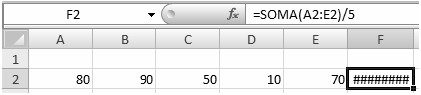
Assinale a alternativa correta.
Provas
Caderno Container