Foram encontradas 720 questões.
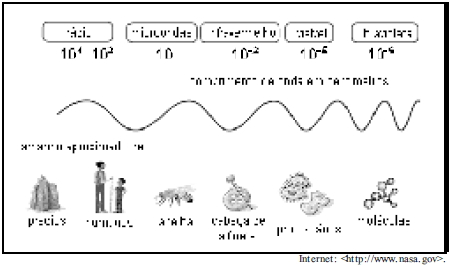
O espectro eletromagnético tem algumas propriedades que os economistas denominam de bem comum. Ele é um bem comum não usual porque não pode ser destruído pelo uso, ao contrário, por exemplo, do ferro, do petróleo ou do carvão. Quando um usuário deixa de utilizar uma parte do espectro, um outro pode fazê-lo. Contudo, o espectro é escasso, porque, para um dado momento e lugar, o uso de determinada faixa espectral pode eliminar qualquer possibilidade de sua utilização por outro usuário. Na figura acima, é feita uma comparação entre comprimento de onda, em faixas do espectro eletromagnético, e dimensões físicas de entes conhecidos.
Considerando as informações apresentadas, julgue o item a seguir.
Os sistemas de televisão por assinatura podem utilizar o meio guiado (cabo) e o não-guiado (espaço) para a transmissão da informação. No caso de sistema de TV via cabo, pode ser empregada uma estrutura híbrida composta de fibra óptica e de cabo coaxial, o que implica a utilização de duas faixas de freqüência do espectro eletromagnético para a transmissão da informação.
Provas

O espectro eletromagnético tem algumas propriedades que os economistas denominam de bem comum. Ele é um bem comum não usual porque não pode ser destruído pelo uso, ao contrário, por exemplo, do ferro, do petróleo ou do carvão. Quando um usuário deixa de utilizar uma parte do espectro, um outro pode fazê-lo. Contudo, o espectro é escasso, porque, para um dado momento e lugar, o uso de determinada faixa espectral pode eliminar qualquer possibilidade de sua utilização por outro usuário. Na figura acima, é feita uma comparação entre comprimento de onda, em faixas do espectro eletromagnético, e dimensões físicas de entes conhecidos.
Considerando as informações apresentadas, julgue o item a seguir.
O comprimento de onda na faixa de microondas é menor que o comprimento de onda na faixa de rádio. Por isso, os sinais em microondas atravessam com mais facilidade os obstáculos que os sinais de rádio. Esse é o motivo de os serviços de telecomunicação em microondas utilizarem potência de transmissão inferior à usada em sistemas na faixa de radiofreqüência.
Provas
Today, telecommunications technology affects lives to a greater degree than ever before. Communication has evolved over many years from the earliest attempts at verbal communication to the use of sophisticated technology to enhance the ability to communicate effectively with others. Every time a telephone call is made, a television program is watched, or a personal computer is used, benefits of telecommunication technologies are being received.
The concept of telecommunications is defined as the transmission of information from one location to another by electronic means. Life is changing constantly and ha s been changing faster due to the rapid advancements in telecommunication. Because of continuing attempts to find better and more efficient ways to communicate, the process of communication has steadily improved. Many of these improvements were made without the use of electronic technology.
Internet :
<http : //www.goldenessays.com/free_essa ys / 4 / technology / telecommunications-advances.shtml> (with adaptations) .
According to the text above, judge the following item.
The word “steadily” means inconsistently.
Provas
Today, telecommunications technology affects lives to a greater degree than ever before. Communication has evolved over many years from the earliest attempts at verbal communication to the use of sophisticated technology to enhance the ability to communicate effectively with others. Every time a telephone call is made, a television program is watched, or a personal computer is used, benefits of telecommunication technologies are being received.
The concept of telecommunications is defined as the transmission of information from one location to another by electronic means. Life is changing constantly and ha s been changing faster due to the rapid advancements in telecommunication. Because of continuing attempts to find better and more efficient ways to communicate, the process of communication has steadily improved. Many of these improvements were made without the use of electronic technology.
Internet :
<http : //www.goldenessays.com/free_essa ys / 4 / technology / telecommunications-advances.shtml> (with adaptations) .
According to the text above, judge the following item.
“without” is the opposite of with.
Provas
Today, telecommunications technology affects lives to a greater degree than ever before. Communication has evolved over many years from the earliest attempts at verbal communication to the use of sophisticated technology to enhance the ability to communicate effectively with others. Every time a telephone call is made, a television program is watched, or a personal computer is used, benefits of telecommunication technologies are being received.
The concept of telecommunications is defined as the transmission of information from one location to another by electronic means. Life is changing constantly and ha s been changing faster due to the rapid advancements in telecommunication. Because of continuing attempts to find better and more efficient ways to communicate, the process of communication has steadily improved. Many of these improvements were made without the use of electronic technology.
Internet :
<http : //www.goldenessays.com/free_essa ys / 4 / technology / telecommunications-advances.shtml> (with adaptations) .
According to the text above, judge the following item.
Telecommunications mean the use of other devices rather than the electronic ones.
Provas
Today, telecommunications technology affects lives to a greater degree than ever before. Communication has evolved over many years from the earliest attempts at verbal communication to the use of sophisticated technology to enhance the ability to communicate effectively with others. Every time a telephone call is made, a television program is watched, or a personal computer is used, benefits of telecommunication technologies are being received.
The concept of telecommunications is defined as the transmission of information from one location to another by electronic means. Life is changing constantly and ha s been changing faster due to the rapid advancements in telecommunication. Because of continuing attempts to find better and more efficient ways to communicate, the process of communication has steadily improved. Many of these improvements were made without the use of electronic technology.
Internet :
<http : //www.goldenessays.com/free_essa ys / 4 / technology / telecommunications-advances.shtml> (with adaptations) .
According to the text above, judge the following item.
Telecommunications technology has undergone a sudden evolution since its very beginning.
Provas
Today, telecommunications technology affects lives to a greater degree than ever before. Communication has evolved over many years from the earliest attempts at verbal communication to the use of sophisticated technology to enhance the ability to communicate effectively with others. Every time a telephone call is made, a television program is watched, or a personal computer is used, benefits of telecommunication technologies are being received.
The concept of telecommunications is defined as the transmission of information from one location to another by electronic means. Life is changing constantly and ha s been changing faster due to the rapid advancements in telecommunication. Because of continuing attempts to find better and more efficient ways to communicate, the process of communication has steadily improved. Many of these improvements were made without the use of electronic technology.
Internet :
<http : //www.goldenessays.com/free_essa ys / 4 / technology / telecommunications-advances.shtml> (with adaptations) .
According to the text above, judge the following item.
At present, telecommunications technology has greater influence on people’s lives than ever before.
Provas
With a population of approximately 170 million people, Brazil ranks as the sixth most populous nation in the world. In 2002, Brazil had the largest economy in Latin America, with a gross domestic product of US$ 407.7 billion and an annual growth rate of 2.1%. Brazil has the largest telecommunications sector in the region. In 2001, Brazil’s net revenue for telecommunications equipment and services was approximately US$ 31.5 billion. Services accounted for US$ 23.0 billion while telecommunications equipment and software suppliers generated the remaining US$ 8.5 billion.
In 1998, through twelve consecutive auctions, the Brazilian state-owned telecommunications system — TELEBRAS — was privatized. This included the sale of three holdings for fixed-line telephone systems, one long-distance carrier, and eight cellular telephone companies. The government’s proceeds from the sale were a total of US$ 8.8 billion, a premium of 63% over the minimum price set for the auction. Privatization of the telecommunications sector has brought Brazil unprecedented investments of approximately US$ 27.9 billion since the process began. Industry analysts predict an injection of an additional US$ 5.5 billion in 2003, mainly from carriers committed to introducing GSM se rvices in the country. The Brazilian communications regulator — ANATEL — predicts that total telecommunications investment in Brazil will reach US$ 64 billion by 2005.
Brazil joined the World Trade Organization (WTO) in 1995 but ha s yet to sign the WTO’s Information Technology Agreement that reduces tariffs on information and communications products to zero. The average import duty for te lecommunications equipment is 15% to 17%. There are no unbundling requirements for incumbent telecommunications s e rvic e providers in Brazil and telephone number portability does not exist.
Internet: <http://www.osec.doc.gov/obl/brazilmission2003/ Industry%20Telecommunications.htm> (with adaptations).
Based on the text above, it can be correctly concluded that
“predicts” means foretells.
Provas
With a population of approximately 170 million people, Brazil ranks as the sixth most populous nation in the world. In 2002, Brazil had the largest economy in Latin America, with a gross domestic product of US$ 407.7 billion and an annual growth rate of 2.1%. Brazil has the largest telecommunications sector in the region. In 2001, Brazil’s net revenue for telecommunications equipment and services was approximately US$ 31.5 billion. Services accounted for US$ 23.0 billion while telecommunications equipment and software suppliers generated the remaining US$ 8.5 billion.
In 1998, through twelve consecutive auctions, the Brazilian state-owned telecommunications system — TELEBRAS — was privatized. This included the sale of three holdings for fixed-line telephone systems, one long-distance carrier, and eight cellular telephone companies. The government’s proceeds from the sale were a total of US$ 8.8 billion, a premium of 63% over the minimum price set for the auction. Privatization of the telecommunications sector has brought Brazil unprecedented investments of approximately US$ 27.9 billion since the process began. Industry analysts predict an injection of an additional US$ 5.5 billion in 2003, mainly from carriers committed to introducing GSM se rvices in the country. The Brazilian communications regulator — ANATEL — predicts that total telecommunications investment in Brazil will reach US$ 64 billion by 2005.
Brazil joined the World Trade Organization (WTO) in 1995 but ha s yet to sign the WTO’s Information Technology Agreement that reduces tariffs on information and communications products to zero. The average import duty for te lecommunications equipment is 15% to 17%. There are no unbundling requirements for incumbent telecommunications s e rvic e providers in Brazil and telephone number portability does not exist.
Internet: <http://www.osec.doc.gov/obl/brazilmission2003/ Industry%20Telecommunications.htm> (with adaptations).
Based on the text above, it can be correctly concluded that
Brazil has already signed the WTO’s Information Technology Agreement.
Provas
With a population of approximately 170 million people, Brazil ranks as the sixth most populous nation in the world. In 2002, Brazil had the largest economy in Latin America, with a gross domestic product of US$ 407.7 billion and an annual growth rate of 2.1%. Brazil has the largest telecommunications sector in the region. In 2001, Brazil’s net revenue for telecommunications equipment and services was approximately US$ 31.5 billion. Services accounted for US$ 23.0 billion while telecommunications equipment and software suppliers generated the remaining US$ 8.5 billion.
In 1998, through twelve consecutive auctions, the Brazilian state-owned telecommunications system — TELEBRAS — was privatized. This included the sale of three holdings for fixed-line telephone systems, one long-distance carrier, and eight cellular telephone companies. The government’s proceeds from the sale were a total of US$ 8.8 billion, a premium of 63% over the minimum price set for the auction. Privatization of the telecommunications sector has brought Brazil unprecedented investments of approximately US$ 27.9 billion since the process began. Industry analysts predict an injection of an additional US$ 5.5 billion in 2003, mainly from carriers committed to introducing GSM se rvices in the country. The Brazilian communications regulator — ANATEL — predicts that total telecommunications investment in Brazil will reach US$ 64 billion by 2005.
Brazil joined the World Trade Organization (WTO) in 1995 but ha s yet to sign the WTO’s Information Technology Agreement that reduces tariffs on information and communications products to zero. The average import duty for te lecommunications equipment is 15% to 17%. There are no unbundling requirements for incumbent telecommunications s e rvic e providers in Brazil and telephone number portability does not exist.
Internet: <http://www.osec.doc.gov/obl/brazilmission2003/ Industry%20Telecommunications.htm> (with adaptations).
Based on the text above, it can be correctly concluded that
never before had Brazilian communications had so much investment.
Provas
Caderno Container