Foram encontradas 105 questões.
Provas

I - Verificar se a soma dos pesos de todos menos o peso do mais pesado não ultrapassa 3 kg.
II - Verificar se a soma dos pesos de metade deles não ultrapassa 1,5 kg.
III - Verificar se a soma dos pesos de metade deles mais o peso do mais pesado ultrapassa 1,5 kg.
É (São) eficaz(es) APENAS o(s) procedimento(s)
Provas
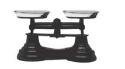
Utilizando uma balança de dois pratos, semelhante à da figura acima, o número mínimo de pesagens que deverão ser feitas para que se possa garantir que a bola que destoa quanto ao peso será identificada é
Provas
Provas
S: caso a declaração contenha um equívoco do ponto de vista da lógica verbal;
N: em caso contrário.
( ) Pretendendo acabar com as baratas que havia em sua casa, comprou remédio para insetos.
( ) De acordo com o calendário de datas festivas do Brasil, em novembro há um feriado.
( ) Sua vida mudou radicalmente; pode-se dizer que deu um giro de 360°.
A sequência correta das letras, de cima para baixo, é
Provas
Supondo que a afirmação do entrevistado seja verdadeira, a conclusão do entrevistador é
Provas
Analise as seguintes situações:
I - A ser mais alto do que B;
II - B ser mais alto do que A;
III - A e B serem a mesma pessoa.
É(São) possível(is) APENAS a(s) situação(ões)
Provas
 . O número de resultados possíveis para expressar, em
 , a medida da área do quadrado original é exatamente igual a
Provas
I - O Plano Plurianual deve definir as prioridades do governo durante o período que vai do primeiro ao quarto ano de um mandato presidencial.
II - As prioridades dispostas no Plano Plurianual são estabelecidas com base em Projeto de Lei Orçamentária Anual (LOA), anteriormente aprovado pelo Congresso Nacional.
III - A Lei Orçamentária autoriza as despesas, de acordo com a estimativa de receitas e a previsão de arrecadação, definindo que o Poder Executivo deve submeter ao Congresso Nacional projeto de lei de crédito adicional, caso necessite incorrer em despesas acima do limite que está previsto na LOA.
IV - A Lei de Diretrizes Orçamentárias (LDO) é uma lei ordinária, válida apenas para um exercício.
Estão corretas APENAS as afirmativas
Provas
Freedom of IMFormation
By Reza Moghadam
Posted on September 17, 2009 by iMFdirect
With the global financial crisis, the world is increasingly looking to the International Monetary Fund- not just for financing but as the global institution charged with overseeing members' economies and policies (what we call surveillance). It's easy to forget that only 10 years ago the Fund was a secretive institution. That's no longer the case. Communicating and engaging with the world at large is now a normal and essential part of the Fund's business.
The IMF today is a very open institution. The vast majority of our reports are published. The public can search the IMF's archives. And we are making lots of effort to reach out to external stakeholders.
The benefits of this increased transparency, both for the Fund's surveillance and lending activities, are indisputable. Transparency allows us to engage with the public and to build a broader understanding and support of what we do. It benefits the quality of our advice by subjecting our analysis to outside scrutiny. And more generally, it makes us more accountable for our advice and financial decisions. In all, it makes us a more effective and legitimate institution.
Frankly, the Fund cannot be a genuine leader on economic policy issues unless it is seen as transparent. We certainly would not have been able to achieve the major reforms of our lending frameworks and the increase in our financial resources had we not been seen as an open and transparent institution. Rightly, the public expects to know what we are up to.
At the same time, certain aspects of transparency remain controversial. Some believe that publication undermines candor in the reports, the frankness of discussions between staff and country authorities, and the Fund's role as trusted advisor.
Communicating and engaging with the world at large is now a normal and essential part of the Fund's business. We are gearing up to review the Fund's transparency policy, as part of our efforts to increase our effectiveness.
The IMF has come a long way over the last 10 years, and publication rates of reports are high. Raising them further is not the main issue, nor one that can easily be resolved without changes much of our membership would consider revolutionary (such as making publication mandatory). Rather, further efforts should focus on making progress on a broad front, on issues that may catch fewer headlines, but are nevertheless crucial:
- Reducing long publication lags. How can we simplify the cumbersome procedure for obtaining consent?
- Maintaining the integrity of reports. The IMF's analysis and advice must be, and be seen to be, convincing, candid, and independent. To this end, there is a long-standing and fundamental principle that Fund reports are not "negotiated" documents.
- Making the Fund's archives more accessible. The current setup for searching the archives-in particular the need to travel to Washington to gain full access to them-is outdated. We should also consider whether we can make some archived material available more quickly to the public.
http://blog-imfdirect.imf.org/2009/09/17/freedom-of-imformation/
The wordplay in the title refers to the fact that the
Provas
Caderno Container