Foram encontradas 196 questões.
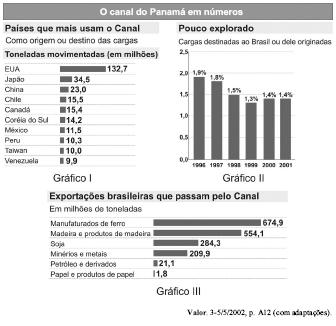
Com base nas informações acima, relativas ao canal do Panamá, julgue os itens seguintes.
Provas

Texto III – questões 16 e 17
1 Em 2001, o BB adotou medidas que conferem maior
transparência às decisões internas e às movimentações da
empresa no mercado bancário. Os ajustes patrimoniais
4 ocorridos em junho, o novo estatuto, aprovado pela
assembléia de acionistas em agosto, o aprimoramento do
processo decisório e o aperfeiçoamento do modelo de
7 negociação tornam muito mais ágeis as decisões e fortalecem
o compromisso da empresa com a ética e a transparência.
O lucro de R$ 1,082 bilhão no exercício, 11,1% maior que
10 o obtido em 2000, confirma o acerto das medidas
implementadas pelo banco ao longo de 2001, garantindo a
ampliação dos negócios e o aumento da lucratividade.
13 O BB encerrou o ano confirmando sua posição como o maior
banco do país, com ativos totais de R$ 165,1 bilhões,
R$ 61,4 bilhões de recursos administrados e R$ 40,2 bilhões
16 em operações de crédito. Com mais de R$ 117 bilhões
captados entre seus quase 14 milhões de clientes, que têm à
disposição mais de 8 mil pontos de atendimento no Brasil
19 e 31 no exterior, o BB encerrou o exercício mantendo sua
liderança no sistema financeiro nacional e seu compromisso
com a satisfação dos clientes e acionistas. Além disso,
22 permaneceu como o banco com maior presença na Internet
brasileira, com quatro milhões de clientes cadastrados e mais
de 18,4 milhões de transações realizadas, no mês de
25 dezembro, no portal www.bb.com.br.
Relatório do Banco do Brasil S.A. In: Correio Braziliense (com adaptações).
A partir do texto III, julgue os itens que se seguem.
Provas
- Interpretação de texto | Reading comprehension
- Gramática - Língua InglesaAdjetivos | AdjectivesComparativo e superlativo de adjetivos | Comparative and superlative
World Bank Brazil – country brief
1 With an estimated 167 million inhabitants, Brazil has the
largest population in Latin America and ranks sixth in the world. The
majority live in the south-central area, which includes industrial cities
4 such as São Paulo, Rio de Janeiro and Belo Horizonte. 80% of the
population now lives in urban areas. Rapid growth in the urban
population has aided economic development but also created serious
7 problems for major cities.
Brazil’s “miracle years” were in the late 1960s and early 1970s
when double digit-annual growth rates were recorded and the structure
10 of the economy underwent rapid change.
In the 1980s, however, Brazil’s economic performance was
poor in comparison with its potential. Annual Gross Domestic Product
13 (GDP) growth only averaged 1.5 percent over the period from 1980
to 1993. This reflected the economy’s inability to respond to
international events in the late 1970s and the 1980s: the second oil
16 shock; increase in international real interest rates; the Latin American
external debt crisis and the ensuing cutoff of foreign credit and foreign
direct investment. This lack of responsiveness reflected the largely
19 inward-looking policy orientation that had been in place since the
1960s.
Economic flexibility was further impaired by provisions of the
22 1988 Constitution, which introduced significant rigidities in budgeting
and public expenditure. An outcome of these pressures was a steady
rise in the rate of inflation, which reached monthly rates of 50% by the
25 middle of 1994.
Internet: <http://lnweb18.worldbank.org/Exter…/
abe36259ca656c4985256914005207e3?OpenDocumen> (with adaptations).
Considering text VII, judge the items below.
Provas
- Interpretação de texto | Reading comprehension
- Gramática - Língua InglesaAdjetivos | AdjectivesComparativo e superlativo de adjetivos | Comparative and superlative
World Bank Brazil – country brief
1 With an estimated 167 million inhabitants, Brazil has the
largest population in Latin America and ranks sixth in the world. The
majority live in the south-central area, which includes industrial cities
4 such as São Paulo, Rio de Janeiro and Belo Horizonte. 80% of the
population now lives in urban areas. Rapid growth in the urban
population has aided economic development but also created serious
7 problems for major cities.
Brazil’s “miracle years” were in the late 1960s and early 1970s
when double digit-annual growth rates were recorded and the structure
10 of the economy underwent rapid change.
In the 1980s, however, Brazil’s economic performance was
poor in comparison with its potential. Annual Gross Domestic Product
13 (GDP) growth only averaged 1.5 percent over the period from 1980
to 1993. This reflected the economy’s inability to respond to
international events in the late 1970s and the 1980s: the second oil
16 shock; increase in international real interest rates; the Latin American
external debt crisis and the ensuing cutoff of foreign credit and foreign
direct investment. This lack of responsiveness reflected the largely
19 inward-looking policy orientation that had been in place since the
1960s.
Economic flexibility was further impaired by provisions of the
22 1988 Constitution, which introduced significant rigidities in budgeting
and public expenditure. An outcome of these pressures was a steady
rise in the rate of inflation, which reached monthly rates of 50% by the
25 middle of 1994.
Internet: <http://lnweb18.worldbank.org/Exter…/
abe36259ca656c4985256914005207e3?OpenDocumen> (with adaptations).
The sentence "Rapid growth in the urban population has aided economic development but also created serious problems for major cities" (R.5-7) means the same as
Provas
World Bank Brazil – country brief
1 With an estimated 167 million inhabitants, Brazil has the
largest population in Latin America and ranks sixth in the world. The
majority live in the south-central area, which includes industrial cities
4 such as São Paulo, Rio de Janeiro and Belo Horizonte. 80% of the
population now lives in urban areas. Rapid growth in the urban
population has aided economic development but also created serious
7 problems for major cities.
Brazil’s “miracle years” were in the late 1960s and early 1970s
when double digit-annual growth rates were recorded and the structure
10 of the economy underwent rapid change.
In the 1980s, however, Brazil’s economic performance was
poor in comparison with its potential. Annual Gross Domestic Product
13 (GDP) growth only averaged 1.5 percent over the period from 1980
to 1993. This reflected the economy’s inability to respond to
international events in the late 1970s and the 1980s: the second oil
16 shock; increase in international real interest rates; the Latin American
external debt crisis and the ensuing cutoff of foreign credit and foreign
direct investment. This lack of responsiveness reflected the largely
19 inward-looking policy orientation that had been in place since the
1960s.
Economic flexibility was further impaired by provisions of the
22 1988 Constitution, which introduced significant rigidities in budgeting
and public expenditure. An outcome of these pressures was a steady
rise in the rate of inflation, which reached monthly rates of 50% by the
25 middle of 1994.
Internet: <http://lnweb18.worldbank.org/Exter…/
abe36259ca656c4985256914005207e3?OpenDocumen> (with adaptations).
Considering text VII, judge the items below.
Provas
World Bank Brazil – country brief
1 With an estimated 167 million inhabitants, Brazil has the
largest population in Latin America and ranks sixth in the world. The
majority live in the south-central area, which includes industrial cities
4 such as São Paulo, Rio de Janeiro and Belo Horizonte. 80% of the
population now lives in urban areas. Rapid growth in the urban
population has aided economic development but also created serious
7 problems for major cities.
Brazil’s “miracle years” were in the late 1960s and early 1970s
when double digit-annual growth rates were recorded and the structure
10 of the economy underwent rapid change.
In the 1980s, however, Brazil’s economic performance was
poor in comparison with its potential. Annual Gross Domestic Product
13 (GDP) growth only averaged 1.5 percent over the period from 1980
to 1993. This reflected the economy’s inability to respond to
international events in the late 1970s and the 1980s: the second oil
16 shock; increase in international real interest rates; the Latin American
external debt crisis and the ensuing cutoff of foreign credit and foreign
direct investment. This lack of responsiveness reflected the largely
19 inward-looking policy orientation that had been in place since the
1960s.
Economic flexibility was further impaired by provisions of the
22 1988 Constitution, which introduced significant rigidities in budgeting
and public expenditure. An outcome of these pressures was a steady
rise in the rate of inflation, which reached monthly rates of 50% by the
25 middle of 1994.
Internet: <http://lnweb18.worldbank.org/Exter…/
abe36259ca656c4985256914005207e3?OpenDocumen> (with adaptations).
With the help of text VII, judge the following items.
Provas
World Bank Brazil – country brief
1 With an estimated 167 million inhabitants, Brazil has the
largest population in Latin America and ranks sixth in the world. The
majority live in the south-central area, which includes industrial cities
4 such as São Paulo, Rio de Janeiro and Belo Horizonte. 80% of the
population now lives in urban areas. Rapid growth in the urban
population has aided economic development but also created serious
7 problems for major cities.
Brazil’s “miracle years” were in the late 1960s and early 1970s
when double digit-annual growth rates were recorded and the structure
10 of the economy underwent rapid change.
In the 1980s, however, Brazil’s economic performance was
poor in comparison with its potential. Annual Gross Domestic Product
13 (GDP) growth only averaged 1.5 percent over the period from 1980
to 1993. This reflected the economy’s inability to respond to
international events in the late 1970s and the 1980s: the second oil
16 shock; increase in international real interest rates; the Latin American
external debt crisis and the ensuing cutoff of foreign credit and foreign
direct investment. This lack of responsiveness reflected the largely
19 inward-looking policy orientation that had been in place since the
1960s.
Economic flexibility was further impaired by provisions of the
22 1988 Constitution, which introduced significant rigidities in budgeting
and public expenditure. An outcome of these pressures was a steady
rise in the rate of inflation, which reached monthly rates of 50% by the
25 middle of 1994.
Internet: <http://lnweb18.worldbank.org/Exter…/
abe36259ca656c4985256914005207e3?OpenDocumen> (with adaptations).
The sentence "Rapid growth in the urban population has aided economic development but also created serious problems for major cities" (R.5-7) means the same as
Provas
World Bank Brazil – country brief
1 With an estimated 167 million inhabitants, Brazil has the
largest population in Latin America and ranks sixth in the world. The
majority live in the south-central area, which includes industrial cities
4 such as São Paulo, Rio de Janeiro and Belo Horizonte. 80% of the
population now lives in urban areas. Rapid growth in the urban
population has aided economic development but also created serious
7 problems for major cities.
Brazil’s “miracle years” were in the late 1960s and early 1970s
when double digit-annual growth rates were recorded and the structure
10 of the economy underwent rapid change.
In the 1980s, however, Brazil’s economic performance was
poor in comparison with its potential. Annual Gross Domestic Product
13 (GDP) growth only averaged 1.5 percent over the period from 1980
to 1993. This reflected the economy’s inability to respond to
international events in the late 1970s and the 1980s: the second oil
16 shock; increase in international real interest rates; the Latin American
external debt crisis and the ensuing cutoff of foreign credit and foreign
direct investment. This lack of responsiveness reflected the largely
19 inward-looking policy orientation that had been in place since the
1960s.
Economic flexibility was further impaired by provisions of the
22 1988 Constitution, which introduced significant rigidities in budgeting
and public expenditure. An outcome of these pressures was a steady
rise in the rate of inflation, which reached monthly rates of 50% by the
25 middle of 1994.
Internet: <http://lnweb18.worldbank.org/Exter…/
abe36259ca656c4985256914005207e3?OpenDocumen> (with adaptations).
With the help of text VII, judge the following items.
Provas
World Bank Brazil – country brief
1 With an estimated 167 million inhabitants, Brazil has the
largest population in Latin America and ranks sixth in the world. The
majority live in the south-central area, which includes industrial cities
4 such as São Paulo, Rio de Janeiro and Belo Horizonte. 80% of the
population now lives in urban areas. Rapid growth in the urban
population has aided economic development but also created serious
7 problems for major cities.
Brazil’s “miracle years” were in the late 1960s and early 1970s
when double digit-annual growth rates were recorded and the structure
10 of the economy underwent rapid change.
In the 1980s, however, Brazil’s economic performance was
poor in comparison with its potential. Annual Gross Domestic Product
13 (GDP) growth only averaged 1.5 percent over the period from 1980
to 1993. This reflected the economy’s inability to respond to
international events in the late 1970s and the 1980s: the second oil
16 shock; increase in international real interest rates; the Latin American
external debt crisis and the ensuing cutoff of foreign credit and foreign
direct investment. This lack of responsiveness reflected the largely
19 inward-looking policy orientation that had been in place since the
1960s.
Economic flexibility was further impaired by provisions of the
22 1988 Constitution, which introduced significant rigidities in budgeting
and public expenditure. An outcome of these pressures was a steady
rise in the rate of inflation, which reached monthly rates of 50% by the
25 middle of 1994.
Internet: <http://lnweb18.worldbank.org/Exter…/
abe36259ca656c4985256914005207e3?OpenDocumen> (with adaptations).
Considering text VII, judge the items below.
Provas
World Bank Brazil – country brief
1 With an estimated 167 million inhabitants, Brazil has the
largest population in Latin America and ranks sixth in the world. The
majority live in the south-central area, which includes industrial cities
4 such as São Paulo, Rio de Janeiro and Belo Horizonte. 80% of the
population now lives in urban areas. Rapid growth in the urban
population has aided economic development but also created serious
7 problems for major cities.
Brazil’s “miracle years” were in the late 1960s and early 1970s
when double digit-annual growth rates were recorded and the structure
10 of the economy underwent rapid change.
In the 1980s, however, Brazil’s economic performance was
poor in comparison with its potential. Annual Gross Domestic Product
13 (GDP) growth only averaged 1.5 percent over the period from 1980
to 1993. This reflected the economy’s inability to respond to
international events in the late 1970s and the 1980s: the second oil
16 shock; increase in international real interest rates; the Latin American
external debt crisis and the ensuing cutoff of foreign credit and foreign
direct investment. This lack of responsiveness reflected the largely
19 inward-looking policy orientation that had been in place since the
1960s.
Economic flexibility was further impaired by provisions of the
22 1988 Constitution, which introduced significant rigidities in budgeting
and public expenditure. An outcome of these pressures was a steady
rise in the rate of inflation, which reached monthly rates of 50% by the
25 middle of 1994.
Internet: <http://lnweb18.worldbank.org/Exter…/
abe36259ca656c4985256914005207e3?OpenDocumen> (with adaptations).
With the help of text VII, judge the following items.
Provas
Caderno Container