Magna Concursos

Foram encontradas 70 questões.

1319050 Ano: 2010
Disciplina: Comunicação Social
Banca: CESGRANRIO
Orgão: BR Distribuidora
Dentre as provas de impressão possíveis, a mais confiável, por se aproximar mais do impresso final, é a prova de
 

Provas

Questão presente nas seguintes provas

EM TORNO DO ESPAÇO PÚBLICO NO BRASIL

Estou no aeroporto de Salvador, na velha Bahia. São 8h25m de uma ensolarada manhã de sábado e eu aguardo o avião que vai me levar ao Rio de Janeiro e, de lá, para minha casa em Niterói.

Viajo relativamente leve: uma pasta com um livro e um computador no qual escrevo essas notas, mais um arquivo com o texto da conferência que proferi para um grupo de empresários americanos que excursionam aprendendo – como eles sempre fazem e nós, na nossa solene arrogância, abominamos – sobre o Brasil. Passei rapidamente pela segurança feita de funcionários locais que riam e trocavam piadas entre si e logo cheguei a um amplo saguão com aquelas poltronas de metal que acomodam o cidadão transformado em passageiro.

Busco um lugar, porque o relativamente leve começa a pesar nos meus ombros e logo observo algo notável: todos os assentos estão ocupados por pessoas e por suas malas ou pacotes.

Eu me explico: o sujeito senta num lugar e usa as outras cadeiras para colocar suas malas, pacotes, sacolas e embrulhos. Assim, cada indivíduo ocupa três cadeiras, em vez de uma, simultaneamente. Eu olho em volta e vejo que não há onde sentar! Meus companheiros de jornada e de saguão simplesmente não me veem e, acomodados como velhos nobres ou bispos baianos da boa era escravocrata, exprimem no rosto uma atitude indiferente bem apropriada com a posse abusiva daquilo que é definido como uma poltrona individual.

Não vejo em ninguém o menor mal-estar ou conflito entre estar só, mas ocupar três lugares, ou perceber que o espaço onde estamos, sendo de todos, teria que ser usado com maior consciência relativamente aos outros como iguais e não como inferiores que ficam sem onde sentar porque “eu cheguei primeiro e tenho o direito a mais cadeiras!”.

Trata-se, penso imediatamente, de uma ocupação “pessoal” e hierárquica do espaço, e não um estilo individual e cidadão de usá-lo. De tal sorte que o saguão desenhado para todos é apropriado por alguns como a sala de visitas de suas próprias casas, tudo acontecendo sem a menor consciência de que numa democracia até o espaço e o tempo devem ser usados democraticamente.

Bem na minha frente, num conjunto de assentos para três pessoas, duas moças dormem serenamente, ocupando o assento central com suas pernas e malas. Ao seu lado e, sem dúvida, imitando-as, uma jovem senhora com ares de dona Carlota Joaquina está sentada na cadeira central e ocupa a cadeira do seu lado direito com uma sacola de grife na qual guarda suas compras. Num outro conjunto de assentos mais distantes, nos outros portões de embarque, observo o mesmo padrão. Ninguém se lembra de ocupar apenas um lugar. Todos estão sentados em dois ou três assentos de uma só vez! Pouco se lixam para uma senhora que chega com um bebê no colo, acompanhada de sua velha mãe.

Digo para mim mesmo: eis um fato do cotidiano brasileiro que pipoca de formas diferentes em vários domínios de nossa vida social. Pois não é assim que entramos nos restaurantes quando estamos em grupo e logo passamos a ser “donos” de tudo? E não é do mesmo modo que ocupamos praças, praias e passagens? (...)

Temos uma verdadeira alergia à impessoalidade que obriga a enxergar o outro. Pois levar a sério o impessoal significa suspender nossos interesses pessoais, dando atenção aos outros como iguais, como deveria ocorrer neste amplo salão no qual metade dos assentos não está ocupada por pessoas, mas por pertences de passageiros sentados a seu lado.

Finalmente observo que quem não tem onde sentar sente-se constrangido em solicitar a vaga ocupada pela mala ou embrulho de quem chegou primeiro. Trata-se de um modo hierarquizado de construir o espaço público e, pelo visto, não vamos nos livrar dele tão cedo. Afinal, os incomodados que se mudem!

DA MATTA, Roberto. O Globo, 24. mar. 2010. (Excerto).

A comparação entre as pessoas no saguão e os “...velhos nobres ou bispos baianos da boa era escravocrata,” se baseia na seguinte atitude:


Provas

Questão presente nas seguintes provas
Fossil Fuels
The twentieth century has been called the hydrocarbon century due to the abundance of fossil fuels, and their contribution to human development. Fossil fuels were formed over millions of years by the decomposing remains of plants and animals under immense heat and pressure. This process resulted in energy laden fuels coal, petroleum, and natural gas, which together have generated most of the energy consumed globally for over a century, paving the way for continued advancement and new inventions.
Fossil fuels are currently the most economically available source of power for both personal and commercial uses. Petroleum fuels our cars and thirst for plastics, while natural gas and coal heat and electrify our homes. Mass transportation is also largely propelled by fossil fuels. In 2005, more than 3/4(a) of total world energy consumption was through the use of fossil fuels. Petroleum led with over 43.4 percent(b) of the world’s total energy consumption, followed by natural gas (15.6 percent)(c) and coal (8.3 percent)(d). North America is the largest consumer of fossil fuels, utilizing nearly 25 percent(e) of the world’s resources.
Long thought to be inexhaustible, fossil fuels have been used extensively since the Industrial Revolution. However, many believe that the world is using fossil fuels at an unsustainable rate. Some experts believe that the world has already reached its peak for oil extraction and production, and that it is only a matter of time before natural gas and coal follow suit. These near-term concerns about oil supply have led to increasing focus on, and exploration of, alternative sources of petroleum, such as in tar sands and oil shale.
To release their stored energy, fossil fuels must be burned. It is during this combustion process that a variety of emissions and particulates, including ash, are released into the atmosphere. Primary releases are sulfur, nitrogen, and carbon, which can be harmful to the environment. They can combine with water vapor in the air to form acidic compounds that create acid rain, and burning fossil fuels releases carbon dioxide, a greenhouse gas that scientists believe is key factor in global climate change.
There are also environmental risks associated with extracting, transporting, and utilizing fossil fuels. Mining for coal and drilling for oil are especially hazardous because the digging of massive mines and wells can change the surrounding landscapes and bring massive amounts of salt water to the surface which can damage nearby ecosystems without proper treatment and sequestration. Natural gas extraction is somewhat safer, but can also be hazardous. While there are regulations in place that attempts to minimize the risks, it is impossible to eliminate them completely. However, regulation is not sufficient; there must be continued research in developing new technologies for both fossil fuel and renewable energy, in addition to increasing conservation measures. Environmental Literacy Council
http://www.enviroliteracy.org/subcategory.php/21.html, access on March 14th, 2010.
Concerning the figures relative to the year 2005, as mentioned in paragraph 2.
 

Provas

Questão presente nas seguintes provas
Fossil Fuels
The twentieth century has been called the hydrocarbon century due to the abundance of fossil fuels, and their contribution to human development. Fossil fuels were formed over millions of years by the decomposing remains of plants and animals under immense heat and pressure. This process resulted in energy laden fuels coal, petroleum, and natural gas, which together have generated most of the energy consumed globally for over a century, paving the way for continued advancement and new inventions.
Fossil fuels are currently the most economically available source of power for both personal and commercial uses. Petroleum fuels our cars and thirst for plastics, while natural gas and coal heat and electrify our homes. Mass transportation is also largely propelled by fossil fuels. In 2005, more than 3/4 of total world energy consumption was through the use of fossil fuels. Petroleum led with over 43.4 percent of the world’s total energy consumption, followed by natural gas (15.6 percent) and coal (8.3 percent). North America is the largest consumer of fossil fuels, utilizing nearly 25 percent of the world’s resources.
Long thought to be inexhaustible, fossil fuels have been used extensively since the Industrial Revolution. However, many believe that the world is using fossil fuels at an unsustainable rate. Some experts believe that the world has already reached its peak for oil extraction and production, and that it is only a matter of time before natural gas and coal follow suit. These near-term concerns about oil supply have led to increasing focus on, and exploration of, alternative sources of petroleum, such as in tar sands and oil shale.
To release their stored energy, fossil fuels must be burned. It is during this combustion process that a variety of emissions and particulates, including ash, are released into the atmosphere. Primary releases are sulfur, nitrogen, and carbon, which can be harmful to the environment. They can combine with water vapor in the air to form acidic compounds that create acid rain, and burning fossil fuels releases carbon dioxide, a greenhouse gas that scientists believe is key factor in global climate change.
There are also environmental risks associated with extracting, transporting, and utilizing fossil fuels. Mining for coal and drilling for oil are especially hazardous because the digging of massive mines and wells can change the surrounding landscapes and bring massive amounts of salt water to the surface which can damage nearby ecosystems without proper treatment and sequestration. Natural gas extraction is somewhat safer, but can also be hazardous. While there are regulations in place that attempts to minimize the risks, it is impossible to eliminate them completely. However, regulation is not sufficient; there must be continued research in developing new technologies for both fossil fuel and renewable energy, in addition to increasing conservation measures. Environmental Literacy Council
http://www.enviroliteracy.org/subcategory.php/21.html, access on March 14th, 2010.
In “To release their stored energy, fossil fuels must be burned.” the expression in boldtype can be replaced by
 

Provas

Questão presente nas seguintes provas
Fossil Fuels
The twentieth century has been called the hydrocarbon century due to the abundance of fossil fuels, and their contribution to human development. Fossil fuels were formed over millions of years by the decomposing remains of plants and animals under immense heat and pressure. This process resulted in energy laden fuels coal, petroleum, and natural gas, which together have generated most of the energy consumed globally for over a century, paving the way for continued advancement and new inventions.
Fossil fuels are currently the most economically available source of power for both personal and commercial uses. Petroleum fuels our cars and thirst for plastics, while natural gas and coal heat and electrify our homes. Mass transportation is also largely propelled by fossil fuels. In 2005, more than 3/4 of total world energy consumption was through the use of fossil fuels. Petroleum led with over 43.4 percent of the world’s total energy consumption, followed by natural gas (15.6 percent) and coal (8.3 percent). North America is the largest consumer of fossil fuels, utilizing nearly 25 percent of the world’s resources.
Long thought to be inexhaustible, fossil fuels have been used extensively since the Industrial Revolution. However, many believe that the world is using fossil fuels at an unsustainable rate. Some experts believe that the world has already reached its peak for oil extraction and production, and that it is only a matter of time before natural gas and coal follow suit. These near-term concerns about oil supply have led to increasing focus on, and exploration of, alternative sources of petroleum, such as in tar sands and oil shale.
To release their stored energy, fossil fuels must be burned. It is during this combustion process that a variety of emissions and particulates, including ash, are released into the atmosphere. Primary releases are sulfur, nitrogen, and carbon, which can be harmful to the environment. They can combine with water vapor in the air to form acidic compounds that create acid rain, and burning fossil fuels releases carbon dioxide, a greenhouse gas that scientists believe is key factor in global climate change.
There are also environmental risks associated with extracting, transporting, and utilizing fossil fuels. Mining for coal and drilling for oil are especially hazardous because the digging of massive mines and wells can change the surrounding landscapes and bring massive amounts of salt water to the surface which can damage nearby ecosystems without proper treatment and sequestration. Natural gas extraction is somewhat safer, but can also be hazardous. While there are regulations in place that attempts to minimize the risks, it is impossible to eliminate them completely. However, regulation is not sufficient; there must be continued research in developing new technologies for both fossil fuel and renewable energy, in addition to increasing conservation measures. Environmental Literacy Council
http://www.enviroliteracy.org/subcategory.php/21.html, access on March 14th, 2010.
Among the solutions to minimize the risks associated with the use of fossil fuels, the author suggests the
 

Provas

Questão presente nas seguintes provas
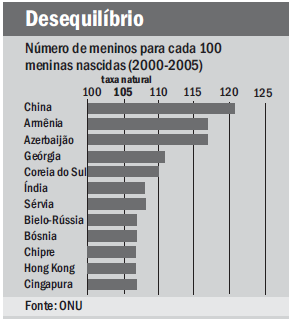
Analise o gráfico e o texto a seguir.
Enunciado 329459-1
Uma escritora narra sua visita a uma família de agricultores numa província chinesa onde uma mulher estava dando à luz. “Tínhamos acabado de nos sentar na cozinha e ouvimos um gemido de dor no quarto ao lado”, ela escreve. “Os gritos ficaram mais fortes – de repente pararam. Houve um soluço baixo e a voz rouca de um homem disse, em tom acusador: coisa inútil.” (...) De repente, pensei ter ouvido um ligeiro movimento no balde de dejetos atrás de mim. Para meu horror absoluto vi um pequeno pé saindo do balde. A parteira deve ter jogado o bebê vivo no balde de lixo.
Revista Carta Capital, 17 mar. 2010. (Adaptado)
A relação estabelecida entre gráfico e texto revela uma realidade singular e indesejável da situação chinesa, quanto aos aspectos demográficos. Tal situação é uma consequência de outro aspecto singular, muito marcante após 1979.
Esses dois aspectos, uma vez interligados, apresentam reflexos na estrutura populacional e correspodem a
 

Provas

Questão presente nas seguintes provas
322611 Ano: 2010
Disciplina: Comunicação Social
Banca: CESGRANRIO
Orgão: BR Distribuidora
Instrumento constituído pelo levantamento de conceitos e preconceitos emitidos por lideranças, formais e informais, dos diversos stakeholders de uma organização e que possam exercer influência em uma organização, um produto ou projeto em questão. A esse instrumento de análise se dá o nome de
 

Provas

Questão presente nas seguintes provas
319767 Ano: 2010
Disciplina: Comunicação Social
Banca: CESGRANRIO
Orgão: BR Distribuidora
No processo offset, os layouts em policromia são impressos com apenas 4 cores de tinta. Essas cores são:
 

Provas

Questão presente nas seguintes provas
316112 Ano: 2010
Disciplina: Comunicação Social
Banca: CESGRANRIO
Orgão: BR Distribuidora
Quando os arquivos são preparados para serem enviados à gráfica, devem ser incluídos alguns elementos, independentes do layout, que servem para guiar o processo de impressão. Esses elementos são:
 

Provas

Questão presente nas seguintes provas
316111 Ano: 2010
Disciplina: Comunicação Social
Banca: CESGRANRIO
Orgão: BR Distribuidora
Campanhas publicitárias são compostas de várias peças. Uma delas é o anúncio impresso em jornal ou revista. No caso do jornal, o formato do anúncio é calculado através do número de
 

Provas

Questão presente nas seguintes provas
