Foram encontradas 60 questões.
Analise a imagem abaixo e responda à questão. Assuma que o software utilizado para criar a tabela foi o MS Excel 2010 em português e que os termos “clicar” e “duplo clique” se referem ao primeiro botão do mouse.

Se selecionar as células B2 a B4 e clicar em 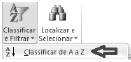 , o resultado obtido será a:
, o resultado obtido será a:Provas
Questão presente nas seguintes provas

ENVIRONMENTAL PROBLEMS
IN BRAZIL
IN BRAZIL
© WWF-Canon / Mark EDWARDS
A glimpse at the threats facing Brazil's remarkable nature
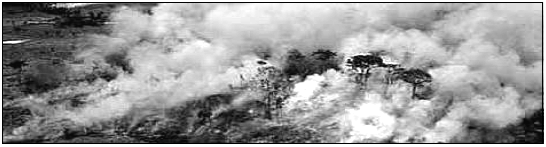
The ongoing expansion of agriculture in Brazil is seriously threatening rare and vulnerable habitats such as the Atlantic Forest, the Cerrado, and the Amazon.
The major threat for these vast – but not infinite – natural areas is the often destructive expansion of a vegetable, more precisely a bean: soy. It was, according to the UN Food and Agriculture Organization (FAO), Brazil’s main agricultural crop by harvested area in 2004, with more than 21 million ha under cultivation.
Another crop of concern is cocoa, which has been blamed for widespread deforestation in Brazil. During the cocoa economic boom of the 1970s, expansion of this crop was a leading cause of the decline of Brazil’s endangered Atlantic Forest ecosystem, of which only about 10% persists - barely.
The cattle problem
The Cerrado, an extensive woodland savanna ecosystem in Brazil, is threatened by cattle ranching. The expansion of cattle ranching is closely linked to the increased soy cultivation - which poses serious concerns about the impact of this industry on sensitive ecosystems.
There are also concerns about the expansion of chicken and pork production moving into the Cerrado.
The paper pulp problem
In the Atlantic forests of Brazil, some of the world's most diverse ecosystems have been converted to fast growing plantations. Brazil has millions of hectares of exotic plantations, made up mainly of eucalyptus, a non-native species.
Although some plantations are certified with the Forest Stewardship Council (FSC) label, in others there have been repeated conflicts with indigenous peoples about land rights. Forty per cent of Brazil's bleached pulp is exported to Europe. Something ought to be done soon!
(Adaptação : http://wwf.panda.org/who_we_are/wwf_offices/brazil/environmental_problems_brazil
A única frase na qual o verbo “make up” apresenta exatamente o mesmo significado do empregado no fragmento “made up mainly of eucalyptus” é:
Provas
Questão presente nas seguintes provas
Compete aos Conselhos Regionais de Biologia, de acordo com o Decreto nº 88.438/83:
Provas
Questão presente nas seguintes provas
ENVIRONMENTAL PROBLEMS
IN BRAZIL
IN BRAZIL
© WWF-Canon / Mark EDWARDS
A glimpse at the threats facing Brazil's remarkable nature
The ongoing expansion of agriculture in Brazil is seriously threatening rare and vulnerable habitats such as the Atlantic Forest, the Cerrado, and the Amazon.
The major threat for these vast – but not infinite – natural areas is the often destructive expansion of a vegetable, more precisely a bean: soy. It was, according to the UN Food and Agriculture Organization (FAO), Brazil’s main agricultural crop by harvested area in 2004, with more than 21 million ha under cultivation.
Another crop of concern is cocoa, which has been blamed for widespread deforestation in Brazil. During the cocoa economic boom of the 1970s, expansion of this crop was a leading cause of the decline of Brazil’s endangered Atlantic Forest ecosystem, of which only about 10% persists - barely.
The cattle problem
The Cerrado, an extensive woodland savanna ecosystem in Brazil, is threatened by cattle ranching. The expansion of cattle ranching is closely linked to the increased soy cultivation - which poses serious concerns about the impact of this industry on sensitive ecosystems.
There are also concerns about the expansion of chicken and pork production moving into the Cerrado.
The paper pulp problem
In the Atlantic forests of Brazil, some of the world's most diverse ecosystems have been converted to fast growing plantations. Brazil has millions of hectares of exotic plantations, made up mainly of eucalyptus, a non-native species.
Although some plantations are certified with the Forest Stewardship Council (FSC) label, in others there have been repeated conflicts with indigenous peoples about land rights. Forty per cent of Brazil's bleached pulp is exported to Europe. Something ought to be done soon!
(Adaptação : http://wwf.panda.org/who_we_are/wwf_offices/brazil/environmental_problems_brazil
O texto tem como tema central a(s):
Provas
Questão presente nas seguintes provas
ENVIRONMENTAL PROBLEMS
IN BRAZIL
IN BRAZIL
© WWF-Canon / Mark EDWARDS
A glimpse at the threats facing Brazil's remarkable nature
The ongoing expansion of agriculture in Brazil is seriously threatening rare and vulnerable habitats such as the Atlantic Forest, the Cerrado, and the Amazon.
The major threat for these vast – but not infinite – natural areas is the often destructive expansion of a vegetable, more precisely a bean: soy. It was, according to the UN Food and Agriculture Organization (FAO), Brazil’s main agricultural crop by harvested area in 2004, with more than 21 million ha under cultivation.
Another crop of concern is cocoa, which has been blamed for widespread deforestation in Brazil. During the cocoa economic boom of the 1970s, expansion of this crop was a leading cause of the decline of Brazil’s endangered Atlantic Forest ecosystem, of which only about 10% persists - barely.
The cattle problem
The Cerrado, an extensive woodland savanna ecosystem in Brazil, is threatened by cattle ranching. The expansion of cattle ranching is closely linked to the increased soy cultivation - which poses serious concerns about the impact of this industry on sensitive ecosystems.
There are also concerns about the expansion of chicken and pork production moving into the Cerrado.
The paper pulp problem
In the Atlantic forests of Brazil, some of the world's most diverse ecosystems have been converted to fast growing plantations. Brazil has millions of hectares of exotic plantations, made up mainly of eucalyptus, a non-native species.
Although some plantations are certified with the Forest Stewardship Council (FSC) label, in others there have been repeated conflicts with indigenous peoples about land rights. Forty per cent of Brazil's bleached pulp is exported to Europe. Something ought to be done soon!
(Adaptação : http://wwf.panda.org/who_we_are/wwf_offices/brazil/environmental_problems_brazil
Dos fragmentos abaixo, o único que se encontra na voz passiva é:
Provas
Questão presente nas seguintes provas
Ao realizar consultas a uma tabela de um banco de dados do MS Access 2010 com frequência, sendo essas pesquisas realizadas sempre através do mesmo campo (CPF, por exemplo), um bom recurso a ser utilizado para melhorar o desempenho do banco de dados, durante o processamento dessas consultas, é a criação/utilização de:
Provas
Questão presente nas seguintes provas
A maneira como a organização procura marcar o novo colaborador para ele agir e pensar de acordo com as suas expectativas é denominada:
Provas
Questão presente nas seguintes provas
A entrevista é uma técnica que tem inúmeras aplicações nas organizações e pode ser utilizada em diversos momentos, desde a seleção até o desligamento dos colaboradores. Na seleção, é o método mais utilizado.
Uma DESVANTAGEM para a utilização dessa técnica é que ela:
Provas
Questão presente nas seguintes provas
ENVIRONMENTAL PROBLEMS
IN BRAZIL
IN BRAZIL
© WWF-Canon / Mark EDWARDS
A glimpse at the threats facing Brazil's remarkable nature
The ongoing expansion of agriculture in Brazil is seriously threatening rare and vulnerable habitats such as the Atlantic Forest, the Cerrado, and the Amazon.
The major threat for these vast – but not infinite – natural areas is the often destructive expansion of a vegetable, more precisely a bean: soy. It was, according to the UN Food and Agriculture Organization (FAO), Brazil’s main agricultural crop by harvested area in 2004, with more than 21 million ha under cultivation.
Another crop of concern is cocoa, which has been blamed for widespread deforestation in Brazil. During the cocoa economic boom of the 1970s, expansion of this crop was a leading cause of the decline of Brazil’s endangered Atlantic Forest ecosystem, of which only about 10% persists - barely.
The cattle problem
The Cerrado, an extensive woodland savanna ecosystem in Brazil, is threatened by cattle ranching. The expansion of cattle ranching is closely linked to the increased soy cultivation - which poses serious concerns about the impact of this industry on sensitive ecosystems.
There are also concerns about the expansion of chicken and pork production moving into the Cerrado.
The paper pulp problem
In the Atlantic forests of Brazil, some of the world's most diverse ecosystems have been converted to fast growing plantations. Brazil has millions of hectares of exotic plantations, made up mainly of eucalyptus, a non-native species.
Although some plantations are certified with the Forest Stewardship Council (FSC) label, in others there have been repeated conflicts with indigenous peoples about land rights. Forty per cent of Brazil's bleached pulp is exported to Europe. Something ought to be done soon!
(Adaptação : http://wwf.panda.org/who_we_are/wwf_offices/brazil/environmental_problems_brazil
Dentre as opções abaixo, o melhor antônimo para o substantivo “boom” é:
Provas
Questão presente nas seguintes provas
Um determinado órgão público necessita realizar um procedimento licitatório na modalidade Tomada de Preços do tipo técnica e preço.
Para cumprir rigorosamente os preceitos da Lei de Licitações, o prazo mínimo a ser estipulado, em dias contados a partir da última publicação do resumo do edital, para recebimento das propostas de preços, deverá ser de:
Provas
Questão presente nas seguintes provas
Cadernos
Caderno Container