Foram encontradas 215 questões.
2432764
Ano: 2012
Disciplina: TI - Desenvolvimento de Sistemas
Banca: CEPUERJ
Orgão: CRBio-2
Disciplina: TI - Desenvolvimento de Sistemas
Banca: CEPUERJ
Orgão: CRBio-2
Provas:
Analise o seguinte trecho de código construído, utilizando a linguagem Java:
public class A {
private int x;
private int fazAlgumaCoisa() { return x + 5; }
public int fazMaisUmPouco() { return x + fazAlgumaCoisa(); }
public A() {
x = -1;
}
}
public class B extends A {
public void fazNadaDemais() { System.out.println(“Faz nada demais!”); }
}
private int x;
private int fazAlgumaCoisa() { return x + 5; }
public int fazMaisUmPouco() { return x + fazAlgumaCoisa(); }
public A() {
x = -1;
}
}
public class B extends A {
public void fazNadaDemais() { System.out.println(“Faz nada demais!”); }
}
Sobre o código acima, pode-se afirmar que:
Provas
Questão presente nas seguintes provas

ENVIRONMENTAL PROBLEMS
IN BRAZIL
IN BRAZIL
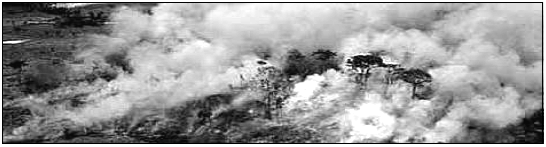
© WWF-Canon / Mark EDWARDS
A glimpse at the threats facing Brazil's remarkable nature
The ongoing expansion of agriculture in Brazil is seriously threatening rare and vulnerable habitats such as the Atlantic Forest, the Cerrado, and the Amazon.
The major threat for these vast – but not infinite – natural areas is the often destructive expansion of a vegetable, more precisely a bean: soy. It was, according to the UN Food and Agriculture Organization (FAO), Brazil’s main agricultural crop by harvested area in 2004, with more than 21 million ha under cultivation.
Another crop of concern is cocoa, which has been blamed for widespread deforestation in Brazil. During the cocoa economic boom of the 1970s, expansion of this crop was a leading cause of the decline of Brazil’s endangered Atlantic Forest ecosystem, of which only about 10% persists - barely.
The cattle problem
The Cerrado, an extensive woodland savanna ecosystem in Brazil, is threatened by cattle ranching. The expansion of cattle ranching is closely linked to the increased soy cultivation - which poses serious concerns about the impact of this industry on sensitive ecosystems.
There are also concerns about the expansion of chicken and pork production moving into the Cerrado.
The paper pulp problem
In the Atlantic forests of Brazil, some of the world's most diverse ecosystems have been converted to fast growing plantations. Brazil has millions of hectares of exotic plantations, made up mainly of eucalyptus, a non-native species.
Although some plantations are certified with the Forest Stewardship Council (FSC) label, in others there have been repeated conflicts with indigenous peoples about land rights. Forty per cent of Brazil's bleached pulp is exported to Europe. Something ought to be done soon!
(Adaptação : http://wwf.panda.org/who_we_are/wwf_offices/brazil/environmental_problems_brazil
O texto tem como tema central a(s):
Provas
Questão presente nas seguintes provas
ENVIRONMENTAL PROBLEMS
IN BRAZIL
IN BRAZIL
© WWF-Canon / Mark EDWARDS
A glimpse at the threats facing Brazil's remarkable nature
The ongoing expansion of agriculture in Brazil is seriously threatening rare and vulnerable habitats such as the Atlantic Forest, the Cerrado, and the Amazon.
The major threat for these vast – but not infinite – natural areas is the often destructive expansion of a vegetable, more precisely a bean: soy. It was, according to the UN Food and Agriculture Organization (FAO), Brazil’s main agricultural crop by harvested area in 2004, with more than 21 million ha under cultivation.
Another crop of concern is cocoa, which has been blamed for widespread deforestation in Brazil. During the cocoa economic boom of the 1970s, expansion of this crop was a leading cause of the decline of Brazil’s endangered Atlantic Forest ecosystem, of which only about 10% persists - barely.
The cattle problem
The Cerrado, an extensive woodland savanna ecosystem in Brazil, is threatened by cattle ranching. The expansion of cattle ranching is closely linked to the increased soy cultivation - which poses serious concerns about the impact of this industry on sensitive ecosystems.
There are also concerns about the expansion of chicken and pork production moving into the Cerrado.
The paper pulp problem
In the Atlantic forests of Brazil, some of the world's most diverse ecosystems have been converted to fast growing plantations. Brazil has millions of hectares of exotic plantations, made up mainly of eucalyptus, a non-native species.
Although some plantations are certified with the Forest Stewardship Council (FSC) label, in others there have been repeated conflicts with indigenous peoples about land rights. Forty per cent of Brazil's bleached pulp is exported to Europe. Something ought to be done soon!
(Adaptação : http://wwf.panda.org/who_we_are/wwf_offices/brazil/environmental_problems_brazil
Dos fragmentos abaixo, o único que se encontra na voz passiva é:
Provas
Questão presente nas seguintes provas
De acordo com a documentação oficial do MS Windows 7, as quatro recomendações de segurança para que um computador esteja protegido são: ativar as atualizações automáticas, além de usar:
Provas
Questão presente nas seguintes provas
Ao realizar consultas a uma tabela de um banco de dados do MS Access 2010 com frequência, sendo essas pesquisas realizadas sempre através do mesmo campo (CPF, por exemplo), um bom recurso a ser utilizado para melhorar o desempenho do banco de dados, durante o processamento dessas consultas, é a criação/utilização de:
Provas
Questão presente nas seguintes provas
A maneira como a organização procura marcar o novo colaborador para ele agir e pensar de acordo com as suas expectativas é denominada:
Provas
Questão presente nas seguintes provas
O MS Windows 7 em português fornece uma biblioteca de documentos, semelhante à pasta “Meus documentos”, que existia em versões anteriores desse sistema operacional.
A respeito deste assunto, pode-se afirmar que a:
Provas
Questão presente nas seguintes provas
Quanto ao registro perante os Conselhos Regionais de Biologia – CRBios, disposto na resolução CFBio nº16/2003, analise as afirmativas abaixo:
I - Registro definitivo é concedido aos que possuam diploma devidamente registrado.
II - Registro provisório, com prazo de validade de doze meses, é concedido aos que colaram grau há no máximo seis meses, mas que ainda não possuam diploma.
III - O registro perante os CRBios é pressuposto indispensável ao exercício profissional da Biologia, exceto para os que possuam certificado de colação de grau expedido há, no máximo, três meses.
IV - Secundário aos que já registrados, exerçam atividades, concomitantemente, em jurisdição de outro CRBio que não o que lhe concedeu o registro.
V - O registro especial será concedido aos profissionais que completarem mais de 25 anos de exercício da profissão e que, estando em dia com as mensalidades, não tenha sofrido pena disciplinar.
A alternativa que apresenta as afirmativas verdadeiras é:
Provas
Questão presente nas seguintes provas
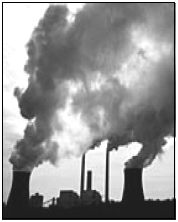
ENVIRONMENTAL POLLUTION
Environmental pollution is contamination of air, water and land from man-made waste. Pollution leads to depletion of the ozone layer, global warming and climate change. Air pollution is the release of chemicals and particles into the atmosphere. Water pollution includes surface runoff, leakage into groundwater, liquid spills, wastewater discharge and littering. If toxins are spilled on the ground or if an underground storage tank leaks, soil can become contaminated. Well known contaminants include herbicides and pesticides. Toxic waste, often in chemical form, is waste material. It pollutes the natural environment and contaminates groundwater.
Other types of pollution include ocean pollution and noise pollution. Environmental pollution can have a deadly effect on humans and ecosystems. For example, cigarette smoke, including second-hand smoke, causes cancer, emphysema, stroke and heart attack. Drinking water can become contaminated by untreated sewage, rashes and skin problems occur due to oil spills, while excessive noise can cause hearing loss. The U.S. Environmental Protection Agency (EPA) was established in 1970 to put a limit on the amount of pollutants in the air. Congress passed the Clean Air Act in 1963, the Noise Control Act in 1972 and the Clean Water Act in 1977. Pollution is a bigger concern in other parts of the world, especially developing countries. Time Magazine reported in 2007 that the most polluted spots in the world included China, India, Peru and Russia.
(Adaptação de: http://www.chicagotribune.com/topic/
environmental-issues/environmental-pollution/06005000.topic)
O melhor antônimo para o substantivo “warming” é:
Provas
Questão presente nas seguintes provas
A entrevista é uma técnica que tem inúmeras aplicações nas organizações e pode ser utilizada em diversos momentos, desde a seleção até o desligamento dos colaboradores. Na seleção, é o método mais utilizado.
Uma DESVANTAGEM para a utilização dessa técnica é que ela:
Provas
Questão presente nas seguintes provas
Cadernos
Caderno Container