Foram encontradas 120 questões.
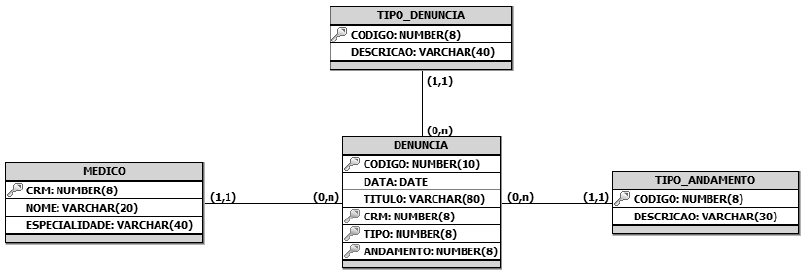
Com relação à figura e às informações acima, julgue o item.
Somente é possível excluir um registro na tabela DENUNCIA depois de se excluir o registro correspondente na tabela TIPO_DENUNCIA, uma vez que ambas as tabelas estão relacionadas.
Provas

Com relação à figura e às informações acima, julgue o item.
É possível criar uma visão (view) para mostrar a quantidade de denúncias que cada médico possui
Provas
Com relação à figura e às informações acima, julgue o item.
A chave primária da tabela TIPO_DENUNCIA é CODIGO.
Provas
Com relação à figura e às informações acima, julgue o item.
Após a implementação de todas as tabelas e de suas respectivas chaves, é possível cadastrar, no banco de dados em questão, um mesmo médico duas vezes, com o mesmo CRM, mas com especialidades diferentes, já que esse banco de dados apresenta diversas inconsistências.
Provas
Com relação à figura e às informações acima, julgue o item.
Somente é possível criar a tabela DENUNCIA após a criação das tabelas MEDICO, TIPO_DENUNCIA e TIPO_ANDAMENTO.
Provas
Doctors Without Borders (Medecins sans frontiers — MSF) brings medical humanitarian assistance to victims of conflict, natural disasters, epidemics, and healthcare exclusion.
War and Conflict: Armed conflict causes injury, displacement, sexual violence, and death, but it also continues to impact people’s lives and health long after the front lines have shifted. War devastates health systems, hampers access to medical supplies, and disrupts vaccination and other disease-prevention efforts, heightening the risk of outbreaks.
In conflict zones, MSF does not take sides. We provide medical care based on needs alone and work to reach the people most in need of help. Nearly one-fourth of MSF’s projects are dedicated to assisting people living in conflict.
Natural disasters: Earthquakes, floods, tsunamis, and major storms can force people to flee their homes and cut off access to safe water, health care services, and transportation, affecting the lives of tens of thousands in a matter of minutes. When minutes matter, MSF’s network of aid workers in more than 70 countries around the world are often the first to deploy rapid, lifesaving medical care. We keep pre-packaged supply kits to launch rapid responses as quickly as possible.
Epidemics and pandemics: Millions of people around the world still die each year from infectious diseases that are preventable or treatable. Those at highest live in poverty or other precarious conditions, with limited access to health care and vaccinations.
During an outbreak of an infectious disease like cholera, measles, yellow fever, or Ebola, MSF teams react swiftly to provide lifesaving vaccines, treatment, and epidemiological services. From setting up temporary facilities to treat patients to running mass vaccination campaigns to improving water and sanitation services to help prevent the spread of disease, MSF teams adapt our emergency responses to the unique needs of communities.
Refugees and internally displaced people: More than 82 million people — or 1 in 95 worldwide — have been forcibly displaced from their homes, fleeing conflict, persecution, natural disaster, or other hardships. On the move and in camps they are often forced to live in precarious conditions, cut off from essential services including health care.
When people are displaced, MSF teams conduct rapid needs assessments and work closely with affected communities to provide services including vaccination; primary and mental health care; nutrition support; provision of shelter, drinking water, and latrines; and more.
Internet: <https://www.doctorswithoutborders.org (adapted).
According to the text, judge the item.
The term “their” is an example of subject pronoun.
Provas
Doctors Without Borders (Medecins sans frontiers — MSF) brings medical humanitarian assistance to victims of conflict, natural disasters, epidemics, and healthcare exclusion.
War and Conflict: Armed conflict causes injury, displacement, sexual violence, and death, but it also continues to impact people’s lives and health long after the front lines have shifted. War devastates health systems, hampers access to medical supplies, and disrupts vaccination and other disease-prevention efforts, heightening the risk of outbreaks.
In conflict zones, MSF does not take sides. We provide medical care based on needs alone and work to reach the people most in need of help. Nearly one-fourth of MSF’s projects are dedicated to assisting people living in conflict.
Natural disasters: Earthquakes, floods, tsunamis, and major storms can force people to flee their homes and cut off access to safe water, health care services, and transportation, affecting the lives of tens of thousands in a matter of minutes. When minutes matter, MSF’s network of aid workers in more than 70 countries around the world are often the first to deploy rapid, lifesaving medical care. We keep pre-packaged supply kits to launch rapid responses as quickly as possible.
Epidemics and pandemics: Millions of people around the world still die each year from infectious diseases that are preventable or treatable. Those at highest live in poverty or other precarious conditions, with limited access to health care and vaccinations.
During an outbreak of an infectious disease like cholera, measles, yellow fever, or Ebola, MSF teams react swiftly to provide lifesaving vaccines, treatment, and epidemiological services. From setting up temporary facilities to treat patients to running mass vaccination campaigns to improving water and sanitation services to help prevent the spread of disease, MSF teams adapt our emergency responses to the unique needs of communities.
Refugees and internally displaced people: More than 82 million people — or 1 in 95 worldwide — have been forcibly displaced from their homes, fleeing conflict, persecution, natural disaster, or other hardships. On the move and in camps they are often forced to live in precarious conditions, cut off from essential services including health care.
When people are displaced, MSF teams conduct rapid needs assessments and work closely with affected communities to provide services including vaccination; primary and mental health care; nutrition support; provision of shelter, drinking water, and latrines; and more.
Internet: <https://www.doctorswithoutborders.org (adapted).
According to the text, judge the item.
In the sentence “MSF teams adapt our emergency responses to the unique needs of communities.”, the word “responses” is being used as a verb.
Provas
Doctors Without Borders (Medecins sans frontiers — MSF) brings medical humanitarian assistance to victims of conflict, natural disasters, epidemics, and healthcare exclusion.
War and Conflict: Armed conflict causes injury, displacement, sexual violence, and death, but it also continues to impact people’s lives and health long after the front lines have shifted. War devastates health systems, hampers access to medical supplies, and disrupts vaccination and other disease-prevention efforts, heightening the risk of outbreaks.
In conflict zones, MSF does not take sides. We provide medical care based on needs alone and work to reach the people most in need of help. Nearly one-fourth of MSF’s projects are dedicated to assisting people living in conflict.
Natural disasters: Earthquakes, floods, tsunamis, and major storms can force people to flee their homes and cut off access to safe water, health care services, and transportation, affecting the lives of tens of thousands in a matter of minutes. When minutes matter, MSF’s network of aid workers in more than 70 countries around the world are often the first to deploy rapid, lifesaving medical care. We keep pre-packaged supply kits to launch rapid responses as quickly as possible.
Epidemics and pandemics: Millions of people around the world still die each year from infectious diseases that are preventable or treatable. Those at highest live in poverty or other precarious conditions, with limited access to health care and vaccinations.
During an outbreak of an infectious disease like cholera, measles, yellow fever, or Ebola, MSF teams react swiftly to provide lifesaving vaccines, treatment, and epidemiological services. From setting up temporary facilities to treat patients to running mass vaccination campaigns to improving water and sanitation services to help prevent the spread of disease, MSF teams adapt our emergency responses to the unique needs of communities.
Refugees and internally displaced people: More than 82 million people — or 1 in 95 worldwide — have been forcibly displaced from their homes, fleeing conflict, persecution, natural disaster, or other hardships. On the move and in camps they are often forced to live in precarious conditions, cut off from essential services including health care.
When people are displaced, MSF teams conduct rapid needs assessments and work closely with affected communities to provide services including vaccination; primary and mental health care; nutrition support; provision of shelter, drinking water, and latrines; and more.
Internet: <https://www.doctorswithoutborders.org (adapted).
According to the text, judge the item.
In the period “War devastates health systems, hampers access to medical supplies, and disrupts vaccination and other disease-prevention efforts, heightening the risk of outbreaks.” , the verb hamper can be correctly replaced by the verb impede.
Provas
Doctors Without Borders (Medecins sans frontiers — MSF) brings medical humanitarian assistance to victims of conflict, natural disasters, epidemics, and healthcare exclusion.
War and Conflict: Armed conflict causes injury, displacement, sexual violence, and death, but it also continues to impact people’s lives and health long after the front lines have shifted. War devastates health systems, hampers access to medical supplies, and disrupts vaccination and other disease-prevention efforts, heightening the risk of outbreaks.
In conflict zones, MSF does not take sides. We provide medical care based on needs alone and work to reach the people most in need of help. Nearly one-fourth of MSF’s projects are dedicated to assisting people living in conflict.
Natural disasters: Earthquakes, floods, tsunamis, and major storms can force people to flee their homes and cut off access to safe water, health care services, and transportation, affecting the lives of tens of thousands in a matter of minutes. When minutes matter, MSF’s network of aid workers in more than 70 countries around the world are often the first to deploy rapid, lifesaving medical care. We keep pre-packaged supply kits to launch rapid responses as quickly as possible.
Epidemics and pandemics: Millions of people around the world still die each year from infectious diseases that are preventable or treatable. Those at highest live in poverty or other precarious conditions, with limited access to health care and vaccinations.
During an outbreak of an infectious disease like cholera, measles, yellow fever, or Ebola, MSF teams react swiftly to provide lifesaving vaccines, treatment, and epidemiological services. From setting up temporary facilities to treat patients to running mass vaccination campaigns to improving water and sanitation services to help prevent the spread of disease, MSF teams adapt our emergency responses to the unique needs of communities.
Refugees and internally displaced people: More than 82 million people — or 1 in 95 worldwide — have been forcibly displaced from their homes, fleeing conflict, persecution, natural disaster, or other hardships. On the move and in camps they are often forced to live in precarious conditions, cut off from essential services including health care.
When people are displaced, MSF teams conduct rapid needs assessments and work closely with affected communities to provide services including vaccination; primary and mental health care; nutrition support; provision of shelter, drinking water, and latrines; and more.
Internet: <https://www.doctorswithoutborders.org (adapted).
According to the text, judge the item.
The word “often” can be replaced by seldom, without changes in meaning.
Provas
Doctors Without Borders (Medecins sans frontiers — MSF) brings medical humanitarian assistance to victims of conflict, natural disasters, epidemics, and healthcare exclusion.
War and Conflict: Armed conflict causes injury, displacement, sexual violence, and death, but it also continues to impact people’s lives and health long after the front lines have shifted. War devastates health systems, hampers access to medical supplies, and disrupts vaccination and other disease-prevention efforts, heightening the risk of outbreaks.
In conflict zones, MSF does not take sides. We provide medical care based on needs alone and work to reach the people most in need of help. Nearly one-fourth of MSF’s projects are dedicated to assisting people living in conflict.
Natural disasters: Earthquakes, floods, tsunamis, and major storms can force people to flee their homes and cut off access to safe water, health care services, and transportation, affecting the lives of tens of thousands in a matter of minutes. When minutes matter, MSF’s network of aid workers in more than 70 countries around the world are often the first to deploy rapid, lifesaving medical care. We keep pre-packaged supply kits to launch rapid responses as quickly as possible.
Epidemics and pandemics: Millions of people around the world still die each year from infectious diseases that are preventable or treatable. Those at highest live in poverty or other precarious conditions, with limited access to health care and vaccinations.
During an outbreak of an infectious disease like cholera, measles, yellow fever, or Ebola, MSF teams react swiftly to provide lifesaving vaccines, treatment, and epidemiological services. From setting up temporary facilities to treat patients to running mass vaccination campaigns to improving water and sanitation services to help prevent the spread of disease, MSF teams adapt our emergency responses to the unique needs of communities.
Refugees and internally displaced people: More than 82 million people — or 1 in 95 worldwide — have been forcibly displaced from their homes, fleeing conflict, persecution, natural disaster, or other hardships. On the move and in camps they are often forced to live in precarious conditions, cut off from essential services including health care.
When people are displaced, MSF teams conduct rapid needs assessments and work closely with affected communities to provide services including vaccination; primary and mental health care; nutrition support; provision of shelter, drinking water, and latrines; and more.
Internet: <https://www.doctorswithoutborders.org (adapted).
According to the text, judge the item.
The “‘s” in “people’s lives” indicates the possessive or genitive case.
Provas
Caderno Container