Foram encontradas 30 questões.
Uma bebida láctea é produzida de três formas distintas quanto à quantidade de gordura em sua composição, podendo ter 1%, 2% ou 3% do seu volume constituído por gordura.
Considerando-se que, dessa bebida, X litros com 1%, Y litros com 2% e Z litros com 3% de gordura foram misturados resultando em X + Y + Z litros com 1,5% de gordura, pode-se afirmar que X é igual a
Provas


Para observar com mais detalhes alguns dedos do pé de um paciente, um profissional de saúde utiliza uma lupa ou lente de aumento, obtendo a imagem mostrada na figura.
Com base nos conhecimentos de Óptica Geométrica, a análise da imagem conjugada pela lente da lupa permite afirmar que os dedos a serem observados estão situados
Provas
Uma bola de borracha que se encontra, inicialmente, em repouso, é abandonada de uma altura de 90,0cm, medida em relação ao piso de uma sala. A bola choca-se com o piso, volta a subir verticalmente, atingindo uma altura h logo após o primeiro choque e, assim, sucessivamente, até parar.
Com base nos conhecimentos de mecânica, admitindo-se que a energia dissipada no primeiro choque da bola com o piso é igual a 35% da energia mecânica inicial da bola, é correto afirmar que h é igual a
Provas
O enfrentamento dos problemas ocasionados pela dependência química devido ao uso indiscriminado de drogas, lícitas ou ilícitas, é complexo e envolve diversos profissionais das áreas de saúde e educação, assistentes sociais, entre outros profissionais. Segundo pesquisadores da área de saúde, apesar da diversidade das drogas conhecidas atingirem diferentes alvos no cérebro, todas elas, direta ou indiretamente, aumentam a liberação de dopamina, neurotransmissor associado ao controle do movimento, da memória e da sensação do prazer, representado pela estrutura química
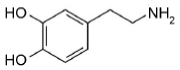
Considerando-se essa informação associada às propriedades dos compostos orgânicos, é correto afirmar:
Provas
A qualidade e a quantidade de água disponível sempre foram determinantes para o bem-estar do homem ao longo do tempo. No Brasil, aproximadamente, 41% de toda água tratada é desperdiçada, e, apenas, 48% da população têm rede de esgotos, sendo que a maior parte do esgoto recolhido não é tratada. A falta de tratamento dos esgotos, que são descartados em córregos, rios e mares, contribui para a poluição da água e a disseminação de micro-organismos patogênicos, que causam doenças em muitos lugares do Mundo.
Com base nessa informação e nos conhecimentos sobre processos físicos, químicos e biológicos, associados ao tratamento da água e dos esgotos, é correto afirmar:
Provas
Há milhares de anos, quando o deserto do Saara era uma área úmida e chuvosa, coberta por floresta, uma criança nasceu com uma mutação genética que lhe deu “imunidade” à malária. Nessa época, a doença era tão mortal quanto é hoje. Em um ambiente que era habitat dos pernilongos que carregam a doença, essa mutação deu grande vantagem a essa criança, que viveu, cresceu e teve filhos. Seus filhos herdaram a mutação, espalharam-se e se reproduziram.
Eggert, N. 2018. Como mutação genética em uma única criança deu origem à
doença que afeta milhões de pessoas. Disponível em: <http://www.bbc.com/>.
Acesso em: abr. 2018. Adaptado.
Com base nos conhecimentos sobre evolução biológica, o processo descrito no texto é identificado como
Provas
A hipertensão arterial é uma doença silenciosa, pois não causa sintomas e é progressiva. No Brasil, atinge 32,5% população e mais de 60% dos idosos, contribuindo direta ou indiretamente para 50% das mortes por doença cardiovascular.
Agência Brasil, 2018. Combate à hipertensão: fique atento aos fatores de risco. Disponível
em: <https://gauchazh.clicrbs.com.br/saude>. Acesso em: abr. 2018. Adaptado.
Sobre os efeitos da hipertensão arterial no corpo humano é correto afirmar:
Provas
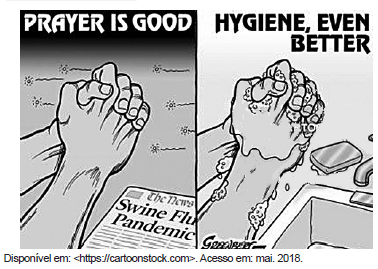
Considering the reduction of pandemic influenza transmission, this cartoon focus on
Provas
Can our technological connectedness trump the risks of our biological and geographic connectedness? That’s one reason Nathan Wolfe has pushed GVF (Globe Viral Forecasting) to pioneer what he calls digital epidemiology, which uses the resources of the Internet to make predictive sense of the viral chatter picked up in the field. He and his team are setting up a bioinformatics strategy that could mine data from Internet searches and social media to pinpoint new outbreaks as they dawn – and potentially predict which newly discovered viruses might pose real threats to humanity. That work is culminating in a project called Epidemic IQ that will, Wolfe hopes, provide the ability to predict new pandemics the way the CIA might predict a terrorist attack.
Current global disease control efforts focus largely on attempting to stop pandemics after they have already emerged. This fire brigade approach, which generally involves drugs, vaccines, and behavioral change, has severe limitations. Just as we discovered in the 1960s that it is better to prevent heart attacks than try to treat them, we realize that it’s better to stop pandemics before they spread and that effort should increasingly be focused on viral forecasting and pandemic prevention.
“We’re finally beginning to understand why pandemics happen instead of just reacting to them”, Wolfe says. What’s needed is a global effort to scale up that kind of proactive work to ensure that every hot spot has surveillance running for new pathogens in animals and in human beings and that it has its own GVF-type group to do the work. Viruses don’t respect borders – whether between nations or between species – and in a world where airlines act like bloodlines, global health is only as strong as its weakest link. We got lucky with the relatively weak swine-flu pandemic in 2009, but history tells us our luck won’t last. “We sit here dodging bullets left and right, assuming we have an invisible shield”, says Wolfe. “But you can’t dodge bullets forever.”
WALSH, Bryan.Virus hunter. Disponível em: <content.time.com/time/subscriber/l>.
Acesso em: mai. 2018. Adaptado.
The expression in bold in the sentence “But you can’t dodge bullets forever.” means that you can’t
Provas
Can our technological connectedness trump the risks of our biological and geographic connectedness? That’s one reason Nathan Wolfe has pushed GVF (Globe Viral Forecasting) to pioneer what he calls digital epidemiology, which uses the resources of the Internet to make predictive sense of the viral chatter picked up in the field. He and his team are setting up a bioinformatics strategy that could mine data from Internet searches and social media to pinpoint new outbreaks as they dawn – and potentially predict which newly discovered viruses might pose real threats to humanity. That work is culminating in a project called Epidemic IQ that will, Wolfe hopes, provide the ability to predict new pandemics the way the CIA might predict a terrorist attack.
Current global disease control efforts focus largely on attempting to stop pandemics after they have already emerged. This fire brigade approach, which generally involves drugs, vaccines, and behavioral change, has severe limitations. Just as we discovered in the 1960s that it is better to prevent heart attacks than try to treat them, we realize that it’s better to stop pandemics before they spread and that effort should increasingly be focused on viral forecasting and pandemic prevention.
“We’re finally beginning to understand why pandemics happen instead of just reacting to them”, Wolfe says. What’s needed is a global effort to scale up that kind of proactive work to ensure that every hot spot has surveillance running for new pathogens in animals and in human beings and that it has its own GVF-type group to do the work. Viruses don’t respect borders – whether between nations or between species – and in a world where airlines act like bloodlines, global health is only as strong as its weakest link. We got lucky with the relatively weak swine-flu pandemic in 2009, but history tells us our luck won’t last. “We sit here dodging bullets left and right, assuming we have an invisible shield”, says Wolfe. “But you can’t dodge bullets forever.”
WALSH, Bryan.Virus hunter. Disponível em: <content.time.com/time/subscriber/l>.
Acesso em: mai. 2018. Adaptado.
According to Wolfe, the most important thing to do when dealing with pandemics is to
Provas
Caderno Container