Foram encontradas 80 questões.
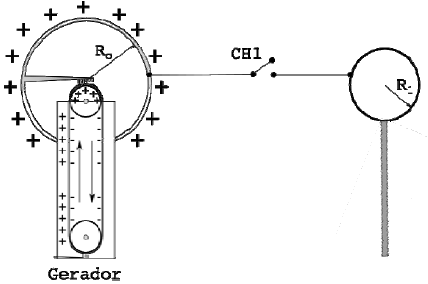
Considere que o Gerador de Van de Graaff da figura está em funcionamento, mantendo constante o potencial elétrico de sua cúpula esférica de raio R0 metros. Quando, então, é fechada a chave CH1, uma esfera condutora de raio R1 = R0/4 metros, inicialmente descarregada, conecta-se à cúpula por meio de fios de capacidade desprezível (também é desprezível a indução eletrostática). Atingido o equilíbrio eletrostático, a razão !$ \sigma !$/!$ \sigma !$ , entre as densidades superficiais de carga elétrica da esfera e da cúpula, vale
Provas

The seven-decade journey to an expanded Panama Canal is coming to a close, despite one last obstacle.
(by David Z. Morris / April 17, 2015)
The Panama Canal is getting a major overhaul, and despite an unresolved lawsuit that has delayed the project, it’s poised to transform global trade dramatically.
The original Panama Canal remains of the most ambitious public works projects of all time. But it wasn’t quite ambitious enough: within a few years of its opening in 1914, it was too small for many military and cargo ships. The U.S. authorities then in control began excavation for larger locks in 1939—but that work came to a standstill as America entered World War II, and no effective progress was made on the project for the remainder of the 20th century.
That changed swiftly when the canal transitioned to full Panamanian control in 1999. By 2006, a detailed expansion plan had been drafted and approved by Panamanian voters in a 77% landslide. With a total budget of $5.2 billion, completion was initially projected for 2014. Last year, the canal netted $2.6 billion, roughly half of Panama’s national revenue. The Panama Canal Authority has projected that the expansion will increase that revenue eightfold by 2025.
There’s been a hitch in the expansion effort, however. A group of mostly European contractors known as the Grupo Unidos por el Canal has filed claims totaling more than a half billion dollars against the Panama Canal Authority, alleging that misinformation led to cost overruns.
But according to Dr. J. David Rogers, a professor of geological engineering at Missouri University of Science and Technology, who has worked closely with the Panamanians for more than a quarter-century, the real problem is that contractors knowingly underbid the job.
The canal expansion is about more than money to the Panamanians, according to Dr. Rogers. “It’s a national pride project for them. It’s their lifeblood,” he says of the Panamanians’ feelings about the canal. “It’s what makes them go.”
The same seriousness didn’t characterize Americans’ approach to canal expansion. Of a series of false starts and fizzled plans, the most amazing came as part of Operation Plowshare, the “Atoms for Peace” program of the U.S. Atomic Energy Agency (now the Department of Energy). Intended to highlight the peacetime usefulness of atomic warheads, Plowshare spent more than a decade exploring the possibility of widening the canal by detonating a string of nuclear warheads. Rising awareness of environmental risks in the 1960s scuttled the idea.
Under the current, nuke-free plan, new approach channels and locks are being excavated alongside the existing entrances, allowing operations to continue normally during construction. The new locks and channels will be about three times bigger, allowing the passage of more of today’s huge container ships. The maximum load will increase from about 5,000 containers to 12,000—though the very largest ships, which currently balloon up to 19,000 containers and primarily work routes between Europe and Asia through the Suez Canal, still won’t fit.
The expansion will provide cheaper shipping between Asia and the American Gulf Coast. Traffic that currently flows through West Coast ports such as Los Angeles and Long Beach—including huge amounts of Midwestern grain and coal—will soon move more directly through ports including Houston and Savannah. Ports along the U.S. Gulf and East coasts have been expanding to accommodate increased ship size and traffic.
The ongoing court battle means that even the Panama Canal Authority’s recently-updated 2016 target for completion may be missed. But a bigger canal is finally coming—and with it, a host of new possibilities.
(fortune.com/2015/04/17/panama-canal/)
Complete the sentences with the correct verb tenses.
1. Little ____________ how inconvenient he can be.
2. Not until she received the call _______________ relieved.
3. Not for one moment _____________ your honesty.
4. Under no circumstances _______________ class.
Provas
Um tanque metálico rígido com 1,0m³ de volume interno é utilizado para armazenar oxigênio puro para uso hospitalar. Um manômetro registra a pressão do gás contido no tanque e, inicialmente, essa pressão é de 30 atm. Após algum tempo de uso, sem que a temperatura tenha variado, verifica-se que a leitura do manômetro reduziu para 25 atm. Medido à pressão atmosférica, o volume, em m³, do oxigênio consumido durante esse tempo é
Provas
FELICIDADE CLANDESTINA
Clarice Lispector
Ela era gorda, baixa, sardenta e de cabelos excessivamente crespos, meio arruivados. Tinha um busto enorme, enquanto nós todas ainda éramos achatadas. Como se não bastasse, enchia os dois bolsos da blusa, por cima do busto, com balas. Mas possuía o que qualquer criança devoradora de histórias gostaria de ter: um pai dono de livraria.
Pouco aproveitava. E nós menos ainda: até para aniversário, em vez de pelo menos um livrinho barato, ela nos entregava em mãos um cartão-postal da loja do pai. Ainda por cima era de paisagem do Recife mesmo, onde morávamos, com suas pontes mais do que vistas. Atrás escrevia com letra bordadíssima palavras como “data natalícia” e “saudade”.
Mas que talento tinha para a crueldade. Ela toda era pura vingança, chupando balas com barulho. Como essa menina devia nos odiar, nós que éramos imperdoavelmente bonitinhas, esguias, altinhas, de cabelos livres. Comigo exerceu com calma ferocidade o seu sadismo. Na minha ânsia de ler, eu nem notava as humilhações a que ela me submetia: continuava a implorar-lhe emprestados os livros que ela não lia.
Até que veio para ela o magno dia de começar a exercer sobre mim uma tortura chinesa. Como casualmente, informou-me que possuía As reinações de Narizinho, de Monteiro Lobato.
Era um livro grosso, meu Deus, era um livro para se ficar vivendo com ele, comendo-o, dormindo-o. E completamente acima de minhas posses. Disse-me que eu passasse pela sua casa no dia seguinte e que ela o emprestaria.
Até o dia seguinte eu me transformei na própria esperança da alegria: eu não vivia, eu nadava devagar num mar suave, as ondas me levavam e me traziam.
No dia seguinte fui à sua casa, literalmente correndo. Ela não morava num sobrado como eu, e sim numa casa. Não me mandou entrar. Olhando bem para meus olhos, disse-me que havia emprestado o livro a outra menina, e que eu voltasse no dia seguinte para buscá-lo. Boquiaberta, saí devagar, mas em breve a esperança de novo me tomava toda e eu recomeçava na rua a andar pulando, que era o meu modo estranho de andar pelas ruas de Recife. Dessa vez nem caí: guiava-me a promessa do livro, o dia seguinte viria, os dias seguintes seriam mais tarde a minha vida inteira, o amor pelo mundo me esperava, andei pulando pelas ruas como sempre e não caí nenhuma vez.
Mas não ficou simplesmente nisso. O plano secreto da filha do dono de livraria era tranquilo e diabólico. No dia seguinte lá estava eu à porta de sua casa, com um sorriso e o coração batendo. Para ouvir a resposta calma: o livro ainda não estava em seu poder, que eu voltasse no dia seguinte. Mal sabia eu como mais tarde, no decorrer da vida, o drama do “dia seguinte” com ela ia se repetir com meu coração batendo.
E assim continuou. Quanto tempo? Não sei. Ela sabia que era tempo indefinido, enquanto o fel não escorresse todo de seu corpo grosso. Eu já começara a adivinhar que ela me escolhera para eu sofrer, às vezes adivinho. Mas, adivinhando-me mesmo, às vezes aceito: como se quem quer me fazer sofrer esteja precisando danadamente que eu sofra.
Quanto tempo? Eu ia diariamente à sua casa, sem faltar um dia sequer. Às vezes ela dizia: pois o livro esteve comigo ontem de tarde, mas você só veio de manhã, de modo que o emprestei a outra menina. E eu, que não era dada a olheiras, sentia as olheiras se cavando sob os meus olhos espantados.
Até que um dia, quando eu estava à porta de sua casa, ouvindo humilde e silenciosa a sua recusa, apareceu sua mãe. Ela devia estar estranhando a aparição muda e diária daquela menina à porta de sua casa. Pediu explicações a nós duas. Houve uma confusão silenciosa, entrecortada de palavras pouco elucidativas. A senhora achava cada vez mais estranho o fato de não estar entendendo. Até que essa mãe boa entendeu. Voltou-se para a filha e com enorme surpresa exclamou: mas este livro nunca saiu daqui de casa e você nem quis ler!
E o pior para essa mulher não era a descoberta do que acontecia. Devia ser a descoberta horrorizada da filha que tinha. Ela nos espiava em silêncio: a potência de perversidade de sua filha desconhecida e a menina loura em pé à porta, exausta, ao vento das ruas de Recife. Foi então que, finalmente se refazendo, disse firme e calma para a
filha: você vai emprestar o livro agora mesmo. E para mim: “E você fica com o livro por quanto tempo quiser.” Entendem? Valia mais do que me dar o livro: “pelo tempo que eu quisesse” é tudo o que uma pessoa, grande ou pequena, pode ter a ousadia de querer.
Como contar o que se seguiu? Eu estava estonteada, e assim recebi o livro na mão. Acho que eu não disse nada. Peguei o livro. Não, não saí pulando como sempre. Saí andando bem devagar. Sei que segurava o livro grosso com as duas mãos, comprimindo-o contra o peito. Quanto tempo levei até chegar em casa, também pouco importa. Meu peito estava quente, meu coração pensativo. Chegando em casa, não comecei a ler. Fingia que não o tinha, só para depois ter o susto de o ter. Horas depois abri-o, li algumas linhas maravilhosas, fechei-o de novo, fui passear pela casa, adiei ainda mais indo comer pão com manteiga, fingi que não sabia onde guardara o livro, achava-o, abria-o por alguns instantes. Criava as mais falsas dificuldades para aquela coisa clandestina que era a felicidade. A felicidade
sempre iria ser clandestina para mim. Parece que eu já pressentia. Como demorei! Eu vivia no ar... Havia orgulho e pudor em mim. Eu era uma rainha delicada. Às vezes sentava-me na rede, balançando-me com o livro aberto no colo, sem tocá-lo, em êxtase puríssimo. Não era mais uma menina com um livro: era uma mulher com o seu amante.
Nas passagens que se seguem as expressões sublinhadas cumprem a função de predicativo. Assinale a EXCEÇÃO.
Provas
The seven-decade journey to an expanded Panama Canal is coming to a close, despite one last obstacle.
(by David Z. Morris / April 17, 2015)
The Panama Canal is getting a major overhaul, and despite an unresolved lawsuit that has delayed the project, it’s poised to transform global trade dramatically.
The original Panama Canal remains of the most ambitious public works projects of all time. But it wasn’t quite ambitious enough: within a few years of its opening in 1914, it was too small for many military and cargo ships. The U.S. authorities then in control began excavation for larger locks in 1939—but that work came to a standstill as America entered World War II, and no effective progress was made on the project for the remainder of the 20th century.
That changed swiftly when the canal transitioned to full Panamanian control in 1999. By 2006, a detailed expansion plan had been drafted and approved by Panamanian voters in a 77% landslide. With a total budget of $5.2 billion, completion was initially projected for 2014. Last year, the canal netted $2.6 billion, roughly half of Panama’s national revenue. The Panama Canal Authority has projected that the expansion will increase that revenue eightfold by 2025.
There’s been a hitch in the expansion effort, however. A group of mostly European contractors known as the Grupo Unidos por el Canal has filed claims totaling more than a half billion dollars against the Panama Canal Authority, alleging that misinformation led to cost overruns.
But according to Dr. J. David Rogers, a professor of geological engineering at Missouri University of Science and Technology, who has worked closely with the Panamanians for more than a quarter-century, the real problem is that contractors knowingly underbid the job.
The canal expansion is about more than money to the Panamanians, according to Dr. Rogers. “It’s a national pride project for them. It’s their lifeblood,” he says of the Panamanians’ feelings about the canal. “It’s what makes them go.”
The same seriousness didn’t characterize Americans’ approach to canal expansion. Of a series of false starts and fizzled plans, the most amazing came as part of Operation Plowshare, the “Atoms for Peace” program of the U.S. Atomic Energy Agency (now the Department of Energy). Intended to highlight the peacetime usefulness of atomic warheads, Plowshare spent more than a decade exploring the possibility of widening the canal by detonating a string of nuclear warheads. Rising awareness of environmental risks in the 1960s scuttled the idea.
Under the current, nuke-free plan, new approach channels and locks are being excavated alongside the existing entrances, allowing operations to continue normally during construction. The new locks and channels will be about three times bigger, allowing the passage of more of today’s huge container ships. The maximum load will increase from about 5,000 containers to 12,000—though the very largest ships, which currently balloon up to 19,000 containers and primarily work routes between Europe and Asia through the Suez Canal, still won’t fit.
The expansion will provide cheaper shipping between Asia and the American Gulf Coast. Traffic that currently flows through West Coast ports such as Los Angeles and Long Beach—including huge amounts of Midwestern grain and coal—will soon move more directly through ports including Houston and Savannah. Ports along the U.S. Gulf and East coasts have been expanding to accommodate increased ship size and traffic.
The ongoing court battle means that even the Panama Canal Authority’s recently-updated 2016 target for completion may be missed. But a bigger canal is finally coming—and with it, a host of new possibilities.
(fortune.com/2015/04/17/panama-canal/)
Mark the correct alternative.
Provas
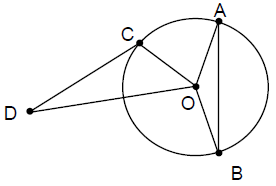
Determine o comprimento do menor arco AB na circunferência de centro O, representada na figura a seguir, sabendo que o segmento OD mede 12cm, os ângulos CÔD = 30° e OÂB = 15° e que a área do triângulo CDO é igual a 18 cm2.
Provas
The seven-decade journey to an expanded Panama Canal is coming to a close, despite one last obstacle.
(by David Z. Morris / April 17, 2015)
The Panama Canal is getting a major overhaul, and despite an unresolved lawsuit that has delayed the project, it’s poised to transform global trade dramatically.
The original Panama Canal remains of the most ambitious public works projects of all time. But it wasn’t quite ambitious enough: within a few years of its opening in 1914, it was too small for many military and cargo ships. The U.S. authorities then in control began excavation for larger locks in 1939—but that work came to a standstill as America entered World War II, and no effective progress was made on the project for the remainder of the 20th century.
That changed swiftly when the canal transitioned to full Panamanian control in 1999. By 2006, a detailed expansion plan had been drafted and approved by Panamanian voters in a 77% landslide. With a total budget of $5.2 billion, completion was initially projected for 2014. Last year, the canal netted $2.6 billion, roughly half of Panama’s national revenue. The Panama Canal Authority has projected that the expansion will increase that revenue eightfold by 2025.
There’s been a hitch in the expansion effort, however. A group of mostly European contractors known as the Grupo Unidos por el Canal has filed claims totaling more than a half billion dollars against the Panama Canal Authority, alleging that misinformation led to cost overruns.
But according to Dr. J. David Rogers, a professor of geological engineering at Missouri University of Science and Technology, who has worked closely with the Panamanians for more than a quarter-century, the real problem is that contractors knowingly underbid the job.
The canal expansion is about more than money to the Panamanians, according to Dr. Rogers. “It’s a national pride project for them. It’s their lifeblood,” he says of the Panamanians’ feelings about the canal. “It’s what makes them go.”
The same seriousness didn’t characterize Americans’ approach to canal expansion. Of a series of false starts and fizzled plans, the most amazing came as part of Operation Plowshare, the “Atoms for Peace” program of the U.S. Atomic Energy Agency (now the Department of Energy). Intended to highlight the peacetime usefulness of atomic warheads, Plowshare spent more than a decade exploring the possibility of widening the canal by detonating a string of nuclear warheads. Rising awareness of environmental risks in the 1960s scuttled the idea.
Under the current, nuke-free plan, new approach channels and locks are being excavated alongside the existing entrances, allowing operations to continue normally during construction. The new locks and channels will be about three times bigger, allowing the passage of more of today’s huge container ships. The maximum load will increase from about 5,000 containers to 12,000—though the very largest ships, which currently balloon up to 19,000 containers and primarily work routes between Europe and Asia through the Suez Canal, still won’t fit.
The expansion will provide cheaper shipping between Asia and the American Gulf Coast. Traffic that currently flows through West Coast ports such as Los Angeles and Long Beach—including huge amounts of Midwestern grain and coal—will soon move more directly through ports including Houston and Savannah. Ports along the U.S. Gulf and East coasts have been expanding to accommodate increased ship size and traffic.
The ongoing court battle means that even the Panama Canal Authority’s recently-updated 2016 target for completion may be missed. But a bigger canal is finally coming—and with it, a host of new possibilities.
(fortune.com/2015/04/17/panama-canal/)
Choose the correct answer.
Provas
The seven-decade journey to an expanded Panama Canal is coming to a close, despite one last obstacle.
(by David Z. Morris / April 17, 2015)
The Panama Canal is getting a major overhaul, and despite an unresolved lawsuit that has delayed the project, it’s poised to transform global trade dramatically.
The original Panama Canal remains of the most ambitious public works projects of all time. But it wasn’t quite ambitious enough: within a few years of its opening in 1914, it was too small for many military and cargo ships. The U.S. authorities then in control began excavation for larger locks in 1939—but that work came to a standstill as America entered World War II, and no effective progress was made on the project for the remainder of the 20th century.
That changed swiftly when the canal transitioned to full Panamanian control in 1999. By 2006, a detailed expansion plan had been drafted and approved by Panamanian voters in a 77% landslide. With a total budget of $5.2 billion, completion was initially projected for 2014. Last year, the canal netted $2.6 billion, roughly half of Panama’s national revenue. The Panama Canal Authority has projected that the expansion will increase that revenue eightfold by 2025.
There’s been a hitch in the expansion effort, however. A group of mostly European contractors known as the Grupo Unidos por el Canal has filed claims totaling more than a half billion dollars against the Panama Canal Authority, alleging that misinformation led to cost overruns.
But according to Dr. J. David Rogers, a professor of geological engineering at Missouri University of Science and Technology, who has worked closely with the Panamanians for more than a quarter-century, the real problem is that contractors knowingly underbid the job.
The canal expansion is about more than money to the Panamanians, according to Dr. Rogers. “It’s a national pride project for them. It’s their lifeblood,” he says of the Panamanians’ feelings about the canal. “It’s what makes them go.”
The same seriousness didn’t characterize Americans’ approach to canal expansion. Of a series of false starts and fizzled plans, the most amazing came as part of Operation Plowshare, the “Atoms for Peace” program of the U.S. Atomic Energy Agency (now the Department of Energy). Intended to highlight the peacetime usefulness of atomic warheads, Plowshare spent more than a decade exploring the possibility of widening the canal by detonating a string of nuclear warheads. Rising awareness of environmental risks in the 1960s scuttled the idea.
Under the current, nuke-free plan, new approach channels and locks are being excavated alongside the existing entrances, allowing operations to continue normally during construction. The new locks and channels will be about three times bigger, allowing the passage of more of today’s huge container ships. The maximum load will increase from about 5,000 containers to 12,000—though the very largest ships, which currently balloon up to 19,000 containers and primarily work routes between Europe and Asia through the Suez Canal, still won’t fit.
The expansion will provide cheaper shipping between Asia and the American Gulf Coast. Traffic that currently flows through West Coast ports such as Los Angeles and Long Beach—including huge amounts of Midwestern grain and coal—will soon move more directly through ports including Houston and Savannah. Ports along the U.S. Gulf and East coasts have been expanding to accommodate increased ship size and traffic.
The ongoing court battle means that even the Panama Canal Authority’s recently-updated 2016 target for completion may be missed. But a bigger canal is finally coming—and with it, a host of new possibilities.
(fortune.com/2015/04/17/panama-canal/)
Choose the correct alternative to complete the sentences below.
I - Simon is in ______ prison because he didn’t pay his taxes.
II - You have made ____ very good progress.
III - We didn’t have time to visit ____ Louvre when we were in Paris.
IV - I’ve always wanted to visit ____ Netherlands.
Provas
Por uma seção transversal de um fio cilíndrico de cobre passam, a cada hora, 9,00x10²² elétrons. O valor aproximado da corrente elétrica média no fio, em amperes, é
Dado: carga elementar e = 1,60x10⁻¹⁹C .
Provas
The seven-decade journey to an expanded Panama Canal is coming to a close, despite one last obstacle.
(by David Z. Morris / April 17, 2015)
The Panama Canal is getting a major overhaul, and despite an unresolved lawsuit that has delayed the project, it’s poised to transform global trade dramatically.
The original Panama Canal remains of the most ambitious public works projects of all time. But it wasn’t quite ambitious enough: within a few years of its opening in 1914, it was too small for many military and cargo ships. The U.S. authorities then in control began excavation for larger locks in 1939—but that work came to a standstill as America entered World War II, and no effective progress was made on the project for the remainder of the 20th century.
That changed swiftly when the canal transitioned to full Panamanian control in 1999. By 2006, a detailed expansion plan had been drafted and approved by Panamanian voters in a 77% landslide. With a total budget of $5.2 billion, completion was initially projected for 2014. Last year, the canal netted $2.6 billion, roughly half of Panama’s national revenue. The Panama Canal Authority has projected that the expansion will increase that revenue eightfold by 2025.
There’s been a hitch in the expansion effort, however. A group of mostly European contractors known as the Grupo Unidos por el Canal has filed claims totaling more than a half billion dollars against the Panama Canal Authority, alleging that misinformation led to cost overruns.
But according to Dr. J. David Rogers, a professor of geological engineering at Missouri University of Science and Technology, who has worked closely with the Panamanians for more than a quarter-century, the real problem is that contractors knowingly underbid the job.
The canal expansion is about more than money to the Panamanians, according to Dr. Rogers. “It’s a national pride project for them. It’s their lifeblood,” he says of the Panamanians’ feelings about the canal. “It’s what makes them go.”
The same seriousness didn’t characterize Americans’ approach to canal expansion. Of a series of false starts and fizzled plans, the most amazing came as part of Operation Plowshare, the “Atoms for Peace” program of the U.S. Atomic Energy Agency (now the Department of Energy). Intended to highlight the peacetime usefulness of atomic warheads, Plowshare spent more than a decade exploring the possibility of widening the canal by detonating a string of nuclear warheads. Rising awareness of environmental risks in the 1960s scuttled the idea.
Under the current, nuke-free plan, new approach channels and locks are being excavated alongside the existing entrances, allowing operations to continue normally during construction. The new locks and channels will be about three times bigger, allowing the passage of more of today’s huge container ships. The maximum load will increase from about 5,000 containers to 12,000—though the very largest ships, which currently balloon up to 19,000 containers and primarily work routes between Europe and Asia through the Suez Canal, still won’t fit.
The expansion will provide cheaper shipping between Asia and the American Gulf Coast. Traffic that currently flows through West Coast ports such as Los Angeles and Long Beach—including huge amounts of Midwestern grain and coal—will soon move more directly through ports including Houston and Savannah. Ports along the U.S. Gulf and East coasts have been expanding to accommodate increased ship size and traffic.
The ongoing court battle means that even the Panama Canal Authority’s recently-updated 2016 target for completion may be missed. But a bigger canal is finally coming—and with it, a host of new possibilities.
(fortune.com/2015/04/17/panama-canal/)
Choose the correct sentence.
Provas
Caderno Container