Foram encontradas 50 questões.
Aedes aegyptii: Culicidae: Diptera apresenta em seu ciclo de vida:
Provas

Sobre Apanteles: Braconidae, é correto afirmar que é:
Provas
Simbiose mutualística obrigatória ocorre nas associações entre:
Provas
As camadas que formam o integumento do inseto, do interior ao exterior, são:
Provas
Os possíveis taxa hierarquicamente superiores de Danaus são:
Provas
O gráfico abaixo, empregado no manejo integrado de pragas, representa a densidade populacional hipotética de uma espécie de inseto em uma cultura, em função do tempo, sendo NDE nível de dano econômico da espécie e PE a posição de equilíbrio da sua densidade populacional.
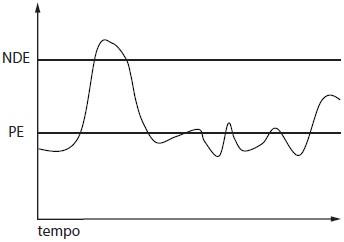
Neste contexto, é correto afirmar:
Provas
Text
Thinking the unthinkable
Today, it seems that no one is uninformed about the environment. Every day the media shows us more evidence of climate change: extreme weather, melting icecaps, and rising seas. Most of us believe we can do something to prevent global disaster, such as recycling, or conserving energy.
It’s strange to recall that, before the 1960s, few people knew of the damage we were doing to the planet. However, one scientist had already realized the dangers ahead. And today, this same man believes it may be too late to save the world.
In the 1960s, Professor James Lovelock came up with one of the most famous theories on the environment – the GAIA hypothesis. According to this hypothesis, the earth’s atmosphere, soil, and oceans work in concert to provide an inhabitable environment for humans. If we disrupt these elements too severely, the earth may one day become uninhabitable.
In the decade before he developed the Gaia hypothesis, Lovelock had created a device to detect atmospheric chemicals. With this device, he discovered particular chemicals, called CFCs. Later, other scientists discovered that these CFCs had damaged the earth’s ozone layer. Before then, we hadn’t knows about the hole in the ozone layer.
By 1979, Lovelock had put forward his theories on the environment, in his first book. At that time, few people believe him. Before scientists such as Lovelock publicized environmental issues, the environment hadn’t been a very fashionable topic. In 2004, after many people had only just started to accept the reality of global warming, Lovelock became convinced that climate change was irreversible. In 2006, he wrote another book describing his latest ideas. In 40 years, Lovelock believes large parts of the world will be desert. We will need to make synthesized food to feed the world’s population.
‘Is Lovelock right this time too? Surely we can prevent this nightmare, if we all recycle, use renewable energy, and travel less by plane and car? Lovelock disagrees. According to him, it is now impossible to reverse global warming. We did not act quickly enough when we had the chance. Renewable energy and recycling are a case of too little, too late.
Ultimately, if the human race is to survive, Lovelock believes we need to use more technology, not less. In his view, only nuclear energy can provide sufficient power for the planet. Now over 90 years old, Lovelock may not live to find out if he is right. But we will…
In the sentence:
“By 1979, Lovelock had put forward his theories on the environment, in his first book.”
The word “his” is used twice. In both cases it refers to:
Provas
Text
Thinking the unthinkable
Today, it seems that no one is uninformed about the environment. Every day the media shows us more evidence of climate change: extreme weather, melting icecaps, and rising seas. Most of us believe we can do something to prevent global disaster, such as recycling, or conserving energy.
It’s strange to recall that, before the 1960s, few people knew of the damage we were doing to the planet. However, one scientist had already realized the dangers ahead. And today, this same man believes it may be too late to save the world.
In the 1960s, Professor James Lovelock came up with one of the most famous theories on the environment – the GAIA hypothesis. According to this hypothesis, the earth’s atmosphere, soil, and oceans work in concert to provide an inhabitable environment for humans. If we disrupt these elements too severely, the earth may one day become uninhabitable.
In the decade before he developed the Gaia hypothesis, Lovelock had created a device to detect atmospheric chemicals. With this device, he discovered particular chemicals, called CFCs. Later, other scientists discovered that these CFCs had damaged the earth’s ozone layer. Before then, we hadn’t knows about the hole in the ozone layer.
By 1979, Lovelock had put forward his theories on the environment, in his first book. At that time, few people believe him. Before scientists such as Lovelock publicized environmental issues, the environment hadn’t been a very fashionable topic. In 2004, after many people had only just started to accept the reality of global warming, Lovelock became convinced that climate change was irreversible. In 2006, he wrote another book describing his latest ideas. In 40 years, Lovelock believes large parts of the world will be desert. We will need to make synthesized food to feed the world’s population.
‘Is Lovelock right this time too? Surely we can prevent this nightmare, if we all recycle, use renewable energy, and travel less by plane and car? Lovelock disagrees. According to him, it is now impossible to reverse global warming. We did not act quickly enough when we had the chance. Renewable energy and recycling are a case of too little, too late.
Ultimately, if the human race is to survive, Lovelock believes we need to use more technology, not less. In his view, only nuclear energy can provide sufficient power for the planet. Now over 90 years old, Lovelock may not live to find out if he is right. But we will…
About Professor James Lovelock, it is correct to state that:
Provas
Text
Thinking the unthinkable
Today, it seems that no one is uninformed about the environment. Every day the media shows us more evidence of climate change: extreme weather, melting icecaps, and rising seas. Most of us believe we can do something to prevent global disaster, such as recycling, or conserving energy.
It’s strange to recall that, before the 1960s, few people knew of the damage we were doing to the planet. However, one scientist had already realized the dangers ahead. And today, this same man believes it may be too late to save the world.
In the 1960s, Professor James Lovelock came up with one of the most famous theories on the environment – the GAIA hypothesis. According to this hypothesis, the earth’s atmosphere, soil, and oceans work in concert to provide an inhabitable environment for humans. If we disrupt these elements too severely, the earth may one day become uninhabitable.
In the decade before he developed the Gaia hypothesis, Lovelock had created a device to detect atmospheric chemicals. With this device, he discovered particular chemicals, called CFCs. Later, other scientists discovered that these CFCs had damaged the earth’s ozone layer. Before then, we hadn’t knows about the hole in the ozone layer.
By 1979, Lovelock had put forward his theories on the environment, in his first book. At that time, few people believe him. Before scientists such as Lovelock publicized environmental issues, the environment hadn’t been a very fashionable topic. In 2004, after many people had only just started to accept the reality of global warming, Lovelock became convinced that climate change was irreversible. In 2006, he wrote another book describing his latest ideas. In 40 years, Lovelock believes large parts of the world will be desert. We will need to make synthesized food to feed the world’s population.
‘Is Lovelock right this time too? Surely we can prevent this nightmare, if we all recycle, use renewable energy, and travel less by plane and car? Lovelock disagrees. According to him, it is now impossible to reverse global warming. We did not act quickly enough when we had the chance. Renewable energy and recycling are a case of too little, too late.
Ultimately, if the human race is to survive, Lovelock believes we need to use more technology, not less. In his view, only nuclear energy can provide sufficient power for the planet. Now over 90 years old, Lovelock may not live to find out if he is right. But we will…
The words: However and ultimately, are being used in the text as:
Provas
Text
Thinking the unthinkable
Today, it seems that no one is uninformed about the environment. Every day the media shows us more evidence of climate change: extreme weather, melting icecaps, and rising seas. Most of us believe we can do something to prevent global disaster, such as recycling, or conserving energy.
It’s strange to recall that, before the 1960s, few people knew of the damage we were doing to the planet. However, one scientist had already realized the dangers ahead. And today, this same man believes it may be too late to save the world.
In the 1960s, Professor James Lovelock came up with one of the most famous theories on the environment – the GAIA hypothesis. According to this hypothesis, the earth’s atmosphere, soil, and oceans work in concert to provide an inhabitable environment for humans. If we disrupt these elements too severely, the earth may one day become uninhabitable.
In the decade before he developed the Gaia hypothesis, Lovelock had created a device to detect atmospheric chemicals. With this device, he discovered particular chemicals, called CFCs. Later, other scientists discovered that these CFCs had damaged the earth’s ozone layer. Before then, we hadn’t knows about the hole in the ozone layer.
By 1979, Lovelock had put forward his theories on the environment, in his first book. At that time, few people believe him. Before scientists such as Lovelock publicized environmental issues, the environment hadn’t been a very fashionable topic. In 2004, after many people had only just started to accept the reality of global warming, Lovelock became convinced that climate change was irreversible. In 2006, he wrote another book describing his latest ideas. In 40 years, Lovelock believes large parts of the world will be desert. We will need to make synthesized food to feed the world’s population.
‘Is Lovelock right this time too? Surely we can prevent this nightmare, if we all recycle, use renewable energy, and travel less by plane and car? Lovelock disagrees. According to him, it is now impossible to reverse global warming. We did not act quickly enough when we had the chance. Renewable energy and recycling are a case of too little, too late.
Ultimately, if the human race is to survive, Lovelock believes we need to use more technology, not less. In his view, only nuclear energy can provide sufficient power for the planet. Now over 90 years old, Lovelock may not live to find out if he is right. But we will…
Choose the alternative that presents the correct meaning for the word “conserving”.
Provas
Caderno Container