Foram encontradas 577 questões.
“A empresa AOL bloqueou, por meio de seu filtro anti-spam, 1,5 bilhão de e-mails esse ano. Ou seja, oito em cada dez mensagens recebidas pelos 26 milhões de assinantes da AOL em todo o mundo foram classificadas como lixo eletrônico.”
Jornal O Globo, 29 dez. 2005.
De acordo com as informações apresentadas na reportagem acima, o número, em bilhões, de mensagens que não foram classificadas como lixo eletrônico correspondeu a:
Provas

Leonardo queria jogar “bolinhas de gude” mas, como não tinha com quem brincar, pegou suas 65 bolinhas e resolveu fazer várias letras “L” de tamanhos diferentes, seguindo o padrão apresentado abaixo.
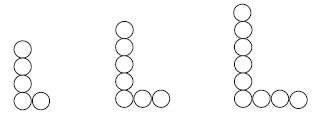
Leonardo fez o maior número possível de “L” e, assim, sobraram n bolinhas. O valor de n foi igual a:
Provas
Em uma fazenda de produção de soja, a plantação ocupava uma área de A hectares que proporcionava uma determinada produção anual de grãos. Com a utilização de novas técnicas de plantio e de colheita, foi possível reduzir a área A em 20% e, ainda assim, obter um aumento de 20% na produção anual de grãos. Considere que a produção média por hectare plantado seja obtida pela razão entre a produção anual da fazenda e a área plantada. Após a adoção das novas técnicas, a produção média por hectare plantado dessa fazenda aumentou em:
Provas
Seu João pagou uma dívida em três parcelas: a primeira correspondeu à metade da dívida e a segunda, à terça parte da dívida. Se a terceira parcela correspondeu a R$ 108,00, o valor, em reais, da primeira parcela paga por Seu João foi:
Provas
Na figura abaixo, as duas balanças estão equilibradas.
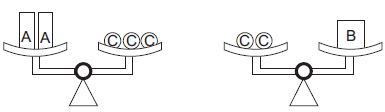
A razão entre as massas das caixas identificadas pelas letras A e B, nessa ordem, é expressa pela fração:
Provas
Numa cidade litorânea foi construída uma ciclovia ao longo da orla. A cada 400 m o piso da ciclovia apresenta marcações indicando a que distância de cada um dos extremos da ciclovia o ciclista se encontra, como exemplificado abaixo.
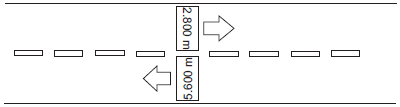
Um ciclista iniciou seu passeio em uma das marcações acima, e foi até o fim da ciclovia. Em seguida, ele pedalou em sentido contrário até o início da mesma e depois retornou ao ponto de partida. Desse modo, a distância total, em km, que este ciclista percorreu foi:
Provas
O gerente do setor de vendas de certa empresa planejou para 2006 um curso de atualização que deverá ser feito por todos os vendedores que integram suas três equipes. Ele decidiu que, a cada mês, um grupo de, no máximo, 30 pessoas fará o curso, sendo todas da mesma equipe. A tabela abaixo apresenta a composição de cada equipe, bem como o total de vendedores do setor de vendas.
|
Equipe |
homens | mulheres |
Total |
| A | 25 | 26 | 51 |
| B | 10 | 20 | 30 |
| C | 38 | 29 | 67 |
|
Total |
73 | 75 | 148 |
O número mínimo de meses necessários para que todos os vendedores desse setor façam o curso é:
Provas
Os alunos do Ensino Médio de uma escola escolheram o novo presidente do grêmio estudantil pelo voto direto. O gráfico abaixo mostra o número de votos que cada um dos três candidatos participantes recebeu.
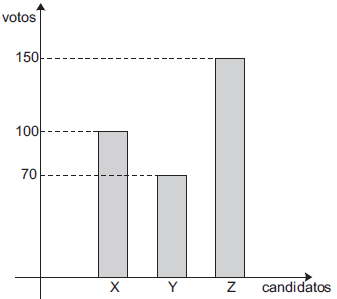
Houve, ainda, 30 alunos que votaram em branco ou anularam o voto. O percentual aproximado do total de votos que o candidato vencedor recebeu foi:
Provas
Getting e-mail right
We all know that personal relationships are important, and that no matter the quality of our ideas and our work, good relationships help us meet whatever goals we have. However, relationships that rely on email may face a difficult battle. Consider this study by Janice Nadler, Ph.D., a psychologist and law professor at Northwestern University. She paired law students from Northwestern and Duke and asked each pair to agree on the purchase of a car. The teams were to bargain entirely through e-mail, but half of them were secretly told to precede the negotiation with a brief getting-toknow chat on the good old telephone.
The results were dramatic. Negotiators who first chatted by phone were more than four times likelier to reach an agreement than those who used only e-mail. Those who never spoke were not only more likely to hit an impasse; they also often felt resentful and angry about the negotiation. Of course, all sorts of online exchanges can be misunderstood, but faceless strangers are especially likely to run into problems. Avoiding simple greetings, for example, can come across as rude, especially if communicators don’t know each other. A hurried email can give the impression that the exchange is unimportant. And because first impression set the tone for subsequent interactions, the exchange can go downhill quickly from there.
The missing element in electronic communications is rapport, says Dr. Nadler. Facial expressions, gestures, tone of voice are all cues missing in e-mail (and smileyface emoticons can’t do much to replace them). But because messages travel instantly, people act as if they are in face-to-face conversation. This illusion of proximity tricks us into thinking we can communicate about difficult subjects, such as disagreements or criticism, and that the tone of our writing will be perceived correctly.
Even if we have the best of intentions, the lack of continuous feedback, by which we constantly adjust our words in conversation, can cause us to go on happily composing messages that will make the recipient angry.
The less we know someone, the more likely we are to engage in what psychologists know as transference — the tendency to project our desires and fears onto another person. Without social cues, such tendencies can get out of control, causing us to interpret messages in ways that are overly self-affirming and potentially extremely inaccurate.
By Hara Estroff Marano. In: http://www.psychologytoday.com/articles/ (with slight adaptations)
According to the last paragraph, the probability that “transference” will take place is greater when you:
Provas
Getting e-mail right
We all know that personal relationships are important, and that no matter the quality of our ideas and our work, good relationships help us meet whatever goals we have. However, relationships that rely on email may face a difficult battle. Consider this study by Janice Nadler, Ph.D., a psychologist and law professor at Northwestern University. She paired law students from Northwestern and Duke and asked each pair to agree on the purchase of a car. The teams were to bargain entirely through e-mail, but half of them were secretly told to precede the negotiation with a brief getting-toknow chat on the good old telephone.
The results were dramatic. Negotiators who first chatted by phone were more than four times likelier to reach an agreement than those who used only e-mail. Those who never spoke were not only more likely to hit an impasse; they also often felt resentful and angry about the negotiation. Of course, all sorts of online exchanges can be misunderstood, but faceless strangers are especially likely to run into problems. Avoiding simple greetings, for example, can come across as rude, especially if communicators don’t know each other. A hurried email can give the impression that the exchange is unimportant. And because first impression set the tone for subsequent interactions, the exchange can go downhill quickly from there.
The missing element in electronic communications is rapport, says Dr. Nadler. Facial expressions, gestures, tone of voice are all cues missing in e-mail (and smileyface emoticons can’t do much to replace them). But because messages travel instantly, people act as if they are in face-to-face conversation. This illusion of proximity tricks us into thinking we can communicate about difficult subjects, such as disagreements or criticism, and that the tone of our writing will be perceived correctly.
Even if we have the best of intentions, the lack of continuous feedback, by which we constantly adjust our words in conversation, can cause us to go on happily composing messages that will make the recipient angry.
The less we know someone, the more likely we are to engage in what psychologists know as transference — the tendency to project our desires and fears onto another person. Without social cues, such tendencies can get out of control, causing us to interpret messages in ways that are overly self-affirming and potentially extremely inaccurate.
By Hara Estroff Marano. In: http://www.psychologytoday.com/articles/ (with slight adaptations)
Check the only alternative in which the fragment in bold type DOES NOT add a negative idea to the word.
Provas
Caderno Container