Foram encontradas 40 questões.
No Microsoft Word, caso se queira escrever a expressão x²+4 0, deve-se:
Provas

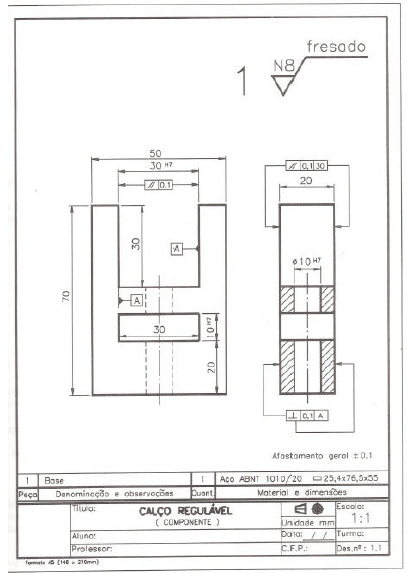
Com a representação da peça a seguir, pode-se dizer que:
Provas
A lei Federal 8666/93 estabelece normas gerais sobre:
Provas
Segundo a Lei Federal 8666/19 as compras, sempre que possível, deverão:
I submeter-se às condições de aquisição e pagamento semelhantes às do setor privado.
II balizar-se pelos preços praticados no âmbito dos órgãos e entidades da Administração Pública.
III ser supervisionadas por um técnico em contabilidade com registro no órgão profissional competente.
IV ser feitas, preferencialmente, de órgãos públicos.
V atender ao princípio da padronização, que imponha compatibilidade de especificações técnicas e de desempenho, observadas, quando for o caso, as condições de manutenção, assistência técnica e garantia oferecidas.
Estão corretas as afirmações:
Provas
TEXT 1: Food or Fuel ??
Bioenergy technologies use renewable biomass resources to produce energy related products including electricity, liquid, solid and gaseous fuels, heat, chemicals, and other materials.
The term "biomass" means any organic matter available on a renewable basis, including dedicated energy crops and trees, food crops, agricultural crop wastes and residues, wood wastes and residues, aquatic plants, animal wastes, municipal wastes, and other waste materials.
A common objection to biomass energy production is that it could divert agricultural production away from food crops in a hungry world - even leading to mass starvation in the poor countries. The basic argument is that energy-crop programmes compete with food crops in a number of ways and thus cause food shortages and price increases.
However, this so-called 'food versus fuel' controversy appears to have been exaggerated in many cases. The subject is far more complex than has generally been presented since agricultural and export policy and the politics of food availability are factors of far greater importance.
In poor countries, for example, local production of biofuels from locally grown crops, where appropriate, can cut dependence and cash expenditure on imported fuels, increase community self-reliance, and provide a stimulus for local job creation and growth. It can also cut dependence on fuel wood, which is often scarce and causes immense health problems, such as lung and heart diseases, through indoor air-pollution. And, as we've seen above, growing biofuel crops can encourage food-crop production rather than reducing it.
(adapted from: http://journeytoforever.org/biofuel_food.html)
TEXT 2: Biofuel crops 'will harm the planet'
Plans to promote "green" petrol and diesel made from plant crops will do the planet more harm than good and should be eliminated, a committee of MPs has demanded.
Ministers and the European Union (EU) were accused of being irresponsible in subsidizing fuels made from plants in the absence of international agreements to prevent rising the accelerated destruction of tropical forests.
The Environmental Audit Select Committee warned that growing conventional crops (such as wheat and sugar beet, in Britain) to make fuel would cause a rise in the price of food and make it harder to meet targets on water quality and on the conservation of birds, plants and animals.
Another report by the Royal Society has warned that biofuels were capable of doing more damage to the atmosphere than fossil fuels by encouraging the accelerated destruction of tropical forests and the increase in air pollution. MPs say the EU's plan for the certification of sustainable “green fuels” is not good enough."
(adapted from :http://www.telegraph.co.uk/earth/main.jhtml?xml=/earth/2008/01/20/eabio120.xml)
Glossary: fuel: combustível; matter: matéria; crop: plantação; waste: resíduo; starvation: fome; harm: dano; MPs: Membros do Parlamento
Observe the following sentence from TEXT 2:
“A report by the Royal Society has warned that….”
The use of the present perfect tense in this sentence implies:
Provas
TEXT 1: Food or Fuel ??
Bioenergy technologies use renewable biomass resources to produce energy related products including electricity, liquid, solid and gaseous fuels, heat, chemicals, and other materials.
The term "biomass" means any organic matter available on a renewable basis, including dedicated energy crops and trees, food crops, agricultural crop wastes and residues, wood wastes and residues, aquatic plants, animal wastes, municipal wastes, and other waste materials.
A common objection to biomass energy production is that it could divert agricultural production away from food crops in a hungry world - even leading to mass starvation in the poor countries. The basic argument is that energy-crop programmes compete with food crops in a number of ways and thus cause food shortages and price increases.
However, this so-called 'food versus fuel' controversy appears to have been exaggerated in many cases. The subject is far more complex than has generally been presented since agricultural and export policy and the politics of food availability are factors of far greater importance.
In poor countries, for example, local production of biofuels from locally grown crops, where appropriate, can cut dependence and cash expenditure on imported fuels, increase community self-reliance, and provide a stimulus for local job creation and growth. It can also cut dependence on fuel wood, which is often scarce and causes immense health problems, such as lung and heart diseases, through indoor air-pollution. And, as we've seen above, growing biofuel crops can encourage food-crop production rather than reducing it.
(adapted from: http://journeytoforever.org/biofuel_food.html)
TEXT 2: Biofuel crops 'will harm the planet'
Plans to promote "green" petrol and diesel made from plant crops will do the planet more harm than good and should be eliminated, a committee of MPs has demanded.
Ministers and the European Union (EU) were accused of being irresponsible in subsidizing fuels made from plants in the absence of international agreements to prevent rising the accelerated destruction of tropical forests.
The Environmental Audit Select Committee warned that growing conventional crops (such as wheat and sugar beet, in Britain) to make fuel would cause a rise in the price of food and make it harder to meet targets on water quality and on the conservation of birds, plants and animals.
Another report by the Royal Society has warned that biofuels were capable of doing more damage to the atmosphere than fossil fuels by encouraging the accelerated destruction of tropical forests and the increase in air pollution. MPs say the EU's plan for the certification of sustainable “green fuels” is not good enough."
(adapted from :http://www.telegraph.co.uk/earth/main.jhtml?xml=/earth/2008/01/20/eabio120.xml)
Glossary: fuel: combustível; matter: matéria; crop: plantação; waste: resíduo; starvation: fome; harm: dano; MPs: Membros do Parlamento
Regarding the information present in texts 1 and 2, match COLUMN 2 according to COLUMN 1.
COLUMN 1
1- Examples of organic matter from which biomass may be derived. (text 1)
2- Examples of possible benefits of local biofuel production. (text 1)
3- Examples of conventional crops which might be used to make biofuel in Britain. (text 2)
4- Examples of possible consequences of biofuels. (text 2)
5- Examples of possible health problems caused by indoor pollution. (text 1)
COLUMN 2
( ) destruction of tropical forests and increase in air pollution
( ) job creation, community self-reliance, cash expenditure cut
( ) lung and heart diseases
( ) aquatic plants, animal wastes, municipal wastes, and other waste materials
( ) wheat and sugar beets
Now, chose the correct order, according to your answers in COLUMN 2.
Provas
TEXT 1: Food or Fuel ??
Bioenergy technologies use renewable biomass resources to produce energy related products including electricity, liquid, solid and gaseous fuels, heat, chemicals, and other materials.
The term "biomass" means any organic matter available on a renewable basis, including dedicated energy crops and trees, food crops, agricultural crop wastes and residues, wood wastes and residues, aquatic plants, animal wastes, municipal wastes, and other waste materials.
A common objection to biomass energy production is that it could divert agricultural production away from food crops in a hungry world - even leading to mass starvation in the poor countries. The basic argument is that energy-crop programmes compete with food crops in a number of ways and thus cause food shortages and price increases.
However, this so-called 'food versus fuel' controversy appears to have been exaggerated in many cases. The subject is far more complex than has generally been presented since agricultural and export policy and the politics of food availability are factors of far greater importance.
In poor countries, for example, local production of biofuels from locally grown crops, where appropriate, can cut dependence and cash expenditure on imported fuels, increase community self-reliance, and provide a stimulus for local job creation and growth. It can also cut dependence on fuel wood, which is often scarce and causes immense health problems, such as lung and heart diseases, through indoor air-pollution. And, as we've seen above, growing biofuel crops can encourage food-crop production rather than reducing it.
(adapted from: http://journeytoforever.org/biofuel_food.html)
TEXT 2: Biofuel crops 'will harm the planet'
Plans to promote "green" petrol and diesel made from plant crops will do the planet more harm than good and should be eliminated, a committee of MPs has demanded.
Ministers and the European Union (EU) were accused of being irresponsible in subsidizing fuels made from plants in the absence of international agreements to prevent rising the accelerated destruction of tropical forests.
The Environmental Audit Select Committee warned that growing conventional crops (such as wheat and sugar beet, in Britain) to make fuel would cause a rise in the price of food and make it harder to meet targets on water quality and on the conservation of birds, plants and animals.
Another report by the Royal Society has warned that biofuels were capable of doing more damage to the atmosphere than fossil fuels by encouraging the accelerated destruction of tropical forests and the increase in air pollution. MPs say the EU's plan for the certification of sustainable “green fuels” is not good enough."
(adapted from :http://www.telegraph.co.uk/earth/main.jhtml?xml=/earth/2008/01/20/eabio120.xml)
Glossary: fuel: combustível; matter: matéria; crop: plantação; waste: resíduo; starvation: fome; harm: dano; MPs: Membros do Parlamento
The two texts above comment on different aspects of the use of bionergy. What topics are focused in text 1 and text 2, respectively?
Provas
TEXT 1: Food or Fuel ??
Bioenergy technologies use renewable biomass resources to produce energy related products including electricity, liquid, solid and gaseous fuels, heat, chemicals, and other materials.
The term "biomass" means any organic matter available on a renewable basis, including dedicated energy crops and trees, food crops, agricultural crop wastes and residues, wood wastes and residues, aquatic plants, animal wastes, municipal wastes, and other waste materials.
A common objection to biomass energy production is that it could divert agricultural production away from food crops in a hungry world - even leading to mass starvation in the poor countries. The basic argument is that energy-crop programmes compete with food crops in a number of ways and thus cause food shortages and price increases.
However, this so-called 'food versus fuel' controversy appears to have been exaggerated in many cases. The subject is far more complex than has generally been presented since agricultural and export policy and the politics of food availability are factors of far greater importance.
In poor countries, for example, local production of biofuels from locally grown crops, where appropriate, can cut dependence and cash expenditure on imported fuels, increase community self-reliance, and provide a stimulus for local job creation and growth. It can also cut dependence on fuel wood, which is often scarce and causes immense health problems, such as lung and heart diseases, through indoor air-pollution. And, as we've seen above, growing biofuel crops can encourage food-crop production rather than reducing it.
(adapted from: http://journeytoforever.org/biofuel_food.html)
TEXT 2: Biofuel crops 'will harm the planet'
Plans to promote "green" petrol and diesel made from plant crops will do the planet more harm than good and should be eliminated, a committee of MPs has demanded.
Ministers and the European Union (EU) were accused of being irresponsible in subsidizing fuels made from plants in the absence of international agreements to prevent rising the accelerated destruction of tropical forests.
The Environmental Audit Select Committee warned that growing conventional crops (such as wheat and sugar beet, in Britain) to make fuel would cause a rise in the price of food and make it harder to meet targets on water quality and on the conservation of birds, plants and animals.
Another report by the Royal Society has warned that biofuels were capable of doing more damage to the atmosphere than fossil fuels by encouraging the accelerated destruction of tropical forests and the increase in air pollution. MPs say the EU's plan for the certification of sustainable “green fuels” is not good enough."
(adapted from :http://www.telegraph.co.uk/earth/main.jhtml?xml=/earth/2008/01/20/eabio120.xml)
Glossary: fuel: combustível; matter: matéria; crop: plantação; waste: resíduo; starvation: fome; harm: dano; MPs: Membros do Parlamento
Both texts above are concerned with polemic views regarding the use of bioenergy. In terms of the position adopted in each text, the texts express:
Provas
TEXT 1: Food or Fuel ??
Bioenergy technologies use renewable biomass resources to produce energy related products including electricity, liquid, solid and gaseous fuels, heat, chemicals, and other materials.
The term "biomass" means any organic matter available on a renewable basis, including dedicated energy crops and trees, food crops, agricultural crop wastes and residues, wood wastes and residues, aquatic plants, animal wastes, municipal wastes, and other waste materials.
A common objection to biomass energy production is that it could divert agricultural production away from food crops in a hungry world - even leading to mass starvation in the poor countries. The basic argument is that energy-crop programmes compete with food crops in a number of ways and thus cause food shortages and price increases.
However, this so-called 'food versus fuel' controversy appears to have been exaggerated in many cases. The subject is far more complex than has generally been presented since agricultural and export policy and the politics of food availability are factors of far greater importance.
In poor countries, for example, local production of biofuels from locally grown crops, where appropriate, can cut dependence and cash expenditure on imported fuels, increase community self-reliance, and provide a stimulus for local job creation and growth. It can also cut dependence on fuel wood, which is often scarce and causes immense health problems, such as lung and heart diseases, through indoor air-pollution. And, as we've seen above, growing biofuel crops can encourage food-crop production rather than reducing it.
(adapted from: http://journeytoforever.org/biofuel_food.html)
TEXT 2: Biofuel crops 'will harm the planet'
Plans to promote "green" petrol and diesel made from plant crops will do the planet more harm than good and should be eliminated, a committee of MPs has demanded.
Ministers and the European Union (EU) were accused of being irresponsible in subsidizing fuels made from plants in the absence of international agreements to prevent rising the accelerated destruction of tropical forests.
The Environmental Audit Select Committee warned that growing conventional crops (such as wheat and sugar beet, in Britain) to make fuel would cause a rise in the price of food and make it harder to meet targets on water quality and on the conservation of birds, plants and animals.
Another report by the Royal Society has warned that biofuels were capable of doing more damage to the atmosphere than fossil fuels by encouraging the accelerated destruction of tropical forests and the increase in air pollution. MPs say the EU's plan for the certification of sustainable “green fuels” is not good enough."
(adapted from :http://www.telegraph.co.uk/earth/main.jhtml?xml=/earth/2008/01/20/eabio120.xml)
Glossary: fuel: combustível; matter: matéria; crop: plantação; waste: resíduo; starvation: fome; harm: dano; MPs: Membros do Parlamento
In the last paragraph of text 1, the modal verb “can” is used three times. In those three cases, what meaning does it convey?
Provas
De acordo com a Norma 8196/1999, podem ser utilizadas como escalas de ampliação as seguintes:
Provas
Caderno Container