Foram encontradas 75 questões.
Considere a versão tridimensional da Tabela Periódica sugerida pelo químico Paul Giguère. Nesta representação, a Tabela Periódica se assemelha a um catavento onde os blocos s, p, d, f são faces duplas formadoras das pás do catavento e onde o eixo de sustentação está fixado ao longo do bloco s.
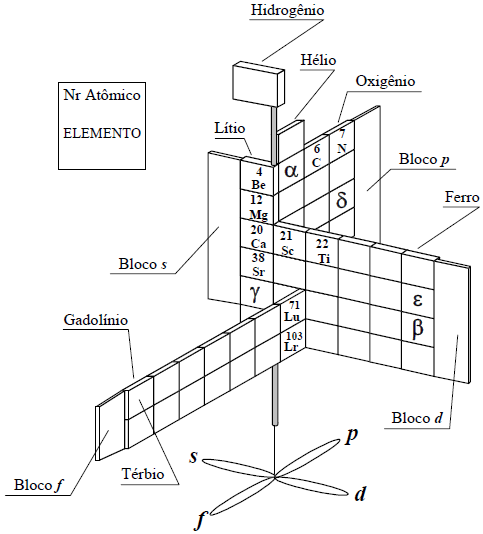
Em relação à tabela acima, assinale a alternativa correta.
Provas

Billions of dollars spent on defeating improvised explosive devices (IED) are beginning to show what technology can and cannot do for the evolving struggle.
Two platoons of U.S. Army scouts are in a field deep in the notorious “Triangle of Death” south of Baghdad, a region of countless clashes between Sunni insurgents and Shia militias. The platoons are guided by a local man who’s warned them of pressure-plate improvised explosive devices, designed to explode when stepped on. He has assured them that he knows where the IED’s are, which means he is almost certainly a former Sunni insurgent.
The platoons come under harassing fire. It stops, but later the tension mounts again as they maneuver near an abandoned house known to shelter al-Qaeda fighters. A shot rings out; the scouts take cover.
They don’t realize it’s just their local guide, with an itchy trigger finger, taking the potshot at the house.
The lieutenant leading the patrol summons three riflemen to cover the abandoned house.
Then all hell breaks loose. One of the riflemen, a sergeant, steps on a pressure-plate IED. The blast badly injures him, the two other riflemen, and the lieutenant. A Navy explosives specialist along on the mission immediately springs into action, using classified gear to comb the area for more bombs. Until he gives the all clear, no one can move, not even to tend the bleeding men. Meanwhile, one of the frozen-inspace scouts notices another IED right next to him and gives a shout, provoking more combing in his area. Then a big area has to be cleared so that the medevac helicopter already on the way can land.
That incident, which took place on 7 November 2007, exhibits many of the hallmarks of the missions in Iraq and Afghanistan – a small patrol; a local man of dubious background; Navy specialists working with soldiers on dry land; and costly technologies pressed into service against cheap and crude weapons.
And, most of all, death by IED.
The word underlined in the sentence “That incident, which took place on 7 November 2007, exhibits many of the hallmarks of the missions in Iraq and Afghanistan ...” can be replaced by which of the following expressions, still keeping the same meaning?
Provas
Billions of dollars spent on defeating improvised explosive devices (IED) are beginning to show what technology can and cannot do for the evolving struggle.
Two platoons of U.S. Army scouts are in a field deep in the notorious “Triangle of Death” south of Baghdad, a region of countless clashes between Sunni insurgents and Shia militias. The platoons are guided by a local man who’s warned them of pressure-plate improvised explosive devices, designed to explode when stepped on. He has assured them that he knows where the IED’s are, which means he is almost certainly a former Sunni insurgent.
The platoons come under harassing fire. It stops, but later the tension mounts again as they maneuver near an abandoned house known to shelter al-Qaeda fighters. A shot rings out; the scouts take cover.
They don’t realize it’s just their local guide, with an itchy trigger finger, taking the potshot at the house.
The lieutenant leading the patrol summons three riflemen to cover the abandoned house.
Then all hell breaks loose. One of the riflemen, a sergeant, steps on a pressure-plate IED. The blast badly injures him, the two other riflemen, and the lieutenant. A Navy explosives specialist along on the mission immediately springs into action, using classified gear to comb the area for more bombs. Until he gives the all clear, no one can move, not even to tend the bleeding men. Meanwhile, one of the frozen-inspace scouts notices another IED right next to him and gives a shout, provoking more combing in his area. Then a big area has to be cleared so that the medevac helicopter already on the way can land.
That incident, which took place on 7 November 2007, exhibits many of the hallmarks of the missions in Iraq and Afghanistan – a small patrol; a local man of dubious background; Navy specialists working with soldiers on dry land; and costly technologies pressed into service against cheap and crude weapons.
And, most of all, death by IED.
The sentence “Then all hell breaks loose.” means that ...
Provas
Billions of dollars spent on defeating improvised explosive devices (IED) are beginning to show what technology can and cannot do for the evolving struggle.
Two platoons of U.S. Army scouts are in a field deep in the notorious “Triangle of Death” south of Baghdad, a region of countless clashes between Sunni insurgents and Shia militias. The platoons are guided by a local man who’s warned them of pressure-plate improvised explosive devices, designed to explode when stepped on. He has assured them that he knows where the IED’s are, which means he is almost certainly a former Sunni insurgent.
The platoons come under harassing fire. It stops, but later the tension mounts again as they maneuver near an abandoned house known to shelter al-Qaeda fighters. A shot rings out; the scouts take cover.
They don’t realize it’s just their local guide, with an itchy trigger finger, taking the potshot at the house.
The lieutenant leading the patrol summons three riflemen to cover the abandoned house.
Then all hell breaks loose. One of the riflemen, a sergeant, steps on a pressure-plate IED. The blast badly injures him, the two other riflemen, and the lieutenant. A Navy explosives specialist along on the mission immediately springs into action, using classified gear to comb the area for more bombs. Until he gives the all clear, no one can move, not even to tend the bleeding men. Meanwhile, one of the frozen-inspace scouts notices another IED right next to him and gives a shout, provoking more combing in his area. Then a big area has to be cleared so that the medevac helicopter already on the way can land.
That incident, which took place on 7 November 2007, exhibits many of the hallmarks of the missions in Iraq and Afghanistan – a small patrol; a local man of dubious background; Navy specialists working with soldiers on dry land; and costly technologies pressed into service against cheap and crude weapons.
And, most of all, death by IED.
According to the text, it is correct to say that improvised explosive devices ...
Provas
Billions of dollars spent on defeating improvised explosive devices (IED) are beginning to show what technology can and cannot do for the evolving struggle.
Two platoons of U.S. Army scouts are in a field deep in the notorious “Triangle of Death” south of Baghdad, a region of countless clashes between Sunni insurgents and Shia militias. The platoons are guided by a local man who’s warned them of pressure-plate improvised explosive devices, designed to explode when stepped on. He has assured them that he knows where the IED’s are, which means he is almost certainly a former Sunni insurgent.
The platoons come under harassing fire. It stops, but later the tension mounts again as they maneuver near an abandoned house known to shelter al-Qaeda fighters. A shot rings out; the scouts take cover.
They don’t realize it’s just their local guide, with an itchy trigger finger, taking the potshot at the house.
The lieutenant leading the patrol summons three riflemen to cover the abandoned house.
Then all hell breaks loose. One of the riflemen, a sergeant, steps on a pressure-plate IED. The blast badly injures him, the two other riflemen, and the lieutenant. A Navy explosives specialist along on the mission immediately springs into action, using classified gear to comb the area for more bombs. Until he gives the all clear, no one can move, not even to tend the bleeding men. Meanwhile, one of the frozen-inspace scouts notices another IED right next to him and gives a shout, provoking more combing in his area. Then a big area has to be cleared so that the medevac helicopter already on the way can land.
That incident, which took place on 7 November 2007, exhibits many of the hallmarks of the missions in Iraq and Afghanistan – a small patrol; a local man of dubious background; Navy specialists working with soldiers on dry land; and costly technologies pressed into service against cheap and crude weapons.
And, most of all, death by IED.
The guide of the U.S. platoon ...
Provas
Billions of dollars spent on defeating improvised explosive devices (IED) are beginning to show what technology can and cannot do for the evolving struggle.
Two platoons of U.S. Army scouts are in a field deep in the notorious “Triangle of Death” south of Baghdad, a region of countless clashes between Sunni insurgents and Shia militias. The platoons are guided by a local man who’s warned them of pressure-plate improvised explosive devices, designed to explode when stepped on. He has assured them that he knows where the IED’s are, which means he is almost certainly a former Sunni insurgent.
The platoons come under harassing fire. It stops, but later the tension mounts again as they maneuver near an abandoned house known to shelter al-Qaeda fighters. A shot rings out; the scouts take cover.
They don’t realize it’s just their local guide, with an itchy trigger finger, taking the potshot at the house.
The lieutenant leading the patrol summons three riflemen to cover the abandoned house.
Then all hell breaks loose. One of the riflemen, a sergeant, steps on a pressure-plate IED. The blast badly injures him, the two other riflemen, and the lieutenant. A Navy explosives specialist along on the mission immediately springs into action, using classified gear to comb the area for more bombs. Until he gives the all clear, no one can move, not even to tend the bleeding men. Meanwhile, one of the frozen-inspace scouts notices another IED right next to him and gives a shout, provoking more combing in his area. Then a big area has to be cleared so that the medevac helicopter already on the way can land.
That incident, which took place on 7 November 2007, exhibits many of the hallmarks of the missions in Iraq and Afghanistan – a small patrol; a local man of dubious background; Navy specialists working with soldiers on dry land; and costly technologies pressed into service against cheap and crude weapons.
And, most of all, death by IED.
The scene narrated in this passage shows that...
Provas
Billions of dollars spent on defeating improvised explosive devices (IED) are beginning to show what technology can and cannot do for the evolving struggle.
Two platoons of U.S. Army scouts are in a field deep in the notorious “Triangle of Death” south of Baghdad, a region of countless clashes between Sunni insurgents and Shia militias. The platoons are guided by a local man who’s warned them of pressure-plate improvised explosive devices, designed to explode when stepped on. He has assured them that he knows where the IED’s are, which means he is almost certainly a former Sunni insurgent.
The platoons come under harassing fire. It stops, but later the tension mounts again as they maneuver near an abandoned house known to shelter al-Qaeda fighters. A shot rings out; the scouts take cover.
They don’t realize it’s just their local guide, with an itchy trigger finger, taking the potshot at the house.
The lieutenant leading the patrol summons three riflemen to cover the abandoned house.
Then all hell breaks loose. One of the riflemen, a sergeant, steps on a pressure-plate IED. The blast badly injures him, the two other riflemen, and the lieutenant. A Navy explosives specialist along on the mission immediately springs into action, using classified gear to comb the area for more bombs. Until he gives the all clear, no one can move, not even to tend the bleeding men. Meanwhile, one of the frozen-inspace scouts notices another IED right next to him and gives a shout, provoking more combing in his area. Then a big area has to be cleared so that the medevac helicopter already on the way can land.
That incident, which took place on 7 November 2007, exhibits many of the hallmarks of the missions in Iraq and Afghanistan – a small patrol; a local man of dubious background; Navy specialists working with soldiers on dry land; and costly technologies pressed into service against cheap and crude weapons.
And, most of all, death by IED.
What scene is narrated in this passage?
Provas
In countless panel discussions on the future of technology, I’m not sure I ever got anything right. As I look back on technological progress, I experience first retrospective surprise, then surprise that I’m surprised, because it all crept up on me when I wasn’t looking. How can something like Google feel so inevitable and yet be impossible to predict? I’m filled with wonder at all that we engineers have accomplished, and I take great communal pride in how we’ve changed the world in so many ways. Decades ago I never dreamed we would have satellite navigation, computers in our pockets, the Internet, cellphones, neither robots that would explore Mars. How did all this happen, and what are we doing for our next trick? The software pioneer Alan Kay has said that the best way to predict the future is to invent it, and that’s what we’ve been busy doing.
According to the passage, we can say that its author
Provas
In countless panel discussions on the future of technology, I’m not sure I ever got anything right. As I look back on technological progress, I experience first retrospective surprise, then surprise that I’m surprised, because it all crept up on me when I wasn’t looking. How can something like Google feel so inevitable and yet be impossible to predict? I’m filled with wonder at all that we engineers have accomplished, and I take great communal pride in how we’ve changed the world in so many ways. Decades ago I never dreamed we would have satellite navigation, computers in our pockets, the Internet, cellphones, neither robots that would explore Mars. How did all this happen, and what are we doing for our next trick? The software pioneer Alan Kay has said that the best way to predict the future is to invent it, and that’s what we’ve been busy doing.
In the sentence “Decades ago I never dreamed we would have satellite navigation, computers in our pockets, the Internet, cellphones, neither robots that would explore Mars.” the word 'neither' can be changed for which of the following words, still keeping the same meaning and grammatical accuracy?
Provas
In countless panel discussions on the future of technology, I’m not sure I ever got anything right. As I look back on technological progress, I experience first retrospective surprise, then surprise that I’m surprised, because it all crept up on me when I wasn’t looking. How can something like Google feel so inevitable and yet be impossible to predict? I’m filled with wonder at all that we engineers have accomplished, and I take great communal pride in how we’ve changed the world in so many ways. Decades ago I never dreamed we would have satellite navigation, computers in our pockets, the Internet, cellphones, neither robots that would explore Mars. How did all this happen, and what are we doing for our next trick? The software pioneer Alan Kay has said that the best way to predict the future is to invent it, and that’s what we’ve been busy doing.
The sentence “How can something like Google feel so inevitable and yet be impossible to predict?” means that …
Provas
Caderno Container