Foram encontradas 70 questões.
Atenção: Para responder às questões de números 23 e 24, considere a charge abaixo.

Na charge editorial, os funcionários têm algo em comum. Nota-se em suas falas que todos
Provas
Questão presente nas seguintes provas

Atenção: Para responder às questões de números 20 a 22, considere o texto abaixo.
A BOLD AND FOOLISH EFFORT TO PREDICT THE FUTURE OF COMPUTING
What today's prophets of technology say about the day after tomorrow
By Ed Regis
PREDICTING WHAT NEXT YEAR'S (OR NEXT WEEK'S) IPAD IS GOING to be like is hard enough. Knowing what computers in general will be like 150 years from now - an eternity in technology development - is . On the other hand, technology prophets, computer pioneers and researchers have never been known for their reticence on the subject of the future. So we thought it wouldn't hurt to ask them. For starters, will there even be computers in the far future? "There will definitely be computers," says nanotechnology oracle Eric Drexler of the University of Oxford. "They're more fundamental than the wheel."
George Dyson, author of books about computers and global intelligence, says, "I can't tell you a lot about computing 50, 100 and 150 years ago but really nothing about computing 50, 100 or 150 years in the future. It's just truly impossible to predict: all I can guarantee is that any prediction will be wrong!" He then relents and makes one: "In 150 years most of the important computation will be analog computation (for the same reason that most of the important numbers are real numbers but not integers) and the notion of alldigital computation will be a quaint relic."
Ivan Sutherland, who invented Sketchpad, the basis for today's ubiquitous graphical user interface says, "I have no clue about the state of the world 150 years from now. If you want to know the future, ask the young people who will create it."
(Disponível em: Magazine Scientific American. janeiro de 2013. v. 308. p. 30, Adaptado)
A BOLD AND FOOLISH EFFORT TO PREDICT THE FUTURE OF COMPUTING
What today's prophets of technology say about the day after tomorrow
By Ed Regis
PREDICTING WHAT NEXT YEAR'S (OR NEXT WEEK'S) IPAD IS GOING to be like is hard enough. Knowing what computers in general will be like 150 years from now - an eternity in technology development - is
. On the other hand, technology prophets, computer pioneers and researchers have never been known for their reticence on the subject of the future. So we thought it wouldn't hurt to ask them. For starters, will there even be computers in the far future? "There will definitely be computers," says nanotechnology oracle Eric Drexler of the University of Oxford. "They're more fundamental than the wheel."George Dyson, author of books about computers and global intelligence, says, "I can't tell you a lot about computing 50, 100 and 150 years ago but really nothing about computing 50, 100 or 150 years in the future. It's just truly impossible to predict: all I can guarantee is that any prediction will be wrong!" He then relents and makes one: "In 150 years most of the important computation will be analog computation (for the same reason that most of the important numbers are real numbers but not integers) and the notion of alldigital computation will be a quaint relic."
Ivan Sutherland, who invented Sketchpad, the basis for today's ubiquitous graphical user interface says, "I have no clue about the state of the world 150 years from now. If you want to know the future, ask the young people who will create it."
(Disponível em: Magazine Scientific American. janeiro de 2013. v. 308. p. 30, Adaptado)
O texto exibe opiniões sobre a existência de computadores no futuro. Além disso, segundo o texto, há também o questionamento sobre
Provas
Questão presente nas seguintes provas
Atenção: Para responder às questões de números 20 a 22, considere o texto abaixo.
A BOLD AND FOOLISH EFFORT TO PREDICT THE FUTURE OF COMPUTING
What today's prophets of technology say about the day after tomorrow
By Ed Regis
PREDICTING WHAT NEXT YEAR'S (OR NEXT WEEK'S) IPAD IS GOING to be like is hard enough. Knowing what computers in general will be like 150 years from now - an eternity in technology development - is . On the other hand, technology prophets, computer pioneers and researchers have never been known for their reticence on the subject of the future. So we thought it wouldn't hurt to ask them. For starters, will there even be computers in the far future? "There will definitely be computers," says nanotechnology oracle Eric Drexler of the University of Oxford. "They're more fundamental than the wheel."
George Dyson, author of books about computers and global intelligence, says, "I can't tell you a lot about computing 50, 100 and 150 years ago but really nothing about computing 50, 100 or 150 years in the future. It's just truly impossible to predict: all I can guarantee is that any prediction will be wrong!" He then relents and makes one: "In 150 years most of the important computation will be analog computation (for the same reason that most of the important numbers are real numbers but not integers) and the notion of alldigital computation will be a quaint relic."
Ivan Sutherland, who invented Sketchpad, the basis for today's ubiquitous graphical user interface says, "I have no clue about the state of the world 150 years from now. If you want to know the future, ask the young people who will create it."
(Disponível em: Magazine Scientific American. janeiro de 2013. v. 308. p. 30, Adaptado)
A BOLD AND FOOLISH EFFORT TO PREDICT THE FUTURE OF COMPUTING
What today's prophets of technology say about the day after tomorrow
By Ed Regis
PREDICTING WHAT NEXT YEAR'S (OR NEXT WEEK'S) IPAD IS GOING to be like is hard enough. Knowing what computers in general will be like 150 years from now - an eternity in technology development - is
. On the other hand, technology prophets, computer pioneers and researchers have never been known for their reticence on the subject of the future. So we thought it wouldn't hurt to ask them. For starters, will there even be computers in the far future? "There will definitely be computers," says nanotechnology oracle Eric Drexler of the University of Oxford. "They're more fundamental than the wheel."George Dyson, author of books about computers and global intelligence, says, "I can't tell you a lot about computing 50, 100 and 150 years ago but really nothing about computing 50, 100 or 150 years in the future. It's just truly impossible to predict: all I can guarantee is that any prediction will be wrong!" He then relents and makes one: "In 150 years most of the important computation will be analog computation (for the same reason that most of the important numbers are real numbers but not integers) and the notion of alldigital computation will be a quaint relic."
Ivan Sutherland, who invented Sketchpad, the basis for today's ubiquitous graphical user interface says, "I have no clue about the state of the world 150 years from now. If you want to know the future, ask the young people who will create it."
(Disponível em: Magazine Scientific American. janeiro de 2013. v. 308. p. 30, Adaptado)
Um dos especialistas em computação citados no texto
Provas
Questão presente nas seguintes provas
Atenção: Para responder às questões de números 20 a 22, considere o texto abaixo.
A BOLD AND FOOLISH EFFORT TO PREDICT THE FUTURE OF COMPUTING
What today's prophets of technology say about the day after tomorrow
By Ed Regis
PREDICTING WHAT NEXT YEAR'S (OR NEXT WEEK'S) IPAD IS GOING to be like is hard enough. Knowing what computers in general will be like 150 years from now - an eternity in technology development - is . On the other hand, technology prophets, computer pioneers and researchers have never been known for their reticence on the subject of the future. So we thought it wouldn't hurt to ask them. For starters, will there even be computers in the far future? "There will definitely be computers," says nanotechnology oracle Eric Drexler of the University of Oxford. "They're more fundamental than the wheel."
George Dyson, author of books about computers and global intelligence, says, "I can't tell you a lot about computing 50, 100 and 150 years ago but really nothing about computing 50, 100 or 150 years in the future. It's just truly impossible to predict: all I can guarantee is that any prediction will be wrong!" He then relents and makes one: "In 150 years most of the important computation will be analog computation (for the same reason that most of the important numbers are real numbers but not integers) and the notion of alldigital computation will be a quaint relic."
Ivan Sutherland, who invented Sketchpad, the basis for today's ubiquitous graphical user interface says, "I have no clue about the state of the world 150 years from now. If you want to know the future, ask the young people who will create it."
(Disponível em: Magazine Scientific American. janeiro de 2013. v. 308. p. 30, Adaptado)
A BOLD AND FOOLISH EFFORT TO PREDICT THE FUTURE OF COMPUTING
What today's prophets of technology say about the day after tomorrow
By Ed Regis
PREDICTING WHAT NEXT YEAR'S (OR NEXT WEEK'S) IPAD IS GOING to be like is hard enough. Knowing what computers in general will be like 150 years from now - an eternity in technology development - is
. On the other hand, technology prophets, computer pioneers and researchers have never been known for their reticence on the subject of the future. So we thought it wouldn't hurt to ask them. For starters, will there even be computers in the far future? "There will definitely be computers," says nanotechnology oracle Eric Drexler of the University of Oxford. "They're more fundamental than the wheel."George Dyson, author of books about computers and global intelligence, says, "I can't tell you a lot about computing 50, 100 and 150 years ago but really nothing about computing 50, 100 or 150 years in the future. It's just truly impossible to predict: all I can guarantee is that any prediction will be wrong!" He then relents and makes one: "In 150 years most of the important computation will be analog computation (for the same reason that most of the important numbers are real numbers but not integers) and the notion of alldigital computation will be a quaint relic."
Ivan Sutherland, who invented Sketchpad, the basis for today's ubiquitous graphical user interface says, "I have no clue about the state of the world 150 years from now. If you want to know the future, ask the young people who will create it."
(Disponível em: Magazine Scientific American. janeiro de 2013. v. 308. p. 30, Adaptado)
Os termos que, de acordo com o contexto, preenchem adequadamente a lacuna
no primeiro parágrafo do texto sãoProvas
Questão presente nas seguintes provas
- Pronome subjetivo | Subjective pronoun
- Interpretação de texto | Reading comprehension
- Gramática - Língua InglesaPronomes | PronounsPronome relativo | Relative clauses
Atenção: Para responder às questões de números 17 a 19, considere o texto abaixo.
Facebook and mobile phones
Will Home work?
Apr 4th 2013, 23:24 by M.G | SAN FRANCISCO
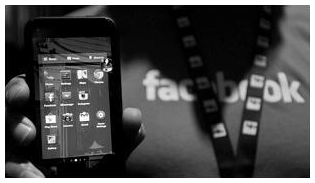
A DAY after the mobile phone celebrated its 40th birthday, Facebook has produced something that it hopes will make certain of the devices even more useful. On April 4th the giant social network unveiled Home, new software that is designed to give it more prominence on mobile phones powered by Android, an operating system developed by Google.
This matters because more and more folk are now accessing social networks from mobile devices rather than from desktop computers and because mobile advertising revenues are growing fast, albeit from a low base. Without a robust mobile presence, Facebook could see some of its users siphoned off by rivals born in the mobile era. And it could miss out on a potentially massive source of new revenue.
There had been speculation that Facebook was working on a phone of its own, or at least on a mobile operating system to rival Android or Apple’s iOS. But dabbling in hardware at this stage of its development would be a huge risk for Facebook and developing a rival operating system would risk alienating Apple and Google, whose mobile platforms have helped power its advertising growth. EMarketer, a research firm, reckons Facebook is on track to win 11% of the $13.6 billion likely to be spent around the world on mobile ads this year.
(Adaptado de http://www.economist.com/blogs/babbage/2013/04/facebook-and-mobile-phones; Acessado em 08/04/2013)
Facebook and mobile phones
Will Home work?
Apr 4th 2013, 23:24 by M.G | SAN FRANCISCO
A DAY after the mobile phone celebrated its 40th birthday, Facebook has produced something that it hopes will make certain of the devices even more useful. On April 4th the giant social network unveiled Home, new software that is designed to give it more prominence on mobile phones powered by Android, an operating system developed by Google.
This matters because more and more folk are now accessing social networks from mobile devices rather than from desktop computers and because mobile advertising revenues are growing fast, albeit from a low base. Without a robust mobile presence, Facebook could see some of its users siphoned off by rivals born in the mobile era. And it could miss out on a potentially massive source of new revenue.
There had been speculation that Facebook was working on a phone of its own, or at least on a mobile operating system to rival Android or Apple’s iOS. But dabbling in hardware at this stage of its development would be a huge risk for Facebook and developing a rival operating system would risk alienating Apple and Google, whose mobile platforms have helped power its advertising growth. EMarketer, a research firm, reckons Facebook is on track to win 11% of the $13.6 billion likely to be spent around the world on mobile ads this year.
(Adaptado de http://www.economist.com/blogs/babbage/2013/04/facebook-and-mobile-phones; Acessado em 08/04/2013)
As palavras it e whose, que aparecem sublinhadas no texto, referem-se, respectivamente, a
Provas
Questão presente nas seguintes provas
Atenção: Para responder às questões de números 17 a 19, considere o texto abaixo.
Facebook and mobile phones
Will Home work?
Apr 4th 2013, 23:24 by M.G | SAN FRANCISCO
A DAY after the mobile phone celebrated its 40th birthday, Facebook has produced something that it hopes will make certain of the devices even more useful. On April 4th the giant social network unveiled Home, new software that is designed to give it more prominence on mobile phones powered by Android, an operating system developed by Google.
This matters because more and more folk are now accessing social networks from mobile devices rather than from desktop computers and because mobile advertising revenues are growing fast, albeit from a low base. Without a robust mobile presence, Facebook could see some of its users siphoned off by rivals born in the mobile era. And it could miss out on a potentially massive source of new revenue.
There had been speculation that Facebook was working on a phone of its own, or at least on a mobile operating system to rival Android or Apple’s iOS. But dabbling in hardware at this stage of its development would be a huge risk for Facebook and developing a rival operating system would risk alienating Apple and Google, whose mobile platforms have helped power its advertising growth. EMarketer, a research firm, reckons Facebook is on track to win 11% of the $13.6 billion likely to be spent around the world on mobile ads this year.
(Adaptado de http://www.economist.com/blogs/babbage/2013/04/facebook-and-mobile-phones; Acessado em 08/04/2013)
Facebook and mobile phones
Will Home work?
Apr 4th 2013, 23:24 by M.G | SAN FRANCISCO
A DAY after the mobile phone celebrated its 40th birthday, Facebook has produced something that it hopes will make certain of the devices even more useful. On April 4th the giant social network unveiled Home, new software that is designed to give it more prominence on mobile phones powered by Android, an operating system developed by Google.
This matters because more and more folk are now accessing social networks from mobile devices rather than from desktop computers and because mobile advertising revenues are growing fast, albeit from a low base. Without a robust mobile presence, Facebook could see some of its users siphoned off by rivals born in the mobile era. And it could miss out on a potentially massive source of new revenue.
There had been speculation that Facebook was working on a phone of its own, or at least on a mobile operating system to rival Android or Apple’s iOS. But dabbling in hardware at this stage of its development would be a huge risk for Facebook and developing a rival operating system would risk alienating Apple and Google, whose mobile platforms have helped power its advertising growth. EMarketer, a research firm, reckons Facebook is on track to win 11% of the $13.6 billion likely to be spent around the world on mobile ads this year.
(Adaptado de http://www.economist.com/blogs/babbage/2013/04/facebook-and-mobile-phones; Acessado em 08/04/2013)
Da leitura do texto, tem-se a informação de que
Provas
Questão presente nas seguintes provas
Atenção: Para responder às questões de números 17 a 19, considere o texto abaixo.
Facebook and mobile phones
Will Home work?
Apr 4th 2013, 23:24 by M.G | SAN FRANCISCO
A DAY after the mobile phone celebrated its 40th birthday, Facebook has produced something that it hopes will make certain of the devices even more useful. On April 4th the giant social network unveiled Home, new software that is designed to give it more prominence on mobile phones powered by Android, an operating system developed by Google.
This matters because more and more folk are now accessing social networks from mobile devices rather than from desktop computers and because mobile advertising revenues are growing fast, albeit from a low base. Without a robust mobile presence, Facebook could see some of its users siphoned off by rivals born in the mobile era. And it could miss out on a potentially massive source of new revenue.
There had been speculation that Facebook was working on a phone of its own, or at least on a mobile operating system to rival Android or Apple’s iOS. But dabbling in hardware at this stage of its development would be a huge risk for Facebook and developing a rival operating system would risk alienating Apple and Google, whose mobile platforms have helped power its advertising growth. EMarketer, a research firm, reckons Facebook is on track to win 11% of the $13.6 billion likely to be spent around the world on mobile ads this year.
(Adaptado de http://www.economist.com/blogs/babbage/2013/04/facebook-and-mobile-phones; Acessado em 08/04/2013)
Facebook and mobile phones
Will Home work?
Apr 4th 2013, 23:24 by M.G | SAN FRANCISCO
A DAY after the mobile phone celebrated its 40th birthday, Facebook has produced something that it hopes will make certain of the devices even more useful. On April 4th the giant social network unveiled Home, new software that is designed to give it more prominence on mobile phones powered by Android, an operating system developed by Google.
This matters because more and more folk are now accessing social networks from mobile devices rather than from desktop computers and because mobile advertising revenues are growing fast, albeit from a low base. Without a robust mobile presence, Facebook could see some of its users siphoned off by rivals born in the mobile era. And it could miss out on a potentially massive source of new revenue.
There had been speculation that Facebook was working on a phone of its own, or at least on a mobile operating system to rival Android or Apple’s iOS. But dabbling in hardware at this stage of its development would be a huge risk for Facebook and developing a rival operating system would risk alienating Apple and Google, whose mobile platforms have helped power its advertising growth. EMarketer, a research firm, reckons Facebook is on track to win 11% of the $13.6 billion likely to be spent around the world on mobile ads this year.
(Adaptado de http://www.economist.com/blogs/babbage/2013/04/facebook-and-mobile-phones; Acessado em 08/04/2013)
De acordo com as informações contidas no texto, a rede social Facebook
Provas
Questão presente nas seguintes provas
Fiquei velho na época errada. Toda a minha vida foi assim. Cheguei às diferentes fases da vida quando elas já tinham perdido as suas vantagens, ou antes de adquirirem vantagens novas. Veja você: a infância. Houve um tempo em que as crianças, assim, da minha classe, eram tratadas como príncipes e princesas. Não foi o meu. E a adolescência? A revolução sexual começou exatamente um dia depois do meu casamento. Quando cheguei à juventude, os jovens adultos estavam cuidando de suas carteiras de ações da Bolsa.
Tudo bem, pensei. Vou me preparar para a velhice e seus privilégios, com minha pensão e meus netos. Mas a Previdência está quase quebrando e meus netos, quando me olham, parecem estar me medindo para um asilo geriátrico. Cheguei tarde também à velhice.
(Adaptado de: Luis Fernando Verissimo. Em algum lugar do paraíso. Rio de Janeiro: Objetiva, 2011, p. 48 e 49)
Tudo bem, pensei. Vou me preparar para a velhice e seus privilégios, com minha pensão e meus netos. Mas a Previdência está quase quebrando e meus netos, quando me olham, parecem estar me medindo para um asilo geriátrico. Cheguei tarde também à velhice.
(Adaptado de: Luis Fernando Verissimo. Em algum lugar do paraíso. Rio de Janeiro: Objetiva, 2011, p. 48 e 49)
A ideia principal do texto está resumida de modo adequado na seguinte formulação: O autor acredita que
Provas
Questão presente nas seguintes provas
O cego de Ipanema
Caminha depressa e ritmado, a cabeça balançando no alto, como um instrumento, a captar os ruídos, os perigos, as ameaças da Terra. Os cegos, habitantes de mundo esquemático, sabem aonde ir, desconhecendo as nossas incertezas e perplexidades. Sua bengala bate na calçada com um barulho seco e compassado, investigando o mundo geométrico. A cidade é um vasto diagrama, de que ele conhece as distâncias, as curvas, os ângulos. Sua vida é uma série de operações matemáticas, enquanto a nossa costuma ser uma improvisação constante, uma tonteira, um desvario. Sua sobrevivência é um cálculo.
Um dia eu o vi em um momento particular de mansidão e ternura. Um rapaz que limpava um cadillac sobre o passeio deixou que ele apalpasse todo o carro. Suas mãos percorreram o para-lama, o painel, os faróis, os frisos. Seu rosto se iluminava, deslumbrado, como se seus olhos vissem pela primeira vez uma grande cachoeira, o mar de encontro aos rochedos, uma tempestade, uma bela mulher.
(Paulo Mendes Campos. O amor acaba. São Paulo: Companhia das Letras, 2013, p. 31)
Caminha depressa e ritmado, a cabeça balançando no alto, como um instrumento, a captar os ruídos, os perigos, as ameaças da Terra. Os cegos, habitantes de mundo esquemático, sabem aonde ir, desconhecendo as nossas incertezas e perplexidades. Sua bengala bate na calçada com um barulho seco e compassado, investigando o mundo geométrico. A cidade é um vasto diagrama, de que ele conhece as distâncias, as curvas, os ângulos. Sua vida é uma série de operações matemáticas, enquanto a nossa costuma ser uma improvisação constante, uma tonteira, um desvario. Sua sobrevivência é um cálculo.
Um dia eu o vi em um momento particular de mansidão e ternura. Um rapaz que limpava um cadillac sobre o passeio deixou que ele apalpasse todo o carro. Suas mãos percorreram o para-lama, o painel, os faróis, os frisos. Seu rosto se iluminava, deslumbrado, como se seus olhos vissem pela primeira vez uma grande cachoeira, o mar de encontro aos rochedos, uma tempestade, uma bela mulher.
(Paulo Mendes Campos. O amor acaba. São Paulo: Companhia das Letras, 2013, p. 31)
Está clara e correta a redação deste livre comentário sobre o texto:
Provas
Questão presente nas seguintes provas
O cego de Ipanema
Caminha depressa e ritmado, a cabeça balançando no alto, como um instrumento, a captar os ruídos, os perigos, as ameaças da Terra. Os cegos, habitantes de mundo esquemático, sabem aonde ir, desconhecendo as nossas incertezas e perplexidades. Sua bengala bate na calçada com um barulho seco e compassado, investigando o mundo geométrico. A cidade é um vasto diagrama, de que ele conhece as distâncias, as curvas, os ângulos. Sua vida é uma série de operações matemáticas, enquanto a nossa costuma ser uma improvisação constante, uma tonteira, um desvario. Sua sobrevivência é um cálculo.
Um dia eu o vi em um momento particular de mansidão e ternura. Um rapaz que limpava um cadillac sobre o passeio deixou que ele apalpasse todo o carro. Suas mãos percorreram o para-lama, o painel, os faróis, os frisos. Seu rosto se iluminava, deslumbrado, como se seus olhos vissem pela primeira vez uma grande cachoeira, o mar de encontro aos rochedos, uma tempestade, uma bela mulher.
(Paulo Mendes Campos. O amor acaba. São Paulo: Companhia das Letras, 2013, p. 31)
Caminha depressa e ritmado, a cabeça balançando no alto, como um instrumento, a captar os ruídos, os perigos, as ameaças da Terra. Os cegos, habitantes de mundo esquemático, sabem aonde ir, desconhecendo as nossas incertezas e perplexidades. Sua bengala bate na calçada com um barulho seco e compassado, investigando o mundo geométrico. A cidade é um vasto diagrama, de que ele conhece as distâncias, as curvas, os ângulos. Sua vida é uma série de operações matemáticas, enquanto a nossa costuma ser uma improvisação constante, uma tonteira, um desvario. Sua sobrevivência é um cálculo.
Um dia eu o vi em um momento particular de mansidão e ternura. Um rapaz que limpava um cadillac sobre o passeio deixou que ele apalpasse todo o carro. Suas mãos percorreram o para-lama, o painel, os faróis, os frisos. Seu rosto se iluminava, deslumbrado, como se seus olhos vissem pela primeira vez uma grande cachoeira, o mar de encontro aos rochedos, uma tempestade, uma bela mulher.
(Paulo Mendes Campos. O amor acaba. São Paulo: Companhia das Letras, 2013, p. 31)
Atente para as seguintes afirmações:
I. A assertiva Sua sobrevivência é um cálculo (1ºparágrafo), referida ao homem cego, justifica-se pelas expressões que imediatamente a antecedem, entre elas improvisação constante.
II. No 1º parágrafo, o autor do texto estabelece uma relação entre as capacidades desenvolvidas pelos homens cegos e a autossuficiência com que parecem explorar os caminhos da vida.
III. Testemunhando um momento particular de mansidão e ternura (2º parágrafo), o autor equipara um prazer possível ao cego e o desfrute visual de formas naturais.
Em relação ao texto, está correto o que se afirma SOMENTE em
Provas
Questão presente nas seguintes provas
Cadernos
Caderno Container