Foram encontradas 50 questões.
Ao nível do mar, a água solidifica a 0 ºC e ferve a 100 ºC. Em países de colonização britânica, as temperaturas são medidas na escala termométrica proposta, em 1724, por Gabriel Fahrenheit. Nessa escala, ao nível do mar, a água solidifica a 32 ºF e ferve a 212 ºF. Em certa cidade, a água ferve a 90 ºC. Na Escala Fahrenheit, essa temperatura corresponde a
Provas

A figura abaixo ilustra uma associação entre os resistores R1, R2 e R3. Um desses resistores tem resistência igual a 1!$ \Omega !$, outro, igual a 2!$ \Omega !$ e o terceiro, a 4!$ \Omega !$. Os pontos A e B são submetidos a uma diferença de potencial igual a 7V.
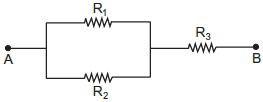
Relacionando os valores de R1, R2 e R3 à intensidade da corrente elétrica, obtém-se:
| Valores de R1, R2 e R3, respectivamente |
Intensidade da corrente que passa por |
Provas

Em um experimento, duas bolas idênticas, A e B, são abandonadas, simultaneamente, de uma mesma altura. Uma delas cai livremente, na vertical, até se chocar com o solo. A outra desce por uma rampa, como ilustra a figura.
Suponha que a altura da queda é de 1,5 m e que o peso de cada bola é igual a 2 newtons.
Desprezando-se todas as forças dissipativas, inclusive a de resistência do ar, e considerando-se a aceleração da gravidade igual a 10 m/s2, a velocidade, em m/s, com que a bola A atinge o solo é
Provas
Em um experimento, duas bolas idênticas, A e B, são abandonadas, simultaneamente, de uma mesma altura. Uma delas cai livremente, na vertical, até se chocar com o solo. A outra desce por uma rampa, como ilustra a figura.
Suponha que a altura da queda é de 1,5 m e que o peso de cada bola é igual a 2 newtons.
O trabalho realizado pelos pesos das bolas A e B é, respectivamente, de
Provas
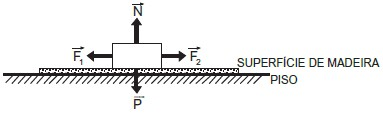
A figura acima ilustra um bloco sobre uma superfície de madeira horizontal que, por sua vez, se apoia sobre um piso também horizontal. Além das forças peso e normal, apenas duas outras forças agem sobre o bloco: !$ \vec{\text{F}_1} !$ e !$ \vec{\text{F}_2} !$, que não são, necessariamente, iguais em módulo. Nessa perspectiva, analise as afirmações.
I – Se a resultante das forças que agem sobre o bloco for igual a zero, esse corpo estará necessariamente em repouso.
II – Se a resultante das forças que agem sobre o bloco for diferente de zero, esse corpo estará necessariamente em movimento retilíneo e uniforme.
III – Inclinando-se a superfície de madeira, com relação ao piso, de um ângulo qualquer entre 0º e 90º, a intensidade da força normal passa a valer menos do que valia quando a superfície estava na horizontal.
Está(ão) correta(s) APENAS a(s) afirmação(ões)
Provas
THE OIL RECYCLING PROCESS
These days, it is relatively common for people to recycle paper, glass and metals (aluminum and steel). The infrastructure and services for this recycling activity are available and relatively well understood. However, the recycling of petroleum products is less well known and sometimes confusing. Regulators and recycling agencies have effectively communicated with businesses the need for and benefits of recycling used oil but more can be done to communicate with individuals who work on their cars or trucks in the garage at home. These individuals generate significant quantities of used petroleum products that need to be recycled.
Many individuals who are unfamiliar with the importance of recycling used oil are unconsciously harming the environment by throwing it away with their normal garbage or emptying their used oil into storm drains. Such actions, especially emptying used oil into storm drains, can cause real harm to the environment. To put it into perspective, just one gallon of used oil can contaminate 1 million gallons of water.
Recycling your used motor oil keeps it out of our rivers, lakes, streams and even the ground water. In many cases, that means keeping it out of our drinking water, off our beaches, and away from wildlife. We all share the responsibility of protecting our environment and keeping our waters safe. Recycling used oil allows us to continue to enjoy what many of us take for granted every day – clean water.
There are many practical uses for used motor oil. A primary use is to refine it into a base stock for lubricating oil. This process is very similar to the refining of crude oil. The result is that the rerefined oil is of as high a quality as a virgin oil product. In fact, rerefining used oil takes from 50 to 85 percent less energy than refining crude oil.
A secondary use of the used oil is to burn it for energy. Large industrial boilers can efficiently burn the used oil with minimum pollution. As a result, some used oil is sent to power plants or cement kilns to be burned as fuel. On a smaller scale, small quantities of used oil are burned in specially designed heaters to provide space heating for small businesses.
As you can see, recycled used oil probably touches your life everyday without you even knowing it. As consumers, we all benefit from recycling used motor oil. From augmenting our oil supplies and helping to generate heat, to protecting the environment, recycling oil just makes good sense.
Extracted from: http://www.recycleoil.org/recycle_oil_process/benefits.html, access on June 12, 2009.
According to the text, “recycling oil just makes good sense.” because
Provas
THE OIL RECYCLING PROCESS
These days, it is relatively common for people to recycle paper, glass and metals (aluminum and steel). The infrastructure and services for this recycling activity are available [A] and relatively well understood. However, the recycling of petroleum products is less well known and sometimes confusing. Regulators and recycling agencies have effectively communicated with businesses the need for and benefits of recycling used oil but more can be done to communicate with individuals who work on their cars or trucks in the garage at home. These individuals generate significant quantities of used petroleum products that need to be recycled.
Many individuals who are unfamiliar with the importance of recycling used oil are unconsciously harming [B] the environment by throwing it away [C] with their normal garbage or emptying their used oil into storm drains. Such actions, especially emptying used oil into storm drains, can cause real harm to the environment. To put it into perspective, just one gallon of used oil can contaminate [D] 1 million gallons of water.
Recycling your used motor oil keeps it out of our rivers, lakes, streams and even the ground water. In many cases, that means keeping it out of our drinking water, off our beaches, and away from wildlife. We all share the responsibility of protecting our environment and keeping our waters safe. Recycling used oil allows us to continue to enjoy what many of us take for granted every day – clean water.
There are many practical uses for used motor oil. A primary use is to refine it into a base stock for lubricating oil. This process is very similar to the refining of crude oil. The result is that the rerefined oil is of as high a quality as a virgin oil product. In fact, rerefining used oil takes from 50 to 85 percent less energy than refining crude oil.
A secondary use of the used oil is to burn it for energy. Large industrial boilers can efficiently burn the used oil with minimum pollution. As a result, some used oil is sent to power plants or cement kilns to be burned as fuel. On a smaller scale, small quantities of used oil are burned in specially designed heaters to provide space heating for small businesses.
As you can see, recycled used oil probably touches your life everyday without you even knowing it. As consumers, we all benefit from recycling used motor oil. From augmenting [E] our oil supplies and helping to generate heat, to protecting the environment, recycling oil just makes good sense.
Extracted from: http://www.recycleoil.org/recycle_oil_process/benefits.html, access on June 12, 2009.
In terms of meaning, it is correct to affirm that
Provas
THE OIL RECYCLING PROCESS
These days, it is relatively common for people to recycle paper, glass and metals (aluminum and steel). The infrastructure and services for this recycling activity are available and relatively well understood. However, the recycling of petroleum products is less well known and sometimes confusing. Regulators and recycling agencies have effectively communicated with businesses the need for and benefits of recycling used oil but more can be done to communicate with individuals who work on their cars or trucks in the garage at home. These individuals generate significant quantities of used petroleum products that need to be recycled.
Many individuals who are unfamiliar with the importance of recycling used oil are unconsciously harming the environment by throwing it away with their normal garbage or emptying their used oil into storm drains. Such actions, especially emptying used oil into storm drains, can cause real harm to the environment. To put it into perspective, just one gallon of used oil can contaminate 1 million gallons of water.
Recycling your used motor oil keeps it out of our rivers, lakes, streams and even the ground water. In many cases, that means keeping it out of our drinking water, off our beaches, and away from wildlife. We all share the responsibility of protecting our environment and keeping our waters safe. Recycling used oil allows us to continue to enjoy what many of us take for granted every day – clean water.
There are many practical uses for used motor oil. A primary use is to refine it into a base stock for lubricating oil. This process is very similar to the refining of crude oil. The result is that the rerefined oil is of as high a quality as a virgin oil product. In fact, rerefining used oil takes from 50 to 85 percent less energy than refining crude oil.
A secondary use of the used oil is to burn it for energy. Large industrial boilers can efficiently burn the used oil with minimum pollution. As a result, some used oil is sent to power plants or cement kilns to be burned as fuel. On a smaller scale, small quantities of used oil are burned in specially designed heaters to provide space heating for small businesses.
As you can see, recycled used oil probably touches your life everyday without you even knowing it. As consumers, we all benefit from recycling used motor oil. From augmenting our oil supplies and helping to generate heat, to protecting the environment, recycling oil just makes good sense.
Extracted from: http://www.recycleoil.org/recycle_oil_process/benefits.html, access on June 12, 2009.
“As a result” in the sentence “As a result, some used oil is sent to power plants or cement kilns to be burned as fuel.” can be substituted by
Provas
THE OIL RECYCLING PROCESS
These days, it is relatively common for people to recycle paper, glass and metals (aluminum and steel). The infrastructure and services for this recycling activity are available and relatively well understood. However, the recycling of petroleum products is less well known and sometimes confusing. Regulators and recycling agencies have effectively communicated with businesses the need for and benefits of recycling used oil but more can be done to communicate with individuals who work on their cars or trucks in the garage at home. These individuals generate significant quantities of used petroleum products that need to be recycled.
Many individuals who are unfamiliar with the importance of recycling used oil are unconsciously harming the environment by throwing it away with their normal garbage [A] or emptying their used oil into storm drains. Such actions, especially emptying used oil into storm drains, can cause real harm to the environment. To put it into perspective, just one gallon of used oil can contaminate 1 million gallons of water.
Recycling your used motor oil keeps it out of our rivers, lakes, streams [B] and even the ground water. In many cases, that means keeping it out of our drinking water, off our beaches, and away from wildlife. We all share the responsibility of protecting our environment and keeping our waters safe. Recycling used oil allows us to continue to enjoy what many of us take for granted every day – clean water.
There are many practical uses for used motor oil. A primary use is to refine it into a base stock for lubricating oil. [C] This process is very similar to the refining of crude oil. The result is that the rerefined oil is of as high a quality as a virgin oil product. In fact, rerefining used oil takes from 50 to 85 percent less energy than refining crude oil.
A secondary use of the used oil is to burn it for energy. [D] Large industrial boilers can efficiently burn the used oil with minimum pollution. As a result, some used oil is sent to power plants or cement kilns to be burned as fuel. On a smaller scale, small quantities of used oil are burned in specially designed heaters to provide space heating for small businesses.
As you can see, recycled used oil probably touches your life everyday without you even knowing it. [E] As consumers, we all benefit from recycling used motor oil. From augmenting our oil supplies and helping to generate heat, to protecting the environment, recycling oil just makes good sense.
Extracted from: http://www.recycleoil.org/recycle_oil_process/benefits.html, access on June 12, 2009.
Check the only item in which “it” does NOT refer to oil.
Provas
THE OIL RECYCLING PROCESS
These days, it is relatively common for people to recycle paper, glass and metals (aluminum and steel). The infrastructure and services for this recycling activity are available and relatively well understood. However, the recycling of petroleum products is less well known and sometimes confusing. Regulators and recycling agencies have effectively communicated with businesses the need for and benefits of recycling used oil but more can be done to communicate with individuals who work on their cars or trucks in the garage at home. These individuals generate significant quantities of used petroleum products that need to be recycled.
Many individuals who are unfamiliar with the importance of recycling used oil are unconsciously harming the environment by throwing it away with their normal garbage or emptying their used oil into storm drains. Such actions, especially emptying used oil into storm drains, can cause real harm to the environment. To put it into perspective, just one gallon of used oil can contaminate 1 million gallons of water.
Recycling your used motor oil keeps it out of our rivers, lakes, streams and even the ground water. In many cases, that means keeping it out of our drinking water, off our beaches, and away from wildlife. We all share the responsibility of protecting our environment and keeping our waters safe. Recycling used oil allows us to continue to enjoy what many of us take for granted every day – clean water.
There are many practical uses for used motor oil. A primary use is to refine it into a base stock for lubricating oil. This process is very similar to the refining of crude oil. The result is that the rerefined oil is of as high a quality as a virgin oil product. In fact, rerefining used oil takes from 50 to 85 percent less energy than refining crude oil.
A secondary use of the used oil is to burn it for energy. Large industrial boilers can efficiently burn the used oil with minimum pollution. As a result, some used oil is sent to power plants or cement kilns to be burned as fuel. On a smaller scale, small quantities of used oil are burned in specially designed heaters to provide space heating for small businesses.
As you can see, recycled used oil probably touches your life everyday without you even knowing it. As consumers, we all benefit from recycling used motor oil. From augmenting our oil supplies and helping to generate heat, to protecting the environment, recycling oil just makes good sense.
Extracted from: http://www.recycleoil.org/recycle_oil_process/benefits.html, access on June 12, 2009.
The main intention of the article is to
Provas
Caderno Container