Foram encontradas 40 questões.
TEXT II –
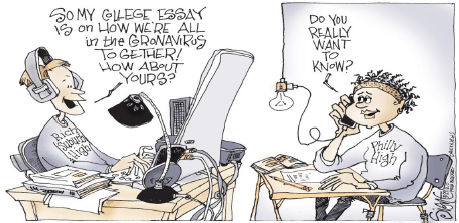
Available at: https://www.inquirer.com/opinion/cartoons/coronavirus-schools-education-equity-
virtual-learning-20200329.html. Accessed on September 22nd, 2020)
Based on the cartoon, we may infer that
Provas

TEXT I -
How teachers are trying to reach English language learners during pandemic
(Apr 29, 2020 4:23 pm – by Jo Napolitano, The Hechinger Report)
Administrators at Dorchester School District Two in suburban Summerville, South Carolina, were well aware of the digital divide when they decided to give students both paper and online resources after shuttering schools because of coronavirus. But even their best efforts have some educators worried, especially those who teach English to speakers of other languages (ESOL).
Katie Crook, Newington Elementary School’s only ESOL teacher, didn’t hear back from many of the parents she texted early on. Many of her students, she said, were born in the United States and live in Spanish-speaking homes.
So she tried a decidedly old-school means of communication: letter writing.
Crook began each note with a joyful “Hello!” before telling students how much she missed them. “I am so sad that school is closed and we can’t work together right now,” she wrote. “If you want, you can write me back and tell me how you are and what you have been up to. Love, Mrs. Crook.” The veteran teacher included a self-addressed stamped envelope along with every card.

“Their lives have been totally turned upside down. There is so much goodness in school that they are missing out on. I want them to know their teachers love them and miss them and are really excited about when they get to see them again,” she said.
Crook received her first response April 9, and she was so thrilled by the correspondence that she tore it open right away. The letter, written on a blank piece of computer paper, was just a few sentences long — it began with, “Hi Mrs. Crook, I miss you to (sic)” — but was more than enough to prove her effort was worth it.
Among the more than 55 million students forced to stay home because of coronavirus-related school closures are at least 4.9 million English-language learners (ELLs). These students made up 9.6 percent of all school-age children in the fall of 2016, the last year for which such data is available. The number has likely risen, according to experts.
By law, schools must ensure ELLs “can participate meaningfully and equally in educational programs,” according to the U.S. Department of Justice, Civil Rights Division, and the U.S. Department of Education’s Office of Civil Rights. And they must communicate with families in a language they understand.
Schools often fell short of these requirements, even before the current crisis.
Tim Boals, executive director of WIDA, a group that provides educational resources for multilingual learners, worries the shutdowns will result in an even greater marginalization of those students. “I think schools are struggling now to serve all their kids, so there is no doubt in my mind that this is an issue,” he said. (…)
(Adapted from: https://www.pbs.org/newshour/education/how-teachers-are-trying-to-reach-
english-language-learners-during-pandemic. Accessed on September 30th, 2020)
“Schools often fell short of these requirements, even before the current crisis.” In this sentence, “fell short of” can be replaced by
Provas
TEXT I -
How teachers are trying to reach English language learners during pandemic
(Apr 29, 2020 4:23 pm – by Jo Napolitano, The Hechinger Report)
Administrators at Dorchester School District Two in suburban Summerville, South Carolina, were well aware of the digital divide when they decided to give students both paper and online resources after shuttering schools because of coronavirus. But even their best efforts have some educators worried, especially those who teach English to speakers of other languages (ESOL).
Katie Crook, Newington Elementary School’s only ESOL teacher, didn’t hear back from many of the parents she texted early on. Many of her students, she said, were born in the United States and live in Spanish-speaking homes.
So she tried a decidedly old-school means of communication: letter writing.
Crook began each note with a joyful “Hello!” before telling students how much she missed them. “I am so sad that school is closed and we can’t work together right now,” she wrote. “If you want, you can write me back and tell me how you are and what you have been up to. Love, Mrs. Crook.” The veteran teacher included a self-addressed stamped envelope along with every card.
“Their lives have been totally turned upside down. There is so much goodness in school that they are missing out on. I want them to know their teachers love them and miss them and are really excited about when they get to see them again,” she said.
Crook received her first response April 9, and she was so thrilled by the correspondence that she tore it open right away. The letter, written on a blank piece of computer paper, was just a few sentences long — it began with, “Hi Mrs. Crook, I miss you to (sic)” — but was more than enough to prove her effort was worth it.
Among the more than 55 million students forced to stay home because of coronavirus-related school closures are at least 4.9 million English-language learners (ELLs). These students made up 9.6 percent of all school-age children in the fall of 2016, the last year for which such data is available. The number has likely risen, according to experts.
By law, schools must ensure ELLs “can participate meaningfully and equally in educational programs,” according to the U.S. Department of Justice, Civil Rights Division, and the U.S. Department of Education’s Office of Civil Rights. And they must communicate with families in a language they understand.
Schools often fell short of these requirements, even before the current crisis.
Tim Boals, executive director of WIDA, a group that provides educational resources for multilingual learners, worries the shutdowns will result in an even greater marginalization of those students. “I think schools are struggling now to serve all their kids, so there is no doubt in my mind that this is an issue,” he said. (…)
(Adapted from: https://www.pbs.org/newshour/education/how-teachers-are-trying-to-reach-
english-language-learners-during-pandemic. Accessed on September 30th, 2020)
In the sentence “And they must communicate with families in a language they understand”, the pronouns “they” (in bold) refer, respectively, to
Provas
TEXT I -
How teachers are trying to reach English language learners during pandemic
(Apr 29, 2020 4:23 pm – by Jo Napolitano, The Hechinger Report)
Administrators at Dorchester School District Two in suburban Summerville, South Carolina, were well aware of the digital divide when they decided to give students both paper and online resources after shuttering schools because of coronavirus. But even their best efforts have some educators worried, especially those who teach English to speakers of other languages (ESOL).
Katie Crook, Newington Elementary School’s only ESOL teacher, didn’t hear back from many of the parents she texted early on. Many of her students, she said, were born in the United States and live in Spanish-speaking homes.
So she tried a decidedly old-school means of communication: letter writing.
Crook began each note with a joyful “Hello!” before telling students how much she missed them. “I am so sad that school is closed and we can’t work together right now,” she wrote. “If you want, you can write me back and tell me how you are and what you have been up to. Love, Mrs. Crook.” The veteran teacher included a self-addressed stamped envelope along with every card.
“Their lives have been totally turned upside down. There is so much goodness in school that they are missing out on. I want them to know their teachers love them and miss them and are really excited about when they get to see them again,” she said.
Crook received her first response April 9, and she was so thrilled by the correspondence that she tore it open right away. The letter, written on a blank piece of computer paper, was just a few sentences long — it began with, “Hi Mrs. Crook, I miss you to (sic)” — but was more than enough to prove her effort was worth it.
Among the more than 55 million students forced to stay home because of coronavirus-related school closures are at least 4.9 million English-language learners (ELLs). These students made up 9.6 percent of all school-age children in the fall of 2016, the last year for which such data is available. The number has likely risen, according to experts.
By law, schools must ensure ELLs “can participate meaningfully and equally in educational programs,” according to the U.S. Department of Justice, Civil Rights Division, and the U.S. Department of Education’s Office of Civil Rights. And they must communicate with families in a language they understand.
Schools often fell short of these requirements, even before the current crisis.
Tim Boals, executive director of WIDA, a group that provides educational resources for multilingual learners, worries the shutdowns will result in an even greater marginalization of those students. “I think schools are struggling now to serve all their kids, so there is no doubt in my mind that this is an issue,” he said. (…)
(Adapted from: https://www.pbs.org/newshour/education/how-teachers-are-trying-to-reach-
english-language-learners-during-pandemic. Accessed on September 30th, 2020)
According to the text, it is RIGHT to say that
Provas
TEXT I -
How teachers are trying to reach English language learners during pandemic
(Apr 29, 2020 4:23 pm – by Jo Napolitano, The Hechinger Report)
Administrators at Dorchester School District Two in suburban Summerville, South Carolina, were well aware of the digital divide when they decided to give students both paper and online resources after shuttering schools because of coronavirus. But even their best efforts have some educators worried, especially those who teach English to speakers of other languages (ESOL).
Katie Crook, Newington Elementary School’s only ESOL teacher, didn’t hear back from many of the parents she texted early on. Many of her students, she said, were born in the United States and live in Spanish-speaking homes.
So she tried a decidedly old-school means of communication: letter writing.
Crook began each note with a joyful “Hello!” before telling students how much she missed them. “I am so sad that school is closed and we can’t work together right now,” she wrote. “If you want, you can write me back and tell me how you are and what you have been up to. Love, Mrs. Crook.” The veteran teacher included a self-addressed stamped envelope along with every card.
“Their lives have been totally turned upside down. There is so much goodness in school that they are missing out on. I want them to know their teachers love them and miss them and are really excited about when they get to see them again,” she said.
Crook received her first response April 9, and she was so thrilled by the correspondence that she tore it open right away. The letter, written on a blank piece of computer paper, was just a few sentences long — it began with, “Hi Mrs. Crook, I miss you to (sic)” — but was more than enough to prove her effort was worth it.
Among the more than 55 million students forced to stay home because of coronavirus-related school closures are at least 4.9 million English-language learners (ELLs). These students made up 9.6 percent of all school-age children in the fall of 2016, the last year for which such data is available. The number has likely risen, according to experts.
By law, schools must ensure ELLs “can participate meaningfully and equally in educational programs,” according to the U.S. Department of Justice, Civil Rights Division, and the U.S. Department of Education’s Office of Civil Rights. And they must communicate with families in a language they understand.
Schools often fell short of these requirements, even before the current crisis.
Tim Boals, executive director of WIDA, a group that provides educational resources for multilingual learners, worries the shutdowns will result in an even greater marginalization of those students. “I think schools are struggling now to serve all their kids, so there is no doubt in my mind that this is an issue,” he said. (…)
(Adapted from: https://www.pbs.org/newshour/education/how-teachers-are-trying-to-reach-
english-language-learners-during-pandemic. Accessed on September 30th, 2020)
Katie Crook decided to write letters to her students because
Provas
Texto 03 - Sherazade
[...]
Possuidora de uma beleza incomum, não foi por sua juventude nem pela harmonia de suas formas que seduziu o tirano, mas pela fascinante destreza para triunfar sobre o esquecimento e remover os sedimentos da memória, o que levaria seus sucessores, ao resgatarem suas histórias em caracteres poliglotas, a declarar que escrever é recordar. Para esse fim suas palavras vertiam em manuscritos, para fixar as folhas de um embelezamento que começava a se apagar na voz de rapsodos ou repetidores que recontavam lendas, epopeias e mitos ao modo dos roteiros homéricos.
Dominava a entonação, as cadências e as vastas e complicadas metáforas que costumam enfeitiçar os amantes das histórias fantásticas. Sua voz era um fio entre o mistério da invenção e as habilidades praticadas pelos rawis1 nos bazares, nas cafeterias e nos salões em que os homens do leste islâmico gastavam suas tardes cultivando, do paladar ao ouvido, o deleite de seus sentidos, quando o islã era sinônimo de beleza e de prazer.
Real ou fictícia, deusa ou heroína noturna que triunfa sobre o poder e sobre a morte, Sherazade é a voz fundadora da literatura e o santuário, para todos os tempos, da arte da palavra.
1. Na tradição árabe, o contador de histórias que se apresenta nos bazares e casbás é chamado rawi (aquele que acalma a sede). [N. de T]
Fonte: ROBLES Martha. Mulheres, mitos e deusas: o feminino
através dos tempos. São Paulo: Aleph. 2019, p. 204.
Na composição do enunciado "Sherazade é a voz fundadora da literatura e o santuário, para todos os tempos, da arte da palavra." a autora
Provas
Texto 03 - Sherazade
[...]
Possuidora de uma beleza incomum, não foi por sua juventude nem pela harmonia de suas formas que seduziu o tirano, mas pela fascinante destreza para triunfar sobre o esquecimento e remover os sedimentos da memória, o que levaria seus sucessores, ao resgatarem suas histórias em caracteres poliglotas, a declarar que escrever é recordar. Para esse fim suas palavras vertiam em manuscritos, para fixar as folhas de um embelezamento que começava a se apagar na voz de rapsodos ou repetidores que recontavam lendas, epopeias e mitos ao modo dos roteiros homéricos.
Dominava a entonação, as cadências e as vastas e complicadas metáforas que costumam enfeitiçar os amantes das histórias fantásticas. Sua voz era um fio entre o mistério da invenção e as habilidades praticadas pelos rawis1 nos bazares, nas cafeterias e nos salões em que os homens do leste islâmico gastavam suas tardes cultivando, do paladar ao ouvido, o deleite de seus sentidos, quando o islã era sinônimo de beleza e de prazer.
Real ou fictícia, deusa ou heroína noturna que triunfa sobre o poder e sobre a morte, Sherazade é a voz fundadora da literatura e o santuário, para todos os tempos, da arte da palavra.
1. Na tradição árabe, o contador de histórias que se apresenta nos bazares e casbás é chamado rawi (aquele que acalma a sede). [N. de T]
Fonte: ROBLES Martha. Mulheres, mitos e deusas: o feminino
através dos tempos. São Paulo: Aleph. 2019, p. 204.
No fragmento do texto "Sua voz era um fio entre o mistério da invenção e as habilidades praticadas pelos rawis [...]" o enunciado em destaque foi empregado para
Provas
Texto 03 - Sherazade
[...]
Possuidora de uma beleza incomum, não foi por sua juventude nem pela harmonia de suas formas que seduziu o tirano, mas pela fascinante destreza para triunfar sobre o esquecimento e remover os sedimentos da memória, o que levaria seus sucessores, ao resgatarem suas histórias em caracteres poliglotas, a declarar que escrever é recordar. Para esse fim suas palavras vertiam em manuscritos, para fixar as folhas de um embelezamento que começava a se apagar na voz de rapsodos ou repetidores que recontavam lendas, epopeias e mitos ao modo dos roteiros homéricos.
Dominava a entonação, as cadências e as vastas e complicadas metáforas que costumam enfeitiçar os amantes das histórias fantásticas. Sua voz era um fio entre o mistério da invenção e as habilidades praticadas pelos rawis1 nos bazares, nas cafeterias e nos salões em que os homens do leste islâmico gastavam suas tardes cultivando, do paladar ao ouvido, o deleite de seus sentidos, quando o islã era sinônimo de beleza e de prazer.
Real ou fictícia, deusa ou heroína noturna que triunfa sobre o poder e sobre a morte, Sherazade é a voz fundadora da literatura e o santuário, para todos os tempos, da arte da palavra.
1. Na tradição árabe, o contador de histórias que se apresenta nos bazares e casbás é chamado rawi (aquele que acalma a sede). [N. de T]
Fonte: ROBLES Martha. Mulheres, mitos e deusas: o feminino
através dos tempos. São Paulo: Aleph. 2019, p. 204.
Em “[...] que recontavam lendas, epopeias e mitos ao modo dos roteiros homéricos.” o termo em destaque “ao modo” pode ser substituído sem prejudicar o sentido do enunciado por
Provas
Texto 03 - Sherazade
[...]
Possuidora de uma beleza incomum, não foi por sua juventude nem pela harmonia de suas formas que seduziu o tirano, mas pela fascinante destreza para triunfar sobre o esquecimento e remover os sedimentos da memória, o que levaria seus sucessores, ao resgatarem suas histórias em caracteres poliglotas, a declarar que escrever é recordar. Para esse fim suas palavras vertiam em manuscritos, para fixar as folhas de um embelezamento que começava a se apagar na voz de rapsodos ou repetidores que recontavam lendas, epopeias e mitos ao modo dos roteiros homéricos.
Dominava a entonação, as cadências e as vastas e complicadas metáforas que costumam enfeitiçar os amantes das histórias fantásticas. Sua voz era um fio entre o mistério da invenção e as habilidades praticadas pelos rawis1 nos bazares, nas cafeterias e nos salões em que os homens do leste islâmico gastavam suas tardes cultivando, do paladar ao ouvido, o deleite de seus sentidos, quando o islã era sinônimo de beleza e de prazer.
Real ou fictícia, deusa ou heroína noturna que triunfa sobre o poder e sobre a morte, Sherazade é a voz fundadora da literatura e o santuário, para todos os tempos, da arte da palavra.
1. Na tradição árabe, o contador de histórias que se apresenta nos bazares e casbás é chamado rawi (aquele que acalma a sede). [N. de T]
Fonte: ROBLES Martha. Mulheres, mitos e deusas: o feminino
através dos tempos. São Paulo: Aleph. 2019, p. 204.
O fragmento do texto "Para esse fim suas palavras vertiam em manuscritos [...]" apresenta uma
Provas
Texto 03 - Sherazade
[...]
Possuidora de uma beleza incomum, não foi por sua juventude nem pela harmonia de suas formas que seduziu o tirano, mas pela fascinante destreza para triunfar sobre o esquecimento e remover os sedimentos da memória, o que levaria seus sucessores, ao resgatarem suas histórias em caracteres poliglotas, a declarar que escrever é recordar. Para esse fim suas palavras vertiam em manuscritos, para fixar as folhas de um embelezamento que começava a se apagar na voz de rapsodos ou repetidores que recontavam lendas, epopeias e mitos ao modo dos roteiros homéricos.
Dominava a entonação, as cadências e as vastas e complicadas metáforas que costumam enfeitiçar os amantes das histórias fantásticas. Sua voz era um fio entre o mistério da invenção e as habilidades praticadas pelos rawis1 nos bazares, nas cafeterias e nos salões em que os homens do leste islâmico gastavam suas tardes cultivando, do paladar ao ouvido, o deleite de seus sentidos, quando o islã era sinônimo de beleza e de prazer.
Real ou fictícia, deusa ou heroína noturna que triunfa sobre o poder e sobre a morte, Sherazade é a voz fundadora da literatura e o santuário, para todos os tempos, da arte da palavra.
1. Na tradição árabe, o contador de histórias que se apresenta nos bazares e casbás é chamado rawi (aquele que acalma a sede). [N. de T]
Fonte: ROBLES Martha. Mulheres, mitos e deusas: o feminino
através dos tempos. São Paulo: Aleph. 2019, p. 204.
Na construção do enunciado “não foi por sua juventude nem pela harmonia de suas formas que seduziu o tirano”, o emprego do termo "nem"
I- marca uma relação de adição entre os segmentos "juventude" e "harmonia das formas" que caracterizam a bela Sherazade.
II- reforça uma declaração de equivalência entre duas particularidades que se alternam para configurar "a destreza de Sherazade".
III- indica a unidade de negação que estabelece a união entre os termos "juventude" e "harmonia".
É CORRETO o que se afirma apenas em:
Provas
Caderno Container