Foram encontradas 60 questões.
Disciplina: Inglês (Língua Inglesa)
Banca: FGV
Orgão: Pref. Canaã Carajás-PA
READ TEXT II AND ANSWER THE FOUR QUESTION THAT FOLLOW IT.
TEXT IV
Assessment for Young Learners in the English Language Classroom
All forms of assessment have an impact on school and classroom culture – it can drive what is taught and how. The process and outcomes of assessment also affect both the teachers’ and the learners’ understanding and experience of learning. Our most common understanding of assessment is that it summarises attainment. This has an especially strong focus in education where summative assessments, the achievement tests that typically occur at the end of an instructional programme, have guided the emphasis in curricula. In true terms, however, assessment is the process of collecting and interpreting evidence to make judgements about a learner’s performance. Thinking about the process in this way allows teachers to gather evidence as an ongoing activity during the learning programme and, as a result, to identify strengths and weaknesses that inform future classroom content. This formative approach, where assessment forms part of the learning cycle, is able to capture more detailed and nuanced data about a learner’s performance than the broader brush stroke of a summative score and consequently supports deeper and more consequential learning. More importantly, there is an influential argument that, in education, we should not even be doing assessment unless it has an impact on learning, and this goes to the heart of the purposes of assessment.
Adapted from: https://www.cambridge.org/us/files/9516/0217/6403/ CambridgePapersInELT_AssessmentForYLs_2020_ONLINE.PDF
Provas

Disciplina: Inglês (Língua Inglesa)
Banca: FGV
Orgão: Pref. Canaã Carajás-PA
READ TEXT II AND ANSWER THE FOUR QUESTION THAT FOLLOW IT.
TEXT IV
Assessment for Young Learners in the English Language Classroom
All forms of assessment have an impact on school and classroom culture – it can drive what is taught and how. The process and outcomes of assessment also affect both the teachers’ and the learners’ understanding and experience of learning. Our most common understanding of assessment is that it summarises attainment. This has an especially strong focus in education where summative assessments, the achievement tests that typically occur at the end of an instructional programme, have guided the emphasis in curricula. In true terms, however, assessment is the process of collecting and interpreting evidence to make judgements about a learner’s performance. Thinking about the process in this way allows teachers to gather evidence as an ongoing activity during the learning programme and, as a result, to identify strengths and weaknesses that inform future classroom content. This formative approach, where assessment forms part of the learning cycle, is able to capture more detailed and nuanced data about a learner’s performance than the broader brush stroke of a summative score and consequently supports deeper and more consequential learning. More importantly, there is an influential argument that, in education, we should not even be doing assessment unless it has an impact on learning, and this goes to the heart of the purposes of assessment.
Adapted from: https://www.cambridge.org/us/files/9516/0217/6403/ CambridgePapersInELT_AssessmentForYLs_2020_ONLINE.PDF
Provas
Disciplina: Inglês (Língua Inglesa)
Banca: FGV
Orgão: Pref. Canaã Carajás-PA
READ TEXT II AND ANSWER THE FOUR QUESTION THAT FOLLOW IT.
TEXT IV
Assessment for Young Learners in the English Language Classroom
All forms of assessment have an impact on school and classroom culture – it can drive what is taught and how. The process and outcomes of assessment also affect both the teachers’ and the learners’ understanding and experience of learning. Our most common understanding of assessment is that it summarises attainment. This has an especially strong focus in education where summative assessments, the achievement tests that typically occur at the end of an instructional programme, have guided the emphasis in curricula. In true terms, however, assessment is the process of collecting and interpreting evidence to make judgements about a learner’s performance. Thinking about the process in this way allows teachers to gather evidence as an ongoing activity during the learning programme and, as a result, to identify strengths and weaknesses that inform future classroom content. This formative approach, where assessment forms part of the learning cycle, is able to capture more detailed and nuanced data about a learner’s performance than the broader brush stroke of a summative score and consequently supports deeper and more consequential learning. More importantly, there is an influential argument that, in education, we should not even be doing assessment unless it has an impact on learning, and this goes to the heart of the purposes of assessment.
Adapted from: https://www.cambridge.org/us/files/9516/0217/6403/ CambridgePapersInELT_AssessmentForYLs_2020_ONLINE.PDF
Provas
Disciplina: Inglês (Língua Inglesa)
Banca: FGV
Orgão: Pref. Canaã Carajás-PA
READ TEXT II AND ANSWER THE FOUR QUESTION THAT FOLLOW IT.
TEXT IV
Assessment for Young Learners in the English Language Classroom
All forms of assessment have an impact on school and classroom culture – it can drive what is taught and how. The process and outcomes of assessment also affect both the teachers’ and the learners’ understanding and experience of learning. Our most common understanding of assessment is that it summarises attainment. This has an especially strong focus in education where summative assessments, the achievement tests that typically occur at the end of an instructional programme, have guided the emphasis in curricula. In true terms, however, assessment is the process of collecting and interpreting evidence to make judgements about a learner’s performance. Thinking about the process in this way allows teachers to gather evidence as an ongoing activity during the learning programme and, as a result, to identify strengths and weaknesses that inform future classroom content. This formative approach, where assessment forms part of the learning cycle, is able to capture more detailed and nuanced data about a learner’s performance than the broader brush stroke of a summative score and consequently supports deeper and more consequential learning. More importantly, there is an influential argument that, in education, we should not even be doing assessment unless it has an impact on learning, and this goes to the heart of the purposes of assessment.
Adapted from: https://www.cambridge.org/us/files/9516/0217/6403/ CambridgePapersInELT_AssessmentForYLs_2020_ONLINE.PDF
As regards Text IV, analyse the assertions below:
I. Assessment should be dissociated from the learning process.
II. Summative evaluations tend to overlook details.
III. Achievement tests must take place at the beginning of the year.
Choose the correct answer.
Provas
Disciplina: Inglês (Língua Inglesa)
Banca: FGV
Orgão: Pref. Canaã Carajás-PA
READ TEXT III AND ANSWER THE FIVE QUESTION THAT FOLLOW IT
TEXT III
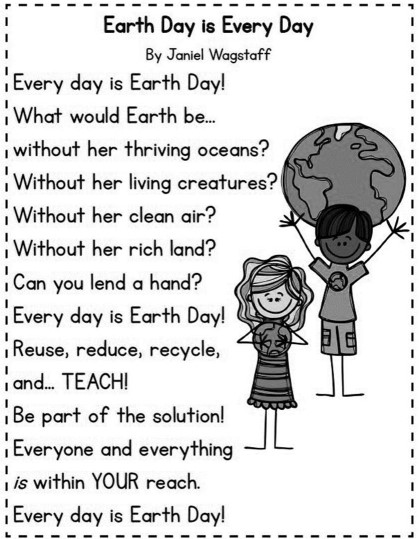
From: https://br.pinterest.com/pin/46865652357417512/
Provas
Disciplina: Inglês (Língua Inglesa)
Banca: FGV
Orgão: Pref. Canaã Carajás-PA
READ TEXT III AND ANSWER THE FIVE QUESTION THAT FOLLOW IT
TEXT III
From: https://br.pinterest.com/pin/46865652357417512/
Provas
Disciplina: Inglês (Língua Inglesa)
Banca: FGV
Orgão: Pref. Canaã Carajás-PA
READ TEXT III AND ANSWER THE FIVE QUESTION THAT FOLLOW IT
TEXT III
From: https://br.pinterest.com/pin/46865652357417512/
Provas
Disciplina: Inglês (Língua Inglesa)
Banca: FGV
Orgão: Pref. Canaã Carajás-PA
READ TEXT III AND ANSWER THE FIVE QUESTION THAT FOLLOW IT
TEXT III
From: https://br.pinterest.com/pin/46865652357417512/
Provas
Disciplina: Inglês (Língua Inglesa)
Banca: FGV
Orgão: Pref. Canaã Carajás-PA
READ TEXT III AND ANSWER THE FIVE QUESTION THAT FOLLOW IT
TEXT III
From: https://br.pinterest.com/pin/46865652357417512/
Provas
Disciplina: Inglês (Língua Inglesa)
Banca: FGV
Orgão: Pref. Canaã Carajás-PA

From: https://schulzmuseum.org/wp-content/uploads/2020/11/1963-05-01_WEBscaled.jpg
The opposite of “dumb” (4th panel) is
Provas
Caderno Container