Foram encontradas 50 questões.
Leia o texto para responder às questões de números 45 a 50.
If styles are general characteristics that differentiate one individual from another, then strategies are those specific “attacks” that we make on a given problem, and that vary considerably within each individual. They are the momentby-moment techniques that we employ to solve “problems” posed by second language input and output. Chamot (2005, p. 112) defines strategies quite broadly as “procedures that facilitate a learning task. Strategies are most often conscious and goal driven.”
As our knowledge of second language acquisition increased markedly during the 1970s, teachers and researchers came to realize that no single research finding and no single method of language teaching would usher in an era of universal success in teaching a second language. We saw that certain learners seemed to be successful regardless of methods or techniques of teaching. We began to see the importance of individual variation in language learning. Certain people appeared to be endowed with abilities to succeed; others lacked those abilities. This observation led Rubin (1975) and Stern (1975) to describe “good” language learners in terms of personal traits, styles, and strategies. Rubin (Rubin & Thompson, 1982) later summarized fourteen such characteristics. Among other abilities, good language learners tend to:
1. Find their own way, taking charge of their learning
2. Be creative and develop a “feel” for the language by experimenting with its grammar and words
3. Make their own opportunities for practice in using the language inside and outside the classroom
4. Learn to live with uncertainty by continuing to talk or listen without understanding every word
5. Use linguistic knowledge, including knowledge of their first language, in learning a second language
6. Use contextual cues to help them in comprehension
7. Learn to make intelligent guesses
8. Learn chunks of language as wholes and formalized routines to help them perform “beyond their competence”
9. Learn different styles of speech and writing and learn to vary their language according to the formality of the situation.
(, H.Douglas Brown. Principles of language learning and teaching. 5th ed. Longman, 2000. Adaptado)
Confidencial até o momento da aplicação.
Leia a gravura e compare-a ao conteúdo do texto de Brown (2000).
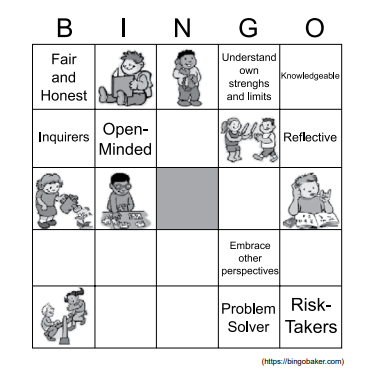
The space in the bingo card that best represents learners who “Learn to live with uncertainty by continuing to talk or listen without understanding every word” (item 4 in Brown’s list of strategies”) is the one which reads
Provas

Leia o texto para responder às questões de números 45 a 50.
If styles are general characteristics that differentiate one individual from another, then strategies are those specific “attacks” that we make on a given problem, and that vary considerably within each individual. They are the momentby-moment techniques that we employ to solve “problems” posed by second language input and output. Chamot (2005, p. 112) defines strategies quite broadly as “procedures that facilitate a learning task. Strategies are most often conscious and goal driven.”
As our knowledge of second language acquisition increased markedly during the 1970s, teachers and researchers came to realize that no single research finding and no single method of language teaching would usher in an era of universal success in teaching a second language. We saw that certain learners seemed to be successful regardless of methods or techniques of teaching. We began to see the importance of individual variation in language learning. Certain people appeared to be endowed with abilities to succeed; others lacked those abilities. This observation led Rubin (1975) and Stern (1975) to describe “good” language learners in terms of personal traits, styles, and strategies. Rubin (Rubin & Thompson, 1982) later summarized fourteen such characteristics. Among other abilities, good language learners tend to:
1. Find their own way, taking charge of their learning
2. Be creative and develop a “feel” for the language by experimenting with its grammar and words
3. Make their own opportunities for practice in using the language inside and outside the classroom
4. Learn to live with uncertainty by continuing to talk or listen without understanding every word
5. Use linguistic knowledge, including knowledge of their first language, in learning a second language
6. Use contextual cues to help them in comprehension
7. Learn to make intelligent guesses
8. Learn chunks of language as wholes and formalized routines to help them perform “beyond their competence”
9. Learn different styles of speech and writing and learn to vary their language according to the formality of the situation.
(, H.Douglas Brown. Principles of language learning and teaching. 5th ed. Longman, 2000. Adaptado)
Confidencial até o momento da aplicação.
In reading, the ability to “make intelligent guesses” is named
Provas
Leia o texto para responder às questões de números 45 a 50.
If styles are general characteristics that differentiate one individual from another, then strategies are those specific “attacks” that we make on a given problem, and that vary considerably within each individual. They are the momentby-moment techniques that we employ to solve “problems” posed by second language input and output. Chamot (2005, p. 112) defines strategies quite broadly as “procedures that facilitate a learning task. Strategies are most often conscious and goal driven.”
As our knowledge of second language acquisition increased markedly during the 1970s, teachers and researchers came to realize that no single research finding and no single method of language teaching would usher in an era of universal success in teaching a second language. We saw that certain learners seemed to be successful regardless of methods or techniques of teaching. We began to see the importance of individual variation in language learning. Certain people appeared to be endowed with abilities to succeed; others lacked those abilities. This observation led Rubin (1975) and Stern (1975) to describe “good” language learners in terms of personal traits, styles, and strategies. Rubin (Rubin & Thompson, 1982) later summarized fourteen such characteristics. Among other abilities, good language learners tend to:
1. Find their own way, taking charge of their learning
2. Be creative and develop a “feel” for the language by experimenting with its grammar and words
3. Make their own opportunities for practice in using the language inside and outside the classroom
4. Learn to live with uncertainty by continuing to talk or listen without understanding every word
5. Use linguistic knowledge, including knowledge of their first language, in learning a second language
6. Use contextual cues to help them in comprehension
7. Learn to make intelligent guesses
8. Learn chunks of language as wholes and formalized routines to help them perform “beyond their competence”
9. Learn different styles of speech and writing and learn to vary their language according to the formality of the situation.
(, H.Douglas Brown. Principles of language learning and teaching. 5th ed. Longman, 2000. Adaptado)
Confidencial até o momento da aplicação.
Um professor do Ensino Fundamental preocupado em desenvolver no aluno a habilidade n.7 citada no texto de Brown, “Learn to make intelligent guesses”, deverá
Provas
Leia o texto para responder às questões de números 45 a 50.
If styles are general characteristics that differentiate one individual from another, then strategies are those specific “attacks” that we make on a given problem, and that vary considerably within each individual. They are the momentby-moment techniques that we employ to solve “problems” posed by second language input and output. Chamot (2005, p. 112) defines strategies quite broadly as “procedures that facilitate a learning task. Strategies are most often conscious and goal driven.”
As our knowledge of second language acquisition increased markedly during the 1970s, teachers and researchers came to realize that no single research finding and no single method of language teaching would usher in an era of universal success in teaching a second language. We saw that certain learners seemed to be successful regardless of methods or techniques of teaching. We began to see the importance of individual variation in language learning. Certain people appeared to be endowed with abilities to succeed; others lacked those abilities. This observation led Rubin (1975) and Stern (1975) to describe “good” language learners in terms of personal traits, styles, and strategies. Rubin (Rubin & Thompson, 1982) later summarized fourteen such characteristics. Among other abilities, good language learners tend to:
1. Find their own way, taking charge of their learning
2. Be creative and develop a “feel” for the language by experimenting with its grammar and words
3. Make their own opportunities for practice in using the language inside and outside the classroom
4. Learn to live with uncertainty by continuing to talk or listen without understanding every word
5. Use linguistic knowledge, including knowledge of their first language, in learning a second language
6. Use contextual cues to help them in comprehension
7. Learn to make intelligent guesses
8. Learn chunks of language as wholes and formalized routines to help them perform “beyond their competence”
9. Learn different styles of speech and writing and learn to vary their language according to the formality of the situation.
(, H.Douglas Brown. Principles of language learning and teaching. 5th ed. Longman, 2000. Adaptado)
Confidencial até o momento da aplicação.
According to Rubin (Rubin & Thompson, 1982), good language learners “learn chunks of language as wholes and formalized routines to help them perform “beyond their competence”. To help their students develop such an ability, the English teacher may, among other classroom proposals,
Provas
Leia o texto para responder às questões de números 45 a 50.
If styles are general characteristics that differentiate one individual from another, then strategies are those specific “attacks” that we make on a given problem, and that vary considerably within each individual. They are the momentby-moment techniques that we employ to solve “problems” posed by second language input and output. Chamot (2005, p. 112) defines strategies quite broadly as “procedures that facilitate a learning task. Strategies are most often conscious and goal driven.”
As our knowledge of second language acquisition increased markedly during the 1970s, teachers and researchers came to realize that no single research finding and no single method of language teaching would usher in an era of universal success in teaching a second language. We saw that certain learners seemed to be successful regardless of methods or techniques of teaching. We began to see the importance of individual variation in language learning. Certain people appeared to be endowed with abilities to succeed; others lacked those abilities. This observation led Rubin (1975) and Stern (1975) to describe “good” language learners in terms of personal traits, styles, and strategies. Rubin (Rubin & Thompson, 1982) later summarized fourteen such characteristics. Among other abilities, good language learners tend to:
1. Find their own way, taking charge of their learning
2. Be creative and develop a “feel” for the language by experimenting with its grammar and words
3. Make their own opportunities for practice in using the language inside and outside the classroom
4. Learn to live with uncertainty by continuing to talk or listen without understanding every word
5. Use linguistic knowledge, including knowledge of their first language, in learning a second language
6. Use contextual cues to help them in comprehension
7. Learn to make intelligent guesses
8. Learn chunks of language as wholes and formalized routines to help them perform “beyond their competence”
9. Learn different styles of speech and writing and learn to vary their language according to the formality of the situation.
(, H.Douglas Brown. Principles of language learning and teaching. 5th ed. Longman, 2000. Adaptado)
Confidencial até o momento da aplicação.
In the first two paragraphs, the pair of terms whose meanings are in evident contrast is:
Provas
Leia o texto para responder às questões de números 45 a 50.
If styles are general characteristics that differentiate one individual from another, then strategies are those specific “attacks” that we make on a given problem, and that vary considerably within each individual. They are the momentby-moment techniques that we employ to solve “problems” posed by second language input and output. Chamot (2005, p. 112) defines strategies quite broadly as “procedures that facilitate a learning task. Strategies are most often conscious and goal driven.”
As our knowledge of second language acquisition increased markedly during the 1970s, teachers and researchers came to realize that no single research finding and no single method of language teaching would usher in an era of universal success in teaching a second language. We saw that certain learners seemed to be successful regardless of methods or techniques of teaching. We began to see the importance of individual variation in language learning. Certain people appeared to be endowed with abilities to succeed; others lacked those abilities. This observation led Rubin (1975) and Stern (1975) to describe “good” language learners in terms of personal traits, styles, and strategies. Rubin (Rubin & Thompson, 1982) later summarized fourteen such characteristics. Among other abilities, good language learners tend to:
1. Find their own way, taking charge of their learning
2. Be creative and develop a “feel” for the language by experimenting with its grammar and words
3. Make their own opportunities for practice in using the language inside and outside the classroom
4. Learn to live with uncertainty by continuing to talk or listen without understanding every word
5. Use linguistic knowledge, including knowledge of their first language, in learning a second language
6. Use contextual cues to help them in comprehension
7. Learn to make intelligent guesses
8. Learn chunks of language as wholes and formalized routines to help them perform “beyond their competence”
9. Learn different styles of speech and writing and learn to vary their language according to the formality of the situation.
(, H.Douglas Brown. Principles of language learning and teaching. 5th ed. Longman, 2000. Adaptado)
Confidencial até o momento da aplicação.
Com relação ao uso de tempos verbais no texto, é correto afirmar que
Provas
Leia o texto para responder às questões de números 39 a 44.
ELF: English as a lingua franca
The Vienna Oxford International Corpus of English (VOICE), a collection of English as a Lingua Franca (ELF) currently under construction, defines lingua franca as an additionally acquired language system that serves as a means of communication for speakers from different speech communities, who use it to communicate with each other but for whom it is not their native language.
Early findings from the VOICE corpus tentatively identify a number of features which point to systematic lexico-grammatical differences between native-speaker English and ELF, for example dropping the third person present tense ‘s’ (e.g. she wear), omitting definite and indefinite articles, insertion of prepositions (e.g. can we discuss about this issue). These features are not a threat to comprehension, as they involve typical errors that most English teachers would correct and remediate. However, Seidlhofer (2004) points out that they appear to be generally unproblematic and do not cause an obstacle to communicative success in ELF.
The work of Jenkins (1996, 2000, 2004, 2005) has also been very influential in relation to the teaching of pronunciation for ELF. Her research finds that a number of items common to most native-speaker varieties of English were not necessary in successful ELF interactions; for example, the substitution of voiceless and voiced th with /t/ or /s/ and /d/ or /z/ (e.g. think became sink or tink, and this became dis or zis). Jenkins argues that such features occur regularly in ELF interactions and do not cause intelligibility problems.
Problems may arise in the (perhaps unfair) equation between a reduced or ‘stripped down’ ELF syllabus and an impoverished experience of the L2. Indeed, it could be argued that learners of any language always end up producing less than the input they are exposed to, and that if that input itself is deliberately restricted, then even less will be the outcome.
(O’KEEFFE, A., MCCARTHY, M. & CARTER, R. From corpus to classroom. Language Use and Language Teaching. Cambridge, CUP. 2007. Adaptado)
The VOICE has identified the insertion of prepositions as an emerging pattern in ELF. An example of such a linguistic deviation is found in alternative
Provas
Leia o texto para responder às questões de números 39 a 44.
ELF: English as a lingua franca
The Vienna Oxford International Corpus of English (VOICE), a collection of English as a Lingua Franca (ELF) currently under construction, defines lingua franca as an additionally acquired language system that serves as a means of communication for speakers from different speech communities, who use it to communicate with each other but for whom it is not their native language.
Early findings from the VOICE corpus tentatively identify a number of features which point to systematic lexico-grammatical differences between native-speaker English and ELF, for example dropping the third person present tense ‘s’ (e.g. she wear), omitting definite and indefinite articles, insertion of prepositions (e.g. can we discuss about this issue). These features are not a threat to comprehension, as they involve typical errors that most English teachers would correct and remediate. However, Seidlhofer (2004) points out that they appear to be generally unproblematic and do not cause an obstacle to communicative success in ELF.
The work of Jenkins (1996, 2000, 2004, 2005) has also been very influential in relation to the teaching of pronunciation for ELF. Her research finds that a number of items common to most native-speaker varieties of English were not necessary in successful ELF interactions; for example, the substitution of voiceless and voiced th with /t/ or /s/ and /d/ or /z/ (e.g. think became sink or tink, and this became dis or zis). Jenkins argues that such features occur regularly in ELF interactions and do not cause intelligibility problems.
Problems may arise in the (perhaps unfair) equation between a reduced or ‘stripped down’ ELF syllabus and an impoverished experience of the L2. Indeed, it could be argued that learners of any language always end up producing less than the input they are exposed to, and that if that input itself is deliberately restricted, then even less will be the outcome.
(O’KEEFFE, A., MCCARTHY, M. & CARTER, R. From corpus to classroom. Language Use and Language Teaching. Cambridge, CUP. 2007. Adaptado)
Das palavras a seguir, retiradas do texto, assinale aquela em que as vogais /ea/ em negrito possuem a mesma pronúncia encontrada na palavra feature.
Provas
Leia o texto para responder às questões de números 39 a 44.
ELF: English as a lingua franca
The Vienna Oxford International Corpus of English (VOICE), a collection of English as a Lingua Franca (ELF) currently under construction, defines lingua franca as an additionally acquired language system that serves as a means of communication for speakers from different speech communities, who use it to communicate with each other but for whom it is not their native language.
Early findings from the VOICE corpus tentatively identify a number of features which point to systematic lexico-grammatical differences between native-speaker English and ELF, for example dropping the third person present tense ‘s’ (e.g. she wear), omitting definite and indefinite articles, insertion of prepositions (e.g. can we discuss about this issue). These features are not a threat to comprehension, as they involve typical errors that most English teachers would correct and remediate. However, Seidlhofer (2004) points out that they appear to be generally unproblematic and do not cause an obstacle to communicative success in ELF.
The work of Jenkins (1996, 2000, 2004, 2005) has also been very influential in relation to the teaching of pronunciation for ELF. Her research finds that a number of items common to most native-speaker varieties of English were not necessary in successful ELF interactions; for example, the substitution of voiceless and voiced th with /t/ or /s/ and /d/ or /z/ (e.g. think became sink or tink, and this became dis or zis). Jenkins argues that such features occur regularly in ELF interactions and do not cause intelligibility problems.
Problems may arise in the (perhaps unfair) equation between a reduced or ‘stripped down’ ELF syllabus and an impoverished experience of the L2. Indeed, it could be argued that learners of any language always end up producing less than the input they are exposed to, and that if that input itself is deliberately restricted, then even less will be the outcome.
(O’KEEFFE, A., MCCARTHY, M. & CARTER, R. From corpus to classroom. Language Use and Language Teaching. Cambridge, CUP. 2007. Adaptado)
Depreende-se das visões de Seidlhofer (2004) e Jenkins (2005), no segundo e terceiro parágrafos, e das posições da BNCC sobre a aprendizagem de inglês na escola brasileira, que uma frase como “She wear a blue uniform for school”, se pronunciada por um aprendiz brasileiro do ensino fundamental,
Provas
Leia o texto para responder às questões de números 39 a 44.
ELF: English as a lingua franca
The Vienna Oxford International Corpus of English (VOICE), a collection of English as a Lingua Franca (ELF) currently under construction, defines lingua franca as an additionally acquired language system that serves as a means of communication for speakers from different speech communities, who use it to communicate with each other but for whom it is not their native language.
Early findings from the VOICE corpus tentatively identify a number of features which point to systematic lexico-grammatical differences between native-speaker English and ELF, for example dropping the third person present tense ‘s’ (e.g. she wear), omitting definite and indefinite articles, insertion of prepositions (e.g. can we discuss about this issue). These features are not a threat to comprehension, as they involve typical errors that most English teachers would correct and remediate. However, Seidlhofer (2004) points out that they appear to be generally unproblematic and do not cause an obstacle to communicative success in ELF.
The work of Jenkins (1996, 2000, 2004, 2005) has also been very influential in relation to the teaching of pronunciation for ELF. Her research finds that a number of items common to most native-speaker varieties of English were not necessary in successful ELF interactions; for example, the substitution of voiceless and voiced th with /t/ or /s/ and /d/ or /z/ (e.g. think became sink or tink, and this became dis or zis). Jenkins argues that such features occur regularly in ELF interactions and do not cause intelligibility problems.
Problems may arise in the (perhaps unfair) equation between a reduced or ‘stripped down’ ELF syllabus and an impoverished experience of the L2. Indeed, it could be argued that learners of any language always end up producing less than the input they are exposed to, and that if that input itself is deliberately restricted, then even less will be the outcome.
(O’KEEFFE, A., MCCARTHY, M. & CARTER, R. From corpus to classroom. Language Use and Language Teaching. Cambridge, CUP. 2007. Adaptado)
Read the two quotations by two researchers, commenting on some lexico-grammatical features of English as a lingua franca:
“Seidlhofer (2004) points out that they appear to be generally unproblematic and do not cause an obstacle to communicative success in ELF.” (paragraph 2)
“Jenkins argues that such features occur regularly in ELF interactions and do not cause intelligibility problems.” (paragraph 3)
From the two statements it is possible to understand that, in the teaching of English as a língua franca, a central issue concerning learners’ production of the English language is
Provas
Caderno Container