Foram encontradas 645 questões.
Provas

Provas
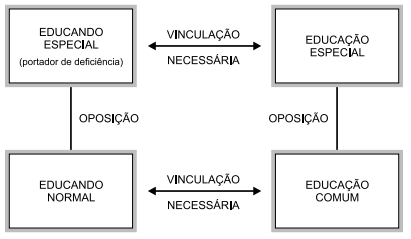
Mazzotta denomina essa visão como
Provas
Provas
Amaral (in Aquino, 1998) afirma que a diferença significativa, o desvio, a anomalia, entre outras denominações, pressupõem a eleição de certos critérios. Um deles “corresponde à comparação entre uma determinada pessoa ou um determinado grupo e o ‘tipo ideal’ construído e sedimentado pelo grupo dominante”.
Para a autora, esse critério tem cunho
Provas
Leia o texto a seguir para responder às questão:
English as a Lingua Franca
A number of researchers have studied conversations in English as a Lingua Franca and have noted a number of somewhat surprising characteristics, including:
a)Non-use of third person present simple tense -s (She look very sad).
b)Interchangeable use of the relative pronouns who and which (a book who, a boy which).
c)Use of an all-purpose tag question such as “isn’t it” (They should arrive soon, isn’t it?).
d)Increasing of redundancy by adding “inexistent” prepositions {We have to study about…, The article treats of…).
Provas
Leia o texto a seguir para responder às questão:
English as a Lingua Franca
A number of researchers have studied conversations in English as a Lingua Franca and have noted a number of somewhat surprising characteristics, including:
a)Non-use of third person present simple tense -s (She look very sad).
b)Interchangeable use of the relative pronouns who and which (a book who, a boy which).
c)Use of an all-purpose tag question such as “isn’t it” (They should arrive soon, isn’t it?).
d)Increasing of redundancy by adding “inexistent” prepositions {We have to study about…, The article treats of…).
Provas
Leia as duas charges a seguir para responder à questão:

(https://culturalconflict.wordpress.com/)

(https://archive.shine.cn/)
Provas
Leia as duas charges a seguir para responder à questão:
(https://culturalconflict.wordpress.com/)
(https://archive.shine.cn/)
Provas
Leia o texto a seguir para responder à questão.
Folklore and fairytales have been examined as effective means for teaching culture in a foreign language because they are an integral part of people’s everyday life. Morain (1997) proposed the idea that folklore is superior to literary writing because it depicts the attitudes of large groups of people. Gholson and Stumpf (2005) believe that folklore might help promote cultural dialogue in which L2 learners gain respect for differences between their native culture and L2 culture, as well as acknowledge the similarities in both cultures. Akpinar and Ozturk (2009) suggest that folklore can be taught in an L2 classroom through an inquiry approach: folklore engages the students in exploring the theme and structure of a folktale, relating these to their L1 background knowledge, and then drawing conclusions about the target culture, its beliefs, values, lifestyles, history, etc.
Read the two excerpts from the text:
“Gholson and Stumpf (2005) believe that folklore might help promote cultural dialogue”.
“Akpinar and Ozturk (2009) suggest that folklore can be taught in an L2 classroom through an inquiry approach.”
In the two excerpts, the bolded modal verbs carry the idea of
Provas
Caderno Container