Foram encontradas 85 questões.
Underlying the traditional linear syllabus is the notion that learning is a process of mastering each item perfectly, one at a time. In metaphorical terms, it was believed that a language develops in the same way as a building is constructed – one (linguistic) brick at a time.
However, the complexity of the acquisition process revealed by a growing body of second language acquisition research led some syllabus designers to argue that language development is basically an organic process. According to this metaphor, a new language develops in a way comparable to plants growing in a garden rather than a building being constructed. Learners do not acquire each item perfectly, one at a time, but numerous items imperfectly, all at once.
Needs analysis
With the advent of Communicative Language Teaching (CLT) in the 1970s, a very different syllabus approach was proposed by a number of linguists. This approach began, not with lists of grammatical, phonological and lexical features, but with an analysis of the communicative needs of the learner. Proponents of CLT argued that it was neither necessary nor possible to include every aspect of the target language in the syllabus. Rather, syllabus content should reflect the communicative purposes and needs of the learners.
Needs-based course design, particularly when it results in rigidly specified learning outcomes, has been heavily criticized. Widdowson (1983), for example, claims that such courses are exercises in training rather than in education because learners can only do those things for which they have been specifically prepared.
(David Nunan. Syllabus Design. In: M. Celce-Murcia (ed).
Teaching English as a second or foreign language. Boston, Massachusstes:
Heinle&Heinle. 3rd edition. 2001. Adaptado)
Provas
Questão presente nas seguintes provas

As palavras speak, sound and make têm, respectivamente, o mesmo som vocálico que
Provas
Questão presente nas seguintes provas
Leia o texto e responda a questão.
The analysis of the relationship between forms and
functions of language is commonly called discourse analysis,
which encompasses the notion that language is more than a
sentence-level phenomenon. A single sentence can seldom
be fully analyzed without considering its context. We use
language in stretches of discourse. We string many sentences
together in interrelated, cohesive units. In most oral language,
our discourse is marked by exchanges with another person
or several persons in which a few sentences spoken by one
participant are followed and built upon by sentences spoken
by another. Speakers formulate representations of meaning
not just from a single sentence but also from referents in both
previous sentences and following sentences.
Consider the following:
A. Got the time?
B. Ten fifteen.
Waiter: More coffee?
Customer: I’m okay.
Parent: Dinner!
Child: Just a minute!
In so many of our everyday exchanges, a single sentence
sometimes contains certain presuppositions that are not
overtly manifested in surrounding sentence-level surface
structure, but that are clear from the total context. All three
of the above conversations contained such presuppositions
(how to ask what time of day it is; how to say “no more coffee”;
how to announce dinner and then indicate one will be there
in a minute). Without the pragmatic contexts of discourse, our
communications would be extraordinarily ambiguous.
(H. Douglas Brown. Principles of language learning and teaching 5th edition
ed.Longman, 2000. Adaptado)
Provas
Questão presente nas seguintes provas
Leia o texto e responda a questão.
Fala e escrita, como formas de manifestação da linguagem,
ocorrem em ambientes sociais distintos, com exigências
específicas quanto à sintaxe e às estruturas textuais. Devido
às suas próprias formas textuais e genéricas, fala e escrita
diferem quanto às suas estruturas e funções características,
fazendo com que, no âmbito do ensino, haja uma estreita
ligação entre linguagem e cognição. Fala e escrita, por
conseguinte, compõem modelos cognitivos distintos e que
estão disponíveis para seus usuários. Uma vez que essas
formas de manifestação da linguagem são diversificadas, a
preocupação com sua delimitação e nomeação traduz-se na
noção de gêneros discursivos de Bakhtin (1992).
Bakhtin concebe os gêneros do discurso como tipos de
enunciados criados dentro dos vários campos da atividade
humana. Consoante tal perspectiva, a linguagem é aprendida
por meio de enunciados concretos, ouvidos e reproduzidos na
comunicação verbal. Cada um dos vários gêneros apresenta
suas próprias exigências em termos de conteúdo, de estrutura
e de sequências linguísticas que os compõem. Todos esses
aspectos devem ser aprendidos mediante práticas sociais que
desenvolvam as capacidades de linguagem dos indivíduos e
as estratégias de aprendizagem.
(Abuêndia Padilha Pinto. Gêneros discursivos e ensino de Língua Inglesa.
In: A. P. Dionisio, A. R Machado e M. A Bezerra (orgs). Gêneros textuais e
ensino. Rio de Janeiro: Lucerna. 2005, Adaptado)
Provas
Questão presente nas seguintes provas
Underlying the traditional linear syllabus is the notion that learning is a process of mastering each item perfectly, one at a time. In metaphorical terms, it was believed that a language develops in the same way as a building is constructed – one (linguistic) brick at a time.
However, the complexity of the acquisition process revealed by a growing body of second language acquisition research led some syllabus designers to argue that language development is basically an organic process. According to this metaphor, a new language develops in a way comparable to plants growing in a garden rather than a building being constructed. Learners do not acquire each item perfectly, one at a time, but numerous items imperfectly, all at once.
Needs analysis
With the advent of Communicative Language Teaching (CLT) in the 1970s, a very different syllabus approach was proposed by a number of linguists. This approach began, not with lists of grammatical, phonological and lexical features, but with an analysis of the communicative needs of the learner. Proponents of CLT argued that it was neither necessary nor possible to include every aspect of the target language in the syllabus. Rather, syllabus content should reflect the communicative purposes and needs of the learners.
Needs-based course design, particularly when it results in rigidly specified learning outcomes, has been heavily criticized. Widdowson (1983), for example, claims that such courses are exercises in training rather than in education because learners can only do those things for which they have been specifically prepared.
(David Nunan. Syllabus Design. In: M. Celce-Murcia (ed).
Teaching English as a second or foreign language. Boston, Massachusstes:
Heinle&Heinle. 3rd edition. 2001. Adaptado)
Provas
Questão presente nas seguintes provas
Leia o texto e responda a questão.
The analysis of the relationship between forms and
functions of language is commonly called discourse analysis,
which encompasses the notion that language is more than a
sentence-level phenomenon. A single sentence can seldom
be fully analyzed without considering its context. We use
language in stretches of discourse. We string many sentences
together in interrelated, cohesive units. In most oral language,
our discourse is marked by exchanges with another person
or several persons in which a few sentences spoken by one
participant are followed and built upon by sentences spoken
by another. Speakers formulate representations of meaning
not just from a single sentence but also from referents in both
previous sentences and following sentences.
Consider the following:
A. Got the time?
B. Ten fifteen.
Waiter: More coffee?
Customer: I’m okay.
Parent: Dinner!
Child: Just a minute!
In so many of our everyday exchanges, a single sentence
sometimes contains certain presuppositions that are not
overtly manifested in surrounding sentence-level surface
structure, but that are clear from the total context. All three
of the above conversations contained such presuppositions
(how to ask what time of day it is; how to say “no more coffee”;
how to announce dinner and then indicate one will be there
in a minute). Without the pragmatic contexts of discourse, our
communications would be extraordinarily ambiguous.
(H. Douglas Brown. Principles of language learning and teaching 5th edition
ed.Longman, 2000. Adaptado)
Provas
Questão presente nas seguintes provas
Leia o texto e responda a questão.
Although words can appear as single items which are
combined in a sentence, they can also occur in two-or-more
item groups. They often combine with each other in ways which
competent speakers of the language recognize instantly.
Word combinations (also known as collocations) have
become a subject of great interest in the recent past.
Collocation is the way in which words co-occur – combinations
which, through custom and practice, have become to be seen
as normal and acceptable. It is immediately apparent that some
words can live together, others cannot. We say fast asleep, and
this is an acceptable collocation, but fast awake is not.
The chunking of language suggests that talking about
vocabulary exclusively in terms of words is not sufficient
to account for the different kinds of meaning unit that the
language has at its disposal.
Provas
Questão presente nas seguintes provas
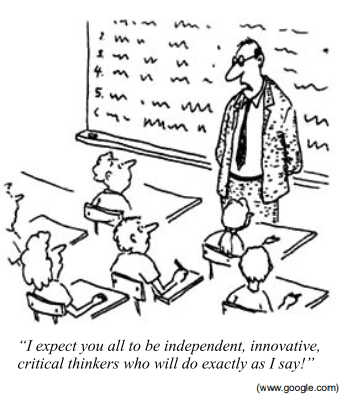
Leia a charge e responda a questão.
Provas
Questão presente nas seguintes provas
Leia a charge e responda a questão.
Provas
Questão presente nas seguintes provas

Provas
Questão presente nas seguintes provas
Cadernos
Caderno Container