Foram encontradas 720 questões.
Leia a tirinha para responder à questão:
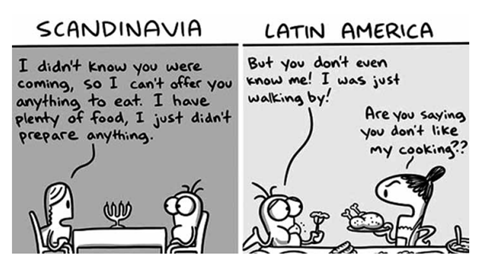
(https://www.boredpanda.com/languages-customs-comics-itchy-feet-comic-part-3/)
Provas
Questão presente nas seguintes provas

Leia a tirinha para responder à questão:
(https://www.boredpanda.com/languages-customs-comics-itchy-feet-comic-part-3/)
Provas
Questão presente nas seguintes provas
Read the text to answer question:
In foreign language education, the teaching of culture
remains a hotly debated issue. What is culture? What is its
relation to language? Which and whose culture should be
taught? What role should the learners’ culture play in the
acquisition of knowledge of the target culture? How can
we avoid essentializing cultures and teaching stereotypes?
And how can we develop in the learners an intercultural
competence that would shortchange neither their own culture
nor the target culture, but would make them into cultural
mediators in a globalized world? This paper explores these
issues from the perspective of the large body of research
done in Australia, Europe and the U.S. in the last twenty
years. It links the study of culture to the study of discourse
(see, e.g., Kramsch 1993, 1998, 2004) and to the concept
of translingual and transcultural competence proposed by the Modern Language Association (e.g., Kramsch, 2010). Special
attention will be given to the unique role that the age-old
Persian culture can play in fostering the cultural mediators of
tomorrow.
(KRAMASCH, Claire. Cultura no ensino de língua estrangeira.
Bakhtiniana: Revista de Estudos do Discurso, São Paulo,
LAEL/PUC-SP, v. 19, n. 4, 2024)
Provas
Questão presente nas seguintes provas
Read the text to answer question:
In foreign language education, the teaching of culture
remains a hotly debated issue. What is culture? What is its
relation to language? Which and whose culture should be
taught? What role should the learners’ culture play in the
acquisition of knowledge of the target culture? How can
we avoid essentializing cultures and teaching stereotypes?
And how can we develop in the learners an intercultural
competence that would shortchange neither their own culture
nor the target culture, but would make them into cultural
mediators in a globalized world? This paper explores these
issues from the perspective of the large body of research
done in Australia, Europe and the U.S. in the last twenty
years. It links the study of culture to the study of discourse
(see, e.g., Kramsch 1993, 1998, 2004) and to the concept
of translingual and transcultural competence proposed by the Modern Language Association (e.g., Kramsch, 2010). Special
attention will be given to the unique role that the age-old
Persian culture can play in fostering the cultural mediators of
tomorrow.
(KRAMASCH, Claire. Cultura no ensino de língua estrangeira.
Bakhtiniana: Revista de Estudos do Discurso, São Paulo,
LAEL/PUC-SP, v. 19, n. 4, 2024)
Nas sentenças a seguir, o exemplo de estrutura paralela usada corretamente é encontrado em:
Provas
Questão presente nas seguintes provas
Read the text to answer question:
In foreign language education, the teaching of culture
remains a hotly debated issue. What is culture? What is its
relation to language? Which and whose culture should be
taught? What role should the learners’ culture play in the
acquisition of knowledge of the target culture? How can
we avoid essentializing cultures and teaching stereotypes?
And how can we develop in the learners an intercultural
competence that would shortchange neither their own culture
nor the target culture, but would make them into cultural
mediators in a globalized world? This paper explores these
issues from the perspective of the large body of research
done in Australia, Europe and the U.S. in the last twenty
years. It links the study of culture to the study of discourse
(see, e.g., Kramsch 1993, 1998, 2004) and to the concept
of translingual and transcultural competence proposed by the Modern Language Association (e.g., Kramsch, 2010). Special
attention will be given to the unique role that the age-old
Persian culture can play in fostering the cultural mediators of
tomorrow.
(KRAMASCH, Claire. Cultura no ensino de língua estrangeira.
Bakhtiniana: Revista de Estudos do Discurso, São Paulo,
LAEL/PUC-SP, v. 19, n. 4, 2024)
Provas
Questão presente nas seguintes provas
Read the text to answer question:
In foreign language education, the teaching of culture
remains a hotly debated issue. What is culture? What is its
relation to language? Which and whose culture should be
taught? What role should the learners’ culture play in the
acquisition of knowledge of the target culture? How can
we avoid essentializing cultures and teaching stereotypes?
And how can we develop in the learners an intercultural
competence that would shortchange neither their own culture
nor the target culture, but would make them into cultural
mediators in a globalized world? This paper explores these
issues from the perspective of the large body of research
done in Australia, Europe and the U.S. in the last twenty
years. It links the study of culture to the study of discourse
(see, e.g., Kramsch 1993, 1998, 2004) and to the concept
of translingual and transcultural competence proposed by the Modern Language Association (e.g., Kramsch, 2010). Special
attention will be given to the unique role that the age-old
Persian culture can play in fostering the cultural mediators of
tomorrow.
(KRAMASCH, Claire. Cultura no ensino de língua estrangeira.
Bakhtiniana: Revista de Estudos do Discurso, São Paulo,
LAEL/PUC-SP, v. 19, n. 4, 2024)
Provas
Questão presente nas seguintes provas
Read the text to answer question:
In foreign language education, the teaching of culture
remains a hotly debated issue. What is culture? What is its
relation to language? Which and whose culture should be
taught? What role should the learners’ culture play in the
acquisition of knowledge of the target culture? How can
we avoid essentializing cultures and teaching stereotypes?
And how can we develop in the learners an intercultural
competence that would shortchange neither their own culture
nor the target culture, but would make them into cultural
mediators in a globalized world? This paper explores these
issues from the perspective of the large body of research
done in Australia, Europe and the U.S. in the last twenty
years. It links the study of culture to the study of discourse
(see, e.g., Kramsch 1993, 1998, 2004) and to the concept
of translingual and transcultural competence proposed by the Modern Language Association (e.g., Kramsch, 2010). Special
attention will be given to the unique role that the age-old
Persian culture can play in fostering the cultural mediators of
tomorrow.
(KRAMASCH, Claire. Cultura no ensino de língua estrangeira.
Bakhtiniana: Revista de Estudos do Discurso, São Paulo,
LAEL/PUC-SP, v. 19, n. 4, 2024)
Provas
Questão presente nas seguintes provas
Leia o texto para responder à questão:
Entretanto, há ainda muitos questionamentos sobre o uso
crítico de tecnologias nas metodologias de ensino de inglês.
Diante do exposto, este trabalho se propõe a apresentar uma
breve retrospectiva histórica das principais metodologias que
se sucederam e em alguns momentos coexistiram no e para
o ensino de inglês, com o objetivo de discutir de que forma(s)
algumas dessas metodologias usaram ou se apropriaram das
tecnologias (e em alguns casos ainda o fazem ou podem fazer) para alcançar seus objetivos de ensino, e, ainda, refletir
sucintamente sobre as implicações desses usos e apropriações das tecnologias para o ensino de inglês como língua
internacional num cenário globalizado e cada vez mais internacionalizado, no caso do ensino superior.
(FINARDI, Kyria Rebecca.; PORCINO, Maria Carolina. Tecnologia e
metodologia no ensino de inglês: impactos da globalização e da
internacionalização. Ilha do Desterro, Florianópolis, UFSC, n. 66, 2014)
Provas
Questão presente nas seguintes provas
Leia o texto para responder à questão:
Entretanto, há ainda muitos questionamentos sobre o uso
crítico de tecnologias nas metodologias de ensino de inglês.
Diante do exposto, este trabalho se propõe a apresentar uma
breve retrospectiva histórica das principais metodologias que
se sucederam e em alguns momentos coexistiram no e para
o ensino de inglês, com o objetivo de discutir de que forma(s)
algumas dessas metodologias usaram ou se apropriaram das
tecnologias (e em alguns casos ainda o fazem ou podem fazer) para alcançar seus objetivos de ensino, e, ainda, refletir
sucintamente sobre as implicações desses usos e apropriações das tecnologias para o ensino de inglês como língua
internacional num cenário globalizado e cada vez mais internacionalizado, no caso do ensino superior.
(FINARDI, Kyria Rebecca.; PORCINO, Maria Carolina. Tecnologia e
metodologia no ensino de inglês: impactos da globalização e da
internacionalização. Ilha do Desterro, Florianópolis, UFSC, n. 66, 2014)
Provas
Questão presente nas seguintes provas
Read the text to answer question:
Information and communication technology (ICT)
ICT uses language to develop and apply technical
computing skills. Learners practise how to find, develop,
analyse and present information, and they learn how to model
situations, solve problems and evaluate their solutions. There
are many opportunities for CLIL ICT teachers to support
their learners’ understanding of key ICT concepts and skills
through the use of physical objects, visuals, demonstrations
and hands-on practice. It is these visual elements of the
subject that makes ICT a good one for learners who are new
to CLIL. However, since ICT lessons may often concentrate
on technical skills or involve learners sitting silently behind
a computer, the challenge for ICT teachers is to create
opportunities for CLIL learners to think for themselves, to
speak and to practise communicating in writing. ICT is ideal
for cross-curricular work: learners can use the content of their subject lessons to carry out ICT tasks in another language. As
they develop ICT knowledge and skills, CLIL learners can be
taught how to think, talk and write like ICT specialists.
(DALE, Liz; TANNER, Rosie. CLIL activities: a resource for subjects and
language teachers. Cambridge: Cambridge University, 2012)
Assinale a alternativa em que a palavra aceita dupla grafia.
Provas
Questão presente nas seguintes provas
Cadernos
Caderno Container