Foram encontradas 540 questões.
Provas

Provas
“As lisonjas vãs têm porta aberta nos ouvidos”.
Com essa frase, o escritor Martin de Roa quer mostrar que
Provas
Provas
“Não sentimos as calamidades públicas senão quando elas atingem nossos negócios pessoais”.
Provas
Muitos radionuclídeos decaem por emissão beta para alcançar uma maior estabilidade. Esse processo pode ser por emissão β−, por emissão β+ (pósitron) ou ainda por captura eletrônica (C.E.). Nesse processo de emissão é criado um neutrino \(v\) ou um antineutrino \(\overline{v}\) que não possuem carga nem massa.
São dadas três reações de decaimento por beta.
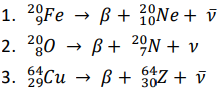
Quanto a emissão beta, é correto afirmar que nas reações de decaimento
Provas
READ TEXT IV AND ANSWER THE QUESTION THAT FOLLOWS IT:
TEXT IV
What is the global situation in relation to literacy?
Great progress has been made in literacy with most recent data (UNESCO Institute for Statistics) showing that more than 86 per cent of the world’s population know how to read and write compared to 68 per cent in 1979. Despite this, worldwide at least 754 million adults still cannot read and write, two thirds of them women, and 250 million children are failing to acquire basic literacy skills. Before the COVID-19 pandemic, which caused the worst disruption to education in a century, 617 million children and teenagers had not reached minimum reading levels.
Acquiring literacy is not a one-off act. Beyond its conventional concept as a set of reading, writing and counting skills, literacy is now understood as a means of identification, understanding, interpretation, creation, and communication in an increasingly digital, text-mediated, information-rich and fast-changing world.
Literacy is a continuum of learning and proficiency in reading, writing and using numbers throughout life and is part of a larger set of skills, which include digital skills, media literacy, education for sustainable development and global citizenship as well as jobspecific skills. Literacy skills themselves are expanding and evolving as people engage more and more with information and learning through digital technology.
Literacy is a continuum of learning and proficiency in reading, writing and using numbers throughout life and is part of a larger set of skills, which include digital skills, media literacy, education for sustainable development and global citizenship as well as jobspecific skills. Literacy skills themselves are expanding and evolving as people engage more and more with information and learning through digital technology.
Adapted from https://www.unesco.org/en/literacy/need-know
Provas
READ TEXT IV AND ANSWER THE QUESTION THAT FOLLOWS IT:
TEXT IV
What is the global situation in relation to literacy?
Great progress has been made in literacy with most recent data (UNESCO Institute for Statistics) showing that more than 86 per cent of the world’s population know how to read and write compared to 68 per cent in 1979. Despite this, worldwide at least 754 million adults still cannot read and write, two thirds of them women, and 250 million children are failing to acquire basic literacy skills. Before the COVID-19 pandemic, which caused the worst disruption to education in a century, 617 million children and teenagers had not reached minimum reading levels.
Acquiring literacy is not a one-off act. Beyond its conventional concept as a set of reading, writing and counting skills, literacy is now understood as a means of identification, understanding, interpretation, creation, and communication in an increasingly digital, text-mediated, information-rich and fast-changing world.
Literacy is a continuum of learning and proficiency in reading, writing and using numbers throughout life and is part of a larger set of skills, which include digital skills, media literacy, education for sustainable development and global citizenship as well as jobspecific skills. Literacy skills themselves are expanding and evolving as people engage more and more with information and learning through digital technology.
Literacy is a continuum of learning and proficiency in reading, writing and using numbers throughout life and is part of a larger set of skills, which include digital skills, media literacy, education for sustainable development and global citizenship as well as jobspecific skills. Literacy skills themselves are expanding and evolving as people engage more and more with information and learning through digital technology.
Adapted from https://www.unesco.org/en/literacy/need-know
Provas
READ TEXT IV AND ANSWER THE QUESTION THAT FOLLOWS IT:
TEXT IV
What is the global situation in relation to literacy?
Great progress has been made in literacy with most recent data (UNESCO Institute for Statistics) showing that more than 86 per cent of the world’s population know how to read and write compared to 68 per cent in 1979. Despite this, worldwide at least 754 million adults still cannot read and write, two thirds of them women, and 250 million children are failing to acquire basic literacy skills. Before the COVID-19 pandemic, which caused the worst disruption to education in a century, 617 million children and teenagers had not reached minimum reading levels.
Acquiring literacy is not a one-off act. Beyond its conventional concept as a set of reading, writing and counting skills, literacy is now understood as a means of identification, understanding, interpretation, creation, and communication in an increasingly digital, text-mediated, information-rich and fast-changing world.
Literacy is a continuum of learning and proficiency in reading, writing and using numbers throughout life and is part of a larger set of skills, which include digital skills, media literacy, education for sustainable development and global citizenship as well as jobspecific skills. Literacy skills themselves are expanding and evolving as people engage more and more with information and learning through digital technology.
Literacy is a continuum of learning and proficiency in reading, writing and using numbers throughout life and is part of a larger set of skills, which include digital skills, media literacy, education for sustainable development and global citizenship as well as jobspecific skills. Literacy skills themselves are expanding and evolving as people engage more and more with information and learning through digital technology.
Adapted from https://www.unesco.org/en/literacy/need-know
Provas
READ TEXT IV AND ANSWER THE QUESTION THAT FOLLOWS IT:
TEXT IV
What is the global situation in relation to literacy?
Great progress has been made in literacy with most recent data (UNESCO Institute for Statistics) showing that more than 86 per cent of the world’s population know how to read and write compared to 68 per cent in 1979. Despite this, worldwide at least 754 million adults still cannot read and write, two thirds of them women, and 250 million children are failing to acquire basic literacy skills. Before the COVID-19 pandemic, which caused the worst disruption to education in a century, 617 million children and teenagers had not reached minimum reading levels.
Acquiring literacy is not a one-off act. Beyond its conventional concept as a set of reading, writing and counting skills, literacy is now understood as a means of identification, understanding, interpretation, creation, and communication in an increasingly digital, text-mediated, information-rich and fast-changing world.
Literacy is a continuum of learning and proficiency in reading, writing and using numbers throughout life and is part of a larger set of skills, which include digital skills, media literacy, education for sustainable development and global citizenship as well as jobspecific skills. Literacy skills themselves are expanding and evolving as people engage more and more with information and learning through digital technology.
Literacy is a continuum of learning and proficiency in reading, writing and using numbers throughout life and is part of a larger set of skills, which include digital skills, media literacy, education for sustainable development and global citizenship as well as jobspecific skills. Literacy skills themselves are expanding and evolving as people engage more and more with information and learning through digital technology.
Adapted from https://www.unesco.org/en/literacy/need-know
I. From a global perspective, illiteracy is still widespread.
II. Compared to 1979, the rate of literacy today has risen.
III. Literacy skills are limited to learning how to read.
Choose the correct answer:
Provas
Caderno Container