Foram encontradas 331 questões.
Provas
Questão presente nas seguintes provas

A respeito dos atos administrativos, é correto afirmar que
Provas
Questão presente nas seguintes provas
December 12, 2012
If It’s for Sale, His Lines Sort It
By MARGALIT FOX
It was born on a beach six decades ago, the product of a pressing need, an intellectual spark and the sweep of a young man’s
fingers through the sand.
The result adorns almost every product of contemporary life, including groceries, wayward luggage and, if you are a
traditionalist, the newspaper you are holding.
The man on the beach that day was a mechanical-engineer-in-training named N. Joseph Woodland. With that transformative
stroke of his fingers − yielding a set of literal lines in the sand − Mr. Woodland, who died on Sunday at 91, conceived the modern bar
code.
Mr. Woodland was a graduate student when he and a classmate, Bernard Silver, created a technology, based on a printed
series of wide and narrow striations, that encoded consumer-product information for optical scanning.
Their idea, developed in the late 1940s and patented 60 years ago this fall, turned out to be ahead of its time, and the two men
together made only $15,000 from it, when they sold their patent to Philco. But the curious round symbol they devised would ultimately
give rise to the universal product code, or U.P.C., as the staggeringly prevalent rectangular bar code (it graces tens of millions of
different items) is officially known.
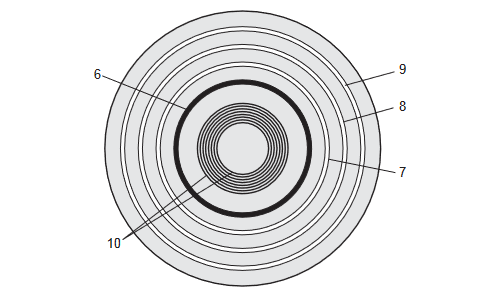
Here is part of the story behind the invention:
To represent information visually, he realized, he would need a code. The only code he knew was the one he had learned in the
Boy Scouts.
What would happen, Mr. Woodland wondered one day, if Morse code, with its elegant simplicity and limitless combinatorial
potential, were adapted graphically? He began trailing his fingers idly through the sand.
“What I’m going to tell you sounds like a fairy tale,” Mr. Woodland told Smithsonian magazine in 1999. “I poked my four fingers
into the sand and for whatever reason − I didn’t know − I pulled my hand toward me and drew four lines. I said: ‘Golly! Now I have four
lines, and they could be wide lines and narrow lines instead of dots and dashes.’ ”
That consequential pass was merely the beginning. “Only seconds later,” Mr. Woodland continued, “I took my four fingers − they
were still in the sand − and I swept them around into a full circle.”
Mr. Woodland favored the circular pattern for its omnidirectionality: a checkout clerk, he reasoned, could scan a product without
regard for its orientation.
But that method − a variegated bull’s-eye of wide and narrow bands −, which depended on an immense scanner equipped with
a 500-watt light, was expensive and unwieldy, and it languished for years.
The two men eventually sold their patent to Philco for $15,000 − all they ever made from their invention.
By the time the patent expired at the end of the 1960s, Mr. Woodland was on the staff of I.B.M., where he worked from 1951
until his retirement in 1987.
Over time, laser scanning technology and the advent of the microprocessor made the bar code viable. In the early 1970s, an
I.B.M. colleague, George J. Laurer, designed the familiar black-and-white rectangle, based on the Woodland-Silver model and drawing
on Mr. Woodland’s considerable input.
(Adapted from http://www.nytimes.com/2012/12/13/business/n-joseph-woodland-inventor-of-the-bar-code-dies-at-91.html?nl=todaysheadlines
&emc=edit_th_20121214&_r=0)
Dentro do contexto, a tradução correta para o significado de “it languished for years” é
If It’s for Sale, His Lines Sort It
By MARGALIT FOX
It was born on a beach six decades ago, the product of a pressing need, an intellectual spark and the sweep of a young man’s
fingers through the sand.
The result adorns almost every product of contemporary life, including groceries, wayward luggage and, if you are a
traditionalist, the newspaper you are holding.
The man on the beach that day was a mechanical-engineer-in-training named N. Joseph Woodland. With that transformative
stroke of his fingers − yielding a set of literal lines in the sand − Mr. Woodland, who died on Sunday at 91, conceived the modern bar
code.
Mr. Woodland was a graduate student when he and a classmate, Bernard Silver, created a technology, based on a printed
series of wide and narrow striations, that encoded consumer-product information for optical scanning.
Their idea, developed in the late 1940s and patented 60 years ago this fall, turned out to be ahead of its time, and the two men
together made only $15,000 from it, when they sold their patent to Philco. But the curious round symbol they devised would ultimately
give rise to the universal product code, or U.P.C., as the staggeringly prevalent rectangular bar code (it graces tens of millions of
different items) is officially known.
Here is part of the story behind the invention:
To represent information visually, he realized, he would need a code. The only code he knew was the one he had learned in the
Boy Scouts.
What would happen, Mr. Woodland wondered one day, if Morse code, with its elegant simplicity and limitless combinatorial
potential, were adapted graphically? He began trailing his fingers idly through the sand.
“What I’m going to tell you sounds like a fairy tale,” Mr. Woodland told Smithsonian magazine in 1999. “I poked my four fingers
into the sand and for whatever reason − I didn’t know − I pulled my hand toward me and drew four lines. I said: ‘Golly! Now I have four
lines, and they could be wide lines and narrow lines instead of dots and dashes.’ ”
That consequential pass was merely the beginning. “Only seconds later,” Mr. Woodland continued, “I took my four fingers − they
were still in the sand − and I swept them around into a full circle.”
Mr. Woodland favored the circular pattern for its omnidirectionality: a checkout clerk, he reasoned, could scan a product without
regard for its orientation.
But that method − a variegated bull’s-eye of wide and narrow bands −, which depended on an immense scanner equipped with
a 500-watt light, was expensive and unwieldy, and it languished for years.
The two men eventually sold their patent to Philco for $15,000 − all they ever made from their invention.
By the time the patent expired at the end of the 1960s, Mr. Woodland was on the staff of I.B.M., where he worked from 1951
until his retirement in 1987.
Over time, laser scanning technology and the advent of the microprocessor made the bar code viable. In the early 1970s, an
I.B.M. colleague, George J. Laurer, designed the familiar black-and-white rectangle, based on the Woodland-Silver model and drawing
on Mr. Woodland’s considerable input.
(Adapted from http://www.nytimes.com/2012/12/13/business/n-joseph-woodland-inventor-of-the-bar-code-dies-at-91.html?nl=todaysheadlines
&emc=edit_th_20121214&_r=0)
Dentro do contexto, a tradução correta para o significado de “it languished for years” é
Provas
Questão presente nas seguintes provas
December 12, 2012
If It’s for Sale, His Lines Sort It
By MARGALIT FOX
It was born on a beach six decades ago, the product of a pressing need, an intellectual spark and the sweep of a young man’s
fingers through the sand.
The result adorns almost every product of contemporary life, including groceries, wayward luggage and, if you are a
traditionalist, the newspaper you are holding.
The man on the beach that day was a mechanical-engineer-in-training named N. Joseph Woodland. With that transformative
stroke of his fingers − yielding a set of literal lines in the sand − Mr. Woodland, who died on Sunday at 91, conceived the modern bar
code.
Mr. Woodland was a graduate student when he and a classmate, Bernard Silver, created a technology, based on a printed
series of wide and narrow striations, that encoded consumer-product information for optical scanning.
Their idea, developed in the late 1940s and patented 60 years ago this fall, turned out to be ahead of its time, and the two men
together made only $15,000 from it, when they sold their patent to Philco. But the curious round symbol they devised would ultimately
give rise to the universal product code, or U.P.C., as the staggeringly prevalent rectangular bar code (it graces tens of millions of
different items) is officially known.
Here is part of the story behind the invention:
To represent information visually, he realized, he would need a code. The only code he knew was the one he had learned in the
Boy Scouts.
What would happen, Mr. Woodland wondered one day, if Morse code, with its elegant simplicity and limitless combinatorial
potential, were adapted graphically? He began trailing his fingers idly through the sand.
“What I’m going to tell you sounds like a fairy tale,” Mr. Woodland told Smithsonian magazine in 1999. “I poked my four fingers
into the sand and for whatever reason − I didn’t know − I pulled my hand toward me and drew four lines. I said: ‘Golly! Now I have four
lines, and they could be wide lines and narrow lines instead of dots and dashes.’ ”
That consequential pass was merely the beginning. “Only seconds later,” Mr. Woodland continued, “I took my four fingers − they
were still in the sand − and I swept them around into a full circle.”
Mr. Woodland favored the circular pattern for its omnidirectionality: a checkout clerk, he reasoned, could scan a product without
regard for its orientation.
But that method − a variegated bull’s-eye of wide and narrow bands −, which depended on an immense scanner equipped with
a 500-watt light, was expensive and unwieldy, and it languished for years.
The two men eventually sold their patent to Philco for $15,000 − all they ever made from their invention.
By the time the patent expired at the end of the 1960s, Mr. Woodland was on the staff of I.B.M., where he worked from 1951
until his retirement in 1987.
Over time, laser scanning technology and the advent of the microprocessor made the bar code viable. In the early 1970s, an
I.B.M. colleague, George J. Laurer, designed the familiar black-and-white rectangle, based on the Woodland-Silver model and drawing
on Mr. Woodland’s considerable input.
(Adapted from http://www.nytimes.com/2012/12/13/business/n-joseph-woodland-inventor-of-the-bar-code-dies-at-91.html?nl=todaysheadlines
&emc=edit_th_20121214&_r=0)
A ideia de Woodland e Silver foi patenteada em
If It’s for Sale, His Lines Sort It
By MARGALIT FOX
It was born on a beach six decades ago, the product of a pressing need, an intellectual spark and the sweep of a young man’s
fingers through the sand.
The result adorns almost every product of contemporary life, including groceries, wayward luggage and, if you are a
traditionalist, the newspaper you are holding.
The man on the beach that day was a mechanical-engineer-in-training named N. Joseph Woodland. With that transformative
stroke of his fingers − yielding a set of literal lines in the sand − Mr. Woodland, who died on Sunday at 91, conceived the modern bar
code.
Mr. Woodland was a graduate student when he and a classmate, Bernard Silver, created a technology, based on a printed
series of wide and narrow striations, that encoded consumer-product information for optical scanning.
Their idea, developed in the late 1940s and patented 60 years ago this fall, turned out to be ahead of its time, and the two men
together made only $15,000 from it, when they sold their patent to Philco. But the curious round symbol they devised would ultimately
give rise to the universal product code, or U.P.C., as the staggeringly prevalent rectangular bar code (it graces tens of millions of
different items) is officially known.
Here is part of the story behind the invention:
To represent information visually, he realized, he would need a code. The only code he knew was the one he had learned in the
Boy Scouts.
What would happen, Mr. Woodland wondered one day, if Morse code, with its elegant simplicity and limitless combinatorial
potential, were adapted graphically? He began trailing his fingers idly through the sand.
“What I’m going to tell you sounds like a fairy tale,” Mr. Woodland told Smithsonian magazine in 1999. “I poked my four fingers
into the sand and for whatever reason − I didn’t know − I pulled my hand toward me and drew four lines. I said: ‘Golly! Now I have four
lines, and they could be wide lines and narrow lines instead of dots and dashes.’ ”
That consequential pass was merely the beginning. “Only seconds later,” Mr. Woodland continued, “I took my four fingers − they
were still in the sand − and I swept them around into a full circle.”
Mr. Woodland favored the circular pattern for its omnidirectionality: a checkout clerk, he reasoned, could scan a product without
regard for its orientation.
But that method − a variegated bull’s-eye of wide and narrow bands −, which depended on an immense scanner equipped with
a 500-watt light, was expensive and unwieldy, and it languished for years.
The two men eventually sold their patent to Philco for $15,000 − all they ever made from their invention.
By the time the patent expired at the end of the 1960s, Mr. Woodland was on the staff of I.B.M., where he worked from 1951
until his retirement in 1987.
Over time, laser scanning technology and the advent of the microprocessor made the bar code viable. In the early 1970s, an
I.B.M. colleague, George J. Laurer, designed the familiar black-and-white rectangle, based on the Woodland-Silver model and drawing
on Mr. Woodland’s considerable input.
(Adapted from http://www.nytimes.com/2012/12/13/business/n-joseph-woodland-inventor-of-the-bar-code-dies-at-91.html?nl=todaysheadlines
&emc=edit_th_20121214&_r=0)
A ideia de Woodland e Silver foi patenteada em
Provas
Questão presente nas seguintes provas
December 12, 2012
If It’s for Sale, His Lines Sort It
By MARGALIT FOX
It was born on a beach six decades ago, the product of a pressing need, an intellectual spark and the sweep of a young man’s
fingers through the sand.
The result adorns almost every product of contemporary life, including groceries, wayward luggage and, if you are a
traditionalist, the newspaper you are holding.
The man on the beach that day was a mechanical-engineer-in-training named N. Joseph Woodland. With that transformative
stroke of his fingers − yielding a set of literal lines in the sand − Mr. Woodland, who died on Sunday at 91, conceived the modern bar
code.
Mr. Woodland was a graduate student when he and a classmate, Bernard Silver, created a technology, based on a printed
series of wide and narrow striations, that encoded consumer-product information for optical scanning.
Their idea, developed in the late 1940s and patented 60 years ago this fall, turned out to be ahead of its time, and the two men
together made only $15,000 from it, when they sold their patent to Philco. But the curious round symbol they devised would ultimately
give rise to the universal product code, or U.P.C., as the staggeringly prevalent rectangular bar code (it graces tens of millions of
different items) is officially known.
Here is part of the story behind the invention:
To represent information visually, he realized, he would need a code. The only code he knew was the one he had learned in the
Boy Scouts.
What would happen, Mr. Woodland wondered one day, if Morse code, with its elegant simplicity and limitless combinatorial
potential, were adapted graphically? He began trailing his fingers idly through the sand.
“What I’m going to tell you sounds like a fairy tale,” Mr. Woodland told Smithsonian magazine in 1999. “I poked my four fingers
into the sand and for whatever reason − I didn’t know − I pulled my hand toward me and drew four lines. I said: ‘Golly! Now I have four
lines, and they could be wide lines and narrow lines instead of dots and dashes.’ ”
That consequential pass was merely the beginning. “Only seconds later,” Mr. Woodland continued, “I took my four fingers − they
were still in the sand − and I swept them around into a full circle.”
Mr. Woodland favored the circular pattern for its omnidirectionality: a checkout clerk, he reasoned, could scan a product without
regard for its orientation.
But that method − a variegated bull’s-eye of wide and narrow bands −, which depended on an immense scanner equipped with
a 500-watt light, was expensive and unwieldy, and it languished for years.
The two men eventually sold their patent to Philco for $15,000 − all they ever made from their invention.
By the time the patent expired at the end of the 1960s, Mr. Woodland was on the staff of I.B.M., where he worked from 1951
until his retirement in 1987.
Over time, laser scanning technology and the advent of the microprocessor made the bar code viable. In the early 1970s, an
I.B.M. colleague, George J. Laurer, designed the familiar black-and-white rectangle, based on the Woodland-Silver model and drawing
on Mr. Woodland’s considerable input.
(Adapted from http://www.nytimes.com/2012/12/13/business/n-joseph-woodland-inventor-of-the-bar-code-dies-at-91.html?nl=todaysheadlines
&emc=edit_th_20121214&_r=0)
O pronome “It”, no início do texto, refere-se a
If It’s for Sale, His Lines Sort It
By MARGALIT FOX
It was born on a beach six decades ago, the product of a pressing need, an intellectual spark and the sweep of a young man’s
fingers through the sand.
The result adorns almost every product of contemporary life, including groceries, wayward luggage and, if you are a
traditionalist, the newspaper you are holding.
The man on the beach that day was a mechanical-engineer-in-training named N. Joseph Woodland. With that transformative
stroke of his fingers − yielding a set of literal lines in the sand − Mr. Woodland, who died on Sunday at 91, conceived the modern bar
code.
Mr. Woodland was a graduate student when he and a classmate, Bernard Silver, created a technology, based on a printed
series of wide and narrow striations, that encoded consumer-product information for optical scanning.
Their idea, developed in the late 1940s and patented 60 years ago this fall, turned out to be ahead of its time, and the two men
together made only $15,000 from it, when they sold their patent to Philco. But the curious round symbol they devised would ultimately
give rise to the universal product code, or U.P.C., as the staggeringly prevalent rectangular bar code (it graces tens of millions of
different items) is officially known.
Here is part of the story behind the invention:
To represent information visually, he realized, he would need a code. The only code he knew was the one he had learned in the
Boy Scouts.
What would happen, Mr. Woodland wondered one day, if Morse code, with its elegant simplicity and limitless combinatorial
potential, were adapted graphically? He began trailing his fingers idly through the sand.
“What I’m going to tell you sounds like a fairy tale,” Mr. Woodland told Smithsonian magazine in 1999. “I poked my four fingers
into the sand and for whatever reason − I didn’t know − I pulled my hand toward me and drew four lines. I said: ‘Golly! Now I have four
lines, and they could be wide lines and narrow lines instead of dots and dashes.’ ”
That consequential pass was merely the beginning. “Only seconds later,” Mr. Woodland continued, “I took my four fingers − they
were still in the sand − and I swept them around into a full circle.”
Mr. Woodland favored the circular pattern for its omnidirectionality: a checkout clerk, he reasoned, could scan a product without
regard for its orientation.
But that method − a variegated bull’s-eye of wide and narrow bands −, which depended on an immense scanner equipped with
a 500-watt light, was expensive and unwieldy, and it languished for years.
The two men eventually sold their patent to Philco for $15,000 − all they ever made from their invention.
By the time the patent expired at the end of the 1960s, Mr. Woodland was on the staff of I.B.M., where he worked from 1951
until his retirement in 1987.
Over time, laser scanning technology and the advent of the microprocessor made the bar code viable. In the early 1970s, an
I.B.M. colleague, George J. Laurer, designed the familiar black-and-white rectangle, based on the Woodland-Silver model and drawing
on Mr. Woodland’s considerable input.
(Adapted from http://www.nytimes.com/2012/12/13/business/n-joseph-woodland-inventor-of-the-bar-code-dies-at-91.html?nl=todaysheadlines
&emc=edit_th_20121214&_r=0)
O pronome “It”, no início do texto, refere-se a
Provas
Questão presente nas seguintes provas
Atualmente, ...... que o número de brasileiros conectados na internet já ...... ultrapassado a casa de 80 milhões, sendo que 72.640.000 são usuários ativos de redes sociais, e 56% destes ...... um aparelho celular para acessar a internet.
(Dados publicados em www.agenciaopen.com/blog/perfil-do-brasileiro-nas-redes-sociais-o-que-ha-de-novo/).
Preenchem corretamente as lacunas da frase acima, na ordem dada:
(Dados publicados em www.agenciaopen.com/blog/perfil-do-brasileiro-nas-redes-sociais-o-que-ha-de-novo/).
Preenchem corretamente as lacunas da frase acima, na ordem dada:
Provas
Questão presente nas seguintes provas
Os incêndios em materiais elétricos ligados à energia elétrica são classificados como
Provas
Questão presente nas seguintes provas
A forma de propagação vertical de um incêndio, que se caracteriza pela subida de vapores inflamáveis e fumaça aquecida, por meio de escadas abertas e poços de elevadores, é classificada como
Provas
Questão presente nas seguintes provas
Os pontos de iluminação de emergência devem
Provas
Questão presente nas seguintes provas
Quanto à fonte de alimentação das luminárias de emergência, deve atender às seguintes características:
Provas
Questão presente nas seguintes provas
Cadernos
Caderno Container