Foram encontradas 70 questões.
O grafite é uma manifestação artística com múltiplas expressões, dentre elas a crítica políticosocial, bastante presente nas obras de Bansky, por exemplo. Em um evento na cidade de Belém, ao sul de Jerusalém, Bansky e outros artistas grafitaram parte do muro que envolve a Cisjordânia e seus arredores, tendo o contexto local como tema comum, como ilustram as obras abaixo.
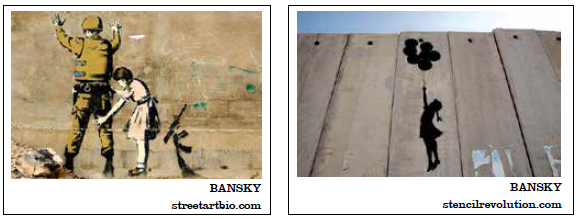
O lugar escolhido e as imagens grafitadas são evidências da oposição do artista ao seguinte aspecto do conflito nessa região:
Provas

O processo de dispersão de sementes é encontrado na maioria das espécies vegetais.
Uma vantagem evolutiva decorrente desse processo é:
Provas
Em uma cidade contemporânea, desenrolam-se, há muitas décadas, os processos paralelos de atomização e massificação. Na esteira deles, a cidade foi deixando de ser um mosaico de bairros coerentes, cada um polarizado por sua própria centralidade, até se chegar à cidade como um todo, nitidamente polarizada por seu Central Business District (CBD – Distrito Central de Negócios), para se tornar, hoje, uma estrutura muito mais complexa e difícil de resumir. Muitos bairros viram seus centros de comércio e serviços desaparecerem ou serem reduzidos à irrelevância e, não raro, o próprio CBD perder prestígio e decair.
Adaptado de SOUZA, M. L. Os conceitos fundamentais da pesquisa sócio-espacial. Rio de Janeiro: Bertrand Brasil, 2015.
A transformação para a atual estrutura interna das metrópoles, descrita no texto, é evidenciada pelo seguinte processo:
Provas
Disciplina: Literatura Brasileira e Estrangeira
Banca: DSEA UERJ
Orgão: UERJ
A QUESTÃO REFERE-SE AO CONTO “A terceira margem do rio”, do livro Primeiras Estórias, de João Guimarães Rosa.
Considere a hipótese de que o título “A terceira margem do rio” se refere também à própria ficção, que se desenvolve entre duas margens: a da realidade e a da imaginação.
O trecho do conto que melhor comprova essa hipótese de leitura é:
Provas
CHANGER LE CORPS ET SOIGNER L’ÂME
Depuis Freud, arrivé sur la scène au même moment que la chirurgie esthétique, on savait que la beauté venait de l’intérieurA). Nous pouvons désormais soigner l’âme en changeant le corps; c’est en tout cas notre nouveau credo.
Nous avons le sentiment, aujourd’hui, que nous pouvons juger les gens sur leur mine. Quand nous regardons quelqu’un de beau, nous croyons “savoir” que cette personne est également bonne!
Le désir de remodeler notre corps est devenu universel... Mais il remonte au siècle des Lumières! C’est ce siècle qui affirme que nous avons le droit de changer de nom, de position sociale et donc de façonner notre corps.
Les premiers clients de la chirurgie esthétique viennent de la classe moyenne. Pourquoi? Parce que cette classe a vu dans la chirurgie esthétique un moyen de grimper dans l’échelle sociale, d’obtenir un meilleur emploi, d’éliminer certains traits ethniques qui empêchaient son avancement. Le but de l’opération est de rendre la différence invisible.
Donnons-nous actuellement plus d’importance au physique dans notre jugement sur les gens? Nous avons toujours eu tendance à penser qu’une personne agréable à regarder était meilleure, plus intelligente, voire plus vertueuse.
Les critères de beauté changent plus souvent. Ma théorie est qu’il n’y a pas de nouveaux critères de beauté, il existe plutôt un consensus sur ce qui constitue la beauté à un moment donné: celle-ci est choisie dans un “catalogue” de modèles différents.
Pourtant, quand on regarde aujourd’hui les émissions de téléréalité, on a l’impression que tout le monde se ressembleB). Ce ne sont pas les médias qui nous disent ce qui est “beau”. Le type de beauté que nous voyons à la télévision ne s’imposerait pas si le public n’y était pas ouvert: nous trouvons que quelque chose est beau, les médias l’évoquent et nous renvoient cette image. Nous nous confirmons donc dans notre idée.
Vous affirmez que celui qui ne se trouve pas “beau” est malheureux. Or, être malheureux, dans notre société, c’est comme être malade. Il faut donc le soigner. Quand on sera arrivé à la moitié du XXIe siècle, on ne vous demandera pas si vous avez subi une opérationC) chirurgicale, on vous questionnera afin de savoir pourquoi vous n’en avez pas eu! Nous entrons dans un monde où l’on pourra modifier toutes les parties du corpsD). La chirurgie plastique sera moins lourde, moins chère, et donc encore plus populaire. Notre corps vieillit d’une manière indépendante de notre esprit. Le grand changement à venir, c’est la possibilité de changer notre corps afin qu’il soit en harmonie avec ce que nous ressentons. C’est notre nouveau droit.
lexpress.fr
Le pronom on peut être remplacé par nous dans les alternatives suivantes, sauf dans:
Provas
A lei de conservação do momento linear está associada às relações de simetrias espaciais.
Nesse contexto, considere uma colisão inelástica entre uma partícula de massa M e velocidade V e um corpo, inicialmente em repouso, de massa igual a 10M.
Logo após a colisão, a velocidade do sistema composto pela partícula e pelo corpo equivale a:
Provas
Cinco cartas de um baralho estão sobre uma mesa; duas delas são Reis, como indicam as imagens.
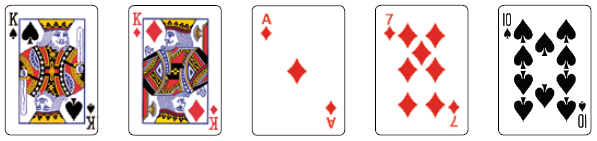
Após serem viradas para baixo e embaralhadas, uma pessoa retira uma dessas cartas ao acaso e, em seguida, retira outra.
A probabilidade de sair Rei apenas na segunda retirada equivale a:
Provas
Our (Im)perfect bodies
Since I write a lot about positive body image, you’d think that I am well over the idea that weight should be something that I allow to define my life. Yet, the vestiges of my past life as a woman obsessed with weight still linger. A good example is vacation pictures. If I show you pictures of all the places I have been in my Iife, I can give you minute details about the place itself, the food, the sights and the weather. I can also tell you something else simply by looking at those pictures: the exact number on the scale I was at that particular time in my life.
Sometimes my past catches up with me. I like to think of myself as a recovering weight-a-holic.
The fear of being overweight is a constant one of despair at not being personally successful in controlling your own body. What good is being in control of finances, major companies and businesses if you’re not in control of your body?! Silly idea, right? And yet that is exactly the unconscious thought many intelligent women have.
Feeling satisfied with your appearance makes a tremendous amount of difference in how you present yourself to the world. Some women live their entire lives on their perception of their physical selves. But I’ve been there, done that. The hell with that idea! Personally, I became tired of living my Iife this way.
My friend is an art historian who specializes in the Renaissance period. Talking with him recently gave me a perspective on body image. As we walked through the permanent exhibit of Renaissance Art in the Metropolitan Museum of Art, he pointed out the paintings done of women.
The women came in all sizes, all shapes. Some were curvier than others, but all were beautiful. Some had what we refer to as love handles; some had soft, fuller stomachs that had never suffered through crunches in a gym. Though I had seen them many times, it was actually refreshing to view them in a new light.
We are led to believe our self-worth must be a reflection of our looks. So, in essence, if we don’t believe we look good, we assume we have no worth! Yet, self-worth should have nothing to do with looks and everything to do with an innate feeling that you really are worth it. You are worth going after your dreams, you are worth being in a good relationship, you are worth living a life that fulfills and nourishes you, and you are certainly worthy of being a successful woman.
There is a quote attributed to Michelangelo that I’ve always admired. When a friend complimented him on the glorious Sistine Chapel, the great artist, referring to his art in the feminine form, was said to have replied: “She is worthy of admiration simply because she exists; perfection and imperfection together”.
BRISTEN HOUGHTON
Adaptado de twitter.com.
But I’ve been there, done that.
The underlined expression refers to the author’s experiencing the situation described below:
Provas
Em um experimento, os blocos I e II, de massas iguais a 10 kg e a 6 kg, respectivamente, estão interligados por um fio ideal. Em um primeiro momento, uma força de intensidade F igual a 64 N é aplicada no bloco I, gerando no fio uma tração TA. Em seguida, uma força de mesma intensidade F é aplicada no bloco II, produzindo a tração TB. Observe os esquemas:
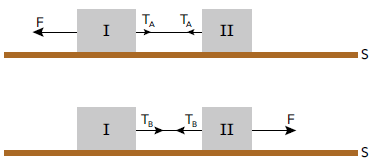
Desconsiderando os atritos entre os blocos e a superfície S, a razão entre as trações !$ { \large T_A \over T_B} !$ corresponde a:
Provas
Our (Im)perfect bodies
Since I write a lot about positive body image, you’d think that I am well over the idea that weight should be something that I allow to define my life. Yet, the vestiges of my past life as a woman obsessed with weight still linger. A good example is vacation pictures. If I show you pictures of all the places I have been in my Iife, I can give you minute details about the place itself, the food, the sights and the weather. I can also tell you something else simply by looking at those pictures: the exact number on the scale I was at that particular time in my life.
Sometimes my past catches up with me. I like to think of myself as a recovering weight-a-holic.
The fear of being overweight is a constant one of despair at not being personally successful in controlling your own body. What good is being in control of finances, major companies and businesses if you’re not in control of your body?! Silly idea, right? And yet that is exactly the unconscious thought many intelligent women have.
Feeling satisfied with your appearance makes a tremendous amount of difference in how you present yourself to the world. Some women live their entire lives on their perception of their physical selves. But I’ve been there, done that. The hell with that idea! Personally, I became tired of living my Iife this way.
My friend is an art historian who specializes in the Renaissance period. Talking with him recently gave me a perspective on body image. As we walked through the permanent exhibit of Renaissance Art in the Metropolitan Museum of Art, he pointed out the paintings done of women.
The women came in all sizes, all shapes. Some were curvier than others, but all were beautiful. Some had what we refer to as love handles; some had soft, fuller stomachs that had never suffered through crunches in a gym. Though I had seen them many times, it was actually refreshing to view them in a new light.
We are led to believe our self-worth must be a reflection of our looks. So, in essence, if we don’t believe we look good, we assume we have no worth! Yet, self-worth should have nothing to do with looks and everything to do with an innate feeling that you really are worth it. You are worth going after your dreams, you are worth being in a good relationship, you are worth living a life that fulfills and nourishes you, and you are certainly worthy of being a successful woman.
There is a quote attributed to Michelangelo that I’ve always admired. When a friend complimented him on the glorious Sistine Chapel, the great artist, referring to his art in the feminine form, was said to have replied: “She is worthy of admiration simply because she exists; perfection and imperfection together”.
BRISTEN HOUGHTON
Adaptado de twitter.com.
the exact number on the scale I was at that particular time in my life.
Concerning the author’s feelings, the statement above illustrates the following fact:
Provas
Caderno Container