Foram encontradas 356 questões.

Texto I
A primeira sessão paga de cinema aconteceu no dia 28 de dezembro de 1895, em uma sala nos fundos do Grand Café, no Boulevard des Capucines, em Paris. Assombrada, a plateia viu imagens de trabalhadores saindo de uma fábrica e de um trem chegando à estação. Para os padrões atuais, as imagens seriam banais, mas, para um mundo acostumado apenas com os slides estáticos, eram uma revelação. Com a projeção das imagens em movimento, Louis e Auguste Lumière realizavam o sonho de muitos inventores — naquela noite, nascia o cinema.
1.000 que fizeram 100 anos de cinema. In: The
Times/IstoÉ. São Paulo: Ed. Três (com adaptações).
Texto II
A Chegada do Trem à Estação (Lumière, 1895), com duração de 50 segundos, narra a chegada de uma locomotiva à plataforma de uma ferrovia repleta de passageiros que a aguardavam. Ao ser projetado, o filme causou espanto diante do público. Como a câmera englobou a totalidade da ação no momento em que o trem chega e para ao lado esquerdo da tela, o público pensou que o trem realmente estava lá, e tamanho foi o medo, que muitos fugiram da sala de exibição, e alguns que permaneceram se esconderam sob as cadeiras.
Fernando Mendonça. A filosofia no cinema.
In: Spectrum, p. 103 (com adaptações).
Texto III
Nada nos impede de afirmar que, comparada com a realidade, a aparência da arte seja ilusória; mas, com idêntica razão, se pode dizer que a chamada realidade é uma ilusão ainda mais forte, uma aparência ainda mais enganadora que a aparência da arte. Na vida empírica e sensitiva, chamamos realidade e consideramos como tal o conjunto dos objetos exteriores e das sensações por eles provocadas. No entanto, todo esse conjunto de objetos e sensações é, não um mundo verdade, mas um mundo ilusões. Sabemos como a verídica realidade existe para lá da sensação imediata dos objetos que percebemos diretamente. Antes, pois, ao mundo exterior do que à aparência da arte se aplicará o qualificativo de ilusório. (...) As obras de arte não são, em referência à realidade concreta, simples aparências e ilusões, mas, sim, possuem uma realidade mais alta e uma existência verídica. Caso se queira marcar um fim último à arte, será ele o de revelar a verdade, o de representar, de modo concreto e figurado, aquilo que agita a alma humana.
F. Hegel. In: Obras completas, H. G., vol. X.
Texto IV
A teoria de Flaubert sobre o realismo como norma estética evidenciava preocupação apenas com os processos profissionais do romancista. Ele idealizou uma indiferença científica, uma frieza e cuidado na observação dos materiais. Fez uma viagem ao Egito para estudar o cenário da sua novela Salammbô. Mas não se pode dizer que as novelas de Flaubert sejam uma servil tradução dos objetos naturais. “As pessoas creem que estou preso ao real”, disse ele, “quando, na realidade, o detesto”. Esse realismo rapidamente se intensificou na passagem para a fase chamada naturalismo, de que Zola foi o expoente máximo na França.
Wimsatt e Brooks. Crítica literária. Lisboa:
Fundação Gulbenkian, 1971, p. 547 (com adaptações).
Texto V
Se tivéssemos de fazer uma trilha sonora para a chegada do trem à estação utilizando como fonte sonora os sons do ambiente da estação, poderíamos planejar a seguinte estrutura musical: som do trem freando lentamente, diminuindo sua velocidade, enquanto se ouve um apito agudo que se repete três vezes; ritmo do movimento da locomotiva ficando mais lento; som do trem diminuindo, e vozes das pessoas na plataforma crescendo de intensidade, de piano para forte; o trem dá seu último suspiro e silêncio. Na plataforma da estação, ouvem-se vozes, choros, pregões de vendedores, sons de carrinhos de carregar bagagem e passos lentos e apressados.
Tendo como referência os fragmentos de textos de I a V apresentados, julgue o item a seguir.
Registra-se, nos textos I e II, o aparecimento do cinema em fins do século XIX, período que, sob o ponto de vista de parte das elites, correspondeu à belle époque, quando se acreditava na marcha irreversível do progresso e na força vigorosa da ciência e da tecnologia. Para a maioria da população, todavia, eram graves os efeitos da crise econômica iniciada nos anos 70 do século XIX, entre os quais se incluía a ampliação das correntes migratórias europeias em direção à América.
Provas

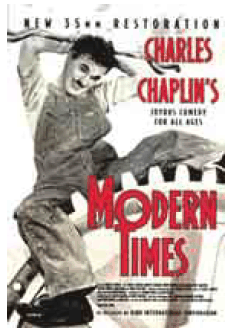
Chaplin stands alone as the greatest entertainer of modern times. There is nobody in the world capable of making you laugh, cry and thrill with his priceless genius.
Based on the picture and the text above, judge the following item.
Chaplin’s gift to arise different states of mind was known all around the world.
Provas
Chaplin stands alone as the greatest entertainer of modern times. There is nobody in the world capable of making you laugh, cry and thrill with his priceless genius.
Based on the picture and the text above, judge the following item.
The picture reminds us of the Industrial Revolution.
Provas
Chaplin stands alone as the greatest entertainer of modern times. There is nobody in the world capable of making you laugh, cry and thrill with his priceless genius.
Based on the picture and the text above, judge the following item.
In the twentieth century, nobody was as great a comedian as Chaplin.
Provas
In the minds of many, the words Brazil and culture conjure up images of beaches, footballers and dancers in vivid carnival costumes. Filmmaking and cinema, on the other hand, haven’t always figured amongst Brazil’s cultural staples.
Repressed and censored by a military dictatorship throughout much of the 1970s and 1980s, Brazilian filmmakers struggled to make an impact on audiences abroad. Shortly after the country’s return to democracy, the Ministry of Culture was closed and the state-supported film industry crumbled almost overnight. The consequent lack of funding caused Brazilian cinema to reach a low point in the early 1990s. Today, less than two decades after the collapse of the industry, Brazilian cinema is enjoying a renaissance, wowing audiences and critics alike.
So, why all the excitement over Brazilian cinema now? Since the start of 2008 Brazilian films have gone from strength to strength on the festival circuit.
In February 2008, director Jose Padilha’s controversial drama about police violence and corruption, Elite Squad, took Berlin Film Festival’s top award, the Golden Bear.
Another triumph followed at Cannes Film Festival in April. Sandra Corvelloni won the best actress award for her role in Walter Salles’ Linha de Passe. She plays a heavily pregnant, chain-smoking mother of four boys who are all in their own ways attempting to transcend their working-class lives.
Salles’ film was also nominated for the prestigious Palme d’Or, as was Blindness, the latest offering from fellow Brazilian and director of City of God, Fernando Meirelles.
Brazilian films are all about favelas and violence, then? Indeed, one of the most celebrated Brazilian releases of the past years, 2003’s City of God, as well as this year’s Elite Squad, feature ultra-violent narratives set mainly in slums, or favelas, as they are known in Brazil. Both of these films, incidentally, were scripted by screenwriter Braulio Mantovani. Both films were widely acclaimed for their honesty and gripping storytelling, but condemned by certain critics for excessive depictions of violence.
At the time of its release, City of God — which has inspired a whole genre of imitators with its fast-paced editing and bright colors — was accused of glamorizing cruelty.
Similarly, Elite Squad has been said to promote fascism, as it depicts the often-brutal methods employed by Brazil’s special police force in the ongoing battle with drug gangs in the favelas. Variety magazine even dubbed Padilha’s oeuvre “a recruitment film for fascist thugs”, with Rambo style heroes.
But Padilha defends the film’s violent tone, insisting that it was necessary in order to drive home its message. “The bottom line is we are trying to say that the whole violence that goes on in Rio is mainly caused by ourselves and we can possibly undo that”, he told CNN.
Other Brazilian directors are taking a less bloody approach in telling the stories, of the working classes. Lucia Murat’s Mare, Nossa História de Amor, for example, is a musical adaptation of Romeo and Juliet set in one of Rio’s hillside shantytowns — a novelty in Brazilian cinema.
Internet: <www.cnn.com> (adapted).
In the text,
“latest” means last.
Provas
In the minds of many, the words Brazil and culture conjure up images of beaches, footballers and dancers in vivid carnival costumes. Filmmaking and cinema, on the other hand, haven’t always figured amongst Brazil’s cultural staples.
Repressed and censored by a military dictatorship throughout much of the 1970s and 1980s, Brazilian filmmakers struggled to make an impact on audiences abroad. Shortly after the country’s return to democracy, the Ministry of Culture was closed and the state-supported film industry crumbled almost overnight. The consequent lack of funding caused Brazilian cinema to reach a low point in the early 1990s. Today, less than two decades after the collapse of the industry, Brazilian cinema is enjoying a renaissance, wowing audiences and critics alike.
So, why all the excitement over Brazilian cinema now? Since the start of 2008 Brazilian films have gone from strength to strength on the festival circuit.
In February 2008, director Jose Padilha’s controversial drama about police violence and corruption, Elite Squad, took Berlin Film Festival’s top award, the Golden Bear.
Another triumph followed at Cannes Film Festival in April. Sandra Corvelloni won the best actress award for her role in Walter Salles’ Linha de Passe. She plays a heavily pregnant, chain-smoking mother of four boys who are all in their own ways attempting to transcend their working-class lives.
Salles’ film was also nominated for the prestigious Palme d’Or, as was Blindness, the latest offering from fellow Brazilian and director of City of God, Fernando Meirelles.
Brazilian films are all about favelas and violence, then? Indeed, one of the most celebrated Brazilian releases of the past years, 2003’s City of God, as well as this year’s Elite Squad, feature ultra-violent narratives set mainly in slums, or favelas, as they are known in Brazil. Both of these films, incidentally, were scripted by screenwriter Braulio Mantovani. Both films were widely acclaimed for their honesty and gripping storytelling, but condemned by certain critics for excessive depictions of violence.
At the time of its release, City of God — which has inspired a whole genre of imitators with its fast-paced editing and bright colors — was accused of glamorizing cruelty.
Similarly, Elite Squad has been said to promote fascism, as it depicts the often-brutal methods employed by Brazil’s special police force in the ongoing battle with drug gangs in the favelas. Variety magazine even dubbed Padilha’s oeuvre “a recruitment film for fascist thugs”, with Rambo style heroes.
But Padilha defends the film’s violent tone, insisting that it was necessary in order to drive home its message. “The bottom line is we are trying to say that the whole violence that goes on in Rio is mainly caused by ourselves and we can possibly undo that”, he told CNN.
Other Brazilian directors are taking a less bloody approach in telling the stories, of the working classes. Lucia Murat’s Mare, Nossa História de Amor, for example, is a musical adaptation of Romeo and Juliet set in one of Rio’s hillside shantytowns — a novelty in Brazilian cinema.
Internet: <www.cnn.com> (adapted).
In the text,
“thugs” is the same as criminals.
Provas
In the minds of many, the words Brazil and culture conjure up images of beaches, footballers and dancers in vivid carnival costumes. Filmmaking and cinema, on the other hand, haven’t always figured amongst Brazil’s cultural staples.
Repressed and censored by a military dictatorship throughout much of the 1970s and 1980s, Brazilian filmmakers struggled to make an impact on audiences abroad. Shortly after the country’s return to democracy, the Ministry of Culture was closed and the state-supported film industry crumbled almost overnight. The consequent lack of funding caused Brazilian cinema to reach a low point in the early 1990s. Today, less than two decades after the collapse of the industry, Brazilian cinema is enjoying a renaissance, wowing audiences and critics alike.
So, why all the excitement over Brazilian cinema now? Since the start of 2008 Brazilian films have gone from strength to strength on the festival circuit.
In February 2008, director Jose Padilha’s controversial drama about police violence and corruption, Elite Squad, took Berlin Film Festival’s top award, the Golden Bear.
Another triumph followed at Cannes Film Festival in April. Sandra Corvelloni won the best actress award for her role in Walter Salles’ Linha de Passe. She plays a heavily pregnant, chain-smoking mother of four boys who are all in their own ways attempting to transcend their working-class lives.
Salles’ film was also nominated for the prestigious Palme d’Or, as was Blindness, the latest offering from fellow Brazilian and director of City of God, Fernando Meirelles.
Brazilian films are all about favelas and violence, then? Indeed, one of the most celebrated Brazilian releases of the past years, 2003’s City of God, as well as this year’s Elite Squad, feature ultra-violent narratives set mainly in slums, or favelas, as they are known in Brazil. Both of these films, incidentally, were scripted by screenwriter Braulio Mantovani. Both films were widely acclaimed for their honesty and gripping storytelling, but condemned by certain critics for excessive depictions of violence.
At the time of its release, City of God — which has inspired a whole genre of imitators with its fast-paced editing and bright colors — was accused of glamorizing cruelty.
Similarly, Elite Squad has been said to promote fascism, as it depicts the often-brutal methods employed by Brazil’s special police force in the ongoing battle with drug gangs in the favelas. Variety magazine even dubbed Padilha’s oeuvre “a recruitment film for fascist thugs”, with Rambo style heroes.
But Padilha defends the film’s violent tone, insisting that it was necessary in order to drive home its message. “The bottom line is we are trying to say that the whole violence that goes on in Rio is mainly caused by ourselves and we can possibly undo that”, he told CNN.
Other Brazilian directors are taking a less bloody approach in telling the stories, of the working classes. Lucia Murat’s Mare, Nossa História de Amor, for example, is a musical adaptation of Romeo and Juliet set in one of Rio’s hillside shantytowns — a novelty in Brazilian cinema.
Internet: <www.cnn.com> (adapted).
According to the text, judge the item.
City of God became a success due to its slow motion editing and its pale colors.
Provas
In the minds of many, the words Brazil and culture conjure up images of beaches, footballers and dancers in vivid carnival costumes. Filmmaking and cinema, on the other hand, haven’t always figured amongst Brazil’s cultural staples.
Repressed and censored by a military dictatorship throughout much of the 1970s and 1980s, Brazilian filmmakers struggled to make an impact on audiences abroad. Shortly after the country’s return to democracy, the Ministry of Culture was closed and the state-supported film industry crumbled almost overnight. The consequent lack of funding caused Brazilian cinema to reach a low point in the early 1990s. Today, less than two decades after the collapse of the industry, Brazilian cinema is enjoying a renaissance, wowing audiences and critics alike.
So, why all the excitement over Brazilian cinema now? Since the start of 2008 Brazilian films have gone from strength to strength on the festival circuit.
In February 2008, director Jose Padilha’s controversial drama about police violence and corruption, Elite Squad, took Berlin Film Festival’s top award, the Golden Bear.
Another triumph followed at Cannes Film Festival in April. Sandra Corvelloni won the best actress award for her role in Walter Salles’ Linha de Passe. She plays a heavily pregnant, chain-smoking mother of four boys who are all in their own ways attempting to transcend their working-class lives.
Salles’ film was also nominated for the prestigious Palme d’Or, as was Blindness, the latest offering from fellow Brazilian and director of City of God, Fernando Meirelles.
Brazilian films are all about favelas and violence, then? Indeed, one of the most celebrated Brazilian releases of the past years, 2003’s City of God, as well as this year’s Elite Squad, feature ultra-violent narratives set mainly in slums, or favelas, as they are known in Brazil. Both of these films, incidentally, were scripted by screenwriter Braulio Mantovani. Both films were widely acclaimed for their honesty and gripping storytelling, but condemned by certain critics for excessive depictions of violence.
At the time of its release, City of God — which has inspired a whole genre of imitators with its fast-paced editing and bright colors — was accused of glamorizing cruelty.
Similarly, Elite Squad has been said to promote fascism, as it depicts the often-brutal methods employed by Brazil’s special police force in the ongoing battle with drug gangs in the favelas. Variety magazine even dubbed Padilha’s oeuvre “a recruitment film for fascist thugs”, with Rambo style heroes.
But Padilha defends the film’s violent tone, insisting that it was necessary in order to drive home its message. “The bottom line is we are trying to say that the whole violence that goes on in Rio is mainly caused by ourselves and we can possibly undo that”, he told CNN.
Other Brazilian directors are taking a less bloody approach in telling the stories, of the working classes. Lucia Murat’s Mare, Nossa História de Amor, for example, is a musical adaptation of Romeo and Juliet set in one of Rio’s hillside shantytowns — a novelty in Brazilian cinema.
Internet: <www.cnn.com> (adapted).
According to the text, judge the item.
The movies City of God and Elite Squad were regarded for their earnestness and for keeping people’s close attention, notwithstanding the violence they presented.
Provas
In the minds of many, the words Brazil and culture conjure up images of beaches, footballers and dancers in vivid carnival costumes. Filmmaking and cinema, on the other hand, haven’t always figured amongst Brazil’s cultural staples.
Repressed and censored by a military dictatorship throughout much of the 1970s and 1980s, Brazilian filmmakers struggled to make an impact on audiences abroad. Shortly after the country’s return to democracy, the Ministry of Culture was closed and the state-supported film industry crumbled almost overnight. The consequent lack of funding caused Brazilian cinema to reach a low point in the early 1990s. Today, less than two decades after the collapse of the industry, Brazilian cinema is enjoying a renaissance, wowing audiences and critics alike.
So, why all the excitement over Brazilian cinema now? Since the start of 2008 Brazilian films have gone from strength to strength on the festival circuit.
In February 2008, director Jose Padilha’s controversial drama about police violence and corruption, Elite Squad, took Berlin Film Festival’s top award, the Golden Bear.
Another triumph followed at Cannes Film Festival in April. Sandra Corvelloni won the best actress award for her role in Walter Salles’ Linha de Passe. She plays a heavily pregnant, chain-smoking mother of four boys who are all in their own ways attempting to transcend their working-class lives.
Salles’ film was also nominated for the prestigious Palme d’Or, as was Blindness, the latest offering from fellow Brazilian and director of City of God, Fernando Meirelles.
Brazilian films are all about favelas and violence, then? Indeed, one of the most celebrated Brazilian releases of the past years, 2003’s City of God, as well as this year’s Elite Squad, feature ultra-violent narratives set mainly in slums, or favelas, as they are known in Brazil. Both of these films, incidentally, were scripted by screenwriter Braulio Mantovani. Both films were widely acclaimed for their honesty and gripping storytelling, but condemned by certain critics for excessive depictions of violence.
At the time of its release, City of God — which has inspired a whole genre of imitators with its fast-paced editing and bright colors — was accused of glamorizing cruelty.
Similarly, Elite Squad has been said to promote fascism, as it depicts the often-brutal methods employed by Brazil’s special police force in the ongoing battle with drug gangs in the favelas. Variety magazine even dubbed Padilha’s oeuvre “a recruitment film for fascist thugs”, with Rambo style heroes.
But Padilha defends the film’s violent tone, insisting that it was necessary in order to drive home its message. “The bottom line is we are trying to say that the whole violence that goes on in Rio is mainly caused by ourselves and we can possibly undo that”, he told CNN.
Other Brazilian directors are taking a less bloody approach in telling the stories, of the working classes. Lucia Murat’s Mare, Nossa História de Amor, for example, is a musical adaptation of Romeo and Juliet set in one of Rio’s hillside shantytowns — a novelty in Brazilian cinema.
Internet: <www.cnn.com> (adapted).
According to the text, judge the item.
City of God and Elite Squad, both written by Mantovani, became a success by accident.
Provas
In the minds of many, the words Brazil and culture conjure up images of beaches, footballers and dancers in vivid carnival costumes. Filmmaking and cinema, on the other hand, haven’t always figured amongst Brazil’s cultural staples.
Repressed and censored by a military dictatorship throughout much of the 1970s and 1980s, Brazilian filmmakers struggled to make an impact on audiences abroad. Shortly after the country’s return to democracy, the Ministry of Culture was closed and the state-supported film industry crumbled almost overnight. The consequent lack of funding caused Brazilian cinema to reach a low point in the early 1990s. Today, less than two decades after the collapse of the industry, Brazilian cinema is enjoying a renaissance, wowing audiences and critics alike.
So, why all the excitement over Brazilian cinema now? Since the start of 2008 Brazilian films have gone from strength to strength on the festival circuit.
In February 2008, director Jose Padilha’s controversial drama about police violence and corruption, Elite Squad, took Berlin Film Festival’s top award, the Golden Bear.
Another triumph followed at Cannes Film Festival in April. Sandra Corvelloni won the best actress award for her role in Walter Salles’ Linha de Passe. She plays a heavily pregnant, chain-smoking mother of four boys who are all in their own ways attempting to transcend their working-class lives.
Salles’ film was also nominated for the prestigious Palme d’Or, as was Blindness, the latest offering from fellow Brazilian and director of City of God, Fernando Meirelles.
Brazilian films are all about favelas and violence, then? Indeed, one of the most celebrated Brazilian releases of the past years, 2003’s City of God, as well as this year’s Elite Squad, feature ultra-violent narratives set mainly in slums, or favelas, as they are known in Brazil. Both of these films, incidentally, were scripted by screenwriter Braulio Mantovani. Both films were widely acclaimed for their honesty and gripping storytelling, but condemned by certain critics for excessive depictions of violence.
At the time of its release, City of God — which has inspired a whole genre of imitators with its fast-paced editing and bright colors — was accused of glamorizing cruelty.
Similarly, Elite Squad has been said to promote fascism, as it depicts the often-brutal methods employed by Brazil’s special police force in the ongoing battle with drug gangs in the favelas. Variety magazine even dubbed Padilha’s oeuvre “a recruitment film for fascist thugs”, with Rambo style heroes.
But Padilha defends the film’s violent tone, insisting that it was necessary in order to drive home its message. “The bottom line is we are trying to say that the whole violence that goes on in Rio is mainly caused by ourselves and we can possibly undo that”, he told CNN.
Other Brazilian directors are taking a less bloody approach in telling the stories, of the working classes. Lucia Murat’s Mare, Nossa História de Amor, for example, is a musical adaptation of Romeo and Juliet set in one of Rio’s hillside shantytowns — a novelty in Brazilian cinema.
Internet: <www.cnn.com> (adapted).
According to the text, judge the item.
Linha de Passe, a Walter Salles’ film, won the Palm d’Or.
Provas
Caderno Container