Foram encontradas 90 questões.
No gráfico estão representadas as curvas típicas de velocidade de crescimento, em cm/ano, em função da idade, em anos, para meninos e meninas de 0 a 20 anos de idade. Estão indicados, também, para os dois gêneros, trechos de aceleração e desaceleração do crescimento e os pontos de início do estirão da adolescência e de término de crescimento.
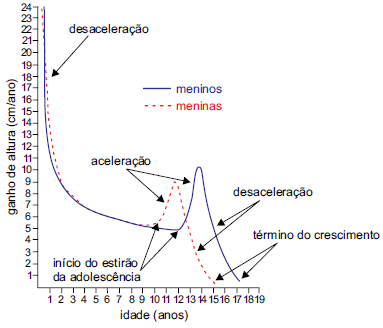
(Robert M. Malina e Claude Bouchard. Atividade física do atleta jovem: do crescimento à maturação, 2002. Adaptado.)
Considerando apenas as informações contidas no gráfico, é correto afirmar que:
Provas

Leia o texto para responder a questão.
Disparity in life spans of the rich and the poor is growing
Sabrina Tavernise
February 12, 2016

Patients at the Free Clinic in Newton, N.J. Researchers
debate whether expanding access to health care will shrink the
gap in life expectancy between the rich and the poor.
Experts have long known that rich people generally live longer than poor people. But a growing body of data shows a more disturbing pattern: Despite big advances in medicine, technology and education, the longevity gap between high-income and low-income Americans has been widening sharply.
The poor are losing ground not only in income, but also in years of life, the most basic measure of well-being. In the early 1970s, a 60-year-old man in the top half of the earnings ladder could expect to live 1.2 years longer than a man of the same age in the bottom half, according to an analysis by the Social Security Administration. Fast-forward to 2001, and he could expect to live 5.8 years longer than his poorer counterpart.
New research released this month contains even more jarring numbers. Looking at the extreme ends of the income spectrum, economists at the Brookings Institution found that for men born in 1920, there was a six-year difference in life expectancy between the top 10 percent of earners and the bottom 10 percent. For men born in 1950, that difference had more than doubled, to 14 years. For women, the gap grew to 13 years, from 4.7 years. “There has been this huge spreading out,” said Gary Burtless, one of the authors of the study.
The growing chasm is alarming policy makers, and has surfaced in the presidential campaign. During a Democratic debate, Senator Bernie Sanders and Hillary Clinton expressed concern over shortening life spans for some Americans. “This may be the next frontier of the inequality discussion,” said Peter Orszag, a former Obama administration official now at Citigroup, who was among the first to highlight the pattern. The causes are still being investigated, but public health researchers say that deep declines in smoking among the affluent and educated may partly explain the difference.
Overall, according to the Brookings study, life expectancy for the bottom 10 percent of wage earners improved by just 3 percent for men born in 1950 compared with those born in 1920. For the top 10 percent, though, it jumped by about 28 percent. (The researchers used a common measure – life expectancy at age 50 – and included data from 1984 to 2012.)
(www.nytimes.com. Adaptado.)
A nova pesquisa da Brookings Institution que foi divulgada
Provas
Dentre as complicações que um portador de diabetes não controlado pode apresentar está a catarata, ou seja, a perda da transparência do cristalino, a lente do olho. Em situações de hiperglicemia, o cristalino absorve água, fica intumescido e tem seu raio de curvatura diminuído (figura 1), o que provoca miopia no paciente. medida que a taxa de açúcar no sangue retorna aos níveis normais, o cristalino perde parte do excesso de água e volta ao tamanho original (figura 2). A repetição dessa situação altera as fibras da estrutura do cristalino, provocando sua opacificação.
(www.revistavigor.com.br. Adaptado.)
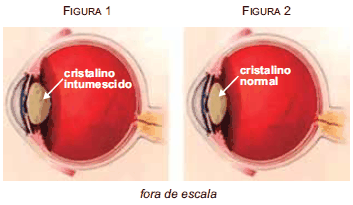
De acordo com o texto, a miopia causada por essa doença deve-se ao fato de, ao tornar-se mais intumescido, o cristalino ter sua distância focal
Provas
Considere amostras de 1 g de cada uma das seguintes substâncias: eteno (C2H4), monóxido de carbono (CO) e nitrogênio (N2). Essas três amostras
Provas
Leia o texto para responder a questão.
Disparity in life spans of the rich and the poor is growing
Sabrina Tavernise
February 12, 2016
Patients at the Free Clinic in Newton, N.J. Researchers
debate whether expanding access to health care will shrink the
gap in life expectancy between the rich and the poor.
Experts have long known that rich people generally live longer than poor people. But a growing body of data shows a more disturbing pattern: Despite big advances in medicine, technology and education, the longevity gap between high-income and low-income Americans has been widening sharply.
The poor are losing ground not only in income, but also in years of life, the most basic measure of well-being. In the early 1970s, a 60-year-old man in the top half of the earnings ladder could expect to live 1.2 years longer than a man of the same age in the bottom half, according to an analysis by the Social Security Administration. Fast-forward to 2001, and he could expect to live 5.8 years longer than his poorer counterpart.
New research released this month contains even more jarring numbers. Looking at the extreme ends of the income spectrum, economists at the Brookings Institution found that for men born in 1920, there was a six-year difference in life expectancy between the top 10 percent of earners and the bottom 10 percent. For men born in 1950, that difference had more than doubled, to 14 years. For women, the gap grew to 13 years, from 4.7 years. “There has been this huge spreading out,” said Gary Burtless, one of the authors of the study.
The growing chasm is alarming policy makers, and has surfaced in the presidential campaign. During a Democratic debate, Senator Bernie Sanders and Hillary Clinton expressed concern over shortening life spans for some Americans. “This may be the next frontier of the inequality discussion,” said Peter Orszag, a former Obama administration official now at Citigroup, who was among the first to highlight the pattern. The causes are still being investigated, but public health researchers say that deep declines in smoking among the affluent and educated may partly explain the difference.
Overall, according to the Brookings study, life expectancy for the bottom 10 percent of wage earners improved by just 3 percent for men born in 1950 compared with those born in 1920. For the top 10 percent, though, it jumped by about 28 percent. (The researchers used a common measure – life expectancy at age 50 – and included data from 1984 to 2012.)
(www.nytimes.com. Adaptado.)
Conforme as informações apresentadas no segundo parágrafo,
Provas
Em um terreno retangular ABCD, de 20 m2, serão construídos um deque e um lago, ambos de superfícies retangulares de mesma largura, com as medidas indicadas na figura. O projeto de construção ainda prevê o plantio de grama na área restante, que corresponde a 48% do terreno.
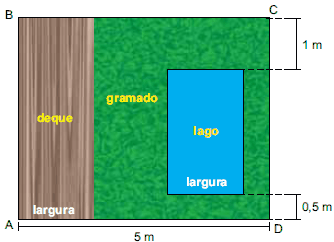
No projeto descrito, a área da superfície do lago, em m2, será igual a
Provas
Leia o trecho extraído do livro A dança do universo do físico brasileiro Marcelo Gleiser para responder a questão.
Durante o século VI a.C., o comércio entre os vários Estados gregos cresceu em importância, e a riqueza gerada levou a uma melhoria das cidades e das condições de vida. O centro das atividades era em Mileto, uma cidade-Estado situada na parte sul da Jônia, hoje a costa mediterrânea da Turquia. Foi em Mileto que a primeira escola de filosofia pré-socrática floresceu. Sua origem marca o início da grande aventura intelectual que levaria, 2 mil anos depois, ao nascimento da ciência moderna. De acordo com Aristóteles, Tales de Mileto foi o fundador da filosofia ocidental.
A reputação de Tales era legendária. Usando seu conhecimento astronômico e meteorológico (provavelmente herdado dos babilônios), ele previu uma excelente colheita de azeitonas com um ano de antecedência. Sendo um homem prático, conseguiu dinheiro para alugar todas as prensas de azeite de oliva da região e, quando chegou o verão, os produtores de azeite de oliva tiveram que pagar a Tales pelo uso das prensas, que acabou fazendo uma fortuna.
Supostamente, Tales também previu um eclipse solar que ocorreu no dia 28 de maio de 585 a.C., que efetivamente causou o fim da guerra entre os lídios e os persas. Quando lhe perguntaram o que era difícil, Tales respondeu: “Conhecer a si próprio”. Quando lhe perguntaram o que era fácil, respondeu: “Dar conselhos”. Não é à toa que era considerado um dos Sete Homens Sábios da Grécia Antiga. No entanto, nem sempre ele era prático. Um dia, perdido em especulações abstratas, Tales caiu dentro de um poço. Esse acidente aparentemente feriu os sentimentos de uma jovem escrava que estava em frente ao poço, a qual comentou, de modo sarcástico, que Tales estava tão preocupado com os céus que nem conseguia ver as coisas que estavam a seus pés.
(A dança do universo, 2006. Adaptado.)
“Sua origem marca o início da grande aventura intelectual que levaria, 2 mil anos depois, ao nascimento da ciência moderna.” (1º parágrafo)
O pronome em destaque refere-se a
Provas
A figura descreve o gráfico de uma função exponencial do tipo !$ y=a^x !$, de !$ \mathbb{R} !$ em !$ \mathbb{R} !$.
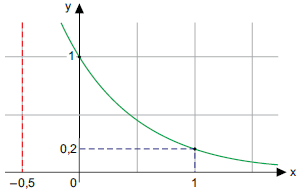
Nessa função, o valor de y para x = – 0,5 é igual a
Provas

(Flavio de Campos e Regina Claro. Oficina de história, vol. 3, 2013.)
Esses cartazes, divulgados durante o regime militar brasileiro, buscavam
Provas
Leia o texto para responder a questão.
Disparity in life spans of the rich and the poor is growing
Sabrina Tavernise
February 12, 2016
Patients at the Free Clinic in Newton, N.J. Researchers
debate whether expanding access to health care will shrink the
gap in life expectancy between the rich and the poor.
Experts have long known that rich people generally live longer than poor people. But a growing body of data shows a more disturbing pattern: Despite big advances in medicine, technology and education, the longevity gap between high-income and low-income Americans has been widening sharply.
The poor are losing ground not only in income, but also in years of life, the most basic measure of well-being. In the early 1970s, a 60-year-old man in the top half of the earnings ladder could expect to live 1.2 years longer than a man of the same age in the bottom half, according to an analysis by the Social Security Administration. Fast-forward to 2001, and he could expect to live 5.8 years longer than his poorer counterpart.
New research released this month contains even more jarring numbers. Looking at the extreme ends of the income spectrum, economists at the Brookings Institution found that for men born in 1920, there was a six-year difference in life expectancy between the top 10 percent of earners and the bottom 10 percent. For men born in 1950, that difference had more than doubled, to 14 years. For women, the gap grew to 13 years, from 4.7 years. “There has been this huge spreading out,” said Gary Burtless, one of the authors of the study.
The growing chasm is alarming policy makers, and has surfaced in the presidential campaign. During a Democratic debate, Senator Bernie Sanders and Hillary Clinton expressed concern over shortening life spans for some Americans. “This may be the next frontier of the inequality discussion,” said Peter Orszag, a former Obama administration official now at Citigroup, who was among the first to highlight the pattern. The causes are still being investigated, but public health researchers say that deep declines in smoking among the affluent and educated may partly explain the difference.
Overall, according to the Brookings study, life expectancy for the bottom 10 percent of wage earners improved by just 3 percent for men born in 1950 compared with those born in 1920. For the top 10 percent, though, it jumped by about 28 percent. (The researchers used a common measure – life expectancy at age 50 – and included data from 1984 to 2012.)
(www.nytimes.com. Adaptado.)
No título do texto, o termo “disparity” tem sentido semelhante ao termo do texto
Provas
Caderno Container