Foram encontradas 90 questões.
A profilaxia pré-exposição (PrEP) ao vírus HIV é um tratamento que consiste no consumo diário do antirretroviral Truvada® e tem como público-alvo pessoas com maior vulnerabilidade a adquirir o vírus. Segundo o Ministério da Saúde, o uso correto do medicamento reduz o risco de infecção por HIV em mais de 90%. Esse uso, porém, não barra a entrada do vírus no organismo, apenas bloqueia a ação da enzima transcriptase reversa.
(https://g1.globo.com. Adaptado.)
O tratamento com Truvada®
Provas
Questão presente nas seguintes provas

Prescriptions for fighting epidemics
Epidemics have plagued humanity since the dawn of settled life. Yet, success in conquering them remains patchy. Experts predict that a global one that could kill more than 300 million people would come round in the next 20 to 40 years. What pathogen would cause it is anybody’s guess. Chances are that it will be a virus that lurks in birds or mammals, or one that that has not yet hatched. The scariest are both highly lethal and spread easily among humans. Thankfully, bugs that excel at the first tend to be weak at the other. But mutations – ordinary business for germs – can change that in a blink. Moreover, when humans get too close to beasts, either wild or packed in farms, an animal disease can become a human one.
A front-runner for global pandemics is the seasonal influenza virus, which mutates so much that a vaccine must be custom-made every year. The Spanish flu pandemic of 1918, which killed 50 million to 100 million people, was a potent version of the “swine flu” that emerged in 2009. The H5N1 “avian flu” strain, deadly in 60% of cases, came about in the 1990s when a virus that sickened birds made the jump to a human. Ebola, HIV and Zika took a similar route.
(www.economist.com, 08.02.2018. Adaptado.)
No trecho do primeiro parágrafo “Moreover, when humans get too close to beasts”, o termo sublinhado indica
Provas
Questão presente nas seguintes provas
Prescriptions for fighting epidemics
Epidemics have plagued humanity since the dawn of settled life. Yet, success in conquering them remains patchy. Experts predict that a global one that could kill more than 300 million people would come round in the next 20 to 40 years. What pathogen would cause it is anybody’s guess. Chances are that it will be a virus that lurks in birds or mammals, or one that that has not yet hatched. The scariest are both highly lethal and spread easily among humans. Thankfully, bugs that excel at the first tend to be weak at the other. But mutations – ordinary business for germs – can change that in a blink. Moreover, when humans get too close to beasts, either wild or packed in farms, an animal disease can become a human one.
A front-runner for global pandemics is the seasonal influenza virus, which mutates so much that a vaccine must be custom-made every year. The Spanish flu pandemic of 1918, which killed 50 million to 100 million people, was a potent version of the “swine flu” that emerged in 2009. The H5N1 “avian flu” strain, deadly in 60% of cases, came about in the 1990s when a virus that sickened birds made the jump to a human. Ebola, HIV and Zika took a similar route.
(www.economist.com, 08.02.2018. Adaptado.)
No trecho do primeiro parágrafo “Yet, success in conquering them remains patchy”, o termo sublinhado equivale, em português, a
Provas
Questão presente nas seguintes provas
Os gráficos mostram o resultado de um experimento de queima de quatro velas de uso comercial, sendo duas do tipo A e duas do tipo B. Tal experimento foi feito para determinar a velocidade de queima das velas A e B em ambientes ventilado e não ventilado.
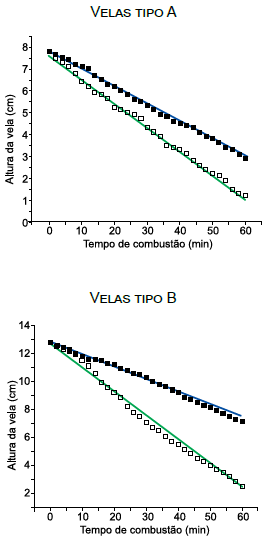
Sendo h0 a altura inicial e v a velocidade de queima de cada vela, os dados obtidos no experimento foram organizados na tabela:
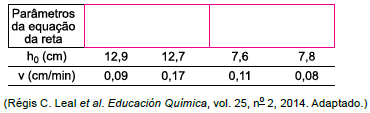
De acordo com a organização dos dados, os títulos faltantes à tabela estão apresentados em
Provas
Questão presente nas seguintes provas
Os microplásticos representam aproximadamente 92,4% da contagem global de partículas de lixo plástico. Estes pequenos plásticos de até 5 mm de tamanho estão entrando no ambiente marinho, contaminando um sistema já vulnerável.
(www.arocha.org. Adaptado.)
Os mexilhões estão entre os invertebrados marinhos diretamente afetados pela presença de partículas de microplásticos nas águas, uma vez que, para se alimentarem,
Provas
Questão presente nas seguintes provas
Prescriptions for fighting epidemics
Epidemics have plagued humanity since the dawn of settled life. Yet, success in conquering them remains patchy. Experts predict that a global one that could kill more than 300 million people would come round in the next 20 to 40 years. What pathogen would cause it is anybody’s guess. Chances are that it will be a virus that lurks in birds or mammals, or one that that has not yet hatched. The scariest are both highly lethal and spread easily among humans. Thankfully, bugs that excel at the first tend to be weak at the other. But mutations – ordinary business for germs – can change that in a blink. Moreover, when humans get too close to beasts, either wild or packed in farms, an animal disease can become a human one.
A front-runner for global pandemics is the seasonal influenza virus, which mutates so much that a vaccine must be custom-made every year. The Spanish flu pandemic of 1918, which killed 50 million to 100 million people, was a potent version of the “swine flu” that emerged in 2009. The H5N1 “avian flu” strain, deadly in 60% of cases, came about in the 1990s when a virus that sickened birds made the jump to a human. Ebola, HIV and Zika took a similar route.
(www.economist.com, 08.02.2018. Adaptado.)
De acordo com o segundo parágrafo,
Provas
Questão presente nas seguintes provas
O cálculo do Produto Interno Bruto (PIB) busca expressar o dinamismo de uma economia a partir da soma das riquezas produzidas por um país durante determinado período. No entanto, o cálculo do PIB ignora
Provas
Questão presente nas seguintes provas
Analise o mapa.
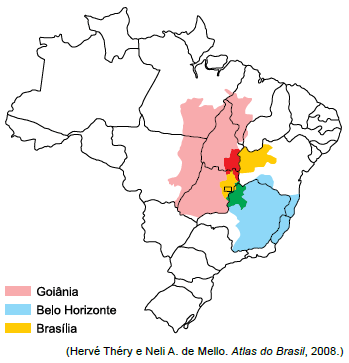
Considerando a dinâmica urbana brasileira, as áreas vermelha e verde no mapa correspondem a
Provas
Questão presente nas seguintes provas
- GeometriaGeometria PlanaCircunferências e CírculosÁrea do círculo, do setor circular e do segmento circular
Dois números reais de 0 a 4, e que podem ser iguais, serão sorteados ao acaso. Denotando-se esses números por x e y, a probabilidade de que eles sejam tais que !$ x^2 + y^2 ≤ 1 !$ é igual a
Provas
Questão presente nas seguintes provas
O solo amazônico é naturalmente rico em mercúrio na sua forma inorgânica. Na bacia do Rio Negro, todos os anos, na época chuvosa, os rios transbordam, invadem a floresta e formam ecossistemas fechados que permanecem inundados por até 130 dias. Nesse processo, o mercúrio inorgânico é liberado na água e bactérias anaeróbias convertem-no em metilmercúrio, que entra na cadeia alimentar aquática desses ecossistemas.
(http://revistapesquisa.fapesp.br. Adaptado.)
Na situação descrita,
Provas
Questão presente nas seguintes provas
Cadernos
Caderno Container