Foram encontradas 155 questões.
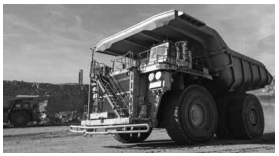
Mining trucks are monstrous machines that guzzle fuel
at a scarcely believable rate. Weighing 220 tonnes, they can
get through 134 litres of diesel every hour. Little wonder then
that mining companies are focusing their attention on these
vehicles as the first step to reducing their carbon footprint.
Anglo American, in collaboration with several partners, is
retrofitting a mining haul truck with hydrogen power technology.
A first of its kind, the monster mining vehicle is being piloted
in Limpopo, South Africa, at the firm’s Mogalakwena platinum
mine. Due to be launched early 2022, the truck will be hybrid,
with a hydrogen fuel cell providing roughly half of the power
and a battery pack the other half.
Instead of having a tank of diesel that powers the motor,
hydrogen enters the fuel cell and mixes with oxygen to create
water in a chemical reaction catalysed by platinum, which
generates the electricity needed to power the motors that
drive the wheels. By rolling out this technology across its
global truck fleet, Anglo American says it will be “taking the
equivalent of half a million diesel cars ‘off the road”.
The construction sector, which includes mining, accounted
for 39% of energy-related CO2
emissions in 2017, according
to Davide Sabbadin, from the European Environmental
Bureau. He says the sector will need to reduce its energy
consumption by a third if it hopes to be compatible with the
Paris Agreement. “While electric-powered vehicles, generally
speaking, are less damaging to the environment than internal
combustion engines on a life cycle analysis, this does not
mean that they are green,” he says. It all hinges on how the
hydrogen is produced. Some hydrogen is created using fossil
fuels, which of course means there are substantial emissions
as a result. “We should refrain from presenting hydrogen as a
technological solution to all problems… all forms of hydrogen
come at an environmental cost – water use, impacts on
nature,” says Mr Sabbadin.
(Jesse Preyser. www.bbc.com, 21.12.2021. Adaptado)
Provas
Questão presente nas seguintes provas

Mining trucks are monstrous machines that guzzle fuel
at a scarcely believable rate. Weighing 220 tonnes, they can
get through 134 litres of diesel every hour. Little wonder then
that mining companies are focusing their attention on these
vehicles as the first step to reducing their carbon footprint.
Anglo American, in collaboration with several partners, is
retrofitting a mining haul truck with hydrogen power technology.
A first of its kind, the monster mining vehicle is being piloted
in Limpopo, South Africa, at the firm’s Mogalakwena platinum
mine. Due to be launched early 2022, the truck will be hybrid,
with a hydrogen fuel cell providing roughly half of the power
and a battery pack the other half.
Instead of having a tank of diesel that powers the motor,
hydrogen enters the fuel cell and mixes with oxygen to create
water in a chemical reaction catalysed by platinum, which
generates the electricity needed to power the motors that
drive the wheels. By rolling out this technology across its
global truck fleet, Anglo American says it will be “taking the
equivalent of half a million diesel cars ‘off the road”.
The construction sector, which includes mining, accounted
for 39% of energy-related CO2
emissions in 2017, according
to Davide Sabbadin, from the European Environmental
Bureau. He says the sector will need to reduce its energy
consumption by a third if it hopes to be compatible with the
Paris Agreement. “While electric-powered vehicles, generally
speaking, are less damaging to the environment than internal
combustion engines on a life cycle analysis, this does not
mean that they are green,” he says. It all hinges on how the
hydrogen is produced. Some hydrogen is created using fossil
fuels, which of course means there are substantial emissions
as a result. “We should refrain from presenting hydrogen as a
technological solution to all problems… all forms of hydrogen
come at an environmental cost – water use, impacts on
nature,” says Mr Sabbadin.
(Jesse Preyser. www.bbc.com, 21.12.2021. Adaptado)
Provas
Questão presente nas seguintes provas
Mining trucks are monstrous machines that guzzle fuel
at a scarcely believable rate. Weighing 220 tonnes, they can
get through 134 litres of diesel every hour. Little wonder then
that mining companies are focusing their attention on these
vehicles as the first step to reducing their carbon footprint.
Anglo American, in collaboration with several partners, is
retrofitting a mining haul truck with hydrogen power technology.
A first of its kind, the monster mining vehicle is being piloted
in Limpopo, South Africa, at the firm’s Mogalakwena platinum
mine. Due to be launched early 2022, the truck will be hybrid,
with a hydrogen fuel cell providing roughly half of the power
and a battery pack the other half.
Instead of having a tank of diesel that powers the motor,
hydrogen enters the fuel cell and mixes with oxygen to create
water in a chemical reaction catalysed by platinum, which
generates the electricity needed to power the motors that
drive the wheels. By rolling out this technology across its
global truck fleet, Anglo American says it will be “taking the
equivalent of half a million diesel cars ‘off the road”.
The construction sector, which includes mining, accounted
for 39% of energy-related CO2
emissions in 2017, according
to Davide Sabbadin, from the European Environmental
Bureau. He says the sector will need to reduce its energy
consumption by a third if it hopes to be compatible with the
Paris Agreement. “While electric-powered vehicles, generally
speaking, are less damaging to the environment than internal
combustion engines on a life cycle analysis, this does not
mean that they are green,” he says. It all hinges on how the
hydrogen is produced. Some hydrogen is created using fossil
fuels, which of course means there are substantial emissions
as a result. “We should refrain from presenting hydrogen as a
technological solution to all problems… all forms of hydrogen
come at an environmental cost – water use, impacts on
nature,” says Mr Sabbadin.
(Jesse Preyser. www.bbc.com, 21.12.2021. Adaptado)
Provas
Questão presente nas seguintes provas
( )
Mining trucks are monstrous machines that guzzle fuel
at a scarcely believable rate. Weighing 220 tonnes, they can
get through 134 litres of diesel every hour. Little wonder then
that mining companies are focusing their attention on these
vehicles as the first step to reducing their carbon footprint.
Anglo American, in collaboration with several partners, is
retrofitting a mining haul truck with hydrogen power technology.
A first of its kind, the monster mining vehicle is being piloted
in Limpopo, South Africa, at the firm’s Mogalakwena platinum
mine. Due to be launched early 2022, the truck will be hybrid,
with a hydrogen fuel cell providing roughly half of the power
and a battery pack the other half.
Instead of having a tank of diesel that powers the motor,
hydrogen enters the fuel cell and mixes with oxygen to create
water in a chemical reaction catalysed by platinum, which
generates the electricity needed to power the motors that
drive the wheels. By rolling out this technology across its
global truck fleet, Anglo American says it will be “taking the
equivalent of half a million diesel cars ‘off the road”.
The construction sector, which includes mining, accounted
for 39% of energy-related CO2
emissions in 2017, according
to Davide Sabbadin, from the European Environmental
Bureau. He says the sector will need to reduce its energy
consumption by a third if it hopes to be compatible with the
Paris Agreement. “While electric-powered vehicles, generally
speaking, are less damaging to the environment than internal
combustion engines on a life cycle analysis, this does not
mean that they are green,” he says. It all hinges on how the
hydrogen is produced. Some hydrogen is created using fossil
fuels, which of course means there are substantial emissions
as a result. “We should refrain from presenting hydrogen as a
technological solution to all problems… all forms of hydrogen
come at an environmental cost – water use, impacts on
nature,” says Mr Sabbadin.
(Jesse Preyser. www.bbc.com, 21.12.2021. Adaptado)
Provas
Questão presente nas seguintes provas
Mining trucks are monstrous machines that guzzle fuel
at a scarcely believable rate. Weighing 220 tonnes, they can
get through 134 litres of diesel every hour. Little wonder then
that mining companies are focusing their attention on these
vehicles as the first step to reducing their carbon footprint.
Anglo American, in collaboration with several partners, is
retrofitting a mining haul truck with hydrogen power technology.
A first of its kind, the monster mining vehicle is being piloted
in Limpopo, South Africa, at the firm’s Mogalakwena platinum
mine. Due to be launched early 2022, the truck will be hybrid,
with a hydrogen fuel cell providing roughly half of the power
and a battery pack the other half.
Instead of having a tank of diesel that powers the motor,
hydrogen enters the fuel cell and mixes with oxygen to create
water in a chemical reaction catalysed by platinum, which
generates the electricity needed to power the motors that
drive the wheels. By rolling out this technology across its
global truck fleet, Anglo American says it will be “taking the
equivalent of half a million diesel cars ‘off the road”.
The construction sector, which includes mining, accounted
for 39% of energy-related CO2
emissions in 2017, according
to Davide Sabbadin, from the European Environmental
Bureau. He says the sector will need to reduce its energy
consumption by a third if it hopes to be compatible with the
Paris Agreement. “While electric-powered vehicles, generally
speaking, are less damaging to the environment than internal
combustion engines on a life cycle analysis, this does not
mean that they are green,” he says. It all hinges on how the
hydrogen is produced. Some hydrogen is created using fossil
fuels, which of course means there are substantial emissions
as a result. “We should refrain from presenting hydrogen as a
technological solution to all problems… all forms of hydrogen
come at an environmental cost – water use, impacts on
nature,” says Mr Sabbadin.
(Jesse Preyser. www.bbc.com, 21.12.2021. Adaptado)
Provas
Questão presente nas seguintes provas
Fernando vai aplicar parte de R$ 53.300,00 em um investimento que renderá 8% do valor aplicado em seis meses.
Ele decidiu usar uma parte do dinheiro imediatamente e
aplicar o restante, de maneira que o valor que ele receberá em seis meses (quantia aplicada mais o rendimento)
seja igual ao valor que ele usará agora. A quantia que
Fernando usará imediatamente é
Provas
Questão presente nas seguintes provas
- GeometriaGeometria PlanaTriângulos
- GeometriaGeometria PlanaQuadriláteros
- GeometriaGeometria PlanaÁreas e Perímetros
Sobre os lados do triângulo AEF estão os pontos C, D e
G. O ponto G também está sobre o lado BC do retângulo
ABCD, cuja área é 544 cm2, conforme mostra a figura,
que também indica as medidas dos segmentos CE e CF.
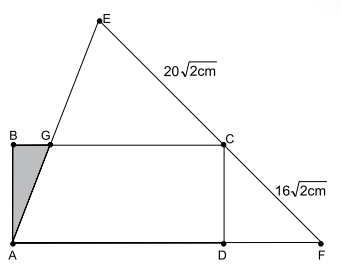
Sabendo que o triângulo CDF é isósceles e que a razão entre a medida do segmento GA e a medida do segmento GE é igual a 0,8, a área do triângulo ABG, em cm2, é
Sabendo que o triângulo CDF é isósceles e que a razão entre a medida do segmento GA e a medida do segmento GE é igual a 0,8, a área do triângulo ABG, em cm2, é
Provas
Questão presente nas seguintes provas
Um parede retangular, com 8 metros de comprimento por
3 metros de altura, será totalmente revestida por ladrilhos quadrados de 20 cm de lado. Parte desses ladrilhos
serão brancos e custam R$ 6,00 cada e o restante será
preto, ao custo de R$ 10,00 cada. Se o custo médio por
ladrilho, nesse revestimento, for de R$ 8,90, a diferença
entre o número de ladrilhos pretos e o de ladrilhos brancos será
Provas
Questão presente nas seguintes provas
Em um torneio de tênis em duplas, havia duplas de homens, duplas de mulheres e duplas mistas, cada jogador
participando de apenas uma dupla. Considerando o total
de jogadores participantes, o número de mulheres excedia o de homens em 18. Os jogos desse torneio foram
organizados de maneira que as duplas femininas disputaram jogos entre si, com cada dupla feminina jogando
um único jogo com cada outra dupla feminina, num total
de 300 jogos, e, para as outras duplas, cada dupla mista
jogou um único jogo com cada dupla masculina. Se nesse torneio o número de duplas mistas excedia o número
de duplas masculinas em 10 e o total de jogos disputados
foi 716, o número total de participantes foi
Provas
Questão presente nas seguintes provas
Em um retângulo ABCD, o ponto E está sobre a metade
do lado AB e os pontos F e G estão sobre os lados do
retângulo, conforme mostra a figura.
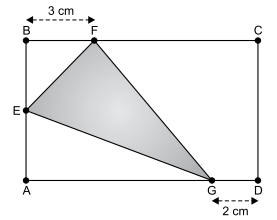
O triângulo BEF é isósceles e a área do retângulo é 60 cm2. Logo, a área do triângulo EFG é
O triângulo BEF é isósceles e a área do retângulo é 60 cm2. Logo, a área do triângulo EFG é
Provas
Questão presente nas seguintes provas
Cadernos
Caderno Container