Foram encontradas 45 questões.
Leia o texto para responder à questão.
Reducing food waste would mitigate climate change, study shows
April 7, 2016
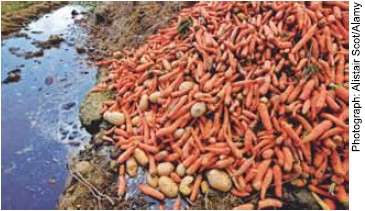
Reducing food waste around the world would help curb emissions of planet-warming gases, lessening some of the impacts of climate change such as more extreme weather and rising seas, scientists said on Thursday.
Up to 14% of emissions from agriculture in 2050 could be avoided by managing food use and distribution better, according to a new study from the Potsdam Institute for Climate Impact Research (PIK). “Agriculture is a major driver of climate change, accounting for more than 20% of overall global greenhouse gas emissions in 2010,” said co-author Prajal Pradhan. “Avoiding food loss and waste would therefore avoid unnecessary greenhouse gas emissions and help mitigate climate change.”
Between 30 and 40% of food produced around the world is never eaten, because it is spoiled after harvest and during transportation, or thrown away by shops and consumers. The share of food wasted is expected to increase drastically if emerging economies like China and India adopt western food habits, including a shift to eating more meat, the researchers warned. Richer countries tend to consume more food than is healthy or simply waste it, they noted.
As poorer countries develop and the world’s population grows, emissions associated with food waste could soar from 0.5 gigatonnes (GT) of carbon dioxide equivalent per year to between 1.9 and 2.5 GT annually by mid-century, showed the study published in the Environmental Science & Technology journal. It is widely argued that cutting food waste and distributing the world’s surplus food where it is needed could help tackle hunger in places that do not have enough - especially given that land to expand farming is limited.
But Jürgen Kropp, another of the study’s co-authors and PIK’s head of climate change and development, told the Thomson Reuters Foundation the potential for food waste curbs to reduce emissions should be given more attention. “It is not a strategy of governments at the moment,” he said.
(www.theguardian.com. Adaptado.)
No trecho do quinto parágrafo “the potential for food waste curbs to reduce emissions”, o termo em destaque indica
Provas

Leia o texto para responder à questão.
Reducing food waste would mitigate climate change, study shows
April 7, 2016
Reducing food waste around the world would help curb emissions of planet-warming gases, lessening some of the impacts of climate change such as more extreme weather and rising seas, scientists said on Thursday.
Up to 14% of emissions from agriculture in 2050 could be avoided by managing food use and distribution better, according to a new study from the Potsdam Institute for Climate Impact Research (PIK). “Agriculture is a major driver of climate change, accounting for more than 20% of overall global greenhouse gas emissions in 2010,” said co-author Prajal Pradhan. “Avoiding food loss and waste would therefore avoid unnecessary greenhouse gas emissions and help mitigate climate change.”
Between 30 and 40% of food produced around the world is never eaten, because it is spoiled after harvest and during transportation, or thrown away by shops and consumers. The share of food wasted is expected to increase drastically if emerging economies like China and India adopt western food habits, including a shift to eating more meat, the researchers warned. Richer countries tend to consume more food than is healthy or simply waste it, they noted.
As poorer countries develop and the world’s population grows, emissions associated with food waste could soar from 0.5 gigatonnes (GT) of carbon dioxide equivalent per year to between 1.9 and 2.5 GT annually by mid-century, showed the study published in the Environmental Science & Technology journal. It is widely argued that cutting food waste and distributing the world’s surplus food where it is needed could help tackle hunger in places that do not have enough - especially given that land to expand farming is limited.
But Jürgen Kropp, another of the study’s co-authors and PIK’s head of climate change and development, told the Thomson Reuters Foundation the potential for food waste curbs to reduce emissions should be given more attention. “It is not a strategy of governments at the moment,” he said.
(www.theguardian.com. Adaptado.)
In the last paragraph, according to Jürgen Kropp,
Provas
Leia o texto para responder à questão.
Reducing food waste would mitigate climate change, study shows
April 7, 2016
Reducing food waste around the world would help curb emissions of planet-warming gases, lessening some of the impacts of climate change such as more extreme weather and rising seas, scientists said on Thursday.
Up to 14% of emissions from agriculture in 2050 could be avoided by managing food use and distribution better, according to a new study from the Potsdam Institute for Climate Impact Research (PIK). “Agriculture is a major driver of climate change, accounting for more than 20% of overall global greenhouse gas emissions in 2010,” said co-author Prajal Pradhan. “Avoiding food loss and waste would therefore avoid unnecessary greenhouse gas emissions and help mitigate climate change.”
Between 30 and 40% of food produced around the world is never eaten, because it is spoiled after harvest and during transportation, or thrown away by shops and consumers. The share of food wasted is expected to increase drastically if emerging economies like China and India adopt western food habits, including a shift to eating more meat, the researchers warned. Richer countries tend to consume more food than is healthy or simply waste it, they noted.
As poorer countries develop and the world’s population grows, emissions associated with food waste could soar from 0.5 gigatonnes (GT) of carbon dioxide equivalent per year to between 1.9 and 2.5 GT annually by mid-century, showed the study published in the Environmental Science & Technology journal. It is widely argued that cutting food waste and distributing the world’s surplus food where it is needed could help tackle hunger in places that do not have enough - especially given that land to expand farming is limited.
But Jürgen Kropp, another of the study’s co-authors and PIK’s head of climate change and development, told the Thomson Reuters Foundation the potential for food waste curbs to reduce emissions should be given more attention. “It is not a strategy of governments at the moment,” he said.
(www.theguardian.com. Adaptado.)
O trecho final do quarto parágrafo “given that land to expand farming is limited” tem o mesmo sentido de
Provas
Leia o texto para responder à questão.
Reducing food waste would mitigate climate change, study shows
April 7, 2016
Reducing food waste around the world would help curb emissions of planet-warming gases, lessening some of the impacts of climate change such as more extreme weather and rising seas, scientists said on Thursday.
Up to 14% of emissions from agriculture in 2050 could be avoided by managing food use and distribution better, according to a new study from the Potsdam Institute for Climate Impact Research (PIK). “Agriculture is a major driver of climate change, accounting for more than 20% of overall global greenhouse gas emissions in 2010,” said co-author Prajal Pradhan. “Avoiding food loss and waste would therefore avoid unnecessary greenhouse gas emissions and help mitigate climate change.”
Between 30 and 40% of food produced around the world is never eaten, because it is spoiled after harvest and during transportation, or thrown away by shops and consumers. The share of food wasted is expected to increase drastically if emerging economies like China and India adopt western food habits, including a shift to eating more meat, the researchers warned. Richer countries tend to consume more food than is healthy or simply waste it, they noted.
As poorer countries develop and the world’s population grows, emissions associated with food waste could soar from 0.5 gigatonnes (GT) of carbon dioxide equivalent per year to between 1.9 and 2.5 GT annually by mid-century, showed the study published in the Environmental Science & Technology journal. It is widely argued that cutting food waste and distributing the world’s surplus food where it is needed could help tackle hunger in places that do not have enough - especially given that land to expand farming is limited.
But Jürgen Kropp, another of the study’s co-authors and PIK’s head of climate change and development, told the Thomson Reuters Foundation the potential for food waste curbs to reduce emissions should be given more attention. “It is not a strategy of governments at the moment,” he said.
(www.theguardian.com. Adaptado.)
According to the information presented in the fourth paragraph, there is an indication to
Provas
Leia o texto para responder à questão.
Reducing food waste would mitigate climate change, study shows
April 7, 2016
Reducing food waste around the world would help curb emissions of planet-warming gases, lessening some of the impacts of climate change such as more extreme weather and rising seas, scientists said on Thursday.
Up to 14% of emissions from agriculture in 2050 could be avoided by managing food use and distribution better, according to a new study from the Potsdam Institute for Climate Impact Research (PIK). “Agriculture is a major driver of climate change, accounting for more than 20% of overall global greenhouse gas emissions in 2010,” said co-author Prajal Pradhan. “Avoiding food loss and waste would therefore avoid unnecessary greenhouse gas emissions and help mitigate climate change.”
Between 30 and 40% of food produced around the world is never eaten, because it is spoiled after harvest and during transportation, or thrown away by shops and consumers. The share of food wasted is expected to increase drastically if emerging economies like China and India adopt western food habits, including a shift to eating more meat, the researchers warned. Richer countries tend to consume more food than is healthy or simply waste it, they noted.
As poorer countries develop and the world’s population grows, emissions associated with food waste could soar from 0.5 gigatonnes (GT) of carbon dioxide equivalent per year to between 1.9 and 2.5 GT annually by mid-century, showed the study published in the Environmental Science & Technology journal. It is widely argued that cutting food waste and distributing the world’s surplus food where it is needed could help tackle hunger in places that do not have enough - especially given that land to expand farming is limited.
But Jürgen Kropp, another of the study’s co-authors and PIK’s head of climate change and development, told the Thomson Reuters Foundation the potential for food waste curbs to reduce emissions should be given more attention. “It is not a strategy of governments at the moment,” he said.
(www.theguardian.com. Adaptado.)
No trecho inicial do quarto parágrafo “As poorer countries develop and the world’s population grows”, o termo em destaque tem sentido equivalente, em português, a
Provas
Leia o texto para responder à questão.
Reducing food waste would mitigate climate change, study shows
April 7, 2016
Reducing food waste around the world would help curb emissions of planet-warming gases, lessening some of the impacts of climate change such as more extreme weather and rising seas, scientists said on Thursday.
Up to 14% of emissions from agriculture in 2050 could be avoided by managing food use and distribution better, according to a new study from the Potsdam Institute for Climate Impact Research (PIK). “Agriculture is a major driver of climate change, accounting for more than 20% of overall global greenhouse gas emissions in 2010,” said co-author Prajal Pradhan. “Avoiding food loss and waste would therefore avoid unnecessary greenhouse gas emissions and help mitigate climate change.”
Between 30 and 40% of food produced around the world is never eaten, because it is spoiled after harvest and during transportation, or thrown away by shops and consumers. The share of food wasted is expected to increase drastically if emerging economies like China and India adopt western food habits, including a shift to eating more meat, the researchers warned. Richer countries tend to consume more food than is healthy or simply waste it, they noted.
As poorer countries develop and the world’s population grows, emissions associated with food waste could soar from 0.5 gigatonnes (GT) of carbon dioxide equivalent per year to between 1.9 and 2.5 GT annually by mid-century, showed the study published in the Environmental Science & Technology journal. It is widely argued that cutting food waste and distributing the world’s surplus food where it is needed could help tackle hunger in places that do not have enough - especially given that land to expand farming is limited.
But Jürgen Kropp, another of the study’s co-authors and PIK’s head of climate change and development, told the Thomson Reuters Foundation the potential for food waste curbs to reduce emissions should be given more attention. “It is not a strategy of governments at the moment,” he said.
(www.theguardian.com. Adaptado.)
De acordo com o terceiro parágrafo, a parcela de alimentos desperdiçados deverá aumentar no futuro se
Provas
Leia o texto para responder à questão.
Reducing food waste would mitigate climate change, study shows
April 7, 2016
Reducing food waste around the world would help curb emissions of planet-warming gases, lessening some of the impacts of climate change such as more extreme weather and rising seas, scientists said on Thursday.
Up to 14% of emissions from agriculture in 2050 could be avoided by managing food use and distribution better, according to a new study from the Potsdam Institute for Climate Impact Research (PIK). “Agriculture is a major driver of climate change, accounting for more than 20% of overall global greenhouse gas emissions in 2010,” said co-author Prajal Pradhan. “Avoiding food loss and waste would therefore avoid unnecessary greenhouse gas emissions and help mitigate climate change.”
Between 30 and 40% of food produced around the world is never eaten, because it is spoiled after harvest and during transportation, or thrown away by shops and consumers. The share of food wasted is expected to increase drastically if emerging economies like China and India adopt western food habits, including a shift to eating more meat, the researchers warned. Richer countries tend to consume more food than is healthy or simply waste it, they noted.
As poorer countries develop and the world’s population grows, emissions associated with food waste could soar from 0.5 gigatonnes (GT) of carbon dioxide equivalent per year to between 1.9 and 2.5 GT annually by mid-century, showed the study published in the Environmental Science & Technology journal. It is widely argued that cutting food waste and distributing the world’s surplus food where it is needed could help tackle hunger in places that do not have enough - especially given that land to expand farming is limited.
But Jürgen Kropp, another of the study’s co-authors and PIK’s head of climate change and development, told the Thomson Reuters Foundation the potential for food waste curbs to reduce emissions should be given more attention. “It is not a strategy of governments at the moment,” he said.
(www.theguardian.com. Adaptado.)
No trecho do segundo parágrafo “Agriculture is a major driver of climate change”, os termos em destaque têm sentido equivalente, em português, a
Provas
Leia o texto para responder à questão.
Reducing food waste would mitigate climate change, study shows
April 7, 2016
Reducing food waste around the world would help curb emissions of planet-warming gases, lessening some of the impacts of climate change such as more extreme weather and rising seas, scientists said on Thursday.
Up to 14% of emissions from agriculture in 2050 could be avoided by managing food use and distribution better, according to a new study from the Potsdam Institute for Climate Impact Research (PIK). “Agriculture is a major driver of climate change, accounting for more than 20% of overall global greenhouse gas emissions in 2010,” said co-author Prajal Pradhan. “Avoiding food loss and waste would therefore avoid unnecessary greenhouse gas emissions and help mitigate climate change.”
Between 30 and 40% of food produced around the world is never eaten, because it is spoiled after harvest and during transportation, or thrown away by shops and consumers. The share of food wasted is expected to increase drastically if emerging economies like China and India adopt western food habits, including a shift to eating more meat, the researchers warned. Richer countries tend to consume more food than is healthy or simply waste it, they noted.
As poorer countries develop and the world’s population grows, emissions associated with food waste could soar from 0.5 gigatonnes (GT) of carbon dioxide equivalent per year to between 1.9 and 2.5 GT annually by mid-century, showed the study published in the Environmental Science & Technology journal. It is widely argued that cutting food waste and distributing the world’s surplus food where it is needed could help tackle hunger in places that do not have enough - especially given that land to expand farming is limited.
But Jürgen Kropp, another of the study’s co-authors and PIK’s head of climate change and development, told the Thomson Reuters Foundation the potential for food waste curbs to reduce emissions should be given more attention. “It is not a strategy of governments at the moment,” he said.
(www.theguardian.com. Adaptado.)
The text
Provas
Observe o quadrinho para responder à questão.
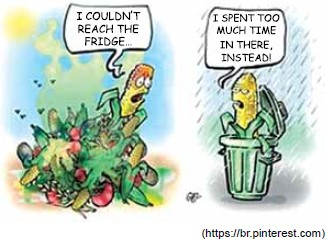
Na fala da espiga de milho à direita “I spent too much time in there, instead!”, o termo em destaque se refere
Provas
Observe o quadrinho para responder à questão.
Na fala da espiga de milho à esquerda “I couldn’t reach the fridge...”, o termo em destaque pode ser substituído, sem alteração de sentido, por
Provas
Caderno Container