Foram encontradas 45.388 questões.
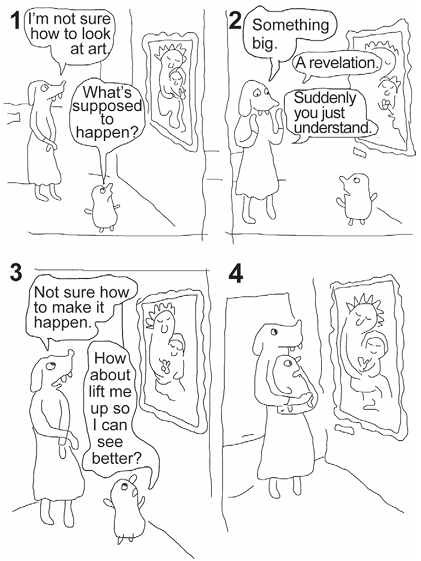
BARRY, L. Disponível em: www.avclub.com. Acesso em: 25 out. 2021.
Essa história em quadrinhos, que apresenta dois personagens frente a um quadro, ilustra a
Provas

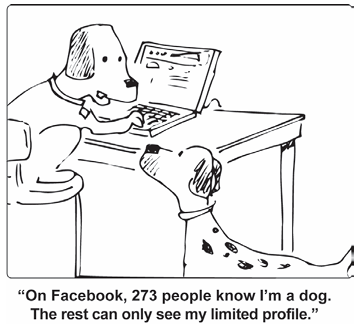
COTTINGHAM, R. Disponível em: www.socialsignal.com.
Acesso em: 6 maio 2013.
Ao abordar a temática das mídias, esse cartum critica
Provas
The Middle East is warming faster than much of the world, and Kuwait is moving towards unbearable temperatures.
With the mercury topping 53° C, three Kuwaiti citizens — an influencer, a weather forecaster and a retired civil servant — raised the alarm.
They urged that Kuwait must not be allowed to get any hotter — and none of them had a solution to offer.
The Global Climate Summit (COP26) in Glasgow was seen as crucial if climate change is to be brought under control. Almost 200 countries were asked for their plans to cut emissions, and it could lead to major changes to our everyday lives.
Disponível em: www.bbc.com. Acesso em: 26 out. 2021 (adaptado).
Nesse texto, o vocábulo “unbearable” enfatiza a
Provas
I remember being caught speaking Spanish at recess [...] I remember being sent to the corner of the classroom for “talking back” to the Anglo teacher when all I was trying to do was tell her how to pronounce my name. “If you want to be American, speak ‘American’. If you don’t like it, go back to Mexico where you belong”.
“I want you to speak English […]”, my mother would say, mortified that I spoke English like a Mexican. At Pan American University, I and all Chicano students were required to take two speech classes. Their purpose: to get rid of our accents.
ANZALDÚA, G. Borderlands/La Frontera: The New Mestiza. San Francisco: Aunt Lute Books, 1987.
O problema abordado nesse texto sobre imigrantes residentes nos Estados Unidos diz respeito aos prejuízos gerados pelo(a)
Provas

Disponível em: www.clickhole.com. Acesso em: 26 out. 2015
A carta da editora Stephanie Allen-Nichols à escritora Alice Walker tem o propósito de
Provas
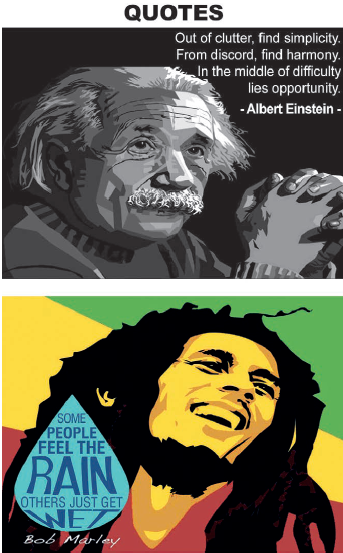
Disponível em: http://thumbpress.com. Acesso em: 28 out. 2013.
A relação entre as citações atribuídas ao físico Albert Einstein e ao cantor e compositor Bob Marley reside na crença de que é necessário
Provas
Holy War
Oh, so we can hate each other and fear each other
We can build these walls between each other
Baby, blow by blow and brick by brick
Keep yourself locked in, yourself locked in
[…]
Oh, maybe we should love somebody
Oh, maybe we could care a little more
So maybe we should love somebody
Instead of polishing the bombs of holy war
KEYS, A. Here. Estados Unidos: RCA Records, 2016.
Nessa letra de canção, que aborda um contexto de ódio e intolerância, o marcador “instead of ” introduz a ideia de
Provas
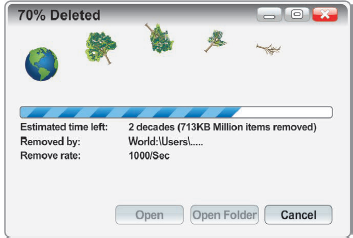
Disponível em: www.hongkiat.com. Acesso em: 18 ago. 2017 (adaptado).
O texto estabelece uma relação entre elementos da natureza e comandos de um programa de computador para
Provas
Text 2
Drones Could Spot Crime Scenes from Afar
A system could aid forensic searches and crime-scene mapping by detecting reflections ffom human materials
BY RACHEL BERKOWITZ
Volunteers sometimes spend months trudging through remote terrain to search for lost hikers or crime victims. But a new tool could soon pinpoint forensic evidence from the sky instead. By identifying how traces of blood and other human signs reflect light when found on various natural surfaces, the scientists say searchers will be able to quickly scour large areas for clues about missing persons—dead or alive—using images acquired by drones.
Special drone-mounted sensors can record wavelength intensity for the entire electromagnetic spectrum (rather than just the red, green and blue of a typical camera) in each pixel of an image. Geologists routinely use this technology to pinpoint mineral deposits. Mark Krekeler, a mineralogist at Miami University in Ohio, and his colleagues realized that the same approach, supported by the right spectral data library, could potentially detect forensic evidence.
To build their tool, the researchers measured how human-related features, including blood, sweaty clothing and skin tones, reflect different wavelengths of light. Previous studies have examined such reflective “signatures” to identify blood, “but the signature depends on the surface itself and may change over time” Krekeler says. He and his team analyzed thousands of samples, such as bloodstains on different rock types, recording how they changed as the blood dried.
The researchers customized software that mixes the known reflective signatures of various surfaces to reproduce a target of interest. For example, rock and clothing signatures can be combined to seek a hiker lost in the mountains, or a blood signature can be mixed with those of clothing and sand to search for a wounded person in a desert.
The software estimates whether the target exists in any pixel in an image. It can distinguish between an animal and a human in dense forest, search a cityscape for evidence of a specific person in a blue cotton dress, or determine whether soil is stained by blood or diesel fuel, Krekeler says. His team was slated to present its work at the Geological Society of America's meeting of the North-Central Section in April.
Wendy Calvin, a planetary scientist at the University of Nevada, Reno, who was not involved with the study, calls it “an interesting and novel use of spectral data—and the technique looks promising” But she says it could be challenging to use from afar because of how much of a substance would likely be needed to show up in a pixel.
Within months, officials will be able to download and test the tool for themselves. Developing best-practice protocols for search teams could make such technology routine for investigations and forensics, Krekeler says. As drones and sensors become more widespread, he adds, they can transform investigations that are currently costly, labor-intensive or even impossible.
Available at: <https:/Awww.scientificamerican.com/article/drones-could-spot-crime-scenes-from-afar/> [on May Ist, 2024].
Which option can replace the emphasized word without changing its meaning?
"Volunteers sometimes spend months trudging through remote terrain to search for lost hikers or crime victims”
Provas
Text 2
Drones Could Spot Crime Scenes from Afar
A system could aid forensic searches and crime-scene mapping by detecting reflections ffom human materials
BY RACHEL BERKOWITZ
Volunteers sometimes spend months trudging through remote terrain to search for lost hikers or crime victims. But a new tool could soon pinpoint forensic evidence from the sky instead. By identifying how traces of blood and other human signs reflect light when found on various natural surfaces, the scientists say searchers will be able to quickly scour large areas for clues about missing persons—dead or alive—using images acquired by drones.
Special drone-mounted sensors can record wavelength intensity for the entire electromagnetic spectrum (rather than just the red, green and blue of a typical camera) in each pixel of an image. Geologists routinely use this technology to pinpoint mineral deposits. Mark Krekeler, a mineralogist at Miami University in Ohio, and his colleagues realized that the same approach, supported by the right spectral data library, could potentially detect forensic evidence.
To build their tool, the researchers measured how human-related features, including blood, sweaty clothing and skin tones, reflect different wavelengths of light. Previous studies have examined such reflective “signatures” to identify blood, “but the signature depends on the surface itself and may change over time” Krekeler says. He and his team analyzed thousands of samples, such as bloodstains on different rock types, recording how they changed as the blood dried.
The researchers customized software that mixes the known reflective signatures of various surfaces to reproduce a target of interest. For example, rock and clothing signatures can be combined to seek a hiker lost in the mountains, or a blood signature can be mixed with those of clothing and sand to search for a wounded person in a desert.
The software estimates whether the target exists in any pixel in an image. It can distinguish between an animal and a human in dense forest, search a cityscape for evidence of a specific person in a blue cotton dress, or determine whether soil is stained by blood or diesel fuel, Krekeler says. His team was slated to present its work at the Geological Society of America's meeting of the North-Central Section in April.
Wendy Calvin, a planetary scientist at the University of Nevada, Reno, who was not involved with the study, calls it “an interesting and novel use of spectral data—and the technique looks promising” But she says it could be challenging to use from afar because of how much of a substance would likely be needed to show up in a pixel.
Within months, officials will be able to download and test the tool for themselves. Developing best-practice protocols for search teams could make such technology routine for investigations and forensics, Krekeler says. As drones and sensors become more widespread, he adds, they can transform investigations that are currently costly, labor-intensive or even impossible.
Available at: <https:/Awww.scientificamerican.com/article/drones-could-spot-crime-scenes-from-afar/> [on May Ist, 2024].
Mark the option that uses the passive voice correctly.
Provas
Caderno Container