READ TEXT II AND ANSWER QUESTIONS 19 TO 24:
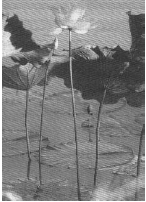
In 1984, the American botanist Jane Shen-Miller was visiting China when scientists there gave her a weird present – a bunch of brown seeds the size of large marbles. She forgot about them for 10 years until she found out they were extremely old lotus seeds. They came from a dried lake bed in China where, centuries ago, Buddhists had grown lotus plants as a sacred symbol of purity.
Ironically, Chairman Mao’s abortive Great Leap Forward in 1958 had brought the lotus fruits to the surface when the local peat was dug up for agriculture.
The seeds were easy to germinate, and once sprouted, Shen-Miller could measure their age. The results were astonishing. They were centuries old and one dated back 1,288 years, the oldest seed ever germinated. When the results were published, word got out that the seeds held the secret of long life, the ancient lake site turned into a tourist attraction and the seeds rapidly disappeared.
When Shen-Miller returned to the site recently, she salvaged 60 specimens. Since then, she and other researchers have been unlocking the secrets of the seeds’ longevity. Each seed is sealed hermetically inside a thick shell. They contain an incredibly tough protein able to survive temperatures up to 110º C, which helps protect the seed in a harsh environment. Another enzyme, methyl transferase, which repairs damage to the seeds’ proteins, is also found in humans and other creatures. There are also high levels of ascorbic acid and glutathione, which help keep proteins fit and healthy and protect cells from damage by free radicals – one of the causes of advancing age in humans.
(The Guardian, March 21, 2002: 11)
