Magna Concursos

Foram encontradas 64 questões.

Directions: Read the text below and answer question according to it.
TEXT
FOOD SHORTAGE CAUSES, EFFECTS AND SOLUTIONS
Food shortage is a serious problem facing the world and is prevalent in sub-Saharan Africa. The scarcity of food is caused by economic, environmental and social factors such as crop failure, overpopulation and poor government policies are the main cause of food scarcity in most countries. Environmental factors determine the kind of crops to be produced in a given place, economic factors determine the buying and production capacity and socio-political factors determine distribution of food to the masses. Food shortage has far reaching long and short term negative impacts which include starvation, malnutrition, increased mortality and political unrest1. There is need to collectively address the issue of food insecurity using both emergency and long term measures.
Causes of food shortages
There are a number of social factors causing food shortages. The rate of population increase is higher than increase in food production. The world is consuming more than it is producing, leading to decline in food stock and storage level and increased food prices due to soaring2 demand. Increased population has led to clearing of agricultural land for human settlement reducing agricultural production (Kamdor, 2007). Overcrowding of population in a given place results in urbanization of previously rich agricultural fields. Destruction of forests for human settlement, particularly tropical rain forest has led to climatic changes, such as prolonged droughts and desertification. Population increase means more pollution as people use more fuel in cars, industry, domestic cooking. The resultant effect is increased air and water pollution which affect the climate and food production.
Environmental factors have greatly contributed to food shortage. Climatic change has reduced agricultural production. The change in climate is majorly caused by human activities and to some small extent natural activities. Increased combustion of fossil fuels due to increasing population through power plant, motor transport and mining of coal and oil emits green house gases which have continued to affect world climate. Deforestation of tropical forest due to human pressure has changed climatic patterns and rainfall seasons, and led to desertification which cannot support a crop production. Land degradation due to increased human activities has impacted negatively on agricultural production (Kamdor, 2007). Natural disasters such as floods, tropical storms and prolonged droughts are on the increase and have devastating impacts on food security particularly in developing countries. There are several economic factors that contribute to food shortage. Economic factors affect the ability of farmers to engage in agricultural production. Poverty situation in developing nations have reduced their capacity to produce food, as most farmers cannot afford seed and fertilizers. They use poor farming methods that cannot yield3 enough, even substantial use. Investments in agricultural research and developing are very low in developing nations. Recent global financial crisis have led to increase in food prices and reduced investments in agriculture by individuals and governments in developed nations resulting in reduced food production.
Effects of food shortage
There are a number of short term effects of food shortage. The impact on children, mothers and elderly are very evident as seen in malnutrition and hunger related deaths. Children succumb to hunger within short period as they cannot stand long period of starvation and they die even before the arrival of emergency assistance.
There are also long term effects of food shortage. These include increase in the price of food as a result demand and supply forces. Increasing cost of food production due to the increase in fuel prices coupled with persistent drought in grain producing regions has contributed to the increase in the price of food in the world. Increase in oil price led to increase in the price of fertilizers, transportation of food and also industrial agriculture. Increasing food prices culminated in political instability and social unrest in several nations across the globe in 2007, in countries of Mexico, Cameroon, Brazil, Burkina Faso, Pakistan, Egypt and Bangladesh among other nations (Kamdor, 2007).
Solution to problem of food shortage
There are some solutions to the problem of food shortage. There is need to reduce production of carbon emissions and pollution to reduce the resultant climatic change through concerted and individual efforts. There is need to invest in clean energy such as solar, nuclear, and geothermal power in homes and industries, because they don’t have adverse effects on the environment (Kamdor, 2007). Rich nations should help poor nations to develop and use clean and renewable energy in order to stabilize green house emissions into the atmosphere (Watson, nd). Government need to work in consultation with climatic bodies, World Bank and the UN to engage in projects aimed at promoting green environment.
Conclusion
Causes of food shortage are well known and can be solved if appropriate measures to solve the problem are taken and effectively implemented. Environmental causes of food shortages are changes in climatic and pollution due to human activities such overgrazing!$ ^4 !$ and deforestation which can be controlled through legislation.
(Adapted from http://www.paypervids.com/food-shortage-causeseffects-solutions/Acesso em:14 fev 2017)
Glossary:
1. unrest – disagreement or fighting between different
groups of people
2. soaring – something that increases rapidly above the
usual level
3. yield – to supply or produce something such as profit or
an amount or food
4. overgrazing – excessive use of land where animals feed
on grass
The sentence “recent global financial crisis have led to increase in food prices and reduced investments in agriculture” states that
 

Provas

Questão presente nas seguintes provas
TEXTO I
MAIS QUE ORWELL, HUXLEY PREVIU NOSSO TEMPO
Hélio Gurovitz
Publicado em 1948, o livro 1984, de George Orwell, saltou para o topo da lista dos mais vendidos (...) A distopia de Orwel, mesmo situada no futuro, tinha um endereço certo em seu tempo: o stalinismo. (...) O mundo da “pós-verdade”, dos “fatos alternativos” e da anestesia intelectual nas redes sociais mais parece outra distopia, publicada em 1932: Admirável mundo novo, de Aldous Huxley.
Não se trata de uma tese nova. Ela foi levantada pela primeira vez em 1985, num livreto do teórico da comunicação americano Neil Postman: Amusing ourselves to death (Nos divertindo até morrer), relembrado por seu filho Andrew em artigo recente no The Guardian. “Na visão de Huxley, não é necessário nenhum Grande Irmão para despojar a população de autonomia, maturidade ou história”, escreveu Postman. “Ela acabaria amando sua opressão, adorando as tecnologias que destroem sua capacidade de pensar. Orwell temia aqueles que proibiriam os livros. Huxley temia que não haveria motivo para proibir um livro, pois não haveria ninguém que quisesse lê-los. Orwell temia aqueles que nos privariam de informação. Huxley, aqueles que nos dariam tanta que seríamos reduzidos à passividade e ao egoísmo. Orwell temia que a verdade fosse escondida de nós. Huxley, que fosse afogada num mar de irrelevância.”
No futuro pintado por Huxley, (...) não há mães, pais ou casamentos. O sexo é livre. A diversão está disponível na forma de jogos esportivos, cinema multissensorial e de uma droga que garante o bem-estar sem efeito colateral: o soma. Restaram na Terra dez áreas civilizadas e uns poucos territórios selvagens, onde grupos nativos ainda preservam costumes e tradições primitivos, como família ou religião. “O mundo agora é estável”, diz um líder civilizado. “As pessoas são felizes, têm o que desejam e nunca desejam o que não podem ter. Sentem-se bem, estão em segurança; nunca adoecem; não têm medo da morte; vivem na ditosa ignorância da paixão e da velhice; não se acham sobrecarregadas de pais e mães; não têm esposas, nem filhos, nem amantes por quem possam sofrer emoções violentas; são condicionadas de tal modo que praticamente não podem deixar de se portar como devem. E se, por acaso, alguma coisa andar mal, há o soma.”
Para chegar à estabilidade absoluta, foi necessário abrir mão da arte e da ciência. “A felicidade universal mantém as engrenagens em funcionamento regular; a verdade e a beleza são incapazes de fazê-lo”, diz o líder. “Cada vez que as massas tomavam o poder público, era a felicidade, mais que a verdade e a beleza, o que importava.” A verdade é considerada uma ameaça; a ciência e a arte, perigos públicos. Mas não é necessário esforço totalitário para controlá-las. Todos aceitam de bom grado, fazem “qualquer sacrifício em troca de uma vida sossegada” e de sua dose diária de soma. “Não foi muito bom para a verdade, sem dúvida. Mas foi excelente para a felicidade.”
No universo de Orwell, a população é controlada pela dor. No de Huxley, pelo prazer. “Orwell temia que nossa ruína seria causada pelo que odiamos. Huxley, pelo que amamos”, escreve Postman. Só precisa haver censura, diz ele, se os tiranos acreditam que o público sabe a diferença entre discurso sério e entretenimento. (...) O alvo de Postman, em seu tempo, era a televisão, que ele julgava ter imposto uma cultura fragmentada e superficial, incapaz de manter com a verdade a relação reflexiva e racional da palavra impressa. O computador só engatinhava, e Postman mal poderia prever como celulares, tablets e redes sociais se tornariam — bem mais que a TV — o soma contemporâneo. Mas suas palavras foram prescientes: “O que afligia a população em Admirável mundo novo não é que estivessem rindo em vez de pensar, mas que não sabiam do que estavam rindo, nem tinham parado de pensar”.
(Adaptado, Revista Época nº 973 – 13 de fevereiro de 2017, p.67)
Distopia = Pensamento, filosofia ou processo discursivo caracterizado pelo totalitarismo, autoritarismo e opressivo controle da sociedade, representando a antítese de utopia. (BECHARA, E. Dicionário da língua portuguesa. 1ª ed. Rio de Janeiro: Editora Nova Fronteira, 2011, p.533)
Do ponto de vista da composição, só NÃO é correto afirmar que o texto se vale de
 

Provas

Questão presente nas seguintes provas
TEXTO I
MAIS QUE ORWELL, HUXLEY PREVIU NOSSO TEMPO
Hélio Gurovitz
Publicado em 1948, o livro 1984, de George Orwell, saltou para o topo da lista dos mais vendidos (...) A distopia de Orwel, mesmo situada no futuro, tinha um endereço certo em seu tempo: o stalinismo. (...) O mundo da “pós-verdade”, dos “fatos alternativos” e da anestesia intelectual nas redes sociais mais parece outra distopia, publicada em 1932: Admirável mundo novo, de Aldous Huxley.
Não se trata de uma tese nova. Ela foi levantada pela primeira vez em 1985, num livreto do teórico da comunicação americano Neil Postman: Amusing ourselves to death (Nos divertindo até morrer), relembrado por seu filho Andrew em artigo recente no The Guardian. “Na visão de Huxley, não é necessário nenhum Grande Irmão para despojar a população de autonomia, maturidade ou história”, escreveu Postman. “Ela acabaria amando sua opressão, adorando as tecnologias que destroem sua capacidade de pensar. Orwell temia aqueles que proibiriam os livros. Huxley temia que não haveria motivo para proibir um livro, pois não haveria ninguém que quisesse lê-los. Orwell temia aqueles que nos privariam de informação. Huxley, aqueles que nos dariam tanta que seríamos reduzidos à passividade e ao egoísmo. Orwell temia que a verdade fosse escondida de nós. Huxley, que fosse afogada num mar de irrelevância.”
No futuro pintado por Huxley, (...) não há mães, pais ou casamentos. O sexo é livre. A diversão está disponível na forma de jogos esportivos, cinema multissensorial e de uma droga que garante o bem-estar sem efeito colateral: o soma. Restaram na Terra dez áreas civilizadas e uns poucos territórios selvagens, onde grupos nativos ainda preservam costumes e tradições primitivos, como família ou religião. “O mundo agora é estável”, diz um líder civilizado. “As pessoas são felizes, têm o que desejam e nunca desejam o que não podem ter. Sentem-se bem, estão em segurança; nunca adoecem; não têm medo da morte; vivem na ditosa ignorância da paixão e da velhice; não se acham sobrecarregadas de pais e mães; não têm esposas, nem filhos, nem amantes por quem possam sofrer emoções violentas; são condicionadas de tal modo que praticamente não podem deixar de se portar como devem. E se, por acaso, alguma coisa andar mal, há o soma.”
Para chegar à estabilidade absoluta!$ ^{(A)} !$, foi necessário abrir mão da arte e da ciência. “A felicidade universal mantém as engrenagens em funcionamento regular; a verdade e a beleza são incapazes de fazê-lo”, diz o líder. “Cada vez que as massas tomavam o poder público, era a felicidade, mais que a verdade e a beleza, o que importava.” A verdade é considerada uma ameaça; a ciência e a arte, perigos públicos. Mas não é necessário esforço totalitário para controlá-las. Todos aceitam de bom grado, fazem “qualquer sacrifício em troca de uma vida sossegada” e de sua dose diária de soma. “Não foi muito bom para a verdade, sem dúvida. Mas foi excelente para a felicidade.”
No universo de Orwell, a população é controlada pela dor. No de Huxley, pelo prazer. “Orwell temia que nossa ruína seria causada pelo que odiamos. Huxley, pelo que amamos”, escreve Postman. Só precisa haver censura, diz ele, se os tiranos acreditam que o público sabe a diferença entre discurso sério e entretenimento. (...) O alvo de Postman, em seu tempo, era a televisão, que ele julgava ter imposto uma cultura fragmentada e superficial, incapaz de manter com a verdade a relação reflexiva e racional da palavra impressa. O computador só engatinhava, e Postman mal poderia prever como celulares, tablets e redes sociais se tornariam — bem mais que a TV — o soma contemporâneo. Mas suas palavras foram prescientes: “O que afligia a população em Admirável mundo novo não é que estivessem rindo em vez de pensar, mas que não sabiam do que estavam rindo, nem tinham parado de pensar”.
(Adaptado, Revista Época nº 973 – 13 de fevereiro de 2017, p.67)
Distopia = Pensamento, filosofia ou processo discursivo caracterizado pelo totalitarismo, autoritarismo e opressivo controle da sociedade, representando a antítese de utopia. (BECHARA, E. Dicionário da língua portuguesa. 1ª ed. Rio de Janeiro: Editora Nova Fronteira, 2011, p.533)
Assinale a alternativa em que o aspecto gramatical analisado está correto.
 

Provas

Questão presente nas seguintes provas
Directions: Read the text below and answer question according to it.
TEXT
FOOD SHORTAGE CAUSES, EFFECTS AND SOLUTIONS
Food shortage is a serious problem facing the world and is prevalent in sub-Saharan Africa. The scarcity of food is caused by economic, environmental and social factors such as crop failure, overpopulation and poor government policies are the main cause of food scarcity in most countries. Environmental factors determine the kind of crops to be produced in a given place, economic factors determine the buying and production capacity and socio-political factors determine distribution of food to the masses. Food shortage has far reaching long and short term negative impacts which include starvation, malnutrition, increased mortality and political unrest1. There is need to collectively address the issue of food insecurity using both emergency and long term measures.
Causes of food shortages
There are a number of social factors causing food shortages. The rate of population increase is higher than increase in food production. The world is consuming more than it is producing, leading to decline in food stock and storage level and increased food prices due to soaring2 demand. Increased population has led to clearing of agricultural land for human settlement reducing agricultural production (Kamdor, 2007). Overcrowding of population in a given place results in urbanization of previously rich agricultural fields. Destruction of forests for human settlement, particularly tropical rain forest has led to climatic changes, such as prolonged droughts and desertification. Population increase means more pollution as people use more fuel in cars, industry, domestic cooking. The resultant effect is increased air and water pollution which affect the climate and food production.
Environmental factors have greatly contributed to food shortage. Climatic change has reduced agricultural production. The change in climate is majorly caused by human activities and to some small extent natural activities. Increased combustion of fossil fuels due to increasing population through power plant, motor transport and mining of coal and oil emits green house gases which have continued to affect world climate. Deforestation of tropical forest due to human pressure has changed climatic patterns and rainfall seasons, and led to desertification which cannot support a crop production. Land degradation due to increased human activities has impacted negatively on agricultural production (Kamdor, 2007). Natural disasters such as floods, tropical storms and prolonged droughts are on the increase and have devastating impacts on food security particularly in developing countries. There are several economic factors that contribute to food shortage. Economic factors affect the ability of farmers to engage in agricultural production. Poverty situation in developing nations have reduced their capacity to produce food, as most farmers cannot afford seed and fertilizers. They use poor farming methods that cannot yield3 enough, even substantial use. Investments in agricultural research and developing are very low in developing nations. Recent global financial crisis have led to increase in food prices and reduced investments in agriculture by individuals and governments in developed nations resulting in reduced food production.
Effects of food shortage
There are a number of short term effects of food shortage. The impact on children, mothers and elderly are very evident as seen in malnutrition and hunger related deaths. Children succumb to hunger within short period as they cannot stand long period of starvation and they die even before the arrival of emergency assistance.
There are also long term effects of food shortage. These include increase in the price of food as a result demand and supply forces. Increasing cost of food production due to the increase in fuel prices coupled with persistent drought in grain producing regions has contributed to the increase in the price of food in the world. Increase in oil price led to increase in the price of fertilizers, transportation of food and also industrial agriculture. Increasing food prices culminated in political instability and social unrest in several nations across the globe in 2007, in countries of Mexico, Cameroon, Brazil, Burkina Faso, Pakistan, Egypt and Bangladesh among other nations (Kamdor, 2007).
Solution to problem of food shortage
There are some solutions to the problem of food shortage. There is need to reduce production of carbon emissions and pollution to reduce the resultant climatic change through concerted and individual efforts. There is need to invest in clean energy such as solar, nuclear, and geothermal power in homes and industries, because they don’t have adverse effects on the environment (Kamdor, 2007). Rich nations should help poor nations to develop and use clean and renewable energy in order to stabilize green house emissions into the atmosphere (Watson, nd). Government need to work in consultation with climatic bodies, World Bank and the UN to engage in projects aimed at promoting green environment.
Conclusion
Causes of food shortage are well known and can be solved if appropriate measures to solve the problem are taken and effectively implemented. Environmental causes of food shortages are changes in climatic and pollution due to human activities such overgrazing!$ ^4 !$ and deforestation which can be controlled through legislation.
(Adapted from http://www.paypervids.com/food-shortage-causeseffects-solutions/Acesso em:14 fev 2017)
Glossary:
1. unrest – disagreement or fighting between different
groups of people
2. soaring – something that increases rapidly above the
usual level
3. yield – to supply or produce something such as profit or
an amount or food
4. overgrazing – excessive use of land where animals feed
on grass
Mark the option which best shows the meaning of the highlighted expression in “deforestation of tropical forest due to human pressure” .
 

Provas

Questão presente nas seguintes provas
TEXTO I
MAIS QUE ORWELL, HUXLEY PREVIU NOSSO TEMPO
Hélio Gurovitz
Publicado em 1948, o livro 1984, de George Orwell, saltou para o topo da lista dos mais vendidos (...) A distopia de Orwel, mesmo situada no futuro, tinha um endereço certo em seu tempo: o stalinismo. (...) O mundo da “pós-verdade”, dos “fatos alternativos” e da anestesia intelectual nas redes sociais mais parece outra distopia!$ ^{(A)} !$, publicada em 1932: Admirável mundo novo, de Aldous Huxley.
Não se trata de uma tese nova. Ela foi levantada pela primeira vez em 1985, num livreto do teórico da comunicação americano Neil Postman: Amusing ourselves to death (Nos divertindo até morrer), relembrado por seu filho Andrew em artigo recente no The Guardian. “Na visão de Huxley, não é necessário nenhum Grande Irmão para despojar a população de autonomia, maturidade ou história”, escreveu Postman. “Ela acabaria amando sua opressão, adorando as tecnologias que destroem sua capacidade de pensar. Orwell temia aqueles que proibiriam os livros. Huxley temia que não haveria motivo para proibir um livro, pois não haveria ninguém que quisesse lê-los. Orwell temia aqueles que nos privariam de informação. Huxley, aqueles que nos dariam tanta que seríamos reduzidos à passividade e ao egoísmo. Orwell temia que a verdade fosse escondida de nós. Huxley, que fosse afogada num mar de irrelevância!$ ^{(D)} !$.”
No futuro pintado por Huxley, (...) não há mães, pais ou casamentos.!$ ^{(B)} !$ O sexo é livre. A diversão está disponível na forma de jogos esportivos, cinema multissensorial e de uma droga que garante o bem-estar sem efeito colateral: o soma. Restaram na Terra dez áreas civilizadas e uns poucos territórios selvagens, onde grupos nativos ainda preservam costumes e tradições primitivos, como família ou religião. “O mundo agora é estável”, diz um líder civilizado. “As pessoas são felizes, têm o que desejam e nunca desejam o que não podem ter. Sentem-se bem, estão em segurança; nunca adoecem; não têm medo da morte; vivem na ditosa ignorância da paixão e da velhice; não se acham sobrecarregadas de pais e mães; não têm esposas, nem filhos, nem amantes por quem possam sofrer emoções violentas; são condicionadas de tal modo que praticamente não podem deixar de se portar como devem. E se, por acaso, alguma coisa andar mal, há o soma.”
Para chegar à estabilidade absoluta, foi necessário abrir mão da arte e da ciência. “A felicidade universal mantém as engrenagens em funcionamento regular; a verdade e a beleza são incapazes de fazê-lo”, diz o líder. “Cada vez que as massas tomavam o poder público, era a felicidade, mais que a verdade e a beleza, o que importava.” A verdade é considerada uma ameaça; a ciência e a arte, perigos públicos. Mas não é necessário esforço totalitário para controlá-las. Todos aceitam de bom grado, fazem “qualquer sacrifício em troca de uma vida sossegada” e de sua dose diária de soma. “Não foi muito bom para a verdade, sem dúvida. Mas foi excelente para a felicidade.”
No universo de Orwell, a população é controlada pela dor. No de Huxley, pelo prazer. “Orwell temia que nossa ruína seria causada pelo que odiamos. Huxley, pelo que amamos”, escreve Postman. Só precisa haver censura, diz ele, se os tiranos acreditam que o público sabe a diferença entre discurso sério e entretenimento. (...) O alvo de Postman, em seu tempo, era a televisão, que ele julgava ter imposto uma cultura fragmentada e superficial, incapaz de manter com a verdade a relação reflexiva e racional da palavra impressa. O computador só engatinhava, e Postman mal poderia prever como celulares, tablets e redes sociais se tornariam!$ ^{(C)} !$ — bem mais que a TV — o soma contemporâneo. Mas suas palavras foram prescientes: “O que afligia a população em Admirável mundo novo não é que estivessem rindo em vez de pensar, mas que não sabiam do que estavam rindo, nem tinham parado de pensar”.
(Adaptado, Revista Época nº 973 – 13 de fevereiro de 2017, p.67)
Distopia = Pensamento, filosofia ou processo discursivo caracterizado pelo totalitarismo, autoritarismo e opressivo controle da sociedade, representando a antítese de utopia. (BECHARA, E. Dicionário da língua portuguesa. 1ª ed. Rio de Janeiro: Editora Nova Fronteira, 2011, p.533)
Assinale a opção cuja figura de linguagem NÃO tem como elemento central um verbo.
 

Provas

Questão presente nas seguintes provas

SECA VIRA TEMA DE EXCURSÃO E AULA DE CIÊNCIA EM ESCOLAS

Thais Bilenky de São Paulo 26/10/2014 02h00

(...) Como no Vera Cruz, a crise da água tem motivado atividades em diversos colégios da cidade. Na rede municipal, 34 escolas ficaram sem água na semana passada.

A Secretaria de Educação diz que incentiva debates sobre o tema e sua inclusão em projetos interdisciplinares.

Nas escolas particulares, problemas de abastecimento não são comuns. A falta de água é abordada para efeito pedagógico - como no colégio Rio Branco, que tem promovido bate-papos e estudos. (...)

(Disponível em: www1.folha.uol.com.br/cotidiano. Acesso em: 14 fev. 2017)

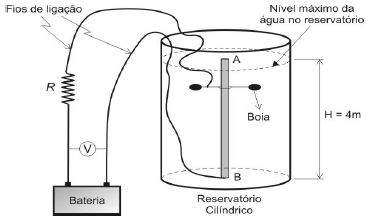
Motivado pelo trecho do artigo acima exposto, um professor de física lançou um desafio para os alunos do 3° ano em uma escola onde, frequentemente, falta água. Tal desafio consistia em determinar o volume d’água em um reservatório de difícil acesso.

Para a determinação deste volume d’água os alunos deveriam utilizar somente um circuito elétrico constituído de um voltímetro ideal V, uma bateria de fem igual a 12 V e resistência interna igual a !$ Ω !$ , além de um resistor ôhmico R igual a 2!$ Ω !$ e um reostato AB, feito de material de resistividade elétrica constante, cuja resistência elétrica pode variar de 0 a 4!$ Ω !$ , de acordo com a posição da bóia que é ajustada pela altura do nível d’água do reservatório. Depois de algum tempo, os alunos apresentaram o projeto ao professor, conforme esquematizado na figura a seguir.
Enunciado 2901129-1

De acordo com o projeto, o volume d’água no reservatório pode ser calculado por meio da ddp nos terminais da bateria, registrada pelo voltímetro. Sendo a capacidade máxima deste reservatório igual a 20 !$ m^3 !$, desconsiderando as resistências elétricas dos fios de ligação que estão isolados e o atrito do suporte da boia com o reostato, quando o voltímetro indicar 9,0 V , o volume d’água neste reservatório será, em !$ m^3 !$, igual a


Provas

Questão presente nas seguintes provas
Directions: Read the text below and answer question according to it.
TEXT
FOOD SHORTAGE CAUSES, EFFECTS AND SOLUTIONS
Food shortage is a serious problem facing the world and is prevalent in sub-Saharan Africa. The scarcity of food is caused by economic, environmental and social factors such as crop failure, overpopulation and poor government policies are the main cause of food scarcity in most countries. Environmental factors determine the kind of crops to be produced in a given place, economic factors determine the buying and production capacity and socio-political factors determine distribution of food to the masses. Food shortage has far reaching long and short term negative impacts which include starvation, malnutrition, increased mortality and political unrest1. There is need to collectively address the issue of food insecurity using both emergency and long term measures.
Causes of food shortages
There are a number of social factors causing food shortages. The rate of population increase is higher than increase in food production. The world is consuming more than it is producing, leading to decline in food stock and storage level and increased food prices due to soaring2 demand. Increased population has led to clearing of agricultural land for human settlement reducing agricultural production (Kamdor, 2007). Overcrowding of population in a given place results in urbanization of previously rich agricultural fields. Destruction of forests for human settlement, particularly tropical rain forest has led to climatic changes, such as prolonged droughts and desertification. Population increase means more pollution as people use more fuel in cars, industry, domestic cooking. The resultant effect is increased air and water pollution which affect the climate and food production.
Environmental factors have greatly contributed to food shortage. Climatic change has reduced agricultural production. The change in climate is majorly caused by human activities and to some small extent natural activities. Increased combustion of fossil fuels due to increasing population through power plant, motor transport and mining of coal and oil emits green house gases which have continued to affect world climate. Deforestation of tropical forest due to human pressure has changed climatic patterns and rainfall seasons, and led to desertification which cannot support a crop production. Land degradation due to increased human activities has impacted negatively on agricultural production (Kamdor, 2007). Natural disasters such as floods, tropical storms and prolonged droughts are on the increase and have devastating impacts on food security particularly in developing countries. There are several economic factors that contribute to food shortage. Economic factors affect the ability of farmers to engage in agricultural production. Poverty situation in developing nations have reduced their capacity to produce food, as most farmers cannot afford seed and fertilizers. They use poor farming methods that cannot yield3 enough, even substantial use. Investments in agricultural research and developing are very low in developing nations. Recent global financial crisis have led to increase in food prices and reduced investments in agriculture by individuals and governments in developed nations resulting in reduced food production.
Effects of food shortage
There are a number of short term effects of food shortage. The impact on children, mothers and elderly are very evident as seen in malnutrition and hunger related deaths. Children succumb to hunger within short period as they cannot stand long period of starvation and they die even before the arrival of emergency assistance.
There are also long term effects of food shortage. These include increase in the price of food as a result demand and supply forces. Increasing cost of food production due to the increase in fuel prices coupled with persistent drought in grain producing regions has contributed to the increase in the price of food in the world. Increase in oil price led to increase in the price of fertilizers, transportation of food and also industrial agriculture. Increasing food prices culminated in political instability and social unrest in several nations across the globe in 2007, in countries of Mexico, Cameroon, Brazil, Burkina Faso, Pakistan, Egypt and Bangladesh among other nations (Kamdor, 2007).
Solution to problem of food shortage
There are some solutions to the problem of food shortage. There is need to reduce production of carbon emissions and pollution to reduce the resultant climatic change through concerted and individual efforts. There is need to invest in clean energy such as solar, nuclear, and geothermal power in homes and industries, because they don’t have adverse effects on the environment (Kamdor, 2007). Rich nations should help poor nations to develop and use clean and renewable energy in order to stabilize green house emissions into the atmosphere (Watson, nd). Government need to work in consultation with climatic bodies, World Bank and the UN to engage in projects aimed at promoting green environment.
Conclusion
Causes of food shortage are well known and can be solved if appropriate measures to solve the problem are taken and effectively implemented. Environmental causes of food shortages are changes in climatic and pollution due to human activities such overgrazing!$ ^4 !$ and deforestation which can be controlled through legislation.
(Adapted from http://www.paypervids.com/food-shortage-causeseffects-solutions/Acesso em:14 fev 2017)
Glossary:
1. unrest – disagreement or fighting between different
groups of people
2. soaring – something that increases rapidly above the
usual level
3. yield – to supply or produce something such as profit or
an amount or food
4. overgrazing – excessive use of land where animals feed
on grass
Starvation, malnutrition, increased mortality and political unrest are mentioned in the text as examples of
 

Provas

Questão presente nas seguintes provas
Directions: Read the text below and answer question according to it.
TEXT
FOOD SHORTAGE CAUSES, EFFECTS AND SOLUTIONS
Food shortage is a serious problem facing the world and is prevalent in sub-Saharan Africa. The scarcity of food is caused by economic, environmental and social factors such as crop failure, overpopulation and poor government policies are the main cause of food scarcity in most countries. Environmental factors determine the kind of crops to be produced in a given place, economic factors determine the buying and production capacity and socio-political factors determine distribution of food to the masses. Food shortage has far reaching long and short term negative impacts which include starvation, malnutrition, increased mortality and political unrest1. There is need to collectively address the issue of food insecurity using both emergency and long term measures.
Causes of food shortages
There are a number of social factors causing food shortages. The rate of population increase is higher than increase in food production. The world is consuming more than it is producing, leading to decline in food stock and storage level and increased food prices due to soaring2 demand. Increased population has led to clearing of agricultural land for human settlement reducing agricultural production (Kamdor, 2007). Overcrowding of population in a given place results in urbanization of previously rich agricultural fields. Destruction of forests for human settlement, particularly tropical rain forest has led to climatic changes, such as prolonged droughts and desertification. Population increase means more pollution as people use more fuel in cars, industry, domestic cooking. The resultant effect is increased air and water pollution which affect the climate and food production.
Environmental factors have greatly contributed to food shortage. Climatic change has reduced agricultural production. The change in climate is majorly caused by human activities and to some small extent natural activities. Increased combustion of fossil fuels due to increasing population through power plant, motor transport and mining of coal and oil emits green house gases which have continued to affect world climate. Deforestation of tropical forest due to human pressure has changed climatic patterns and rainfall seasons, and led to desertification which cannot support a crop production. Land degradation due to increased human activities has impacted negatively on agricultural production (Kamdor, 2007). Natural disasters such as floods, tropical storms and prolonged droughts are on the increase and have devastating impacts on food security particularly in developing countries. There are several economic factors that contribute to food shortage. Economic factors affect the ability of farmers to engage in agricultural production. Poverty situation in developing nations have reduced their capacity to produce food, as most farmers cannot afford seed and fertilizers. They use poor farming methods that cannot yield3 enough, even substantial use. Investments in agricultural research and developing are very low in developing nations. Recent global financial crisis have led to increase in food prices and reduced investments in agriculture by individuals and governments in developed nations resulting in reduced food production.
Effects of food shortage
There are a number of short term effects of food shortage. The impact on children, mothers and elderly are very evident as seen in malnutrition and hunger related deaths. Children succumb to hunger within short period as they cannot stand long period of starvation and they die even before the arrival of emergency assistance.
There are also long term effects of food shortage. These include increase in the price of food as a result demand and supply forces. Increasing cost of food production due to the increase in fuel prices coupled with persistent drought in grain producing regions has contributed to the increase in the price of food in the world. Increase in oil price led to increase in the price of fertilizers, transportation of food and also industrial agriculture. Increasing food prices culminated in political instability and social unrest in several nations across the globe in 2007, in countries of Mexico, Cameroon, Brazil, Burkina Faso, Pakistan, Egypt and Bangladesh among other nations (Kamdor, 2007).
Solution to problem of food shortage
There are some solutions to the problem of food shortage. There is need to reduce production of carbon emissions and pollution to reduce the resultant climatic change through concerted and individual efforts. There is need to invest in clean energy such as solar, nuclear, and geothermal power in homes and industries, because they don’t have adverse effects on the environment (Kamdor, 2007). Rich nations should help poor nations to develop and use clean and renewable energy in order to stabilize green house emissions into the atmosphere (Watson, nd). Government need to work in consultation with climatic bodies, World Bank and the UN to engage in projects aimed at promoting green environment.
Conclusion
Causes of food shortage are well known and can be solved if appropriate measures to solve the problem are taken and effectively implemented. Environmental causes of food shortages are changes in climatic and pollution due to human activities such overgrazing!$ ^4 !$ and deforestation which can be controlled through legislation.
(Adapted from http://www.paypervids.com/food-shortage-causeseffects-solutions/Acesso em:14 fev 2017)
Glossary:
1. unrest – disagreement or fighting between different
groups of people
2. soaring – something that increases rapidly above the
usual level
3. yield – to supply or produce something such as profit or
an amount or food
4. overgrazing – excessive use of land where animals feed
on grass
In the sentence “land degradation due to increased human activities has impacted negatively on agricultural production” it is INCORRECT to state that
 

Provas

Questão presente nas seguintes provas
TEXTO I
MAIS QUE ORWELL, HUXLEY PREVIU NOSSO TEMPO
Hélio Gurovitz
Publicado em 1948, o livro 1984, de George Orwell, saltou para o topo da lista dos mais vendidos (...) A distopia de Orwel, mesmo situada no futuro, tinha um endereço certo em seu tempo: o stalinismo. (...) O mundo da “pós-verdade”, dos “fatos alternativos” e da anestesia intelectual nas redes sociais mais parece outra distopia, publicada em 1932: Admirável mundo novo, de Aldous Huxley.
Não se trata de uma tese nova. Ela foi levantada pela primeira vez em 1985, num livreto do teórico da comunicação americano Neil Postman: Amusing ourselves to death (Nos divertindo até morrer), relembrado por seu filho Andrew em artigo recente no The Guardian. “Na visão de Huxley, não é necessário nenhum Grande Irmão para despojar a população de autonomia, maturidade ou história”, escreveu Postman. “Ela acabaria amando sua opressão, adorando as tecnologias que destroem sua capacidade de pensar. Orwell temia aqueles que proibiriam os livros. Huxley temia que não haveria motivo para proibir um livro, pois não haveria ninguém que quisesse lê-los. Orwell temia aqueles que nos privariam de informação. Huxley, aqueles que nos dariam tanta que seríamos reduzidos à passividade e ao egoísmo. Orwell temia que a verdade fosse escondida de nós. Huxley, que fosse afogada num mar de irrelevância.”
No futuro pintado por Huxley, (...) não há mães, pais ou casamentos. O sexo é livre. A diversão está disponível na forma de jogos esportivos, cinema multissensorial e de uma droga que garante o bem-estar sem efeito colateral: o soma. Restaram na Terra dez áreas civilizadas e uns poucos territórios selvagens, onde grupos nativos ainda preservam costumes e tradições primitivos, como família ou religião. “O mundo agora é estável”, diz um líder civilizado. “As pessoas são felizes, têm o que desejam e nunca desejam o que não podem ter. Sentem-se bem, estão em segurança; nunca adoecem; não têm medo da morte; vivem na ditosa ignorância da paixão e da velhice; não se acham sobrecarregadas de pais e mães; não têm esposas, nem filhos, nem amantes por quem possam sofrer emoções violentas; são condicionadas de tal modo que praticamente não podem deixar de se portar como devem. E se, por acaso, alguma coisa andar mal, há o soma.”
Para chegar à estabilidade absoluta, foi necessário abrir mão da arte e da ciência. “A felicidade universal mantém as engrenagens em funcionamento regular; a verdade e a beleza são incapazes de fazê-lo”, diz o líder. “Cada vez que as massas tomavam o poder público, era a felicidade, mais que a verdade e a beleza, o que importava.” A verdade é considerada uma ameaça; a ciência e a arte, perigos públicos. Mas não é necessário esforço totalitário para controlá-las. Todos aceitam de bom grado, fazem “qualquer sacrifício em troca de uma vida sossegada” e de sua dose diária de soma. “Não foi muito bom para a verdade, sem dúvida. Mas foi excelente para a felicidade.”
No universo de Orwell, a população é controlada pela dor. No de Huxley, pelo prazer. “Orwell temia que nossa ruína seria causada pelo que odiamos. Huxley, pelo que amamos”, escreve Postman. Só precisa haver censura, diz ele, se os tiranos acreditam que o público sabe a diferença entre discurso sério e entretenimento. (...) O alvo de Postman, em seu tempo, era a televisão, que ele julgava ter imposto uma cultura fragmentada e superficial, incapaz de manter com a verdade a relação reflexiva e racional da palavra impressa. O computador só engatinhava, e Postman mal poderia prever como celulares, tablets e redes sociais se tornariam — bem mais que a TV — o soma contemporâneo. Mas suas palavras foram prescientes: “O que afligia a população em Admirável mundo novo não é que estivessem rindo em vez de pensar, mas que não sabiam do que estavam rindo, nem tinham parado de pensar”.
(Adaptado, Revista Época nº 973 – 13 de fevereiro de 2017, p.67)
Distopia = Pensamento, filosofia ou processo discursivo caracterizado pelo totalitarismo, autoritarismo e opressivo controle da sociedade, representando a antítese de utopia. (BECHARA, E. Dicionário da língua portuguesa. 1ª ed. Rio de Janeiro: Editora Nova Fronteira, 2011, p.533)
Assinale a alternativa em que a análise dos termos presentes no excerto abaixo está de acordo com o que prescreve a Gramática Normativa da Língua Portuguesa.
“A distopia de Orwell, mesmo situada no futuro, tinha um endereço certo em seu tempo: o stalinismo.”
 

Provas

Questão presente nas seguintes provas

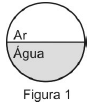
Um recipiente vazio, perfeitamente transparente, no formato de uma lente esférica delgada gaussiana, de raio a, é preenchido com água límpida e cristalina até a metade de sua capacidade (Figura 1).
Enunciado 2874408-1

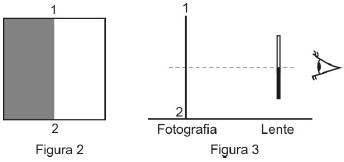
Essa lente é então fixada a uma determinada distância de uma fotografia quadrada de lado 3a (Figura 2), tendo seus centros geométricos alinhados (Figura 3).
Enunciado 2874408-2

Considerando que o sistema lente-fotografia esteja imerso no ar, um observador na posição O (Figura 3), poderá observar, dentre as opções abaixo, a imagem da situação apresentada, como sendo


Provas

Questão presente nas seguintes provas
