Magna Concursos

Foram encontradas 64 questões.

TEXTO II
REDES SOCIAIS E COLABORAÇÃO EXTREMA: O FIM DO SENSO CRÍTICO?
Eugênio Mira
Conectados. Essa palavra nunca fez tanto sentido quanto agora. Quando se discutia no passado sobre como os homens agiriam com o advento da aldeia global (...) não se imaginava o quanto esse processo seria rápido e devastador.
(...) quando McLuhan apresentou o termo, em 1968, ele sequer imaginaria que não seria a televisão a grande responsável pela interligação mundial absoluta, e sim a internet, que na época não passava de um projeto militar do governo dos Estados Unidos.
A internet mudou definitivamente a maneira como nos comunicamos e percebemos o mundo. Graças a ela temos acesso a toda informação do mundo à distância de apenas um toque de botão. E quando começaram a se popularizar as redes sociais, um admirável mundo novo abriu-se ante nossos olhos!$ ^{(B)} !$. Uma ferramenta colaborativa extrema, que possibilitaria o contato imediato com outras pessoas através de suas
afinidades, fossem elas políticas, religiosas ou mesmo geográficas. Projetos colaborativos, revoluções instantâneas... Tudo seria maior e melhor quando as pessoas se alinhassem na órbita de seus ideais. O tempo passou, e essa revolução não se instaurou!$ ^{(D)} !$.
Basta observar as figuras que surgem nos sites de humor e outros assemelhados. Conhecidos como memes (termo cunhado pelo pesquisador Richard Dawkins, que representaria para nossa memória o mesmo que os genes representam para o corpo, ou seja, uma parcela mínima de informação), essas figuras surgiram com a intenção de demonstrar, de maneira icônica, algum sentimento ou sensação. Ao fazer isso, a tendência de ter uma reação diversa daquelas expressas pelas tirinhas é cada vez menor. Tudo fica branco e preto. Ou se aceita a situação, ou revolta-se!$ ^{(C)} !$. Sem chance para o debate ou questionamento.
(...)
A situação é ainda mais grave quando um dos poucos entes criativos restantes na internet produz algum comentário curto, espirituoso ou reflexivo, a respeito de alguma situação atual ou recente... Em minutos pipocam cópias da frase por todo lugar. Copia-se sem o menor bom senso!$ ^{(A)} !$, sem créditos. Pensar e refletir, e depois falar, são coisas do passado. O importante agora é copiar e colar, e depois partilhar. As redes sociais desfraldaram um mundo completamente novo, e o uso que o homem fará dessas ferramentas é o que dirá o nosso futuro cultural. Se enveredarmos pela partilha de ideias, gestando-as em nossas mentes e depois as passando a outros, será uma estufa mundial a produzir avanços incríveis em todos os campos de conhecimento. Se, no entanto, as redes sociais se transformarem em uma rede neural de apoio à preguiça de pensar, a humanidade estará fadada ao processo antinatural de regressão. O advento das redes sociais trouxe para perto das pessoas comuns os amigos distantes, os ídolos e as ideias consumistas mais arraigados, mas aparentemente está levando para longe algo muito mais humano e essencial na vida em sociedade: o senso crítico. Será uma troca justa?
(http://obviousmag.org/archives/2011/09/redes_sociais_e_colaboracao_extrema_O_fim_do_senso_critico-.htm. Adaptado.Acesso em: 21 fev 2017)
O vocábulo se exerce, na língua portuguesa, várias funções. Observe seu uso nos excertos a seguir.
I. Copia-se sem o menor bom senso...”
II. “...um admirável mundo novo abriu-se ante nossos olhos.”
III. “Ou se aceita a situação ou revolta-se.”
IV. “O tempo passou, e essa revolução não se instaurou”.
Assinale a análise correta.
 

Provas

Questão presente nas seguintes provas
TEXTO I
MAIS QUE ORWELL, HUXLEY PREVIU NOSSO TEMPO
Hélio Gurovitz
Publicado em 1948, o livro 1984, de George Orwell, saltou para o topo da lista dos mais vendidos (...) A distopia de Orwel, mesmo situada no futuro, tinha um endereço certo em seu tempo: o stalinismo. (...) O mundo da “pós-verdade”, dos “fatos alternativos” e da anestesia intelectual nas redes sociais mais parece outra distopia, publicada em 1932: Admirável mundo novo, de Aldous Huxley.
Não se trata de uma tese nova. Ela foi levantada pela primeira vez em 1985, num livreto do teórico da comunicação americano Neil Postman: Amusing ourselves to death (Nos divertindo até morrer), relembrado por seu filho Andrew em artigo recente no The Guardian. “Na visão de Huxley, não é necessário nenhum Grande Irmão para despojar a população de autonomia, maturidade ou história”, escreveu Postman. “Ela acabaria amando sua opressão, adorando as tecnologias que destroem sua capacidade de pensar. Orwell temia aqueles que proibiriam os livros. Huxley temia que não haveria motivo para proibir um livro, pois não haveria ninguém que quisesse lê-los. Orwell temia aqueles que nos privariam de informação. Huxley, aqueles que nos dariam tanta que seríamos reduzidos à passividade e ao egoísmo. Orwell temia que a verdade fosse escondida de nós. Huxley, que fosse afogada num mar de irrelevância.”
No futuro pintado por Huxley, (...) não há mães, pais ou casamentos. O sexo é livre. A diversão está disponível na forma de jogos esportivos, cinema multissensorial e de uma droga que garante o bem-estar sem efeito colateral: o soma. Restaram na Terra dez áreas civilizadas e uns poucos territórios selvagens, onde grupos nativos ainda preservam costumes e tradições primitivos, como família ou religião. “O mundo agora é estável”, diz um líder civilizado. “As pessoas são felizes, têm o que desejam e nunca desejam o que não podem ter. Sentem-se bem, estão em segurança; nunca adoecem; não têm medo da morte; vivem na ditosa ignorância da paixão e da velhice; não se acham sobrecarregadas de pais e mães; não têm esposas, nem filhos, nem amantes por quem possam sofrer emoções violentas; são condicionadas de tal modo que praticamente não podem deixar de se portar como devem. E se, por acaso, alguma coisa andar mal, há o soma.”
Para chegar à estabilidade absoluta, foi necessário abrir mão da arte e da ciência. “A felicidade universal mantém as engrenagens em funcionamento regular; a verdade e a beleza são incapazes de fazê-lo”, diz o líder. “Cada vez que as massas tomavam o poder público, era a felicidade, mais que a verdade e a beleza, o que importava.” A verdade é considerada uma ameaça; a ciência e a arte, perigos públicos. Mas não é necessário esforço totalitário para controlá-las. Todos aceitam de bom grado, fazem “qualquer sacrifício em troca de uma vida sossegada” e de sua dose diária de soma. “Não foi muito bom para a verdade, sem dúvida. Mas foi excelente para a felicidade.”
No universo de Orwell, a população é controlada pela dor. No de Huxley, pelo prazer. “Orwell temia que nossa ruína seria causada pelo que odiamos. Huxley, pelo que amamos”, escreve Postman. Só precisa haver censura, diz ele, se os tiranos acreditam que o público sabe a diferença entre discurso sério e entretenimento. (...) O alvo de Postman, em seu tempo, era a televisão, que ele julgava ter imposto uma cultura fragmentada e superficial, incapaz de manter com a verdade a relação reflexiva e racional da palavra impressa. O computador só engatinhava, e Postman mal poderia prever como celulares, tablets e redes sociais se tornariam — bem mais que a TV — o soma contemporâneo. Mas suas palavras foram prescientes: “O que afligia a população em Admirável mundo novo não é que estivessem rindo em vez de pensar, mas que não sabiam do que estavam rindo, nem tinham parado de pensar”.
(Adaptado, Revista Época nº 973 – 13 de fevereiro de 2017, p.67)
Distopia = Pensamento, filosofia ou processo discursivo caracterizado pelo totalitarismo, autoritarismo e opressivo controle da sociedade, representando a antítese de utopia. (BECHARA, E. Dicionário da língua portuguesa. 1ª ed. Rio de Janeiro: Editora Nova Fronteira, 2011, p.533)
Leia as afirmações feitas acerca do texto e julgue-as como VERDADEIRAS (V) ou FALSAS (F).
( ) As obras citadas, “1984”, “Admirável mundo novo” e “Nos divertindo até morrer” se assemelham por serem obras que tratam de teoria da comunicação.
( ) Há dois meios de controle ou de ruína social: a dor ou o prazer.
( ) A censura tirana é necessária porque o público sabe a diferença entre discurso sério e entretenimento.
( ) A televisão é incapaz de manter com a verdade a mesma relação reflexiva e racional da palavra impressa.
( ) Tal qual a TV, os celulares, tabletes e redes se prestam a funcionar como o soma: garantir o bem-estar social.
( ) Na obra de Huxley, as pessoas não pensavam, mas riam, mesmo não sabendo de quê.
Assinale a alternativa que contém a sequência correta.
 

Provas

Questão presente nas seguintes provas
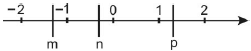
Na reta dos números reais abaixo, estão representados os números m, n e p.
Enunciado 2720686-1
Analise as proposições a seguir e classifique-as em V (VERDADEIRA) ou F (FALSA).
( ) !$ \sqrt{ \large{m-n \over p}} !$ não é um número real.
( ) !$ (p +m) !$ pode ser um número inteiro.
( ) !$ \large{p \over n} !$ é, necessariamente, um número racional.
A sequência correta é
 

Provas

Questão presente nas seguintes provas
Considere no plano cartesiano a circunferência !$ λ !$ tangente à bissetriz dos quadrantes ímpares no ponto !$ A(1, 1) !$ .
Sabendo que a reta !$ t : x − y + 4 = 0 !$ tangencia !$ λ !$ no ponto B, marque a opção correta.
 

Provas

Questão presente nas seguintes provas

Directions: Read the text below and answer question according to it.

TEXT

FOOD SHORTAGE CAUSES, EFFECTS AND SOLUTIONS

Food shortage is a serious problem facing the world and is prevalent in sub-Saharan Africa. The scarcity of food is caused by economic, environmental and social factors such as crop failure, overpopulation and poor government policies are the main cause of food scarcity in most countries. Environmental factors determine the kind of crops to be produced in a given place, economic factors determine the buying and production capacity and socio-political factors determine distribution of food to the masses. Food shortage has far reaching long and short term negative impacts which include starvation, malnutrition, increased mortality and political unrest1. There is need to collectively address the issue of food insecurity using both emergency and long term measures.

Causes of food shortages

There are a number of social factors causing food shortages. The rate of population increase is higher than increase in food production. The world is consuming more than it is producing, leading to decline in food stock and storage level and increased food prices due to soaring2 demand. Increased population has led to clearing of agricultural land for human settlement reducing agricultural production (Kamdor, 2007). Overcrowding of population in a given place results in urbanization of previously rich agricultural fields. Destruction of forests for human settlement, particularly tropical rain forest has led to climatic changes, such as prolonged droughts and desertification. Population increase means more pollution as people use more fuel in cars, industry, domestic cooking. The resultant effect is increased air and water pollution which affect the climate and food production.

Environmental factors have greatly contributed to food shortage. Climatic change has reduced agricultural production. The change in climate is majorly caused by human activities and to some small extent natural activities. Increased combustion of fossil fuels due to increasing population through power plant, motor transport and mining of coal and oil emits green house gases which have continued to affect world climate. Deforestation of tropical forest due to human pressure has changed climatic patterns and rainfall seasons, and led to desertification which cannot support a crop production. Land degradation due to increased human activities has impacted negatively on agricultural production (Kamdor, 2007). Natural disasters such as floods, tropical storms and prolonged droughts are on the increase and have devastating impacts on food security particularly in developing countries. There are several economic factors that contribute to food shortage. Economic factors affect the ability of farmers to engage in agricultural production. Poverty situation in developing nations have reduced their capacity to produce food, as most farmers cannot afford seed and fertilizers. They use poor farming methods that cannot yield3 enough, even substantial use. Investments in agricultural research and developing are very low in developing nations. Recent global financial crisis have led to increase in food prices and reduced investments in agriculture by individuals and governments in developed nations resulting in reduced food production.

Effects of food shortage

There are a number of short term effects of food shortage. The impact on children, mothers and elderly are very evident as seen in malnutrition and hunger related deaths. Children succumb to hunger within short period as they cannot stand long period of starvation and they die even before the arrival of emergency assistance.

There are also long term effects of food shortage. These include increase in the price of food as a result demand and supply forces. Increasing cost of food production due to the increase in fuel prices coupled with persistent drought in grain producing regions has contributed to the increase in the price of food in the world. Increase in oil price led to increase in the price of fertilizers, transportation of food and also industrial agriculture. Increasing food prices culminated in political instability and social unrest in several nations across the globe in 2007, in countries of Mexico, Cameroon, Brazil, Burkina Faso, Pakistan, Egypt and Bangladesh among other nations (Kamdor, 2007).

Solution to problem of food shortage

There are some solutions to the problem of food shortage. There is need to reduce production of carbon emissions and pollution to reduce the resultant climatic change through concerted and individual efforts. There is need to invest in clean energy such as solar, nuclear, and geothermal power in homes and industries, because they don’t have adverse effects on the environment (Kamdor, 2007). Rich nations should help poor nations to develop and use clean and renewable energy in order to stabilize green house emissions into the atmosphere (Watson, nd). Government need to work in consultation with climatic bodies, World Bank and the UN to engage in projects aimed at promoting green environment.

Conclusion

Causes of food shortage are well known and can be solved if appropriate measures to solve the problem are taken and effectively implemented. Environmental causes of food shortages are changes in climatic and pollution due to human activities such overgrazing!$ ^4 !$ and deforestation which can be controlled through legislation.

(Adapted from http://www.paypervids.com/food-shortage-causeseffects-solutions/Acesso em:14 fev 2017)

Glossary:

1. unrest – disagreement or fighting between different

groups of people

2. soaring – something that increases rapidly above the

usual level

3. yield – to supply or produce something such as profit or

an amount or food

4. overgrazing – excessive use of land where animals feed

on grass

The sentence “the change in climate is majorly caused by human activities” means that


Provas

Questão presente nas seguintes provas

Uma rampa, homogênea, de massa m e comprimento L, é inicialmente colocada na horizontal. A extremidade A, dessa rampa, encontra-se acoplada a uma articulação sem atrito. Na extremidade B está sentado, em repouso, um garoto, também de massa m. Essa extremidade B está presa ao chão, por um fio ideal, e ao teto, por uma mola ideal, de constante elástica k, conforme ilustra a Figura 1.
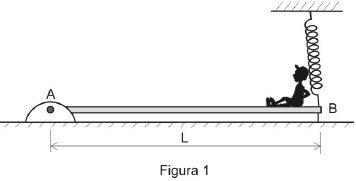
Enunciado 2715546-1

Quando o garoto, que neste caso deve ser tratado como partícula, atinge a extremidade A, a mola se encontra em seu comprimento natural (sem deformação) e a rampa estará em repouso e inclinada de um ângulo !$ θ !$ . Considerando g o módulo da aceleração da gravidade local, nessas condições, a velocidade do garoto em A, vale


Provas

Questão presente nas seguintes provas
Directions: Read the text below and answer question according to it.
TEXT
FOOD SHORTAGE CAUSES, EFFECTS AND SOLUTIONS
Food shortage is a serious problem facing the world and is prevalent in sub-Saharan Africa. The scarcity of food is caused by economic, environmental and social factors such as crop failure, overpopulation and poor government policies are the main cause of food scarcity in most countries. Environmental factors determine the kind of crops to be produced in a given place, economic factors determine the buying and production capacity and socio-political factors determine distribution of food to the masses. Food shortage has far reaching long and short term negative impacts which include starvation, malnutrition, increased mortality and political unrest1. There is need to collectively address the issue of food insecurity using both emergency and long term measures.
Causes of food shortages
There are a number of social factors causing food shortages. The rate of population increase is higher than increase in food production. The world is consuming more than it is producing, leading to decline in food stock and storage level and increased food prices due to soaring2 demand. Increased population has led to clearing of agricultural land for human settlement reducing agricultural production (Kamdor, 2007). Overcrowding of population in a given place results in urbanization of previously rich agricultural fields. Destruction of forests for human settlement, particularly tropical rain forest has led to climatic changes, such as prolonged droughts and desertification. Population increase means more pollution as people use more fuel in cars, industry, domestic cooking. The resultant effect is increased air and water pollution which affect the climate and food production.
Environmental factors have greatly contributed to food shortage. Climatic change has reduced agricultural production. The change in climate is majorly caused by human activities and to some small extent natural activities. Increased combustion of fossil fuels due to increasing population through power plant, motor transport and mining of coal and oil emits green house gases which have continued to affect world climate. Deforestation of tropical forest due to human pressure has changed climatic patterns and rainfall seasons, and led to desertification which cannot support a crop production. Land degradation due to increased human activities has impacted negatively on agricultural production (Kamdor, 2007). Natural disasters such as floods, tropical storms and prolonged droughts are on the increase and have devastating impacts on food security particularly in developing countries. There are several economic factors that contribute to food shortage. Economic factors affect the ability of farmers to engage in agricultural production. Poverty situation in developing nations have reduced their capacity to produce food, as most farmers cannot afford seed and fertilizers. They use poor farming methods that cannot yield3 enough, even substantial use. Investments in agricultural research and developing are very low in developing nations. Recent global financial crisis have led to increase in food prices and reduced investments in agriculture by individuals and governments in developed nations resulting in reduced food production.
Effects of food shortage
There are a number of short term effects of food shortage. The impact on children, mothers and elderly are very evident as seen in malnutrition and hunger related deaths. Children succumb to hunger within short period as they cannot stand long period of starvation and they die even before the arrival of emergency assistance.
There are also long term effects of food shortage. These include increase in the price of food as a result demand and supply forces. Increasing cost of food production due to the increase in fuel prices coupled with persistent drought in grain producing regions has contributed to the increase in the price of food in the world. Increase in oil price led to increase in the price of fertilizers, transportation of food and also industrial agriculture. Increasing food prices culminated in political instability and social unrest in several nations across the globe in 2007, in countries of Mexico, Cameroon, Brazil, Burkina Faso, Pakistan, Egypt and Bangladesh among other nations (Kamdor, 2007).
Solution to problem of food shortage
There are some solutions to the problem of food shortage. There is need to reduce production of carbon emissions and pollution to reduce the resultant climatic change through concerted and individual efforts. There is need to invest in clean energy such as solar, nuclear, and geothermal power in homes and industries, because they don’t have adverse effects on the environment (Kamdor, 2007). Rich nations should help poor nations to develop and use clean and renewable energy in order to stabilize green house emissions into the atmosphere (Watson, nd). Government need to work in consultation with climatic bodies, World Bank and the UN to engage in projects aimed at promoting green environment.
Conclusion
Causes of food shortage are well known and can be solved if appropriate measures to solve the problem are taken and effectively implemented. Environmental causes of food shortages are changes in climatic and pollution due to human activities such overgrazing!$ ^4 !$ and deforestation which can be controlled through legislation.
(Adapted from http://www.paypervids.com/food-shortage-causeseffects-solutions/Acesso em:14 fev 2017)
Glossary:
1. unrest – disagreement or fighting between different
groups of people
2. soaring – something that increases rapidly above the
usual level
3. yield – to supply or produce something such as profit or
an amount or food
4. overgrazing – excessive use of land where animals feed
on grass
Investing in clean energy is considered
 

Provas

Questão presente nas seguintes provas
Directions: Read the text below and answer question according to it.
TEXT
FOOD SHORTAGE CAUSES, EFFECTS AND SOLUTIONS
Food shortage is a serious problem facing the world and is prevalent in sub-Saharan Africa. The scarcity of food is caused by economic, environmental and social factors such as crop failure, overpopulation and poor government policies are the main cause of food scarcity in most countries. Environmental factors determine the kind of crops to be produced in a given place, economic factors determine the buying and production capacity and socio-political factors determine distribution of food to the masses. Food shortage has far reaching long and short term negative impacts which include starvation, malnutrition, increased mortality and political unrest1. There is need to collectively address the issue of food insecurity using both emergency and long term measures.
Causes of food shortages
There are a number of social factors causing food shortages. The rate of population increase is higher than increase in food production. The world is consuming more than it is producing, leading to decline in food stock and storage level and increased food prices due to soaring2 demand. Increased population has led to clearing of agricultural land for human settlement reducing agricultural production (Kamdor, 2007). Overcrowding of population in a given place results in urbanization of previously rich agricultural fields. Destruction of forests for human settlement, particularly tropical rain forest has led to climatic changes, such as prolonged droughts and desertification. Population increase means more pollution as people use more fuel in cars, industry, domestic cooking. The resultant effect is increased air and water pollution which affect the climate and food production.
Environmental factors have greatly contributed to food shortage. Climatic change has reduced agricultural production. The change in climate is majorly caused by human activities and to some small extent natural activities. Increased combustion of fossil fuels due to increasing population through power plant, motor transport and mining of coal and oil emits green house gases which have continued to affect world climate. Deforestation of tropical forest due to human pressure has changed climatic patterns and rainfall seasons, and led to desertification which cannot support a crop production. Land degradation due to increased human activities has impacted negatively on agricultural production (Kamdor, 2007). Natural disasters such as floods, tropical storms and prolonged droughts are on the increase and have devastating impacts on food security particularly in developing countries. There are several economic factors that contribute to food shortage. Economic factors affect the ability of farmers to engage in agricultural production. Poverty situation in developing nations have reduced their capacity to produce food, as most farmers cannot afford seed and fertilizers. They use poor farming methods that cannot yield3 enough, even substantial use. Investments in agricultural research and developing are very low in developing nations. Recent global financial crisis have led to increase in food prices and reduced investments in agriculture by individuals and governments in developed nations resulting in reduced food production.
Effects of food shortage
There are a number of short term effects of food shortage. The impact on children, mothers and elderly are very evident as seen in malnutrition and hunger related deaths. Children succumb to hunger within short period as they cannot stand long period of starvation and they die even before the arrival of emergency assistance.
There are also long term effects of food shortage. These include increase in the price of food as a result demand and supply forces. Increasing cost of food production due to the increase in fuel prices coupled with persistent drought in grain producing regions has contributed to the increase in the price of food in the world. Increase in oil price led to increase in the price of fertilizers, transportation of food and also industrial agriculture. Increasing food prices culminated in political instability and social unrest in several nations across the globe in 2007, in countries of Mexico, Cameroon, Brazil, Burkina Faso, Pakistan, Egypt and Bangladesh among other nations (Kamdor, 2007).
Solution to problem of food shortage
There are some solutions to the problem of food shortage. There is need to reduce production of carbon emissions and pollution to reduce the resultant climatic change through concerted and individual efforts. There is need to invest in clean energy such as solar, nuclear, and geothermal power in homes and industries, because they don’t have adverse effects on the environment (Kamdor, 2007). Rich nations should help poor nations to develop and use clean and renewable energy in order to stabilize green house emissions into the atmosphere (Watson, nd). Government need to work in consultation with climatic bodies, World Bank and the UN to engage in projects aimed at promoting green environment.
Conclusion
Causes of food shortage are well known and can be solved if appropriate measures to solve the problem are taken and effectively implemented. Environmental causes of food shortages are changes in climatic and pollution due to human activities such overgrazing!$ ^4 !$ and deforestation which can be controlled through legislation.
(Adapted from http://www.paypervids.com/food-shortage-causeseffects-solutions/Acesso em:14 fev 2017)
Glossary:
1. unrest – disagreement or fighting between different
groups of people
2. soaring – something that increases rapidly above the
usual level
3. yield – to supply or produce something such as profit or
an amount or food
4. overgrazing – excessive use of land where animals feed
on grass
The text conclusion seems to be
 

Provas

Questão presente nas seguintes provas
Considere o sólido geométrico obtido pela rotação de 360º do triângulo ABC em torno da reta que passa por C e é paralela ao lado !$ \overline{AB} !$.
Sabe-se que este triângulo é isósceles, com !$ \overline{AC}≡ \overline{BC}=R \sqrt 2m !$, !$ \overline{AB}=2Rm !$ (sendo R uma constante real não nula), e que o volume do sólido obtido é !$ V=4 \pi \sqrt 3 \, m^3 !$.
A medida de R, em metros, é igual a
 

Provas

Questão presente nas seguintes provas

Uma fonte sonora A, em repouso, emite um sinal sonoro de frequência constante !$ f_A = 100 !$ Hz. Um sensor S desloca-se com velocidade constante !$ V_S = 80 !$ m/s, em relação à Terra, sobre um plano perfeitamente retilíneo, em direção à fonte sonora, como mostra a Figura 1.
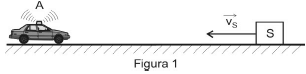
Enunciado 2702019-1

O sensor registra a frequência aparente devido à sua movimentação em relação à fonte sonora e a reenvia para um laboratório onde um sistema de caixas sonoras, acopladas a três tubos sonoros, de comprimentos !$ L_1 !$, !$ L_2 !$ e !$ L_3 !$ , reproduz essa frequência aparente fazendo com que as colunas de ar desses tubos vibrem produzindo os harmônicos apresentados na Figura 2.
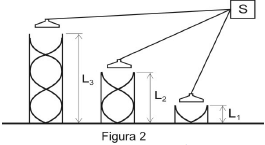
Enunciado 2702019-2

Considere que o sensor se movimenta em um local onde a velocidade do som é constante e igual a 320 m/s, que os tubos sonoros possuam diâmetros muito menores do que seus respectivos comprimentos e que a velocidade do som no interior desses tubos seja também constante e igual a 320 m/s. Considere também que a fonte A e o ar estejam em repouso em relação à Terra. Nessas condições, é correto afirmar que os comprimentos !$ L_1 !$, !$ L_2 !$ e !$ L_3 !$ , respectivamente, em metros, são


Provas

Questão presente nas seguintes provas