Foram encontradas 371 questões.
Sejam !$ A=\begin{pmatrix} 2&-1&-3\\1&-1&1\\-3&2&2\end{pmatrix}, \vec{x}=\begin{pmatrix}x_1\\x_2\\x_3 \end{pmatrix} !$e !$ \vec{b}=\begin{pmatrix}b_1\\b_2\\b_3 \end{pmatrix} !$. Assinale V (verdadeiro) ou F (falso):
Item 0 - se !$ \vec{b}=\begin{pmatrix}0\\0\\0 \end{pmatrix}=\vec{0} !$ então a única solução do sistema linear !$ A \cdot \vec{x}=\vec{b} !$ é a solução !$ \vec{x}=\vec{0} !$;
Provas

Provas
Um importador adquiriu vários artigos ao preço médio de US$ 15.00 com um desvio-padrão de US$ 1.00. Sabendo-se que a taxa de câmbio é de R$ 3,00 por dólar, é correto afirmar:
Item 3 - Se a margem de lucro for de 20% sobre o preço em reais, o novo preço médio será R$ 54,00 e o novo desvio-padrão será R$ 3,60.
Provas
Provas
Uma variável aleatória continua x tem a sua função densidade de probabilidade dada pelo gráfico:
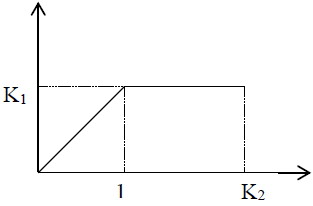
É correto afirmar:
Item 2 - A função densidade de probabilidade de !$ x !$ será !$ f(x)=\begin{cases} K_1 x, 0 \le x < 1 \\ K_1 1 \le x \le K_2 \\ 0, fora\, desses\,intervalos. \end{cases} !$
Provas
Considere o modelo de regressão linear múltipla para dados seccionais:
!$ y_i=\beta_0+\beta_1x_{1i}+\beta_2x_{2i}+L + \beta_k x_{ki}+u_i, \,\,\,\, i=1,K,n !$
É correto afirmar que:
Item 0 - Para que os estimadores de mínimos quadrados sejam lineares não-tendeciosos de menor variância (BLUE) é necessário que os erros sejam homocedásticos.
Provas
Interest in the subject reached its climax with a monster conference on ‘Inflation and Growth in Latin America’ held in Rio de Janeiro in January 1963.
The structuralist theory of inflation did not emerge unscathed from the intensive discussion. Arthur Lewis, in his summing up, stressed the need to distinguish between the original cause and the spiral mechanism. The structuralist argument about supply inelasticity related entirely to the former, but in this respect there was no difference between Chile and (say) India. Why then has inflation been so much more of a problem in Chile? ‘The difference is that Chile is in the grip of the spiral process to a much greater degree than India.’ Another participant, T.E. Davis, spelled this out. Inflation in Chile has been a ‘conscious policy that constitutes a common second best’ for powerful interest groups; conservatives that have the power to block any attempts to reduce real wages; and large private firms that have sufficient power to insist that bank credit to the private sector expands pari passu with that to government. ‘Stabilization programs are politically feasible only when it appears to these groups that inflation might conceivably “get out of hand”; but opposition reappears when the rate of inflation has been reduced to what historically seem to constitute “safe” levels’.
If this was the crux of the problem of inflation in Latin America, it had little if anything to do with all the arguments about inelastic supply, immobility of resources and the other alleged defects of the price mechanism. The problem of excess income claims by organized sectional interests had, after all, long been recognized as one form of ‘cost push’, although not always, it must be admitted, given its due by hard-line monetarists.
Oddly enough, the same conclusion was already implicit in the very first statement of the structuralist theory of inflation, by Noyola. While he attributed inflation in Chile and Mexico fundamentally to structural factors – chiefly instability of export earnings and capacity to import in Chile and inelastic supply of food due to earlier land reform and government agricultural policies in Mexico – he explained the much more severe inflation in Chile by the fact that the ‘propagating mechanism’ was much weaker in Mexico because its huge labor surplus in agriculture depressed real wages and weakened the trade unions. It was the strong organization in Chile of the major social groups with their competing income claims, in other words the ‘propagating mechanism’ rather than the initiating ‘structural factors’, that accounted for Chile’s much more serious inflation problem.
The structuralist theory of inflation was criticized at the 1963 Rio de Janeiro conference. According to the text, the chief criticisms leveled against it were:
Item 2 - The structuralist argument downplayed the importance of the “propagating mechanism” first put forward by Noyola.
Provas
The classical and neoclassical thesis according to which, in a perfectly competitive economy and in the absence of externalities, market forces operating through the price mechanism assure an optimum allocation of resources, statically and dynamically, were open to attack at three points. First, prices may give the wrong signals because they are distorted by monopoly or other influences. Secondly, labor and other factors of production may respond to price signals inadequately or even perversely. Thirdly, although ready to respond appropriately to price signals, factors of production may be immobile, unable to move quickly if at all. Lets us call them the ‘signaling’, ‘response’ and ‘mobility’ components of the mechanism.
According to the text,
Item 0 - classical and neoclassical analyses share the same views about the operation of the market forces.
Provas
Provas
Provas
Caderno Container