Foram encontradas 371 questões.
Com respeito a inferência e estimação de parâmetros populacionais, é correto afirmar:
Item 1 - O valor esperado da estatística !$ \dfrac{1}{n} \sum^n_{i=1} (x_1-\overline{x})^2 !$, em que !$ \sigma^2 !$ é a variância da população. Então, um estimador não-tendencioso de !$ \sigma^2 !$ será !$ \dfrac{1}{n-1} \sum^n_{i=1}(x_i - \overline{x})^2 !$
Provas

Uma variável aleatória continua x tem a sua função densidade de probabilidade dada pelo gráfico:
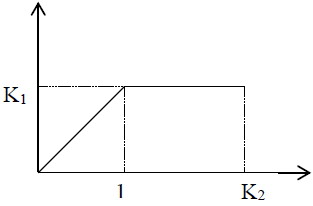
É correto afirmar:
Item 1 - O valor da constante K2 será igual a (K1+2)/2K1.
Provas
Provas
Provas
Structuralism in the broad sense of skepticism about the efficacy of the price mechanism and a conviction that government planning and controls must make up for ‘market failure’ was common to most, though not all, of the first generation of development economists. Some emphasized the inadequacy of prices as a guide to investment decisions. Others stressed what they believed to be the unacceptable social costs of the free play of market forces, especially its effects in aggravating inequality, nationally and internationally. All agreed that for various reasons all three components of the price mechanism work even less well in underdeveloped than in developed countries and that neoclassical economic theory was therefore largely inapplicable to LDCs.
What is the connection between structuralism in this broad sense and the Latin American ‘structuralist’ theory of inflation?
There is a consensus among the structuralists that:
Item 3 - Neoclassical economic theory is largely inapplicable to LDC’s
Provas
As vendas de ingressos para os jogos de um time de futebol dependem do número de vitórias do time por temporada e do preço dos ingressos. Em outras palavras, a função demanda pelos ingressos é dada por !$ q=N(20-p) !$, em que !$ p !$ é o preço dos ingressos, !$ q !$ é a quantidade de ingressos (em milhares) e !$ N !$ é a proporção de jogos ganhos. O time pode aumentar N se investir !$ C !$ reais (em milhares) na contratação de novos talentos. Neste caso, tem-se que !$ N=0,7-\dfrac{1}{C} !$. Assuma que o custo marginal de vender um ingresso seja zero.
É correto afirmar que:
Item 3 - A receita total no ponto de ótimo é 60 (em milhares).
Provas
Um importador adquiriu vários artigos ao preço médio de US$ 15.00 com um desvio-padrão de US$ 1.00. Sabendo-se que a taxa de câmbio é de R$ 3,00 por dólar, é correto afirmar:
Item 2 - Se ao preço original de cada artigo, um intermediário adicionar uma margem de lucro fixa de R$ 10,00, o novo preço médio será R$ 55,00 com um desvio-padrão de R$ 6,00.
Provas
The Doctrine of Market Failure
In the nineteenth century and well into the twentieth, socialist and other critics of capitalism condemned it chiefly on two grounds. First, that it was unjust and exploitative. Secondly, that it was unstable, prone to crises and doomed to collapse. Rarely if ever, was capitalism criticized on the ground that its quintessential mechanism of market forces operating through the price system fails to work. This third line of criticism, which may be called the doctrine of market failure, was developed, chiefly in Britain, in the 1930s and 1940s, though traces of it can of course be found earlier in many places.
Socialist critics of capitalism condemn it on the grounds that it
Item 2 - has a natural bent towards crises,
Provas
The classical and neoclassical thesis according to which, in a perfectly competitive economy and in the absence of externalities, market forces operating through the price mechanism assure an optimum allocation of resources, statically and dynamically, were open to attack at three points. First, prices may give the wrong signals because they are distorted by monopoly or other influences. Secondly, labor and other factors of production may respond to price signals inadequately or even perversely. Thirdly, although ready to respond appropriately to price signals, factors of production may be immobile, unable to move quickly if at all. Lets us call them the ‘signaling’, ‘response’ and ‘mobility’ components of the mechanism.
According to the text,
Item 2 - a perverse factor supply response to price signals is one of the reasons why markets fail.
Provas
Provas
Caderno Container