Foram encontradas 60 questões.
No plano cartesiano abaixo, o polígono OABCD tem vértices O(0,0), A(0,2), B(3,2), D(t,0) e C(t,u).
O ponto C é colinear com B e E(7,6).
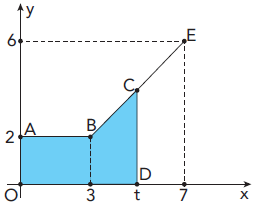
Sendo o segmento CD paralelo ao eixo y e 3 < t !$ \le !$ 7, a área desse polígono é:
Provas

As ondas eletromagnéticas do satélite S, que gira em torno da Terra, atingem toda a calota esférica definida pelo arco PQ, conforme representado abaixo.
O ponto O é o centro da Terra e B indica a posição de um observador do satélite, no momento em que !$ \overline{SM} !$ = !$ \overline{MO} !$ = r.
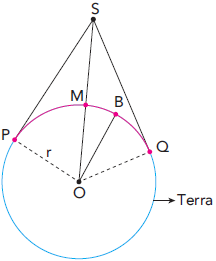
Sabendo que cos (B!$ \hat{O} !$S) = 0,76, a distância !$ \overline{BS} !$ é igual a:
Provas
Considere os retângulos congruentes abaixo, graduados com a mesma escala, e os quatro polígonos destacados: I, II, III e IV. Três deles têm a mesma área.

O polígono de área diferente é:
Provas
Algumas medicações precisam ser administradas na veia dos pacientes por meio de dispositivos que gotejam, conforme a ilustração a seguir.

Admita as seguintes variáveis para um paciente hospitalizado que recebe medicação intravenosa:
!$ \bullet !$ x é o volume total da medicação, em mililitros;
!$ \bullet !$ t é o tempo, em horas, necessário para que toda a medicação seja administrada;
!$ \bullet !$ y é a taxa de gotejamento, em número de gotas por minuto.
Sabe-se que, para o dispositivo utilizado, 1 mililitro equivale a 25 gotas.
A taxa de gotejamento, em gotas por minuto, é:
Provas
Durante muitos anos, admitiu-se que a Terra fosse o centro do universo. O astrônomo Nicolau Copérnico (1473-1543), porém, mostrou que esse e outros astros giram em torno do Sol.
A tabela a seguir indica o número de dias terrestres para a Terra e um dado asteroide completarem uma volta em torno do Sol.
| ASTRO | NÚMERO DE DIAS |
| Terra | 365 |
| asteroide | 219 |
Considere que a órbita do asteroide está no mesmo plano da órbita da Terra e que esses astros e o Sol ocupam a mesma posição relativa, a cada t anos terrestres.
Assim, o menor valor de t é:
Provas
Masterpieces rejected by art critics
Despite severe criticism, famous artists continued to move forward and pursue their art with the same passion.
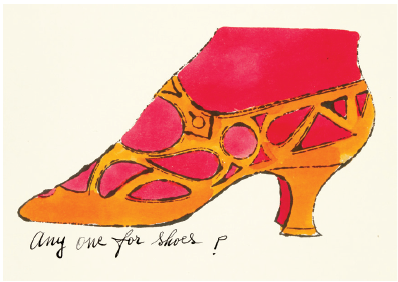
Shoe, by Andy Warhol
Art is a struggle – for everyone. Not just because the creative process involves rigorous mental and physical effort but also because it is a very difficult career path to take. With thousands of struggling creative professionals across the globe trying to “make it”, pursuing art-making can become very discouraging. However, the trick is to keep moving forward despite all the obstacles you face. And when that becomes hard, it can help to go back and look to the masters for inspiration, artistic and otherwise.
Most masters, as we know them now, did not have it as easy as we think. They struggled too, and more likely than not, a lot more than any of us ever will need to. However, they managed to look past the rejections and the criticism and focused on their art alone because they believed in themselves. Here are some of the obstacles that a greatest artist faced in his lifetime to inspire you to keep moving forward and make you realize that rejection is just a part of the struggle that evolves you as an artist, not the end of it.
Andy Warhol was undoubtedly the most unapologetically controversial artist of his time. Critics thrashed his works as “aesthetic frauds” and criticized him for reducing art to a “hands-off business”.
In 1956, Andy Warhol donated a work of his (Shoe) to the Museum of Modern Art in New York.
Soon after, Alfred H. Barr Jr., the Director of the Museum Collections at the time, wrote Warhol a letter rejecting his (free gift!) work due to “limited gallery and storage space”. “We must turn down gifts offered since we feel it is not fair to accept as a gift a work which may be shown only infrequently”, he explained.
Today, the Museum of Modern Art has 168 of Warhol’s works in their private collection, including the Shoe.
We’ve all been there. The very moment you create something, you open yourself up to critique.
Whether or not you ask for it, art criticism can be a hard pill to swallow. Training yourself to accept and learn from your harshest critics is one of the most difficult – but most rewarding – skills to develop as an artist. But if the masters could do it, so can you!
TANYA SINGH Adaptado de agora-gallery.com.
art criticism can be a hard pill to swallow.
In the sentence above, those who are supposed to swallow the pill are the ones below:
Provas
Masterpieces rejected by art critics
Despite severe criticism, famous artists continued to move forward and pursue their art with the same passion.
Shoe, by Andy Warhol
Art is a struggle – for everyone. Not just because the creative process involves rigorous mental and physical effort but also because it is a very difficult career path to take. With thousands of struggling creative professionals across the globe trying to “make it”, pursuing art-making can become very discouraging. However, the trick is to keep moving forward despite all the obstacles you face. And when that becomes hard, it can help to go back and look to the masters for inspiration, artistic and otherwise.
Most masters, as we know them now, did not have it as easy as we think. They struggled too, and more likely than not, a lot more than any of us ever will need to. However, they managed to look past the rejections and the criticism and focused on their art alone because they believed in themselves. Here are some of the obstacles that a greatest artist faced in his lifetime to inspire you to keep moving forward and make you realize that rejection is just a part of the struggle that evolves you as an artist, not the end of it.
Andy Warhol was undoubtedly the most unapologetically controversial artist of his time. Critics thrashed his works as “aesthetic frauds” and criticized him for reducing art to a “hands-off business”.
In 1956, Andy Warhol donated a work of his (Shoe) to the Museum of Modern Art in New York.
Soon after, Alfred H. Barr Jr., the Director of the Museum Collections at the time, wrote Warhol a letter rejecting his (free gift!) work due to “limited gallery and storage space”. “We must turn down gifts offered since we feel it is not fair to accept as a gift a work which may be shown only infrequently”, he explained.
Today, the Museum of Modern Art has 168 of Warhol’s works in their private collection, including the Shoe.
We’ve all been there. The very moment you create something, you open yourself up to critique.
Whether or not you ask for it, art criticism can be a hard pill to swallow. Training yourself to accept and learn from your harshest critics is one of the most difficult – but most rewarding – skills to develop as an artist. But if the masters could do it, so can you!
TANYA SINGH Adaptado de agora-gallery.com.
In the fourth paragraph, it is possible to identify an implicit message in the Director’s reaction to Andy Warhol's donation.
The implicit message concerning the donation is the following:
Provas
Masterpieces rejected by art critics
Despite severe criticism, famous artists continued to move forward and pursue their art with the same passion.
Shoe, by Andy Warhol
Art is a struggle – for everyone. Not just because the creative process involves rigorous mental and physical effort but also because it is a very difficult career path to take. With thousands of struggling creative professionals across the globe trying to “make it”, pursuing art-making can become very discouraging. However, the trick is to keep moving forward despite all the obstacles you face. And when that becomes hard, it can help to go back and look to the masters for inspiration, artistic and otherwise.
Most masters, as we know them now, did not have it as easy as we think. They struggled too, and more likely than not, a lot more than any of us ever will need to. However, they managed to look past the rejections and the criticism and focused on their art alone because they believed in themselves. Here are some of the obstacles that a greatest artist faced in his lifetime to inspire you to keep moving forward and make you realize that rejection is just a part of the struggle that evolves you as an artist, not the end of it.
Andy Warhol was undoubtedly the most unapologetically controversial artist of his time. Critics thrashed his works as “aesthetic frauds” and criticized him for reducing art to a “hands-off business”.
In 1956, Andy Warhol donated a work of his (Shoe) to the Museum of Modern Art in New York.
Soon after, Alfred H. Barr Jr., the Director of the Museum Collections at the time, wrote Warhol a letter rejecting his (free gift!) work due to “limited gallery and storage space”. “We must turn down gifts offered since we feel it is not fair to accept as a gift a work which may be shown only infrequently”, he explained.
Today, the Museum of Modern Art has 168 of Warhol’s works in their private collection, including the Shoe.
We’ve all been there. The very moment you create something, you open yourself up to critique.
Whether or not you ask for it, art criticism can be a hard pill to swallow. Training yourself to accept and learn from your harshest critics is one of the most difficult – but most rewarding – skills to develop as an artist. But if the masters could do it, so can you!
TANYA SINGH Adaptado de agora-gallery.com.
Critics thrashed his works as “aesthetic frauds”
The underlined word may be substituted, without significant change in meaning, by the one below:
Provas
Masterpieces rejected by art critics
Despite severe criticism, famous artists continued to move forward and pursue their art with the same passion.
Shoe, by Andy Warhol
Art is a struggle – for everyone. Not just because the creative process involves rigorous mental and physical effort but also because it is a very difficult career path to take. With thousands of struggling creative professionals across the globe trying to “make it”, pursuing art-making can become very discouraging. However, the trick is to keep moving forward despite all the obstacles you face.(a) And when that becomes hard, it can help to go back and look to the masters for inspiration, artistic and otherwise.
Most masters, as we know them now, did not have it as easy as we think. They struggled too, and more likely than not, a lot more than any of us ever will need to. However, they managed to look past the rejections(b) and the criticism and focused on their art alone because they believed in themselves. Here are some of the obstacles that a greatest artist faced in his lifetime to inspire you to keep moving forward and make you realize that rejection is just a part of the struggle that evolves you as an artist, not the end of it.
Andy Warhol was undoubtedly the most unapologetically controversial artist of his time. Critics thrashed his works as “aesthetic frauds” and criticized him for reducing art to a “hands-off business”.
In 1956, Andy Warhol donated a work of his (Shoe) to the Museum of Modern Art in New York.
Soon after, Alfred H. Barr Jr., the Director of the Museum Collections at the time, wrote Warhol a letter rejecting his (free gift!) work due to “limited gallery and storage space”.(c) “We must turn down gifts offered since we feel it is not fair to accept as a gift a work which may be shown only infrequently”, he explained.
Today, the Museum of Modern Art has 168 of Warhol’s works in their private collection, including the Shoe.
We’ve all been there. The very moment you create something, you open yourself up to critique.
Whether or not you ask for it,(d) art criticism can be a hard pill to swallow. Training yourself to accept and learn from your harshest critics is one of the most difficult – but most rewarding – skills to develop as an artist. But if the masters could do it, so can you!
TANYA SINGH Adaptado de agora-gallery.com.
because they believed in themselves.
The underlined word introduces the reason for something to happen.
Another linker used for the same purpose is the one underlined in:
Provas
Masterpieces rejected by art critics
Despite severe criticism, famous artists continued to move forward and pursue their art with the same passion.
Shoe, by Andy Warhol
Art is a struggle – for everyone. Not just because the creative process involves rigorous mental and physical effort but also because it is a very difficult career path to take. With thousands of struggling creative professionals across the globe trying to “make it”, pursuing art-making can become very discouraging. However, the trick is to keep moving forward despite all the obstacles you face. And when that becomes hard, it can help to go back and look to the masters for inspiration, artistic and otherwise.
Most masters, as we know them now, did not have it as easy as we think. They struggled too, and more likely than not, a lot more than any of us ever will need to. However, they managed to look past the rejections and the criticism and focused on their art alone because they believed in themselves. Here are some of the obstacles that a greatest artist faced in his lifetime to inspire you to keep moving forward and make you realize that rejection is just a part of the struggle that evolves you as an artist, not the end of it.
Andy Warhol was undoubtedly the most unapologetically controversial artist of his time. Critics thrashed his works as “aesthetic frauds” and criticized him for reducing art to a “hands-off business”.
In 1956, Andy Warhol donated a work of his (Shoe) to the Museum of Modern Art in New York.
Soon after, Alfred H. Barr Jr., the Director of the Museum Collections at the time, wrote Warhol a letter rejecting his (free gift!) work due to “limited gallery and storage space”. “We must turn down gifts offered since we feel it is not fair to accept as a gift a work which may be shown only infrequently”, he explained.
Today, the Museum of Modern Art has 168 of Warhol’s works in their private collection, including the Shoe.
We’ve all been there. The very moment you create something, you open yourself up to critique.
Whether or not you ask for it, art criticism can be a hard pill to swallow. Training yourself to accept and learn from your harshest critics is one of the most difficult – but most rewarding – skills to develop as an artist. But if the masters could do it, so can you!
TANYA SINGH Adaptado de agora-gallery.com.
The text Masterpieces rejected by art critics discusses how people deal with novelty, as well as the text Abrir-se ao novo.
Regarding novelty, the two texts have the following aspect in common:
Provas
Caderno Container