Foram encontradas 50 questões.
A tabela abaixo mostra os dados das cargas de uma residência.
|
Aparelho |
P (W) | Quantidade |
Tempo médio de utilização por dia |
|
Lâmpada Incandescente |
100 | 4 |
2 horas |
|
Lâmpada Incandescente |
60 | 10 |
4 horas |
|
Chuveiro Elétrico |
4500 | 1 |
1 hora |
|
TV |
150 | 2 |
3 horas |
|
Ferro Elétrico |
800 | 1 |
1 hora |
|
Geladeira |
200 | 1 |
24 horas |
Se o custo do kWh é de R$0,40, qual será o valor pago pelo proprietário ao final do mês? (Considerar o mês com 30 dias)
Provas

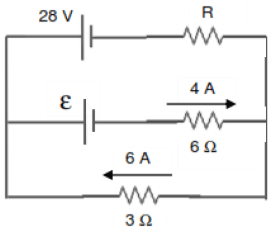
No circuito indicado na figura acima, o valor da tensão !$ ε !$ e da resistência R é, respectivamente,
Provas
Quatro passageiros estão no interior do carro, e os cabos elétricos de média tensão rompidos de um poste caem e encostam sobre a parte externa do veículo.
Nessa situação, o procedimento indicado é
Provas
Segundo a lei Geral das Telecomunicações, afirma-se que:
I. A ANATEL é vinculada ao Ministério das Comunicações, sendo hierarquicamente dependente.
II. É permitida a utilização de equipamentos emissores de radiofrequência sem certificação expedida ou aceita pela ANATEL.
III. O espectro de radiofrequências é um recurso ilimitado, constituindo-se em bem público, administrado pela ANATEL.
Analise os itens acima e marque a alternativa CORRETA:
Provas
Segundo a lei Geral das Telecomunicações, o usuário de serviços de telecomunicações tem o dever de:
I. utilizar adequadamente os serviços, equipamentos e redes de telecomunicações;
II. respeitar os bens públicos e aqueles voltados à utilização do público em geral;
III. estimular a expansão do uso dos serviços de telecomunicações em benefício da sociedade.
Analise os itens acima e marque a alternativa CORRETA:
Provas
A respeito da escravidão no Brasil e sua abolição, assinale a alternativa INCORRETA:
Provas
Disciplina: Segurança e Saúde no Trabalho (SST)
Banca: FRA
Orgão: CEMIG-Telecom
O equipamento de proteção individual para trabalho em eletricidade é obrigatório, sendo o empregado responsável por utilizá-lo, por sua guarda e por cumprir as determinações do empregador sobre o seu uso adequado.
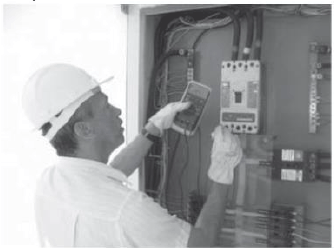
Na figura acima, o eletricista não está usando como equipamento de proteção individual:
Provas
TODAY’S education reformers believe that schools are broken and that business can supply the remedy. Some place their faith in the idea of competition. Others embrace disruptive innovation, mainly through online learning. Both camps share the belief that the solution resides in the impersonal, whether it’s the invisible hand of the market or the transformative power of technology.
Neither strategy has lived up to its hype, and with good reason. It’s impossible to improve education by doing an end run around inherently complicated and messy human relationships. All youngsters need to believe that they have a stake in the future, a goal worth striving for, if they’re going to make it in school. They need a champion, someone who believes in them, and that’s where teachers enter the picture. The most effective approaches foster bonds of caring between teachers and their students.
Marketplace mantras dominate policy discussions. High-stakes reading and math tests are treated as the single metric of success, the counterpart to the business bottom line. Teachers whose students do poorly on those tests get pink slips, while those whose students excel receive merit pay, much as businesses pay bonuses to their star performers and fire the laggards. Just as companies shut stores that aren’t meeting their sales quotas, opening new ones in more promising territory, failing schools are closed and so-called turnaround model schools, with new teachers and administrators, take their place. (...) Closing schools treats everyone there as guilty of causing low test scores, ignoring the difficult lives of the children in these schools — “no excuses,” say the reformers, as if poverty were an excuse. While these reformers talk a lot about markets and competition, the essence of a good education — bringing together talented teachers, engaged students and a challenging curriculum — goes undiscussed.
Public schools have been spending billions of dollars on technology which they envision as the wave of the future. (...) While technology can be put to good use by talented teachers, they, and not the futurists, must take the lead. The process of teaching and learning is an intimate act that neither computers nor markets can hope to replicate. Small wonder, then, that the business model hasn’t worked in reforming the schools — there is simply no substitute for the personal element.
Disponível em: http://www.nytimes.com/. Acesso em 16 ago 2014.
O pronome those destacado no texto acima se refere a
Provas
TODAY’S education reformers believe that schools are broken and that business can supply the remedy. Some place their faith in the idea of competition. Others embrace disruptive innovation, mainly through online learning. Both camps share the belief that the solution resides in the impersonal, whether it’s the invisible hand of the market or the transformative power of technology.
Neither strategy has lived up to its hype, and with good reason. It’s impossible to improve education by doing an end run around inherently complicated and messy human relationships. All youngsters need to believe that they have a stake in the future, a goal worth striving for, if they’re going to make it in school. They need a champion, someone who believes in them, and that’s where teachers enter the picture. The most effective approaches foster bonds of caring between teachers and their students.
Marketplace mantras dominate policy discussions. High-stakes reading and math tests are treated as the single metric of success, the counterpart to the business bottom line. Teachers whose students do poorly on those tests get pink slips, while those whose students excel receive merit pay, much as businesses pay bonuses to their star performers and fire the laggards. Just as companies shut stores that aren’t meeting their sales quotas, opening new ones in more promising territory, failing schools are closed and so-called turnaround model schools, with new teachers and administrators, take their place. (...) Closing schools treats everyone there as guilty of causing low test scores, ignoring the difficult lives of the children in these schools — “no excuses,” say the reformers, as if poverty were an excuse. While these reformers talk a lot about markets and competition, the essence of a good education — bringing together talented teachers, engaged students and a challenging curriculum — goes undiscussed.
Public schools have been spending billions of dollars on technology which they envision as the wave of the future. (...) While technology can be put to good use by talented teachers, they, and not the futurists, must take the lead. The process of teaching and learning is an intimate act that neither computers nor markets can hope to replicate. Small wonder, then, that the business model hasn’t worked in reforming the schools — there is simply no substitute for the personal element.
Disponível em: http://www.nytimes.com/. Acesso em 16 ago 2014.
O objetivo principal desse texto é
Provas
Why do some people call it “soccer”?
Known to most of the rest of the world as football, or “fútbol,” the beautiful game is almost exclusively referred to as soccer in the United States, but many Americans may be surprised to learn that our outlier moniker actually originated across the pond.
Games played by kicking, hitting, throwing or carrying a ball have been around for thousands of years, but in the mid-to-late-19th century many sports—such as baseball, soccer, and American football—codified their rulebooks into the forms we recognize today. Modern soccer was born in 1863, when representatives from several English schools and clubs got together to standardize a single set of rules for their matches. They dubbed their new organization the Football Association, and their version of the game became known as “Association Football.” The word association was used to distinguish their specific sport from other popular games of the day such as “rugby football.”
The word soccer comes from a slang abbreviation of the word association, which British players of the day adapted as “assoc,” “assoccer” and eventually soccer or soccer football. (The habit of adding –er to nicknames in British vernacular is frequently attributed to Oxford students of that period, and can be found in other sporting slang such as “rugger” for rugby.)
The parallel names soccer and football (or the combined soccer football) were used more or less interchangeably to refer to association football until well into the 20th century, at which point football emerged as the dominant name in most parts of the world. However, in countries where another football variety was already popular—such as America and Australia—the name soccer stuck around.
Disponível em: http://www.history.com/. Acesso em 11 ago 2014.
Sobre o termo soccer, é CORRETO afirmar que
Provas
Caderno Container