Foram encontradas 72 questões.
TEXTO 2

A compreensão do Texto 2 exige que:
Provas
Questão presente nas seguintes provas

A figura abaixo representa as diferentes fases da interfase:
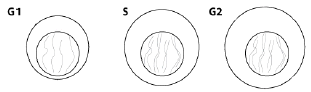
Sobre a interfase é correto afirmar que:
Provas
Questão presente nas seguintes provas
O reostato é um dispositivo que possibilita a variação da resistência de um circuito elétrico, sem que haja variação na corrente elétrica. O reostato de certo chuveiro elétrico permite ligá-lo nas posições “inverno” (água mais quente) e “verão” (água mais fria). Se a potência dissipada pelo chuveiro na posição “inverno” é duas vezes maior que a potência dissipada na posição “verão”, então a resistência elétrica associada à potência na posição “inverno” é:
Provas
Questão presente nas seguintes provas
A torneira X enche um reservatório três vezes mais rapidamente que a torneira Y. Se, juntas, as duas torneiras enchem o reservatório em 15 horas, em quantas horas a torneira X, sozinha, enche o reservatório?
Provas
Questão presente nas seguintes provas
Um automóvel se desloca em linha reta ao longo de uma rodovia. Durante certo intervalo de tempo, a sua posição, em metros, é dada pela equação !$ × (t) = 200 -20t + 0,5t^2 !$, onde t denota o tempo medido em segundos. Nesta situação, pode-se afirmar que a velocidade e a aceleração do automóvel no instante t = 0 valem, respectivamente,
Provas
Questão presente nas seguintes provas
Why bilinguals are smarter
SPEAKING two languages rather than just one has obvious practical benefits in an increasingly globalized world. But in recent years, scientists have begun to show that the advantages of bilingualism are even more fundamental than being able to converse with a wider range of people. Being bilingual, it turns out, makes you smarter. It can have a profound effect on your brain, improving cognitive skills not related to language and even shielding against dementia in old age.
This view of bilingualism is remarkably different from the understanding of bilingualism through much of the 20th century. Researchers, educators and policy makers long considered a second language to be an interference, cognitively speaking, that hindered a child’s academic and intellectual development.
They were not wrong about the interference: there is ample evidence that in a bilingual’s brain both language systems are active even when he is using only one language, thus creating situations in which one system obstructs the other. But this interference, researchers are finding out, isn’t so much a handicap as a blessing in disguise. It forces the brain to resolve internal conflict, giving the mind a workout that strengthens its cognitive muscles.
The collective evidence from a number of such studies suggests that the bilingual experience improves the brain’s so-called executive function — a command system that directs the attention processes that we use for planning, solving problems and performing various other mentally demanding tasks. These processes include ignoring distractions to stay focused, switching attention willfully from one thing to another and holding information in mind — like remembering a sequence of directions while driving.
The bilingual experience appears to influence the brain from infancy to old age. Nobody ever doubted the power of language. But who would have imagined that the words we hear and the sentences we speak might be leaving such a deep imprint?
Adaptado de: <http://www.nytimes.com/2012/03/18/opinion/sunday/the-benefits-ofbilingualism.
html?WT.mc_id=D-NYT-MKTG-MOD-31048-0502-
HD&WT.mc_ev=click&WT.mc_c= > Acessado em 25 de abril de 2015.
In the sentence “But this interference, researchers are finding out, isn’t so much a handicap as a blessing in disguise.” handicap is a synonym of
Provas
Questão presente nas seguintes provas
TEXTO 1
Português, a língua mais difícil do
mundo? Conta outra! .
Alguns mitos resistentes rondam como mosquitos chatos a língua portuguesa falada no Brasil. Diante deles, argumentações fundadas em fatos e um mínimo de racionalidade são tão inúteis quanto tapas desferidos às cegas no escuro do quarto em pernilongos zumbidores. Os tapas acertam o vazio, os zumbidos continuam lá.
A lenda de que se fala no estado do Maranhão o português mais “correto” do Brasil é uma dessas balelas aceitas por aí como verdades reveladas – e nem os tristíssimos índices educacionais maranhenses podem fazer nada contra isso. Tapas no vazio.
Outra bobagem de grande prestígio é aquela que sustenta ser o português “a língua mais difícil do mundo”. Baseada, talvez, na dor de cabeça real que acomete estrangeiros confrontados com a arquitetura barroca de nossos verbos, a afirmação é categórica o bastante para dispensar a necessidade de uma prova.
O sujeito erra o gênero da palavra alface e pronto, lá vem a desculpa universal: “Ah, também, como é difícil a porcaria dessa língua! Ah, se tivéssemos sido colonizados pelos holandeses!” Não, claro que isso não quer dizer que o queixoso saiba falar holandês. É justamente na imensa parcela monoglota da população que a crença na dificuldade insuperável da língua portuguesa encontra solo mais fértil.
Não é uma conclusão a que se chegue depois de estudar judiciosamente latim, alemão, húngaro, russo e japonês. Ninguém precisa ter encarado um idioma em que se use declinação – vespeiro do qual a gramática portuguesa nos poupou – para sair deplorando em altos brados o desafio invencível da crase. Não há dúvida de que o mito das agruras superlativas do português diz muito sobre a falência educacional brasileira, cupim que rói as fundações de qualquer projeto de desenvolvimento social que vá além da promoção de um maior acesso da população a shopping centers.
Temo, porém, que suas raízes sejam mais profundas. Percebe-se aí uma mistura tóxica de autocomplacência, autodepreciação, ufanismo, fuga da realidade e desculpa esfarrapada que pode ser ainda mais difícil de derrotar do que nosso vicejante semianalfabetismo.
http://veja.abril.com.br/blog/sobre-palavras/cronica/portugues-alingua-
mais-dificil-do-mundo-conta-outra/
Ainda em consideração ao sentido de algumas palavras do Texto 1, assinale a alternativa em que o sentido de palavras ou expressões grifadas está indicado corretamente.
Provas
Questão presente nas seguintes provas
A colonização portuguesa, no Brasil, foi marcada pela violência da escravidão e as dificuldades de organização econômica. Com a chegada da Independência, o Brasil conseguiu:
Provas
Questão presente nas seguintes provas
Ao longo do litoral alagoano, são identificados vários ambientes de sedimentação, incluindo terras úmidas (pântanos de água doce e mangues), depósitos fluviais, terraços marinhos holocênicos e pleistocênicos, dunas costeiras holocênicas (ativas e inativas), bancos recifais e praias atuais, cuja origem e evolução estão relacionadas com os seguintes fatores:
1) Clima
2) Corrente de deriva litorânea
3) Movimentos eustáticos
4) Diferenças de latitude
5) Ações edáficas.
Estão corretos apenas:
Provas
Questão presente nas seguintes provas
Why bilinguals are smarter
SPEAKING two languages rather than just one has obvious practical benefits in an increasingly globalized world. But in recent years, scientists have begun to show that the advantages of bilingualism are even more fundamental than being able to converse with a wider range of people. Being bilingual, it turns out, makes you smarter. It can have a profound effect on your brain, improving cognitive skills not related to language and even shielding against dementia in old age.
This view of bilingualism is remarkably different from the understanding of bilingualism through much of the 20th century. Researchers, educators and policy makers long considered a second language to be an interference, cognitively speaking, that hindered a child’s academic and intellectual development.
They were not wrong about the interference: there is ample evidence that in a bilingual’s brain both language systems are active even when he is using only one language, thus creating situations in which one system obstructs the other. But this interference, researchers are finding out, isn’t so much a handicap as a blessing in disguise. It forces the brain to resolve internal conflict, giving the mind a workout that strengthens its cognitive muscles.
The collective evidence from a number of such studies suggests that the bilingual experience improves the brain’s so-called executive function — a command system that directs the attention processes that we use for planning, solving problems and performing various other mentally demanding tasks. These processes include ignoring distractions to stay focused, switching attention willfully from one thing to another and holding information in mind — like remembering a sequence of directions while driving.
The bilingual experience appears to influence the brain from infancy to old age. Nobody ever doubted the power of language. But who would have imagined that the words we hear and the sentences we speak might be leaving such a deep imprint?
Adaptado de: <http://www.nytimes.com/2012/03/18/opinion/sunday/the-benefits-ofbilingualism.
html?WT.mc_id=D-NYT-MKTG-MOD-31048-0502-
HD&WT.mc_ev=click&WT.mc_c= > Acessado em 25 de abril de 2015.
In recent years, it has been shown that the advantages of bilingualism
Provas
Questão presente nas seguintes provas
Cadernos
Caderno Container