Foram encontradas 180 questões.
Text II
Reading Comprehension Instruction
There are widespread and erroneous perceptions that children must know all of the words before they can comprehend a text and that they must comprehend it at the literal level before advancing to comprehension at the inferential level.
Recognizing some words is clearly necessary and central to reading. It is important for children to acquire a set of strategies for figuring out the meanings of words and apply these strategies so that words are recognized automatically. Four groups of strategies exist: (1) common graphophonic patterns (e.g., at in cat, hat, bat), (2) high-frequency or common words used in sentences (e.g., the, a, or), (3) word building (e.g., morphemes, as play in plays, played, playing, playful), and (4) contextual supports gathered through the meanings of sentences, texts, and illustrations. These word recognition strategies are taught as children are engaged in reading and are considered effective in fluency instruction.
Vocabulary and reading comprehension growth occurs side by side even for beginning readers. They each require explicit instruction and lots of reading of stories including repeated readings to teach phonics, to develop sight vocabulary, and to teach children how to decode words; guided retelling using questions that prompt children to name the characters, identify the setting (place and time), speak to the problem, tell what happened, and how the story ended; repeated checking for information; and drawing conclusions. Teaching strategies to children early, explicitly, and sequentially are three key characteristics of effective vocabulary and reading comprehension instruction.
For those who are learning English as second or foreign language, take advantage of their first language knowledge to identify cognate pairs, which are words with similar spellings, pronunciations, and meanings in English. To identify the degree of overlap between the two languages is a strategy that has been demonstrated to be effective for Spanish- literate children: learn the words for basic objects (e.g., dog, cat, house, car) that English-only children already know; review and practice passages and stories through read-alouds in order to accelerate the rate at which words can be identified and read; and engage in basic reading skills including spelling.
(PHILLIPS, L.M, NORRIS, S. P. & VAVRA, K.L. Reading Comprehension Instruction (pp. 1-10). Faculty of Education, University of Alberta. Posted online on 2007-11-20 in: http://www.literacyencyclopedia.ca)
Provas

Uma função real f é derivável em x = -1 com f(-1) = 0 e ƒ ' (-1) = 1. Pode-se afirmar que  é igual a
Provas
Considere as elipses 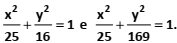 A área do quadrilátero convexo cujos vértices são os focos dessas elipses é igual a
Provas
Provas
Considere a figura.
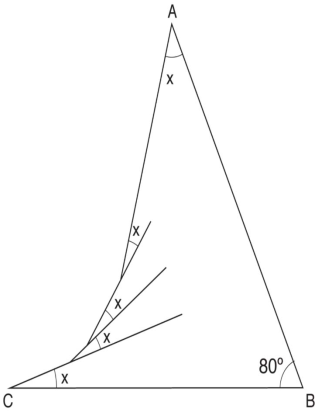
O ângulo x mede
Provas
Provas
Seja ABCD o retângulo indicado a seguir.
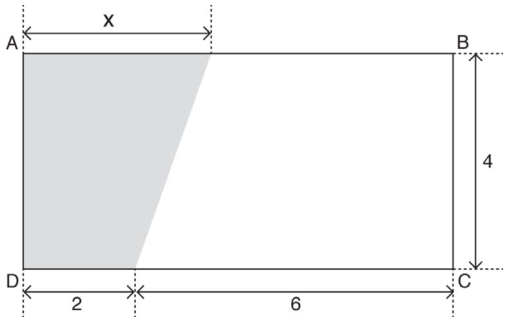
Qual é o maior valor inteiro que pode ser atribuído à base maior x do trapézio sombreado na figura, de modo que sua área seja inferior a 60% da área desse retângulo?
Provas
A tabela apresenta as medidas descritivas das notas de Matemática de oito turmas de uma escola:
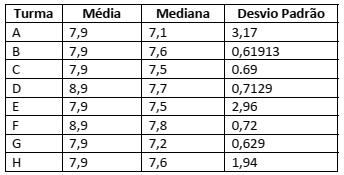
Uma empresa premiará, com uma viagem a Mangaratiba, as cinco turmas com melhores médias. Em caso de empate, a turma escolhida será a que apresentar uma distribuição de notas mais homogênea, ou seja, a turma com pontuação mais regular. Utilizando os dados estatísticos do quadro e os critérios estabelecidos, pode-se concluir que as cinco primeiras colocadas serão, respectivamente, as turmas
Provas
Provas
Provas
Caderno Container