Foram encontradas 50 questões.
Ao receber propostas de duas instituições, o analista se deparou com a seguinte situação:
• Instituição Alfa: 60 % ao ano
• Instituição Beta: 5 % ao mês
Ao analisar as taxas propostas, o analista poderá concluir que elas são:
Provas

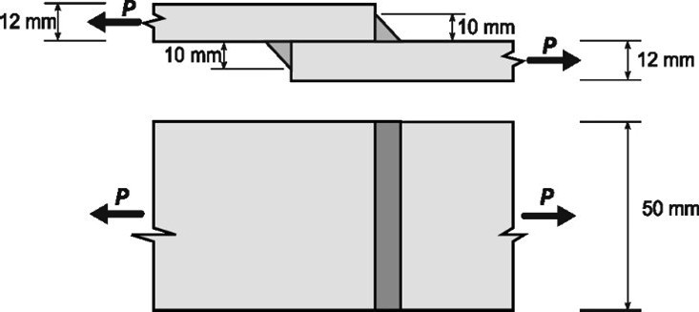
A figura mostra duas chapas de aço ASTM A36 de espessura 12 mm e largura 50 mm que estão unidas por cordões de solda de pernas horizontal e vertical de 10 mm e comprimento igual à largura das chapas. Considerando o uso de processo SMAW e eletrodos E60, com tensão admissível \( τ \)s igual a 70 MPa, a carga P, aplicada igualmente distribuída em todas as partes e desprezando eventuais cargas de momento, nas condições dadas, é:
Provas
The World of AI
How libraries are integrating and navigating this powerful technology
A hot topic in many industries, generative artificial intelligence (generative AI) has increasingly occupied our cultural consciousness since the large language model ChatGPT debuted for public use in November 2022. Some libraries are playing a unique role in charting a path through this new technological territory as the boundaries of AI’s uses and impacts continue to shift.
“Librarians are asking if AI will render us obsolete — it won’t,” says Nick Tanzi, library technology consultant, author, and assistant director of South Huntington Public Library in Huntington Station, New York. “We are information professionals, and our information landscape has just grown in complexity.”
AI’s critics have sounded the alarm about the models’ tendency to reinforce and amplify any biases found in the data they are trained on. Others have raised concerns about false information and privacy, as well as plagiarism and copyright, issues of particular concern to academic and school libraries. How can users be sure the output generated by AI tools is legal, ethical, and accurate?
“There’s an old saying: ‘Garbage in, garbage out,’” says Elissa Malespina, teacher-librarian at Union (N.J.) High School, who writes the AI School Librarians Newsletter. “In the world of AI, it’s a matter of ‘data in, data out.’ Make sure you’ve got a clear sense of not just how AI operates but also where it’s drawing its knowledge from. It’s all about being an informed user.”
American Libraries spoke with five technology experts, educators, and librarians who are pioneering the use of generative AI at their institutions. They discuss how it’s being used in libraries, what ethical concerns have emerged, and how librarians can educate their communities on navigating these powerful technologies.
By Emily Udell | March 1, 2024 Fonte: https//americanlibrariesmagazine.org Acessado em: 16/01/2026. Acesso em 16/01/2026.
A partir da leitura do texto "The World of AI", de Emily Udell, pode-se afirmar que:
Provas
The World of AI
How libraries are integrating and navigating this powerful technology
A hot topic in many industries, generative artificial intelligence (generative AI) has increasingly occupied our cultural consciousness since the large language model ChatGPT debuted for public use in November 2022. Some libraries are playing a unique role in charting a path through this new technological territory as the boundaries of AI’s uses and impacts continue to shift.
“Librarians are asking if AI will render us obsolete — it won’t,” says Nick Tanzi, library technology consultant, author, and assistant director of South Huntington Public Library in Huntington Station, New York. “We are information professionals, and our information landscape has just grown in complexity.”
AI’s critics have sounded the alarm about the models’ tendency to reinforce and amplify any biases found in the data they are trained on. Others have raised concerns about false information and privacy, as well as plagiarism and copyright, issues of particular concern to academic and school libraries. How can users be sure the output generated by AI tools is legal, ethical, and accurate?
“There’s an old saying: ‘Garbage in, garbage out,’” says Elissa Malespina, teacher-librarian at Union (N.J.) High School, who writes the AI School Librarians Newsletter. “In the world of AI, it’s a matter of ‘data in, data out.’ Make sure you’ve got a clear sense of not just how AI operates but also where it’s drawing its knowledge from. It’s all about being an informed user.”
American Libraries spoke with five technology experts, educators, and librarians who are pioneering the use of generative AI at their institutions. They discuss how it’s being used in libraries, what ethical concerns have emerged, and how librarians can educate their communities on navigating these powerful technologies.
By Emily Udell | March 1, 2024 Fonte: https//americanlibrariesmagazine.org Acessado em: 16/01/2026. Acesso em 16/01/2026.
Em “They discuss how it’s being used in libraries, what ethical concerns have emerged, and how librarians can educate their communities on navigating these powerful technologies" (5º parágrafo), o pronome destacado refere-se a:
Provas
The World of AI
How libraries are integrating and navigating this powerful technology
A hot topic in many industries, generative artificial intelligence (generative AI) has increasingly occupied our cultural consciousness since the large language model ChatGPT debuted for public use in November 2022. Some libraries are playing a unique role in charting a path through this new technological territory as the boundaries of AI’s uses and impacts continue to shift.
“Librarians are asking if AI will render us obsolete — it won’t,” says Nick Tanzi, library technology consultant, author, and assistant director of South Huntington Public Library in Huntington Station, New York. “We are information professionals, and our information landscape has just grown in complexity.”
AI’s critics have sounded the alarm about the models’ tendency to reinforce and amplify any biases found in the data they are trained on. Others have raised concerns about false information and privacy, as well as plagiarism and copyright, issues of particular concern to academic and school libraries. How can users be sure the output generated by AI tools is legal, ethical, and accurate?
“There’s an old saying: ‘Garbage in, garbage out,’” says Elissa Malespina, teacher-librarian at Union (N.J.) High School, who writes the AI School Librarians Newsletter. “In the world of AI, it’s a matter of ‘data in, data out.’ Make sure you’ve got a clear sense of not just how AI operates but also where it’s drawing its knowledge from. It’s all about being an informed user.”
American Libraries spoke with five technology experts, educators, and librarians who are pioneering the use of generative AI at their institutions. They discuss how it’s being used in libraries, what ethical concerns have emerged, and how librarians can educate their communities on navigating these powerful technologies.
By Emily Udell | March 1, 2024 Fonte: https//americanlibrariesmagazine.org Acessado em: 16/01/2026. Acesso em 16/01/2026.
No trecho “AI’s critics have sounded the alarm about the models’ tendency to reinforce and amplify any biases found in the data they are trained on.” (3º parágrafo), a forma verbal destacada está flexionada no:
Provas
Para todo número real x, considere que @(x) seja igual ao triplo do inverso da quinta parte do quadrado de x. Logo, @(@(2)) é igual a:
Provas
Considere a seguinte proposição:
Se Helena é casada com Reinaldo e Carmem é filha de Rita, então Joana é irmã de Maurício.
A negação lógica dessa proposição está indicada em:
Provas
Helena não tem filhos gêmeos. A probabilidade de que os 3 filhos de Helena tenham nascido no mesmo dia da semana é de:
Provas
Uma agência de turismo ofereceu aos seus clientes um pacote de viagem para o destino X e outro para o destino Y. Ao final de um determinado período, o número de pacotes vendidos para o destino X correspondeu a 13/19 do número de pacotes vendidos para o destino Y. Logo, se o número de pacotes vendidos para o destino X nesse período foi maior do que 100, o número de pacotes vendidos para o destino Y foi, no mínimo, igual a:
Provas
Leia o texto a seguir:
Fórum Econômico Mundial começa nesta segunda-feira em Davos
Começa nesta segunda-feira (19), em Davos, na Suíça, o Fórum Econômico Mundial. Há 55 anos, o encontro reúne líderes políticos e dirigentes de empresas das principais economias mundiais. O tema do evento, que ocorre até dia 23, é “Um Espírito de Diálogo”, buscando promover a cooperação entre líderes políticos, empresários e organizações.
O fórum contará com a participação de mais de 3 mil delegados de mais de 130 países, incluindo 64 chefes de Estado e de governo, de acordo com a organização. A representante do governo brasileiro será a ministra da Gestão e da Inovação dos Serviços Públicos, Esther Dweck.
Ela irá participar de diferentes debates, entre eles a reunião do Global Digital Collaboration (GDC), grupo que envolve governos, sociedade civil, organismos internacionais e empresas com foco em soluções digitais. O presidente Luiz Inácio Lula da Silva já participou de edições anteriores, mas não vai a Davos em 2026.
Concentração de riqueza
Um relatório divulgado nesta segunda-feira pela Oxfam Brasil, por ocasião da abertura do Fórum Econômico Mundial, aponta que a riqueza dos bilionários cresceu mais de 16% em 2025. Esse aumento é três vezes superior à média dos últimos cinco anos, chegando a US$ 18,3 trilhões, nível mais alto da história.
O estudo ressalta que, desde 2020, a riqueza dos bilionários aumentou 81%, enquanto uma em cada quatro pessoas não tem regularmente o suficiente para comer, e quase metade da população mundial vive na pobreza. Comparativamente, o aumento da riqueza coletiva em US$ 2,5 trilhões, entre 2024 e 2025, seria suficiente para erradicar a pobreza extrema 26 vezes. (com Agência Brasil)
Fonte: https://www.jb.com.br/mundo/2026/01/1058396-forum-economico-mundial-comeca-nesta-segunda-feira-em-davos.html. Acesso em 19/01/2026. Texto adaptado
Na palavra CONCENTRAÇÃO, o elemento em destaque é um sufixo cuja função é transformar um verbo (“concentrar”) em nome (“concentração”). A única palavra que, na língua portuguesa atual, igualmente apresenta esse mesmo sufixo é:
Provas
Caderno Container