Foram encontradas 48 questões.
No contexto atual, a máscara deve fazer parte do nosso vestuário.
Usuários desse item de extrema necessidade individual e coletiva buscam a produção caseira e, para isso, existem vários modelos disponíveis com sugestões de materiais.
Considere a confecção de máscaras caseiras, seguindo os modelos das figuras a seguir bem como as especificações de materiais para cada uma de suas partes.
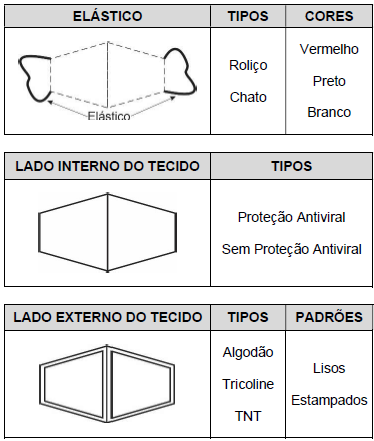
Com as especificações indicadas acima, a quantidade de máscaras diferentes que se pode confeccionar é igual a
Provas

Disciplina: Inglês (Língua Inglesa)
Banca: DIRENS Aeronáutica
Orgão: EPCAR
Answer question according to the text.
TEXT
Many parents are concerned with their child’s seemingly obsessive video game play. Fortnite, the most recent gaming phenomenon, has taken the world by storm and has parents asking if the shooter game is okay for kids. The short answer is yes, Fortnite is generally fine. Furthermore, parents can breathe easier knowing that research suggests gaming (on its own) does not cause disorders like addiction.
However, there’s more to the story. A comprehensive answer to the question of whether video games are prejudicial must take into account other factors, and parents need to understand why kids play, as well as when to worry and when to relax.
The word “addiction” gets tossed around quite a bit these days, but if it isn’t causing serious harm and disorder to daily function, it isn’t an addiction. Parents may worry that their kids are addicted, but if the children can pull themselves away from a game to join the family for a conversation over dinner and shows interest in other activities, like sports or socializing with friends, then they are not addicted.
Generally, parents panic when their kid’s video game playing comes at the expense of doing other things, like studying or helping around the house. But let’s be honest, kids have been avoiding these activities for ages. Equally true is the fact that parents have been complaining about their unhelpful children well before the first video game was plugged into its socket.
In fact, moderate video game play has been shown to be beneficial. A study conducted at Oxford by Dr. Andrew Przybylski revealed that playing about one hour per day improved psychological well-being, while when taken to an extreme, playing over three hours per day, was correlated with less well-being.
The real question should be what is it about the special attraction of gaming that makes it the preferred pastime of so many millions of kids? What makes it so difficult for even non-addicted kids to step away from video games sometimes? The answer has to do with the way games address basic psychological needs.
Fortnite, like any well-designed video game, satisfies what we are all looking for. According to Drs. Edward Deci and Richard Ryan, people need three things to flourish. We look for competence — the need for mastery, progression, achievement, and growth. We seek autonomy — the need for volition and freedom of control over our choice. And finally, we look for relatedness — the need to feel like we matter to others, and that others matter to us. Unfortunately, when considering the state of modern childhood, many kids aren’t getting enough of these three essential elements.
School, where kids spend most of their waking hours, is in many ways the antithesis of a place where kids feel competence, autonomy, and relatedness. There, kids are told what to do, where to be, what to think, what to wear, and what to eat. While some argue that discipline and control provide structure, it’s clear why teachers and students might struggle with motivation in the classroom.
Gamers feel competence when they practice strengths to reach their goals. In a game, players have the autonomy to call the shots, do what they want, and experiment with creative strategies to solve problems. Games are also social outlets where players can feel relatedness. In Fortnite, for example, players often meet in the virtual environment to chat and socialize, because doing so in the real world is often inconvenient or off limits.
Of course, none of this is to say video games are a good substitution — quite the opposite. No game
can give a child the feeling of competence that comes from accomplishing a difficult task or learning a new skill on their own accord. Fortnite can’t compete with the exhilaration that comes from the autonomy of exploring reality, where a child is free to ask questions and unlock mysteries in the real world. No social media site can give a kid the sense of relatedness, safety, and warmth that comes from an adult who loves that child unconditionally just the way they are, no matter what, and takes the time to tell them so.
Some kids suffer from gaming disorders, but such dependencies are often combined with preexisting conditions, including problems with impulse control. For most children, however, parents understanding the deeper truth behind what kids are getting out of games empowers them to take steps to give their children more of what they need. Video games are this generation’s outlet, and some kids use them as a tool to escape the same way some of us use our own flavor of dissociative devices to tune out reality for a while.
(Adapted from https://www.psychologytoday.com. Access on March 25th, 2021)
Glossary:
1. to toss around – to discuss possibilities or new ideas
2. to step away – to not become involved with something
3. to flourish – to grow or develop successfully
4. volition – the power to make your own decision
5. exhilaration – excitement and happiness
6. to call the shots – to be in position to decide
7. outlet – a way in which emotions, energy or abilities can be expressed or made use of
8. to tune out – to stop paying attention to something or someone
The underlined word in the passage Many parents are concerned with their child’s seemingly obsessive video game play, is closest in meaning to
Provas
TEXTO I
Eu, Etiqueta
Carlos Drummond de Andrade
Em minha calça está grudado um nome
Que não é meu de batismo ou de cartório,
Um nome...estranho.
Meu blusão traz lembrete de bebida
Que jamais pus na boca, nessa vida,
Em minha camiseta, a marca de cigarro
Que não fumo, até hoje não fumei.
Minhas meias falam de produtos
Que nunca experimentei
Mas são comunicados a meus pés.
Meu tênis é proclama colorido
(...)
Meu lenço, meu relógio, meu chaveiro,
Minha gravata e cinto e escova e pente,
Meu copo, minha xícara,
Minha toalha de banho e sabonete,
Meu isso, meu aquilo
Desde a cabeça ao bico dos sapatos,
São mensagens,
Letras falantes,
Gritos visuais,
Ordens de uso, abuso, reincidências,
Costume, hábito, premência,
Indispensabilidade,
E fazem de mim homem-anúncio itinerante,
Escravo da matéria anunciada.
Estou, estou na moda.
É duro andar na moda, ainda que a moda
Seja negar minha identidade,
Trocá-la por mil, açambarcando
Todas as marcas registradas,
Todos os logotipos do mercado.
Com que inocência demito-me de ser
Eu que antes era e me sabia
Tão diverso dos outros, tão mim mesmo,
Ser pensante sentinte e solidário
(...)
Agora sou anúncio
Ora vulgar ora bizarro.
Em língua nacional ou em qualquer língua
(Qualquer principalmente.)
E nisto me comparo, tiro glória
De minha anulação.
Não sou – vê lá – anúncio contratado.
Eu é que mimosamente pago
Para anunciar, para vender
Em bares festas praias pérgulas piscinas,
E bem à vista exibo esta etiqueta
Global no corpo que desiste
De ser veste e sandália de uma essência
Tão viva, independente,
(...)
Sou gravado de forma universal,
Saio da estamparia, não de casa,
Da vitrine me tiram, recolocam,
Objeto pulsante mas objeto
Que se oferece como signo dos outros
Objetos estáticos, tarifados.
Por me ostentar assim, tão orgulhoso
De ser não eu, mas artigo industrial,
Peço que meu nome retifiquem.
Já não me convém o título de homem.
Meu nome novo é Coisa.
Eu sou a Coisa, coisamente.
(Disponível em: http://portaldoprofessor.mec.gov.br/ficha TecnicaAula.html ?aula=52346. Acesso em 17/03/2021.)
Considere que o poema possa ser dividido em quatro partes, sendo o limite entre elas as reticências entre parênteses (...).
Analise essas partes e indique a qual delas se refere cada uma das afirmações abaixo.
( ) O próprio eu lírico, após a anulação de sua personalidade, transforma-se também em agente da máquina capitalista.
( ) Ocorre a separação entre a identidade do eu lírico e a forma como ele se apresenta no mundo, entre sua aparência e seu ser individual.
( ) A coisificação do ser humano alcança seu grau máximo com a perda do controle de suas ações, de sua privacidade e, por fim, de seu valor humano.
( ) Trata da sobreposição do ter ao ser, do sufocamento do eu pela ânsia de posse a que o homem é induzido pela sociedade consumista.
Provas
As divisões exatas de a e b por 4 e 6, respectivamente, são iguais.
Multiplicando-se o mínimo múltiplo comum (mmc) de a e b pelo máximo divisor comum (mdc) de a e b, obtém-se 1536
A diferença (a – b) é igual a
Provas
TEXTO II
Consumismo: impactos para o bolso e para o planeta
Carlos Eduardo Costa
Há vários anos, a sociedade moderna tem sido rotulada como a sociedade do consumo. A grande questão, na verdade, é que temos assistido à consolidação de uma sociedade consumista. E esse é o grande problema.
Em uma sociedade de consumo, as pessoas adquirem produtos e serviços necessários para sua vida. Consumismo, ao contrário, é o ato de comprar produtos e serviços sem necessidade e consciência. É compulsivo e descontrolado. Não basta se vestir, é preciso acompanhar todas as tendências da moda. Não é suficiente o conforto proporcionado por alguns produtos tecnológicos, é necessário possuir os últimos lançamentos. Numa sociedade consumista, o consumidor é permanentemente incentivado a adquirir novos produtos.
E essa onda consumista traz graves consequências para a nossa sociedade. No plano individual, um grande número de pessoas se encontra em uma situação de endividamento extremo estimulado pelo desejo de consumo. (...).
Já no plano coletivo, é o nosso planeta que sofre com o consumismo. O meio ambiente é diretamente afetado, pois o consumo desenfreado e o desperdício, muitas vezes causado pela falta de conhecimento, requerem o uso de mais matérias-primas, e, consequentemente, também geram grande quantidade de resíduos. Por causa disso, os ambientalistas acreditam que o nosso planeta está gravemente doente, e alguns dos sintomas já são sentidos e estão piorando as condições de vida na Terra, como, por exemplo, o aquecimento global. (...)
(Disponível em: https://www.campograndenews.com.br/artigos /consumismo-impactos-para-o-bolso-e-para-o-planeta. Acesso em 13/03/2021)
Considerando a construção de vozes verbais, analise os itens a seguir e assinale aquele em que a alteração proposta está INCORRETA:
Provas
TEXTO I
Eu, Etiqueta
Carlos Drummond de Andrade
Em minha calça está grudado um nome
Que não é meu de batismo ou de cartório,
Um nome...estranho.
Meu blusão traz lembrete de bebida
Que jamais pus na boca, nessa vida,
Em minha camiseta, a marca de cigarro
Que não fumo, até hoje não fumei.
Minhas meias falam de produtos
Que nunca experimentei
Mas são comunicados a meus pés.
Meu tênis é proclama colorido
(...)
Meu lenço, meu relógio, meu chaveiro,
Minha gravata e cinto e escova e pente,
Meu copo, minha xícara,
Minha toalha de banho e sabonete,
Meu isso, meu aquilo
Desde a cabeça ao bico dos sapatos,
São mensagens,
Letras falantes,
Gritos visuais,
Ordens de uso, abuso, reincidências,
Costume, hábito, premência,
Indispensabilidade,
E fazem de mim homem-anúncio itinerante,
Escravo da matéria anunciada.
Estou, estou na moda.
É duro andar na moda, ainda que a moda
Seja negar minha identidade,
Trocá-la por mil, açambarcando
Todas as marcas registradas,
Todos os logotipos do mercado.
Com que inocência demito-me de ser
Eu que antes era e me sabia
Tão diverso dos outros, tão mim mesmo,
Ser pensante sentinte e solidário
(...)
Agora sou anúncio
Ora vulgar ora bizarro.
Em língua nacional ou em qualquer língua
(Qualquer principalmente.)
E nisto me comparo, tiro glória
De minha anulação.
Não sou – vê lá – anúncio contratado.
Eu é que mimosamente pago
Para anunciar, para vender
Em bares festas praias pérgulas piscinas,
E bem à vista exibo esta etiqueta
Global no corpo que desiste
De ser veste e sandália de uma essência
Tão viva, independente,
(...)
Sou gravado de forma universal,
Saio da estamparia, não de casa,
Da vitrine me tiram, recolocam,
Objeto pulsante mas objeto
Que se oferece como signo dos outros
Objetos estáticos, tarifados.
Por me ostentar assim, tão orgulhoso
De ser não eu, mas artigo industrial,
Peço que meu nome retifiquem.
Já não me convém o título de homem.
Meu nome novo é Coisa.
Eu sou a Coisa, coisamente.
(Disponível em: http://portaldoprofessor.mec.gov.br/ficha TecnicaAula.html ?aula=52346. Acesso em 17/03/2021.)
Sobre o texto I, é correto afirmar que
Provas
Disciplina: Inglês (Língua Inglesa)
Banca: DIRENS Aeronáutica
Orgão: EPCAR
Answer question according to the text.
TEXT
Many parents are concerned with their child’s seemingly obsessive video game play. Fortnite, the most recent gaming phenomenon, has taken the world by storm and has parents asking if the shooter game is okay for kids. The short answer is yes, Fortnite is generally fine. Furthermore, parents can breathe easier knowing that research suggests gaming (on its own) does not cause disorders like addiction.
However, there’s more to the story. A comprehensive answer to the question of whether video games are prejudicial must take into account other factors, and parents need to understand why kids play, as well as when to worry and when to relax.
The word “addiction” gets tossed around quite a bit these days, but if it isn’t causing serious harm and disorder to daily function, it isn’t an addiction. Parents may worry that their kids are addicted, but if the children can pull themselves away from a game to join the family for a conversation over dinner and shows interest in other activities, like sports or socializing with friends, then they are not addicted.
Generally, parents panic when their kid’s video game playing comes at the expense of doing other things, like studying or helping around the house. But let’s be honest, kids have been avoiding these activities for ages. Equally true is the fact that parents have been complaining about their unhelpful children well before the first video game was plugged into its socket.
In fact, moderate video game play has been shown to be beneficial. A study conducted at Oxford by Dr. Andrew Przybylski revealed that playing about one hour per day improved psychological well-being, while when taken to an extreme, playing over three hours per day, was correlated with less well-being.
The real question should be what is it about the special attraction of gaming that makes it the preferred pastime of so many millions of kids? What makes it so difficult for even non-addicted kids to step away from video games sometimes? The answer has to do with the way games address basic psychological needs.
Fortnite, like any well-designed video game, satisfies what we are all looking for. According to Drs. Edward Deci and Richard Ryan, people need three things to flourish. We look for competence — the need for mastery, progression, achievement, and growth. We seek autonomy — the need for volition and freedom of control over our choice. And finally, we look for relatedness — the need to feel like we matter to others, and that others matter to us. Unfortunately, when considering the state of modern childhood, many kids aren’t getting enough of these three essential elements.
School, where kids spend most of their waking hours, is in many ways the antithesis of a place where kids feel competence, autonomy, and relatedness. There, kids are told what to do, where to be, what to think, what to wear, and what to eat. While some argue that discipline and control provide structure, it’s clear why teachers and students might struggle with motivation in the classroom.
Gamers feel competence when they practice strengths to reach their goals. In a game, players have the autonomy to call the shots, do what they want, and experiment with creative strategies to solve problems. Games are also social outlets where players can feel relatedness. In Fortnite, for example, players often meet in the virtual environment to chat and socialize, because doing so in the real world is often inconvenient or off limits.
Of course, none of this is to say video games are a good substitution — quite the opposite. No game
can give a child the feeling of competence that comes from accomplishing a difficult task or learning a new skill on their own accord. Fortnite can’t compete with the exhilaration that comes from the autonomy of exploring reality, where a child is free to ask questions and unlock mysteries in the real world. No social media site can give a kid the sense of relatedness, safety, and warmth that comes from an adult who loves that child unconditionally just the way they are, no matter what, and takes the time to tell them so.
Some kids suffer from gaming disorders, but such dependencies are often combined with preexisting conditions, including problems with impulse control. For most children, however, parents understanding the deeper truth behind what kids are getting out of games empowers them to take steps to give their children more of what they need. Video games are this generation’s outlet, and some kids use them as a tool to escape the same way some of us use our own flavor of dissociative devices to tune out reality for a while.
(Adapted from https://www.psychologytoday.com. Access on March 25th, 2021)
Glossary:
1. to toss around – to discuss possibilities or new ideas
2. to step away – to not become involved with something
3. to flourish – to grow or develop successfully
4. volition – the power to make your own decision
5. exhilaration – excitement and happiness
6. to call the shots – to be in position to decide
7. outlet – a way in which emotions, energy or abilities can be expressed or made use of
8. to tune out – to stop paying attention to something or someone
The underlined word in the passage No social media site can give a kid the sense of relatedness, safety, and warmth that comes from an adult who loves that child unconditionally just the way they are, no matter what, and takes the time to tell them so can be replaced by
Provas
Uma obra será realizada nas imediações da cidade de Barbacena, MG. Inicialmente, a empresa contratada fez uma planilha com a previsão de todos os gastos com a execução dessa obra.
Assim, a empresa planejou executar o previsto em 16 dias com 25 operários trabalhando 6 horas por dia.
Contudo, o engenheiro verificou que o terreno apresentava o triplo da dificuldade prevista para a obra.
A empresa, então, replanejou a execução e dobrou o número de operários para que trabalhassem 8 horas por dia.
Se for cumprido esse novo planejamento, então o prazo em que essa obra ficará pronta, em dias, será igual a
Provas
TEXTO II
Consumismo: impactos para o bolso e para o planeta
Carlos Eduardo Costa
Há vários anos, a sociedade moderna tem sido rotulada como a sociedade do consumo. A grande questão, na verdade, é que temos assistido à consolidação de uma sociedade consumista. E esse é o grande problema.
Em uma sociedade de consumo, as pessoas adquirem produtos e serviços necessários para sua vida. Consumismo, ao contrário, é o ato de comprar produtos e serviços sem necessidade e consciência. É compulsivo e descontrolado. Não basta se vestir, é preciso acompanhar todas as tendências da moda. Não é suficiente o conforto proporcionado por alguns produtos tecnológicos, é necessário possuir os últimos lançamentos. Numa sociedade consumista, o consumidor é permanentemente incentivado a adquirir novos produtos.
E essa onda consumista traz graves consequências para a nossa sociedade. No plano individual, um grande número de pessoas se encontra em uma situação de endividamento extremo estimulado pelo desejo de consumo. (...).
Já no plano coletivo, é o nosso planeta que sofre com o consumismo. O meio ambiente é diretamente afetado, pois o consumo desenfreado e o desperdício, muitas vezes causado pela falta de conhecimento, requerem o uso de mais matérias-primas, e, consequentemente, também geram grande quantidade de resíduos. Por causa disso, os ambientalistas acreditam que o nosso planeta está gravemente doente, e alguns dos sintomas já são sentidos e estão piorando as condições de vida na Terra, como, por exemplo, o aquecimento global. (...)
(Disponível em: https://www.campograndenews.com.br/artigos /consumismo-impactos-para-o-bolso-e-para-o-planeta. Acesso em 13/03/2021)
Segundo o texto II, é correto afirmar que
Provas
Disciplina: Inglês (Língua Inglesa)
Banca: DIRENS Aeronáutica
Orgão: EPCAR
Answer question according to the text.
TEXT
Many parents are concerned with their child’s seemingly obsessive video game play. Fortnite, the most recent gaming phenomenon, has taken the world by storm and has parents asking if the shooter game is okay for kids. The short answer is yes, Fortnite is generally fine. Furthermore, parents can breathe easier knowing that research suggests gaming (on its own) does not cause disorders like addiction.
However, there’s more to the story. A comprehensive answer to the question of whether video games are prejudicial must take into account other factors, and parents need to understand why kids play, as well as when to worry and when to relax.
The word “addiction” gets tossed around quite a bit these days, but if it isn’t causing serious harm and disorder to daily function, it isn’t an addiction. Parents may worry that their kids are addicted, but if the children can pull themselves away from a game to join the family for a conversation over dinner and shows interest in other activities, like sports or socializing with friends, then they are not addicted.
Generally, parents panic when their kid’s video game playing comes at the expense of doing other things, like studying or helping around the house. But let’s be honest, kids have been avoiding these activities for ages. Equally true is the fact that parents have been complaining about their unhelpful children well before the first video game was plugged into its socket.
In fact, moderate video game play has been shown to be beneficial. A study conducted at Oxford by Dr. Andrew Przybylski revealed that playing about one hour per day improved psychological well-being, while when taken to an extreme, playing over three hours per day, was correlated with less well-being.
The real question should be what is it about the special attraction of gaming that makes it the preferred pastime of so many millions of kids? What makes it so difficult for even non-addicted kids to step away from video games sometimes? The answer has to do with the way games address basic psychological needs.
Fortnite, like any well-designed video game, satisfies what we are all looking for. According to Drs. Edward Deci and Richard Ryan, people need three things to flourish. We look for competence — the need for mastery, progression, achievement, and growth. We seek autonomy — the need for volition and freedom of control over our choice. And finally, we look for relatedness — the need to feel like we matter to others, and that others matter to us. Unfortunately, when considering the state of modern childhood, many kids aren’t getting enough of these three essential elements.
School, where kids spend most of their waking hours, is in many ways the antithesis of a place where kids feel competence, autonomy, and relatedness. There, kids are told what to do, where to be, what to think, what to wear, and what to eat. While some argue that discipline and control provide structure, it’s clear why teachers and students might struggle with motivation in the classroom.
Gamers feel competence when they practice strengths to reach their goals. In a game, players have the autonomy to call the shots, do what they want, and experiment with creative strategies to solve problems. Games are also social outlets where players can feel relatedness. In Fortnite, for example, players often meet in the virtual environment to chat and socialize, because doing so in the real world is often inconvenient or off limits.
Of course, none of this is to say video games are a good substitution — quite the opposite. No game
can give a child the feeling of competence that comes from accomplishing a difficult task or learning a new skill on their own accord. Fortnite can’t compete with the exhilaration that comes from the autonomy of exploring reality, where a child is free to ask questions and unlock mysteries in the real world. No social media site can give a kid the sense of relatedness, safety, and warmth that comes from an adult who loves that child unconditionally just the way they are, no matter what, and takes the time to tell them so.
Some kids suffer from gaming disorders, but such dependencies are often combined with preexisting conditions, including problems with impulse control. For most children, however, parents understanding the deeper truth behind what kids are getting out of games empowers them to take steps to give their children more of what they need. Video games are this generation’s outlet, and some kids use them as a tool to escape the same way some of us use our own flavor of dissociative devices to tune out reality for a while.
(Adapted from https://www.psychologytoday.com. Access on March 25th, 2021)
Glossary:
1. to toss around – to discuss possibilities or new ideas
2. to step away – to not become involved with something
3. to flourish – to grow or develop successfully
4. volition – the power to make your own decision
5. exhilaration – excitement and happiness
6. to call the shots – to be in position to decide
7. outlet – a way in which emotions, energy or abilities can be expressed or made use of
8. to tune out – to stop paying attention to something or someone
The phrase off limits is closest in meaning to
Provas
Caderno Container