Foram encontradas 752 questões.
Leia o texto, para responder à questão.
The disjunction between method as conceptualized by theorists and method as conducted by teachers is the direct consequence of the inherent limitations of the concept of method itself. First and foremost, methods are based on idealized concepts geared toward idealized contexts. Since language learning and teaching needs, wants, and situations are unpredictably numerous, no idealized method can visualize all the variables in advance in order to provide situation-specific suggestions that practicing teachers need to tackle the challenges they are confronted with every day of their professional lives.
Not anchored in any specific learning and teaching context, and caught up in the whirlwind of fashion, methods tend to wildly drift from one theoretical extreme to the other. At one time, grammatical drills were considered the right way to teach; at another, they were given up in favor of communicative tasks. At one time, explicit error correction was not only favored but considered necessary; at another, it was frowned upon. These extreme swings create conditions where certain aspects of learning and teaching get overly emphasized while certain others are utterly ignored, depending on which way the pendulum swings.
The limitations of the concept of method gradually led to statements such as “the term method is a label without substance” (Clarke, 1983, p. 109), and that it has “diminished rather than enhanced our understanding of language teaching” (Pennycook, 1989, p. 597). This realization has resulted in a widespread dissatisfaction with the concept of method.
(Kumaravadivelu, B. Beyond Methods: Macrostrategies for language teaching. Haven and London: Yale University Press. 2003. Adaptado)
In the text, the author
Provas

Leia os diálogos, para responder à questão.
Text 1: Making a doctor’s appointment
(telephone rings)
Patient: Could I make an appointment to see the doctor,
please?
Receptionist: Certainly, who do you usually see?
Patient: Dr Cullen.
Receptionist: I’m sorry but Dr Cullen has got patients all day.
Would Dr Maley do?
Patient: Sure.
Receptionist: OK then. When would you like to come?
Patient: Could I come at four o’clock?
Receptionist: Four o’clock? Fine. Could I have your name,
please?
(Nunan and Lockwood 1991)
Text 2: Confirming an appointment with the doctor
(telephone rings)
Receptionist: Doctor’s rooms, can you hold the line for a
moment?
Patient: Yes.
Receptionist: (pause) Thanks.
Receptionist: Hello.
Patient: Hello.
Patient: That’s all right … I’m just calling to confirm an
appointment with Dr X for the first of October.
Receptionist: Oh …
Patient: Because it was so far in advance I was told to.
Receptionist: I see what you mean, to see if she’s going to be
in that day.
Patient: That’s right.
Receptionist: Oh we may not know yet.
Patient: Oh I see.
Receptionist: First of October … Edith … yes.
Patient: Yes.
Receptionist: There she is. OK.. What’s your name?
Patient: At nine fift…
Receptionist: Got it got it.
(Burns, Joyce and Gollin 1996)
(Carter, Ronald et al. Telling tails: grammar, the spoken language and materials development. In Tomlinson, B. (ed). Material Development in Language Teaching. Cambridge: CUP. 1998/2011. Adaptado)
A teacher who believes firmly in language-centered approaches would state that
Provas
Leia os diálogos, para responder à questão.
Text 1: Making a doctor’s appointment
(telephone rings)
Patient: Could I make an appointment to see the doctor,
please?
Receptionist: Certainly, who do you usually see?
Patient: Dr Cullen.
Receptionist: I’m sorry but Dr Cullen has got patients all day.
Would Dr Maley do?
Patient: Sure.
Receptionist: OK then. When would you like to come?
Patient: Could I come at four o’clock?
Receptionist: Four o’clock? Fine. Could I have your name,
please?
(Nunan and Lockwood 1991)
Text 2: Confirming an appointment with the doctor
(telephone rings)
Receptionist: Doctor’s rooms, can you hold the line for a
moment?
Patient: Yes.
Receptionist: (pause) Thanks.
Receptionist: Hello.
Patient: Hello.
Patient: That’s all right … I’m just calling to confirm an
appointment with Dr X for the first of October.
Receptionist: Oh …
Patient: Because it was so far in advance I was told to.
Receptionist: I see what you mean, to see if she’s going to be
in that day.
Patient: That’s right.
Receptionist: Oh we may not know yet.
Patient: Oh I see.
Receptionist: First of October … Edith … yes.
Patient: Yes.
Receptionist: There she is. OK.. What’s your name?
Patient: At nine fift…
Receptionist: Got it got it.
(Burns, Joyce and Gollin 1996)
(Carter, Ronald et al. Telling tails: grammar, the spoken language and materials development. In Tomlinson, B. (ed). Material Development in Language Teaching. Cambridge: CUP. 1998/2011. Adaptado)
Compare the two dialogues. A feature that marks the second dialogue off as naturally occurring discourse is the presence of
Provas
Considere a seguinte gravura e seu texto para responder à questão.
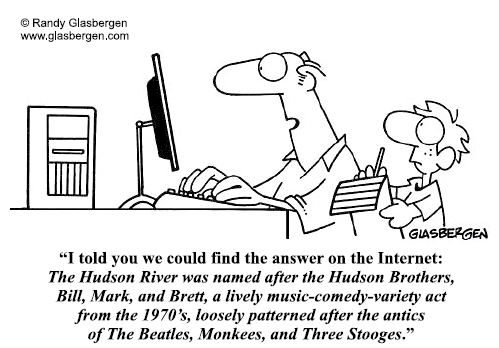
(www.glasbergen.com)
The content of the answer provided by the internet could be an integral part of an English reading class to discuss issues directly related to the
Provas
Leia o texto para responder à questão.
AI tech products at schools and universities
Every few years, an emerging technology shows up at the doorstep of schools and universities promising to transform education. The most recent? Technologies powered by generative artificial intelligence, also known as GenAI. These technologies are sold on the potential they hold for education. As optimistic as these visions of the future may be, the realities of educational technology over the past few decades have not lived up to their promises, as shown by rigorous investigations of technology after technology – from mechanical machines to computers, from mobile devices to massive open online courses.
Yet, educational technology evangelists forget, remain unaware or simply do not care. Or they may be overly optimistic that the next new technology will be different than before.
Here are four questions I believe should be answered before school officials purchase any technology that relies on AI.
1. Is there evidence that a product works?
Compelling evidence of the effect of GenAI products on educational outcomes does not yet exist. Therefore, and unfortunately, it is the consumer who carries the onus of appraising products. My recommendation is: use multiple means for assessing product effectiveness.
2. [...]
Oftentimes, there is a divide between what entrepreneurs build and educators need. For example, one shortcoming of the One Laptop Per Child program – an ambitious program that sought to put small, cheap but sturdy laptops in the hands of children from families of lesser means – is that the laptops were designed for idealized younger versions of the developers themselves, not so much the children who were actually using them.
Initiatives have been implemented in which entrepreneurs and educators work together to improve educational technology products. Some products are developed with input from students and educators. Questions to ask vendors might be: In what ways were educators and learners included? How did their input influence the final product?
3. What educational beliefs shape this product?
Educational technology is rarely neutral. It is designed by people, and people have beliefs, experiences, ideologies and biases that shape the technologies they develop.
It is important for educational technology products to rely on what educators have experienced as relevant to the students they meet in their real-life classes. Questions to ask include: What pedagogical principles guide this product? What particular learning does it support or discourage?
4. Does the product level the playing field?
Finally, people ought to ask how a product addresses educational inequities. Is this technology going to help reduce the learning gaps between different groups of learners? Or is it one that aids some learners – often those who are already successful or privileged – but not others? Is it adopting an asset-based or a deficit-based approach to addressing inequities?
Educational technology vendors and startups may not have answers to all of these questions. But they should still be asked and considered. Answers could lead to improved products.
(George Veletsianos. https://theconversation.com, 15.04.24. Adaptado)
Words ending in –ing may play a variety of roles in the English sentence. The word in bold is an adjective in alternative:
Provas
Leia o texto para responder à questão.
AI tech products at schools and universities
Every few years, an emerging technology shows up at the doorstep of schools and universities promising to transform education. The most recent? Technologies powered by generative artificial intelligence, also known as GenAI. These technologies are sold on the potential they hold for education. As optimistic as these visions of the future may be, the realities of educational technology over the past few decades have not lived up to their promises, as shown by rigorous investigations of technology after technology – from mechanical machines to computers, from mobile devices to massive open online courses.
Yet, educational technology evangelists forget, remain unaware or simply do not care. Or they may be overly optimistic that the next new technology will be different than before.
Here are four questions I believe should be answered before school officials purchase any technology that relies on AI.
1. Is there evidence that a product works?
Compelling evidence of the effect of GenAI products on educational outcomes does not yet exist. Therefore, and unfortunately, it is the consumer who carries the onus of appraising products. My recommendation is: use multiple means for assessing product effectiveness.
2. [...]
Oftentimes, there is a divide between what entrepreneurs build and educators need. For example, one shortcoming of the One Laptop Per Child program – an ambitious program that sought to put small, cheap but sturdy laptops in the hands of children from families of lesser means – is that the laptops were designed for idealized younger versions of the developers themselves, not so much the children who were actually using them.
Initiatives have been implemented in which entrepreneurs and educators work together to improve educational technology products. Some products are developed with input from students and educators. Questions to ask vendors might be: In what ways were educators and learners included? How did their input influence the final product?
3. What educational beliefs shape this product?
Educational technology is rarely neutral. It is designed by people, and people have beliefs, experiences, ideologies and biases that shape the technologies they develop.
It is important for educational technology products to rely on what educators have experienced as relevant to the students they meet in their real-life classes. Questions to ask include: What pedagogical principles guide this product? What particular learning does it support or discourage?
4. Does the product level the playing field?
Finally, people ought to ask how a product addresses educational inequities. Is this technology going to help reduce the learning gaps between different groups of learners? Or is it one that aids some learners – often those who are already successful or privileged – but not others? Is it adopting an asset-based or a deficit-based approach to addressing inequities?
Educational technology vendors and startups may not have answers to all of these questions. But they should still be asked and considered. Answers could lead to improved products.
(George Veletsianos. https://theconversation.com, 15.04.24. Adaptado)
Leia as duas perguntas e a afirmação a seguir.
– “In what ways were educators or learners included?” (parágrafo 6)
– “How did their input influence the final product?” (parágrafo 6)
– “It is important for educational technology products to rely on what educators have experienced as relevant to the students they meet in their real-life classes.” (parágrafo 7)
Em seu conjunto, as três citações refletem a preocupação do autor do texto em valorizar o professor no que concerne
Provas
Leia o texto para responder à questão.
AI tech products at schools and universities
Every few years, an emerging technology shows up at the doorstep of schools and universities promising to transform education. The most recent? Technologies powered by generative artificial intelligence, also known as GenAI. These technologies are sold on the potential they hold for education. As optimistic as these visions of the future may be, the realities of educational technology over the past few decades have not lived up to their promises, as shown by rigorous investigations of technology after technology – from mechanical machines to computers, from mobile devices to massive open online courses.
Yet, educational technology evangelists forget, remain unaware or simply do not care. Or they may be overly optimistic that the next new technology will be different than before.
Here are four questions I believe should be answered before school officials purchase any technology that relies on AI.
1. Is there evidence that a product works?
Compelling evidence of the effect of GenAI products on educational outcomes does not yet exist. Therefore, and unfortunately, it is the consumer who carries the onus of appraising products. My recommendation is: use multiple means for assessing product effectiveness.
2. [...]
Oftentimes, there is a divide between what entrepreneurs build and educators need. For example, one shortcoming of the One Laptop Per Child program – an ambitious program that sought to put small, cheap but sturdy laptops in the hands of children from families of lesser means – is that the laptops were designed for idealized younger versions of the developers themselves, not so much the children who were actually using them.
Initiatives have been implemented in which entrepreneurs and educators work together to improve educational technology products. Some products are developed with input from students and educators. Questions to ask vendors might be: In what ways were educators and learners included? How did their input influence the final product?
3. What educational beliefs shape this product?
Educational technology is rarely neutral. It is designed by people, and people have beliefs, experiences, ideologies and biases that shape the technologies they develop.
It is important for educational technology products to rely on what educators have experienced as relevant to the students they meet in their real-life classes. Questions to ask include: What pedagogical principles guide this product? What particular learning does it support or discourage?
4. Does the product level the playing field?
Finally, people ought to ask how a product addresses educational inequities. Is this technology going to help reduce the learning gaps between different groups of learners? Or is it one that aids some learners – often those who are already successful or privileged – but not others? Is it adopting an asset-based or a deficit-based approach to addressing inequities?
Educational technology vendors and startups may not have answers to all of these questions. But they should still be asked and considered. Answers could lead to improved products.
(George Veletsianos. https://theconversation.com, 15.04.24. Adaptado)
In a more formal register, the fragment “Therefore, and unfortunately”, in the answer to question 1, could be adequately replaced, without meaning change, by:
Provas
Leia o texto para responder à questão.
AI tech products at schools and universities
Every few years, an emerging technology shows up at the doorstep of schools and universities promising to transform education. The most recent? Technologies powered by generative artificial intelligence, also known as GenAI. These technologies are sold on the potential they hold for education. As optimistic as these visions of the future may be, the realities of educational technology over the past few decades have not lived up to their promises, as shown by rigorous investigations of technology after technology – from mechanical machines to computers, from mobile devices to massive open online courses.
Yet, educational technology evangelists forget, remain unaware or simply do not care. Or they may be overly optimistic that the next new technology will be different than before.
Here are four questions I believe should be answered before school officials purchase any technology that relies on AI.
1. Is there evidence that a product works?
Compelling evidence of the effect of GenAI products on educational outcomes does not yet exist. Therefore, and unfortunately, it is the consumer who carries the onus of appraising products. My recommendation is: use multiple means for assessing product effectiveness.
2. [...]
Oftentimes, there is a divide between what entrepreneurs build and educators need. For example, one shortcoming of the One Laptop Per Child program – an ambitious program that sought to put small, cheap but sturdy laptops in the hands of children from families of lesser means – is that the laptops were designed for idealized younger versions of the developers themselves, not so much the children who were actually using them.
Initiatives have been implemented in which entrepreneurs and educators work together to improve educational technology products. Some products are developed with input from students and educators. Questions to ask vendors might be: In what ways were educators and learners included? How did their input influence the final product?
3. What educational beliefs shape this product?
Educational technology is rarely neutral. It is designed by people, and people have beliefs, experiences, ideologies and biases that shape the technologies they develop.
It is important for educational technology products to rely on what educators have experienced as relevant to the students they meet in their real-life classes. Questions to ask include: What pedagogical principles guide this product? What particular learning does it support or discourage?
4. Does the product level the playing field?
Finally, people ought to ask how a product addresses educational inequities. Is this technology going to help reduce the learning gaps between different groups of learners? Or is it one that aids some learners – often those who are already successful or privileged – but not others? Is it adopting an asset-based or a deficit-based approach to addressing inequities?
Educational technology vendors and startups may not have answers to all of these questions. But they should still be asked and considered. Answers could lead to improved products.
(George Veletsianos. https://theconversation.com, 15.04.24. Adaptado)
Observe a palavra destacada em negrito nas duas frases a seguir:
I. “Yet, educational technologist evangelists forget, remain unaware or simply do not care.” (parágrafo 2)
II. “Compelling evidence of the effect of GenAI products on educational outcomes does not yet exist” (parágrafo 5).
O uso da palavra yet está corretamente explicado na alternativa:
Provas
Leia o texto para responder à questão.
AI tech products at schools and universities
Every few years, an emerging technology shows up at the doorstep of schools and universities promising to transform education. The most recent? Technologies powered by generative artificial intelligence, also known as GenAI. These technologies are sold on the potential they hold for education. As optimistic as these visions of the future may be, the realities of educational technology over the past few decades have not lived up to their promises, as shown by rigorous investigations of technology after technology – from mechanical machines to computers, from mobile devices to massive open online courses.
Yet, educational technology evangelists forget, remain unaware or simply do not care. Or they may be overly optimistic that the next new technology will be different than before.
Here are four questions I believe should be answered before school officials purchase any technology that relies on AI.
1. Is there evidence that a product works?
Compelling evidence of the effect of GenAI products on educational outcomes does not yet exist. Therefore, and unfortunately, it is the consumer who carries the onus of appraising products. My recommendation is: use multiple means for assessing product effectiveness.
2. [...]
Oftentimes, there is a divide between what entrepreneurs build and educators need. For example, one shortcoming of the One Laptop Per Child program – an ambitious program that sought to put small, cheap but sturdy laptops in the hands of children from families of lesser means – is that the laptops were designed for idealized younger versions of the developers themselves, not so much the children who were actually using them.
Initiatives have been implemented in which entrepreneurs and educators work together to improve educational technology products. Some products are developed with input from students and educators. Questions to ask vendors might be: In what ways were educators and learners included? How did their input influence the final product?
3. What educational beliefs shape this product?
Educational technology is rarely neutral. It is designed by people, and people have beliefs, experiences, ideologies and biases that shape the technologies they develop.
It is important for educational technology products to rely on what educators have experienced as relevant to the students they meet in their real-life classes. Questions to ask include: What pedagogical principles guide this product? What particular learning does it support or discourage?
4. Does the product level the playing field?
Finally, people ought to ask how a product addresses educational inequities. Is this technology going to help reduce the learning gaps between different groups of learners? Or is it one that aids some learners – often those who are already successful or privileged – but not others? Is it adopting an asset-based or a deficit-based approach to addressing inequities?
Educational technology vendors and startups may not have answers to all of these questions. But they should still be asked and considered. Answers could lead to improved products.
(George Veletsianos. https://theconversation.com, 15.04.24. Adaptado)
In the first sentence of the second paragraph we find an example of ellipsis. Commonly found in oral or written texts, ellipsis can be described as
Provas
Leia o texto para responder à questão.
AI tech products at schools and universities
Every few years, an emerging technology shows up at the doorstep of schools and universities promising to transform education. The most recent? Technologies powered by generative artificial intelligence, also known as GenAI. These technologies are sold on the potential they hold for education. As optimistic as these visions of the future may be, the realities of educational technology over the past few decades have not lived up to their promises, as shown by rigorous investigations of technology after technology – from mechanical machines to computers, from mobile devices to massive open online courses.
Yet, educational technology evangelists forget, remain unaware or simply do not care. Or they may be overly optimistic that the next new technology will be different than before.
Here are four questions I believe should be answered before school officials purchase any technology that relies on AI.
1. Is there evidence that a product works?
Compelling evidence of the effect of GenAI products on educational outcomes does not yet exist. Therefore, and unfortunately, it is the consumer who carries the onus of appraising products. My recommendation is: use multiple means for assessing product effectiveness.
2. [...]
Oftentimes, there is a divide between what entrepreneurs build and educators need. For example, one shortcoming of the One Laptop Per Child program – an ambitious program that sought to put small, cheap but sturdy laptops in the hands of children from families of lesser means – is that the laptops were designed for idealized younger versions of the developers themselves, not so much the children who were actually using them.
Initiatives have been implemented in which entrepreneurs and educators work together to improve educational technology products. Some products are developed with input from students and educators. Questions to ask vendors might be: In what ways were educators and learners included? How did their input influence the final product?
3. What educational beliefs shape this product?
Educational technology is rarely neutral. It is designed by people, and people have beliefs, experiences, ideologies and biases that shape the technologies they develop.
It is important for educational technology products to rely on what educators have experienced as relevant to the students they meet in their real-life classes. Questions to ask include: What pedagogical principles guide this product? What particular learning does it support or discourage?
4. Does the product level the playing field?
Finally, people ought to ask how a product addresses educational inequities. Is this technology going to help reduce the learning gaps between different groups of learners? Or is it one that aids some learners – often those who are already successful or privileged – but not others? Is it adopting an asset-based or a deficit-based approach to addressing inequities?
Educational technology vendors and startups may not have answers to all of these questions. But they should still be asked and considered. Answers could lead to improved products.
(George Veletsianos. https://theconversation.com, 15.04.24. Adaptado)
Another very relevant reading ability to be developed in students is that of recognizing the gist of a text, or of a self-contained part of a text. A teacher’s instruction to help develop this ability would include asking the students to reread subitem 2 and provide a subtitle that both shows their understanding of the excerpt and corresponds to the way the text has been structured.
One correct subtitle would be:
Provas
Caderno Container