Foram encontradas 962 questões.
A avaliação tradicional ainda se faz muito presente no cotidiano das escolas, sendo empregada no sentido de medir, selecionar para a atribuição de uma nota ou um conceito. A nota é utilizada como instrumento de controle para manter a disciplina em sala de sala e tentar motivar o aluno a estudar a fim de conseguir ser aprovado ao final de um ano letivo. Assinale a alternativa que descreve corretamente as características da concepção de avaliação supracitada.
Provas

Question based on the following passage
The real reason Apple and Google want you to use your phone less
NIR EYAL MAY 19, 2019
If tech is “hijacking your brain” with their “irresistible” products, as some tech critics claim, why are these companies now acting against their own interests?
This week Apple follows Google by announcing features to help people cut back on their tech use. Why would the companies that make your phone want you to use it less? If tech is “hijacking your brain” with their “irresistible” products, as some tech critics claim, why are these companies now acting against their own interests? Perhaps the tech giants have had a change of heart or have been persuaded by public pressure to change their ways? Hardly. I studied the sophisticated psychology these companies deploy to keep people hooked and wrote a book about how they do it. At first glance, it appears their business model would benefit from addiction. The more you use your phone, the more money they make through the apps you buy and the ads you view.
However, the addiction story falls short when considering the long-term interests of these companies. Apple and Google are making it easier for consumers to cut back on phone use because it is in their interest to do so. In this case, what’s good for the user is also good for these companies’ bottom lines. Apple and Google don’t want you to get addicted. Addiction is a compulsive harmful behavior. Rather, they’d prefer you form healthy habits with your digital devices.
Consider why you wear a seatbelt. In 1968, the Federal Government mandated that seat belts come equipped in all cars. However, nineteen years before any such regulation, American car makers started offering seat belts as a feature. The laws came well after car makers started offering seatbelts because that’s what consumers wanted. Car makers who sold safer cars sold more.
Similarly, thousands of third-party apps have given smartphone owners ways to moderate tech use with tools to help them monitor how much time they spend online, turn off access to certain sites, and reduce digital distraction — tools very similar to what Apple and Google recently announced. I started writing about this burgeoning trend, in what I called “attention retention” devices, back in early 2015 and today there are more digital wellness products than ever.
As they often do with successful apps built on their platforms, Apple and Google took note of what consumers wanted and decided to incorporate these features as standard — just as car makers did with seat belts in the 1950s. They also went beyond what app makers can do by adding features only the operating system makers can offer, like batch notifications to reduce the frequency of intraday interruptions and the ability to put the phone in “shush” mode by flipping it over.
The history of innovation is littered with examples of new technologies causing unintended harm. As cultural theorist Paul Virilio said, “When you invent the ship, you also invent the shipwreck.” Although the devices these modern shipbuilders make certainly have potential negative consequences, like overuse, it’s also in their interests to make their products less harmful.
With few exceptions, when a product harms people, consumers tend to use it less often or find better alternatives. The feature fight between these two tech rivals benefits everyone. The move to help users create healthy habits with their devices is an example of competition making products better.
Although they are certainly designed to be persuasive and user-friendly, we aren’t slaves to our technologies and it behooves us to stop thinking we’re powerless. The tech companies are taking steps to help users rein in device overuse. Now it’s our turn to put these features to use, buckle down, and buckle up
(Available in: https://www.theladders.com/career-advice/the-reason-apple-and-google-want-you-to-use-your-phone-less. Accessed on May 19th, 2019. Adapted.)
The author mentions Paul Virilio's statement, “When you invent the ship, you also invent the shipwreck”, in paragraph 6, for which of the following reasons?
Provas
Question based on the following passage:
The real reason Apple and Google want you to use your phone less
NIR EYAL MAY 19, 2019
If tech is “hijacking your brain” with their “irresistible” products, as some tech critics claim, why are these companies now acting against their own interests?
This week Apple follows Google by announcing features to help people cut back on their tech use. Why would the companies that make your phone want you to use it less? If tech is “hijacking your brain” with their “irresistible” products, as some tech critics claim, why are these companies now acting against their own interests? Perhaps the tech giants have had a change of heart or have been persuaded by public pressure to change their ways? Hardly. I studied the sophisticated psychology these companies deploy to keep people hooked and wrote a book about how they do it. At first glance, it appears their business model would benefit from addiction. The more you use your phone, the more money they make through the apps you buy and the ads you view.
However, the addiction story falls short when considering the long-term interests of these companies. Apple and Google are making it easier for consumers to cut back on phone use because it is in their interest to do so. In this case, what’s good for the user is also good for these companies’ bottom lines. Apple and Google don’t want you to get addicted. Addiction is a compulsive harmful behavior. Rather, they’d prefer you form healthy habits with your digital devices.
Consider why you wear a seatbelt. In 1968, the Federal Government mandated that seat belts come equipped in all cars. However, nineteen years before any such regulation, American car makers started offering seat belts as a feature. The laws came well after car makers started offering seatbelts because that’s what consumers wanted. Car makers who sold safer cars sold more.
Similarly, thousands of third-party apps have given smartphone owners ways to moderate tech use with tools to help them monitor how much time they spend online, turn off access to certain sites, and reduce digital distraction — tools very similar to what Apple and Google recently announced. I started writing about this burgeoning trend, in what I called “attention retention” devices, back in early 2015 and today there are more digital wellness products than ever.
As they often do with successful apps built on their platforms, Apple and Google took note of what consumers wanted and decided to incorporate these features as standard — just as car makers did with seat belts in the 1950s. They also went beyond what app makers can do by adding features only the operating system makers can offer, like batch notifications to reduce the frequency of intraday interruptions and the ability to put the phone in “shush” mode by flipping it over.
The history of innovation is littered with examples of new technologies causing unintended harm. As cultural theorist Paul Virilio said, “When you invent the ship, you also invent the shipwreck.” Although the devices these modern shipbuilders make certainly have potential negative consequences, like overuse, it’s also in their interests to make their products less harmful.
With few exceptions, when a product harms people, consumers tend to use it less often or find better alternatives. The feature fight between these two tech rivals benefits everyone. The move to help users create healthy habits with their devices is an example of competition making products better.
Although they are certainly designed to be persuasive and user-friendly, we aren’t slaves to our technologies and it behooves us to stop thinking we’re powerless. The tech companies are taking steps to help users rein in device overuse. Now it’s our turn to put these features to use, buckle down, and buckle up
(Available in: https://www.theladders.com/career-advice/the-reason-apple-and-google-want-you-to-use-your-phone-less. Accessed on May 19th, 2019. Adapted.)
What is the author’s purpose in mentioning “At first glance, it appears their business model would benefit from addiction” in paragraph 1?
Provas
Question based on the following passage:
The real reason Apple and Google want you to use your phone less
NIR EYAL MAY 19, 2019
If tech is “hijacking your brain” with their “irresistible” products, as some tech critics claim, why are these companies now acting against their own interests?
This week Apple follows Google by announcing features to help people cut back on their tech use. Why would the companies that make your phone want you to use it less? If tech is “hijacking your brain” with their “irresistible” products, as some tech critics claim, why are these companies now acting against their own interests? Perhaps the tech giants have had a change of heart or have been persuaded by public pressure to change their ways? Hardly. I studied the sophisticated psychology these companies deploy to keep people hooked and wrote a book about how they do it. At first glance, it appears their business model would benefit from addiction. The more you use your phone, the more money they make through the apps you buy and the ads you view.
However, the addiction story falls short when considering the long-term interests of these companies. Apple and Google are making it easier for consumers to cut back on phone use because it is in their interest to do so. In this case, what’s good for the user is also good for these companies’ bottom lines. Apple and Google don’t want you to get addicted. Addiction is a compulsive harmful behavior. Rather, they’d prefer you form healthy habits with your digital devices.
Consider why you wear a seatbelt. In 1968, the Federal Government mandated that seat belts come equipped in all cars. However, nineteen years before any such regulation, American car makers started offering seat belts as a feature. The laws came well after car makers started offering seatbelts because that’s what consumers wanted. Car makers who sold safer cars sold more.
Similarly, thousands of third-party apps have given smartphone owners ways to moderate tech use with tools to help them monitor how much time they spend online, turn off access to certain sites, and reduce digital distraction — tools very similar to what Apple and Google recently announced. I started writing about this burgeoning trend, in what I called “attention retention” devices, back in early 2015 and today there are more digital wellness products than ever.
As they often do with successful apps built on their platforms, Apple and Google took note of what consumers wanted and decided to incorporate these features as standard — just as car makers did with seat belts in the 1950s. They also went beyond what app makers can do by adding features only the operating system makers can offer, like batch notifications to reduce the frequency of intraday interruptions and the ability to put the phone in “shush” mode by flipping it over.
The history of innovation is littered with examples of new technologies causing unintended harm. As cultural theorist Paul Virilio said, “When you invent the ship, you also invent the shipwreck.” Although the devices these modern shipbuilders make certainly have potential negative consequences, like overuse, it’s also in their interests to make their products less harmful.
With few exceptions, when a product harms people, consumers tend to use it less often or find better alternatives. The feature fight between these two tech rivals benefits everyone. The move to help users create healthy habits with their devices is an example of competition making products better.
Although they are certainly designed to be persuasive and user-friendly, we aren’t slaves to our technologies and it behooves us to stop thinking we’re powerless. The tech companies are taking steps to help users rein in device overuse. Now it’s our turn to put these features to use, buckle down, and buckle up
(Available in: https://www.theladders.com/career-advice/the-reason-apple-and-google-want-you-to-use-your-phone-less. Accessed on May 19th, 2019. Adapted.)
According to the passage, what can be stated about Apple and Google?
Provas
Considere o seguinte diagrama de classes.
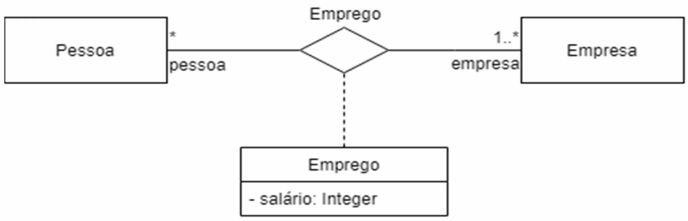
Sobre o diagrama acima, é correto afirmar que
Provas
As LANs virtuais (VLANs) permitem que uma única LAN estendida seja particionada em várias LANs aparentemente separadas. Sobre esse tipo de rede, é correto afirmar que
Provas
Disciplina: TI - Organização e Arquitetura dos Computadores
Banca: IDECAN
Orgão: IF-PB
Na montagem de estações de trabalho, existem várias possibilidades para configuração do banco de memória principal RAM. Considere que estão disponíveis pentes de memória DDR3 e DDR4 de várias frequências e capacidades, que precisam ser instalados em placas mãe com dois slots disponíveis. Ao configurar um ambiente com várias estações nesse cenário, qual é a escolha ideal para configuração das memórias?
Provas
Disciplina: TI - Organização e Arquitetura dos Computadores
Banca: IDECAN
Orgão: IF-PB
Uma atividade comum na manutenção de estações de trabalho é a instalação de sistemas operacionais. Para realizar essa atividade, o administrador precisa definir o layout de partições no disco, antes ou durante a instalação do sistema. Considere que um usuário necessita de uma partição de 3,0 TB (terabytes) para seu sistema operacional. Estando disponível um disco de 4,0 TB (terabytes), como deve ser feita a configuração do disco?
Provas
Disciplina: TI - Organização e Arquitetura dos Computadores
Banca: IDECAN
Orgão: IF-PB
Uma placa mãe de um servidor ou computador pessoal moderno suporta a instalação de processadores ou CPUs em sockets padronizados. Ao analisar uma placa mãe e processador construídos com um socket no padrão PGA, um analista de suporte técnico irá observar:
Provas
O processo de teste tem dois objetivos distintos:
- Demonstrar ao desenvolvedor e ao cliente que o software atende a seus requisitos e
- Descobrir situações em que o software se comporta de maneira incorreta, indesejável ou de forma diferente das especificações.
Sobre testes de software, é incorreto afirmar que
Provas
Caderno Container